
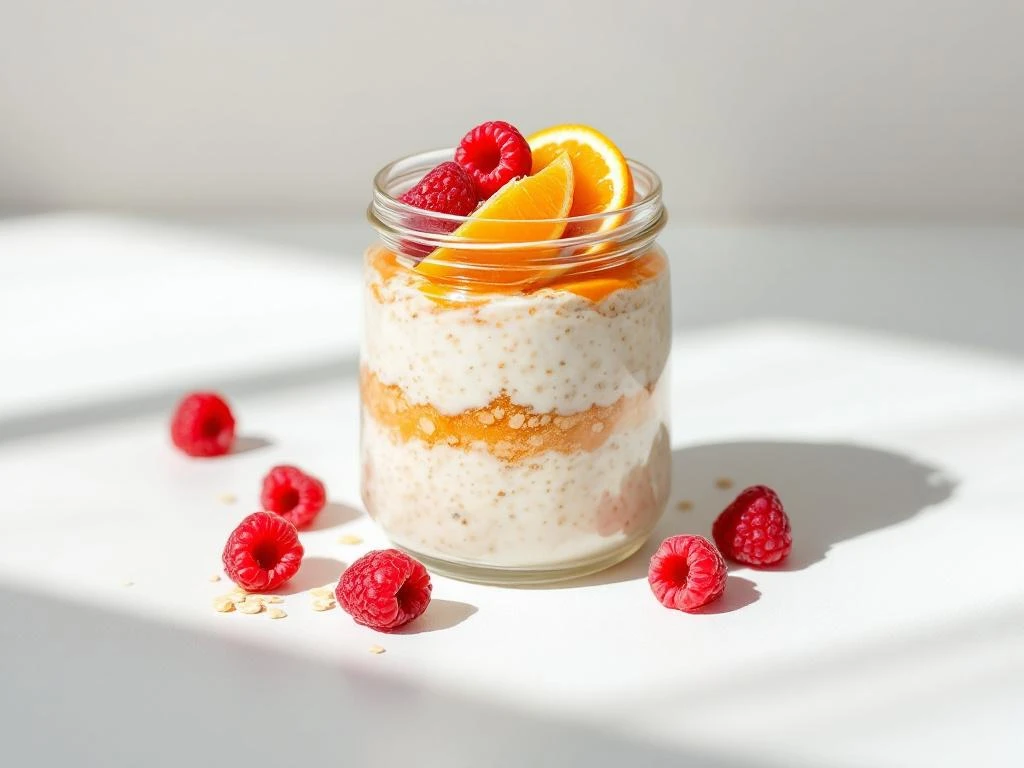
Managing IBS symptoms while enjoying a delicious breakfast doesn’t have to be complicated. This orange raspberry overnight oats recipe gives you a no-cook, meal prep friendly option that’s gentle on your digestive system. The recipe takes about 5 minutes to prepare the night before, and it’s ready when you wake up. You’ll need certified gluten-free oats, lactose-free milk or a suitable alternative, fresh oranges, raspberries, and a few basic pantry items. This guide walks you through ingredient selection, preparation, storage, and customisation options to keep your breakfasts interesting all week long.
Why orange raspberry overnight oats work for IBS
Overnight oats offer a gentle, easy-to-digest breakfast option that fits perfectly into a low FODMAP eating pattern. The soaking process breaks down some of the starches in oats, making them easier on your digestive system. When you prepare oats this way, you’re also getting soluble fibre that supports regular bowel movements without triggering IBS symptoms.
The combination of orange and raspberry adds natural sweetness and vitamin C without relying on high FODMAP fruits like apples or pears. Raspberries stay low FODMAP at 60g per serving, whilst oranges provide flavour through their zest and a small amount of juice. This recipe keeps portions controlled to ensure you stay within safe FODMAP limits.
Meal prep becomes simple when you make several jars at once. You’ll have grab-and-go breakfasts ready throughout the week, which helps you avoid reaching for less suitable options when you’re rushed or experiencing symptoms. The cold preparation method also means you’re not heating your kitchen or spending time cooking when you’d rather be resting.
Gather your low FODMAP ingredients
Start with certified gluten-free oats as your base. Regular oats often contain traces of wheat from processing facilities, which can trigger symptoms if you’re sensitive to gluten. You’ll need 40g of oats per serving, which keeps you within the low FODMAP threshold. Look for rolled oats rather than instant varieties, as they provide better texture after soaking.
Choose your liquid carefully. Lactose-free milk works well at 125ml per serving. Alternative options include almond milk (made from almonds, which are low FODMAP at 10 nuts), coconut milk from a carton, or oat milk if you tolerate it. Avoid soy milk made from whole soybeans, as it’s high FODMAP. Check labels to ensure your chosen milk doesn’t contain high FODMAP additives like inulin or chicory root.
For the fruit components, you’ll need one small orange and 60g of fresh raspberries per serving. Select oranges that feel heavy for their size, indicating juiciness. The raspberries should be firm and brightly coloured without any mushy spots. Frozen raspberries work as a substitute, but thaw and drain them before adding to prevent excess liquid.
Additional ingredients include maple syrup (one tablespoon per serving for sweetness), a pinch of salt to enhance flavours, and optional vanilla extract. If you’re in the elimination phase of the low FODMAP diet, stick to pure vanilla extract rather than vanilla essence, which may contain high FODMAP ingredients.
Suitable substitutions
Replace raspberries with blueberries at 40g per serving, strawberries at 65g, or a mix of both. Swap orange zest for lemon zest if you prefer a sharper citrus note. Use rice malt syrup instead of maple syrup if you’re avoiding fructose. For added protein, stir in one tablespoon of peanut butter or a low FODMAP protein powder after the oats have soaked.
Prepare your orange raspberry overnight oats
Grab a clean glass jar or airtight container with at least 350ml capacity. Mason jars work perfectly because you can see the layers and they seal well for storage. Add your 40g of gluten-free oats to the bottom of the container.
Zest half of your orange directly over the oats. Use a fine grater or microplane to get just the coloured part of the peel, avoiding the bitter white pith underneath. The zest contains oils that infuse the oats with bright citrus flavour overnight. Squeeze one tablespoon of fresh orange juice into the jar. More juice can make the oats too wet and acidic.
Pour 125ml of your chosen lactose-free milk over the oats. Add one tablespoon of maple syrup and a small pinch of salt. Stir everything together with a spoon until the oats are fully submerged and the sweetener is distributed. The mixture will look quite liquid at this stage, but the oats absorb most of it during soaking.
Gently fold in 40g of raspberries, keeping some whole for visual appeal. You can layer them on top instead if you prefer distinct fruit pieces in the morning. Press down lightly to ensure the berries make contact with the liquid, which helps them soften slightly and release some colour.
Seal your container tightly and place it in the refrigerator. The oats need at least 4 hours to soften properly, but 8 hours or overnight gives the best texture. The starches in the oats break down gradually, creating a creamy consistency without any cooking. Make multiple jars at once using the same process to have breakfasts ready for several days.
Getting the ratios right
The standard ratio is roughly 1 part oats to 3 parts liquid. If you prefer thicker oats, reduce the milk to 100ml. For a runnier consistency, add up to 150ml. Remember that the oats continue to absorb liquid even after the initial soaking period, so they’ll thicken slightly by day two or three of storage.
Customise your overnight oats for variety
Keep your breakfast interesting by rotating through different low FODMAP combinations. Add one tablespoon of chia seeds for extra omega-3 fatty acids and a thicker texture. Sprinkle in a quarter teaspoon of cinnamon or ginger for warmth without adding FODMAPs. A tablespoon of shredded coconut provides tropical flavour and healthy fats.
Change your fruit selection weekly. Try kiwi fruit (two small ones, peeled and chopped), firm banana at 50g, or passionfruit pulp from one fruit. Each of these stays within low FODMAP portions whilst providing different vitamins and flavours. Mix berries together for variety, keeping your total berry amount at 60g.
Adjust sweetness based on your preferences and symptom patterns. Some people with IBS tolerate maple syrup better than other sweeteners, whilst others prefer rice malt syrup or a small amount of brown sugar. Start with one tablespoon and adjust down if you find it too sweet. The fruit adds natural sweetness too, so you might need less added sugar than you expect.
For texture variations, try adding 10g of chopped walnuts or pecans before refrigerating. These nuts are low FODMAP at this portion and add satisfying crunch. Alternatively, top your oats with a tablespoon of pumpkin seeds or sunflower seeds just before eating. Adding crunchy elements at serving time keeps them from getting soggy.
Seasonal adaptations
During winter, warm your overnight oats in the microwave for 60 seconds. This creates a porridge-like consistency that’s comforting on cold mornings. Add warming spices like nutmeg or cardamom. In summer, keep them cold and top with extra fresh berries and a few ice cubes for a refreshing start to hot days.
Store and serve your breakfast perfectly
Your prepared overnight oats stay fresh in the refrigerator for up to 4 days. Glass containers work better than plastic for longer storage because they don’t absorb odours or stains from the berries. Keep the containers sealed tightly to prevent the oats from absorbing refrigerator smells or drying out around the edges.
Check your oats after the initial soaking period. They should be soft and creamy with no hard, dry bits remaining. If they seem too thick, stir in a splash of additional milk. If they’re too runny, they’ll thicken as they continue to sit. The texture changes slightly each day, becoming denser and more porridge-like by day three or four.
Portion control matters for FODMAP management. Stick to one jar per serving rather than eating multiple portions, even if you’re very hungry. The 40g oat portion is specifically measured to stay within low FODMAP limits. Eating more could push you over the threshold and trigger symptoms. If one serving doesn’t fill you up, pair your oats with a low FODMAP protein source like eggs or lactose-free yoghurt.
Serve your oats straight from the refrigerator or at room temperature. Some people prefer to remove their jar from the fridge 10 minutes before eating to take the chill off. Give the oats a good stir before eating to redistribute any liquid that has settled at the bottom. The raspberries will have bled slightly, creating pretty pink swirls throughout.
Add fresh toppings just before serving to maintain their texture and nutritional value. A few extra fresh raspberries, a sprinkle of seeds, or a small dollop of lactose-free yoghurt all work well. Drizzle a tiny bit of extra maple syrup on top if you want more sweetness. These last-minute additions keep each breakfast feeling special rather than repetitive.
Container recommendations
Use 350ml to 500ml jars for single servings. Wide-mouth jars make stirring and eating easier than narrow containers. If you’re taking your breakfast to work, choose a container with a secure, leak-proof lid. Some people prefer containers with separate compartments to keep crunchy toppings separate until eating time.
Orange raspberry overnight oats recipe summary
Preparation time: 5 minutes | Portions: 1 serving
- 40g certified gluten-free rolled oats
- 125ml lactose-free milk or suitable alternative
- Zest from half a small orange
- 1 tablespoon fresh orange juice
- 60g fresh raspberries
- 1 tablespoon maple syrup
- Pinch of salt
- Optional: vanilla extract, chia seeds, nuts, or additional toppings
Steps:
- Add oats to a 350ml jar or container
- Zest half an orange over the oats and add 1 tablespoon of juice
- Pour in lactose-free milk, maple syrup, and a pinch of salt
- Stir until oats are fully submerged
- Fold in raspberries gently
- Seal container and refrigerate for at least 4 hours or overnight
- Stir before serving and add fresh toppings if desired
- Store prepared oats for up to 4 days in the refrigerator
This recipe is for informational purposes only and is not medical or dietary advice. Please consult a healthcare professional before making any changes to your diet.
Related Articles
- Peanut Butter Oatmeal Cookies
- What is the gentlest food on the stomach?
- What is the most common FODMAP trigger?
- What are the best snacks for IBS?
- Lactose-Free Cottage Cheese with Pineapple