
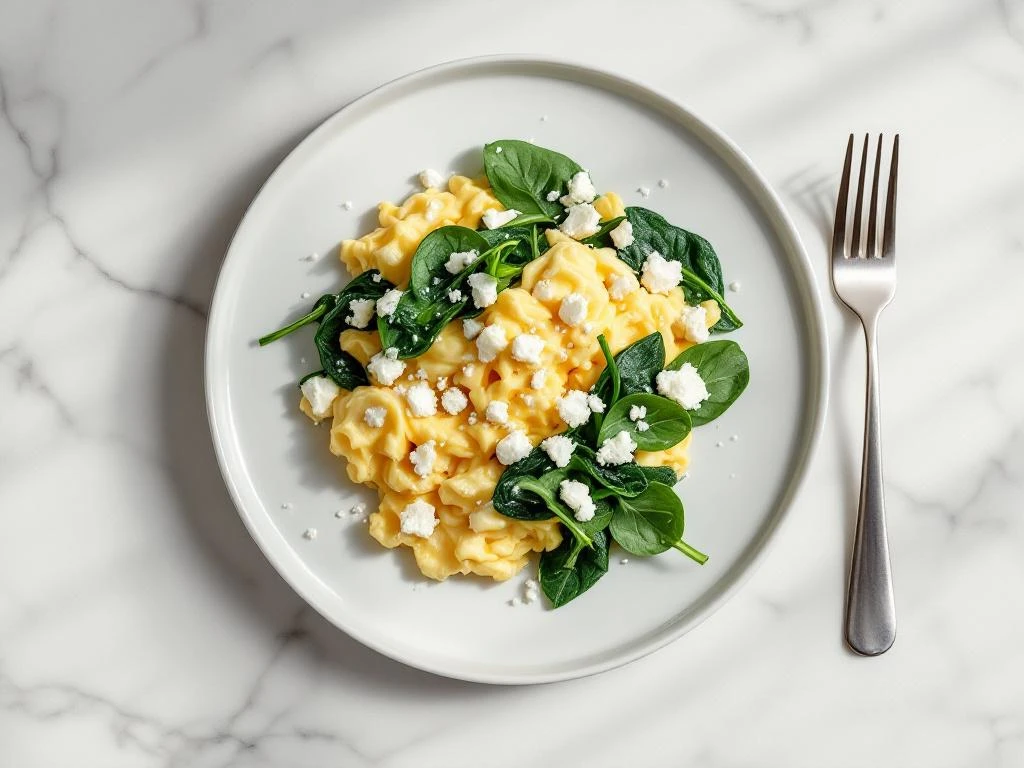
Scrambled eggs work well for IBS-friendly breakfasts because they’re quick to make, easy to digest, and naturally low FODMAP. Adding spinach and feta brings extra flavour and nutrition without triggering digestive symptoms. This recipe keeps portion sizes safe for sensitive stomachs whilst giving you a satisfying, protein-rich meal to start your day. You’ll learn the exact measurements and techniques to make these eggs perfectly fluffy every time.
Why spinach and feta scrambled eggs work for IBS
Eggs provide complete protein that’s gentle on your digestive system. They contain no FODMAPs and help you feel full without causing bloating or discomfort. This makes them an excellent base for an IBS-friendly breakfast.
Spinach becomes low FODMAP when you stick to the right serving size. One cup of fresh baby spinach per person stays within safe limits. Larger portions contain higher amounts of sorbitol, which can trigger symptoms. Measure your spinach carefully to keep this recipe stomach-friendly.
Lactose-free feta cheese adds tangy flavour without the digestive issues regular feta can cause. Most people with IBS tolerate small amounts of lactose-free cheese well. Limit your portion to about 40 grams to maintain low FODMAP status whilst getting that salty, creamy taste that makes these eggs special.
Gather your low FODMAP ingredients and tools
You’ll need these ingredients for two servings:
- 4 large eggs
- 2 cups fresh baby spinach leaves
- 80g lactose-free feta cheese
- 1 tablespoon lactose-free butter or garlic-infused olive oil
- Salt and pepper to taste
- 2 tablespoons lactose-free milk (optional for extra creaminess)
Check your feta label to confirm it’s lactose-free. Some brands use lactase enzymes during production, which breaks down the lactose naturally. Look for “lactose-free” or “suitable for lactose intolerance” on the packaging.
Essential kitchen tools include a non-stick frying pan, a mixing bowl, a whisk or fork, a silicone spatula, and measuring cups. Having everything ready before you start cooking helps you work quickly and prevents overcooking.
Prepare the spinach and feta mixture
Rinse your baby spinach leaves under cold water. Pat them dry with kitchen paper or use a salad spinner. Excess water will make your eggs watery and affect the texture.
Roughly chop the spinach into smaller pieces. This helps distribute it evenly throughout the eggs and makes eating easier. Aim for pieces about 2-3 centimetres wide.
Crumble your lactose-free feta into small chunks. Keep them roughly the size of a pea so they melt slightly but still provide pockets of flavour. Set aside about a tablespoon to sprinkle on top at the end.
Crack your eggs into a mixing bowl. Add the optional milk if you want creamier eggs. Whisk vigorously for about 30 seconds until the mixture looks uniform and slightly frothy. This incorporates air and makes your scrambled eggs fluffy rather than dense.
Cook perfectly fluffy scrambled eggs
Heat your non-stick pan over medium-low heat. Add the butter or garlic-infused oil and let it melt completely. The pan should feel warm but not smoking hot. High heat makes rubbery eggs.
Pour in your whisked eggs. Let them sit undisturbed for about 20 seconds until you see the edges start to set. Use your silicone spatula to gently push the cooked edges toward the centre, tilting the pan so uncooked egg flows to the empty spaces.
When the eggs are about halfway cooked (still quite wet but starting to form curds), add your chopped spinach. Stir gently to distribute it evenly. The spinach will wilt quickly from the heat of the eggs.
Add most of your crumbled feta, saving some for garnish. Continue stirring gently every few seconds. The eggs should look glossy and slightly wet when you remove them from heat. They’ll continue cooking from residual heat, so take them off the stove when they’re just underdone.
Success check: Your eggs should be soft, creamy, and formed into small curds. They shouldn’t be dry or browned. The whole cooking process takes about 3-4 minutes from start to finish.
Customize your scrambled eggs for variety
Fresh herbs transform this basic recipe without adding FODMAPs. Chop fresh chives, basil, or parsley and stir them in during the last 30 seconds of cooking. Use about a tablespoon per two servings for noticeable flavour.
Swap lactose-free feta for other low FODMAP cheeses like aged cheddar or Swiss cheese in small amounts. Stick to 40 grams per person to maintain digestive safety. Each cheese brings different flavour notes to your eggs.
Add protein by stirring in cooked, crumbled bacon or sliced smoked salmon. Both are naturally low FODMAP and pair well with eggs and feta. Add them when you add the spinach so they warm through.
Serve your eggs with gluten-free toast, a small portion of sourdough bread (which is lower FODMAP), or alongside grilled tomatoes. Keep tomato portions to about half a medium tomato per person to stay within safe limits.
Sprinkle the reserved feta and a pinch of black pepper on top before serving. A small drizzle of garlic-infused olive oil adds extra richness without the FODMAP content of fresh garlic.
These eggs taste best fresh but you can prep ingredients the night before. Wash and chop your spinach, crumble your feta, and store them separately in the fridge. Whisk your eggs just before cooking for the fluffiest texture.
This recipe works for meal prep if needed. Cook the eggs slightly underdone, let them cool completely, and store in an airtight container for up to two days. Reheat gently in a pan with a tiny bit of butter to restore moisture.
Spinach and feta scrambled eggs
Cooking time: 10 minutes | Portions: 2 servings
- Whisk 4 eggs with 2 tablespoons lactose-free milk until frothy
- Chop 2 cups baby spinach and crumble 80g lactose-free feta
- Heat 1 tablespoon butter in a non-stick pan over medium-low heat
- Pour in eggs and let sit for 20 seconds before stirring
- Add spinach when eggs are halfway cooked
- Stir in most of the feta, saving some for garnish
- Remove from heat when eggs are still slightly wet
- Top with reserved feta and fresh herbs
- Serve immediately with gluten-free toast or sourdough
This recipe is for informational purposes only and is not medical or dietary advice. Please consult a healthcare professional before making any changes to your diet.
Related Articles
- Chia Seed Pudding with Raspberries
- Lactose-Free Cottage Cheese with Pineapple
- Rice Crispy Breakfast Bars
- Gluten-Free Granola with Almond Milk
- Bacon and Egg Breakfast Muffins