
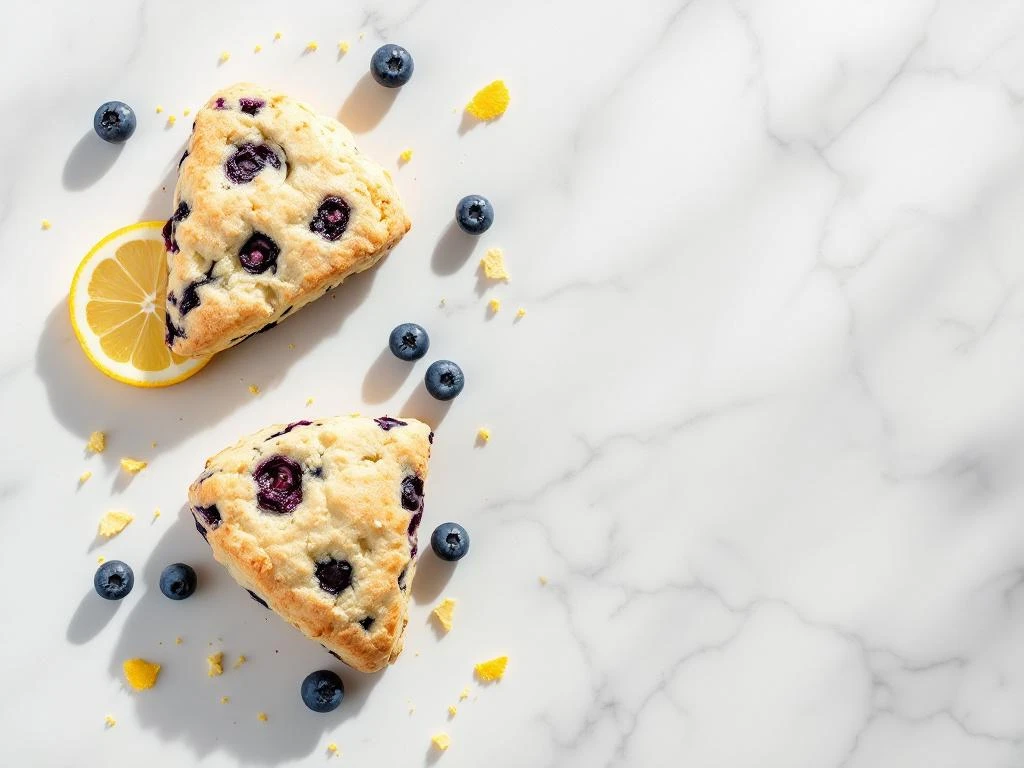
Gluten-free scones can feel like a challenge when you’re managing IBS and following a low FODMAP diet. Traditional scones often contain wheat flour, high FODMAP fruits in large amounts, and dairy that can trigger digestive symptoms. This recipe solves those problems by using gluten-free flour, carefully portioned blueberries, and fresh lemon to create tender, flaky scones that won’t upset your stomach. You’ll need about 45 minutes from start to finish, including baking time. This guide is suitable for beginner bakers who can measure ingredients and follow straightforward mixing instructions.
You’ll need basic baking equipment including mixing bowls, measuring cups and spoons, a baking sheet, and either a pastry cutter or a fork. The ingredients are straightforward and available at most supermarkets. The key to success is handling the dough gently and keeping your butter cold. By the end, you’ll have eight delicious homemade scones perfect for breakfast or a satisfying snack that fits your dietary needs.
Why gluten-free lemon blueberry scones work for IBS
These scones fit perfectly into a low FODMAP diet because they avoid common trigger ingredients. Traditional wheat flour contains fructans that cause bloating and discomfort for people with IBS. Gluten-free flour blends eliminate this problem while still creating the structure scones need. The texture might be slightly different from wheat-based versions, but the result is just as satisfying.
Blueberries are low FODMAP in portions of 20 berries or about 28 grams. This recipe keeps the berry amount within safe limits so you can enjoy their natural sweetness and antioxidants without triggering symptoms. Lemon adds bright flavour through both zest and juice, and citrus is generally well tolerated on a low FODMAP diet. The combination creates a fresh, fruity taste that feels special without causing digestive issues.
Regular scones often include buttermilk or large amounts of cream, both of which contain lactose that many IBS sufferers can’t digest properly. This recipe uses lactose-free alternatives or smaller amounts of cream that most people tolerate well. The butter provides richness and creates the flaky layers that make scones appealing, and most people with IBS can handle the amount of lactose in butter without problems.
Gather your gluten-free scone ingredients
For the dry ingredients, you’ll need 250 grams of gluten-free flour blend. Look for blends that contain xanthan gum or add half a teaspoon separately. King Arthur Measure for Measure or Bob’s Red Mill 1-to-1 Baking Flour work well. You’ll also need 2 tablespoons of sugar, 2 teaspoons of baking powder, and a quarter teaspoon of salt.
The wet ingredients include 60 grams of cold butter (or dairy-free alternative like Naturli or Flora), one large egg, 80 ml of lactose-free cream or lactose-free milk, and 2 tablespoons of fresh lemon juice. For the flavour components, gather one large lemon for zesting and 60 grams of fresh or frozen blueberries (about 20 berries).
If you need substitutions, coconut oil can replace butter but will change the flavour slightly. Make sure it’s solid and cold. For egg-free versions, try a flax egg (1 tablespoon ground flaxseed mixed with 3 tablespoons water, left to thicken for 5 minutes). Choose gluten-free flour blends without bean flours if you’re sensitive to them. Always check that your baking powder is gluten-free as some brands contain wheat-based fillers.
Prepare your workspace and tools
Set your oven to 200°C (400°F) and position the rack in the centre. Line a baking sheet with parchment paper or a silicone mat. This prevents sticking and makes cleanup easier. Get out two mixing bowls (one large, one medium), measuring cups and spoons, a whisk, and either a pastry cutter, two knives, or a fork for cutting butter.
You’ll also need a zester or fine grater for the lemon, a cutting board, and a sharp knife for shaping scones. If you have a round biscuit cutter, that works nicely, but a knife for cutting triangles is just as effective. Have a pastry brush ready if you want to add an egg wash for shine, though this is optional.
Arrange all your ingredients on the counter before you start. This keeps the process smooth and prevents you from searching for items with floury hands. Take your butter out of the fridge and cut it into small cubes, then return it to the fridge until you need it. Cold butter is essential for flaky scones, so keep it chilled until the moment you add it to the flour.
Mix the dry ingredients for perfect texture
Add the gluten-free flour blend, sugar, baking powder, and salt to your large mixing bowl. Use a whisk to combine them thoroughly for at least 30 seconds. This step matters more with gluten-free flour than regular flour because gluten-free blends can settle and separate in the package, leaving you with uneven amounts of different flours and starches.
Whisking also adds air to the mixture, which helps your scones rise properly. Gluten-free baked goods can turn out dense if you don’t incorporate enough air during mixing. Make sure you see no clumps of baking powder, as these can create bitter spots and uneven rising. The mixture should look uniform in colour and texture.
Gluten-free flour behaves differently from wheat flour because it lacks the protein structure that gluten provides. This means your batter will be more delicate and the final scones will have a different crumb. The thorough mixing at this stage helps distribute the xanthan gum (if your blend contains it) evenly, which acts as a binder to replace the missing gluten structure.
Incorporate cold butter into the flour mixture
Take your cold butter cubes from the fridge and add them to the flour mixture. Using a pastry cutter, two knives in a crossing motion, or your fingertips, work the butter into the flour until the mixture resembles coarse breadcrumbs or small peas. This typically takes 3 to 5 minutes. Some larger pieces of butter are fine, as they create flaky pockets when baking.
If you’re using your fingers, work quickly to avoid warming the butter too much. Rub the butter and flour between your thumbs and fingertips, letting the mixture fall back into the bowl. Cold butter creates steam during baking, which pushes layers apart and creates the flaky texture scones are known for. If your butter starts to soften or your kitchen is warm, pop the bowl in the fridge for 10 minutes before continuing.
You’ll know you’re done when most of the mixture looks sandy with some pea-sized butter pieces scattered throughout. Don’t overwork it trying to make everything perfectly uniform. Those visible butter bits are what make your scones tender and flaky rather than tough and dense. If you accidentally mix too much and the butter disappears completely, your scones will still taste good but might be slightly less flaky.
Add lemon zest and blueberries gently
Wash your lemon and pat it dry. Using a fine grater or zester, remove just the yellow outer layer of the peel. Stop when you reach the white pith, which tastes bitter. You want about 1 tablespoon of zest. Add this to your flour and butter mixture and stir it through with a fork. The zest contains aromatic oils that give your scones a bright lemon flavour without adding moisture.
Before adding blueberries, toss them with a teaspoon of your flour mixture in a small bowl. This coating helps prevent the berries from sinking to the bottom during baking and reduces colour bleeding. Gently fold the coated blueberries into your mixture using a spatula or large spoon. Use a light touch to avoid crushing the berries, which would release juice and create purple streaks.
If you’re using frozen blueberries, don’t thaw them. Add them directly from the freezer after coating with flour. Frozen berries actually work better than thawed ones because they hold their shape and bleed less during mixing and baking. Just be aware that frozen berries might add a minute or two to your baking time.
Form and shape your scone dough
In your smaller bowl, whisk together the egg, lactose-free cream, and lemon juice until combined. Pour this mixture into your flour mixture all at once. Using a fork or spatula, stir gently until the dough just comes together. You’ll still see some dry patches, and that’s fine. Gluten-free dough is more delicate than traditional scone dough, so a light touch prevents it from becoming gummy.
Turn the dough out onto a clean work surface lightly dusted with gluten-free flour. If the dough seems very sticky, dust your hands with a bit of flour too. Gently pat and press the dough into a circle about 2 cm thick. Don’t knead or overwork it. The dough might feel more crumbly than you expect compared to wheat-based dough, but it will hold together.
Use a sharp knife to cut the circle into 8 wedges like a pizza, or use a round cutter to stamp out circles. If using a cutter, press straight down without twisting, which can seal the edges and prevent proper rising. Gather any scraps, gently press them together, and cut additional scones. Place the shaped scones on your prepared baking sheet with about 5 cm of space between them.
Bake to golden perfection
If you’d like a golden, shiny top, brush the scones lightly with beaten egg or a splash of lactose-free cream using a pastry brush. This step is optional but creates an appealing appearance. Place the baking sheet on the centre rack of your preheated oven. Set a timer for 15 minutes.
The scones are done when the tops are golden brown and the edges look firm and slightly darker. They should feel set when you gently press the top. If you have an instant-read thermometer, the internal temperature should reach about 90°C (195°F). Gluten-free baked goods can dry out quickly, so watch them carefully after the 15-minute mark.
If the tops are browning too quickly but the scones aren’t done in the middle, loosely cover them with foil for the last few minutes of baking. Your kitchen will smell wonderful with the combination of lemon and baking scones. Avoid opening the oven door during the first 12 minutes, as the temperature drop can affect rising.
Cool and serve your scones properly
Let the scones sit on the baking sheet for 5 minutes after removing them from the oven. This brief rest helps them firm up enough to move without breaking. Then transfer them to a wire rack using a spatula. Cooling on a rack prevents soggy bottoms by allowing air to circulate around the entire scone.
These scones taste best while still slightly warm, about 10 minutes after baking. Serve them with lactose-free butter, a small amount of strawberry jam (check FODMAP serving sizes for your chosen jam), or lactose-free clotted cream if available. A cup of tea makes them feel like a proper treat. The lemon flavour will be bright and the blueberries should have created small pockets of sweetness throughout.
Store leftover scones in an airtight container at room temperature for up to 2 days. For longer storage, freeze them in a sealed bag for up to 3 months. Reheat frozen scones in a 160°C (325°F) oven for about 10 minutes, or microwave individual scones for 20 to 30 seconds. The texture is best when reheated in the oven rather than the microwave, which can make them slightly rubbery.
Troubleshoot common gluten-free scone issues
If your scones turn out dry and crumbly, you likely overbaked them or didn’t add enough liquid. Gluten-free baked goods dry out faster than wheat-based ones. Next time, check them a minute or two earlier and consider adding an extra tablespoon of cream to the wet ingredients. You can also brush the tops with melted butter right after baking to add moisture.
Flat scones that don’t rise properly usually mean your baking powder was old or you overworked the dough. Baking powder loses effectiveness over time, so check the expiration date. When mixing, stop as soon as the dough comes together. Every extra stir develops structure that can make gluten-free scones tough and prevent proper rising. Make sure your oven was fully preheated before baking.
If blueberries sink to the bottom, you might not have tossed them in flour first, or your dough was too wet. The flour coating helps suspend berries in the batter. Dense, heavy scones often result from using a gluten-free flour blend without xanthan gum or another binder. These ingredients help create structure in the absence of gluten. If your scones fall apart easily, your dough might have been too dry or you didn’t press it together firmly enough when shaping.
Altitude and humidity affect gluten-free baking more than regular baking. At high altitudes, reduce baking powder slightly and increase liquid by a tablespoon. In humid conditions, you might need a bit less liquid or slightly more flour. Keep notes on what works in your kitchen so you can repeat successful batches. Gluten-free baking involves more variables than wheat-based baking, but you’ll develop a feel for the right consistency with practice.
You’ve now learned how to make gluten-free lemon blueberry scones that work with your low FODMAP diet. These scones let you enjoy homemade baking without worrying about triggering IBS symptoms. The bright lemon and sweet blueberries create a flavour combination that feels special for breakfast or an afternoon snack. With practice, you’ll get comfortable working with gluten-free dough and can experiment with other low FODMAP additions like a small amount of dark chocolate chips or different citrus zests.
The techniques you’ve learned here apply to other gluten-free baking projects too. Understanding how to work with cold butter, handle delicate dough, and adjust for gluten-free flour will help you succeed with biscuits, shortcakes, and other similar recipes. Keep exploring low FODMAP recipes to build a varied diet that supports your digestive health while still bringing you joy.
Gluten-free lemon blueberry scones
Cooking Time: 15-18 minutes | Portions: 8 scones
- 250g gluten-free flour blend (with xanthan gum)
- 2 tablespoons sugar
- 2 teaspoons baking powder
- ¼ teaspoon salt
- 60g cold butter (or dairy-free alternative), cubed
- 1 tablespoon lemon zest (from 1 large lemon)
- 60g blueberries (about 20 berries)
- 1 large egg
- 80ml lactose-free cream or milk
- 2 tablespoons fresh lemon juice
Steps:
- Preheat oven to 200°C (400°F) and line a baking sheet with parchment paper
- Whisk together flour, sugar, baking powder, and salt in a large bowl
- Cut cold butter into flour mixture until it resembles coarse breadcrumbs
- Stir in lemon zest, then gently fold in flour-coated blueberries
- Whisk egg, cream, and lemon juice together, then add to flour mixture
- Stir gently until dough just comes together
- Pat dough into a 2cm thick circle and cut into 8 wedges
- Place on prepared baking sheet and brush with egg or cream if desired
- Bake for 15-18 minutes until golden brown
- Cool on baking sheet for 5 minutes, then transfer to wire rack
- Serve warm with lactose-free butter or suitable jam
This recipe is for informational purposes only and is not medical or dietary advice. Please consult a healthcare professional before making any changes to your diet.
Related Articles
- Who gets IBS the most?
- What foods trigger IBS?
- Egg White and Veggie Breakfast Burrito
- Egg and Spinach Breakfast Stack
- Orange Raspberry Overnight Oats