
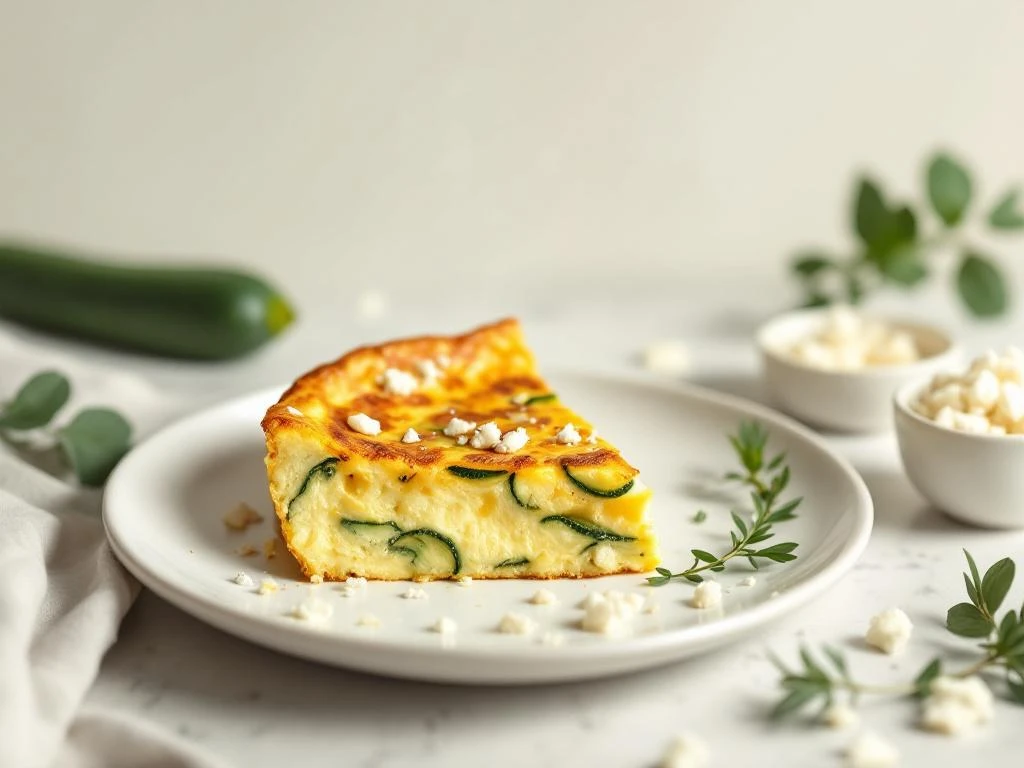
Making a low FODMAP frittata doesn’t have to be complicated. This zucchini and feta frittata recipe gives you a delicious, IBS-friendly meal that works for breakfast, lunch or dinner. You’ll need about 35 minutes total, including prep and cooking time. This is a beginner-friendly recipe that requires basic cooking skills like whisking eggs and using your stovetop and oven. You’ll need an oven-safe skillet, a whisk, a grater, and simple low FODMAP ingredients. The result is a protein-rich, satisfying frittata that you can enjoy immediately or store for easy meal prep throughout the week.
Why this zucchini and feta frittata works for IBS
This frittata recipe aligns perfectly with low FODMAP guidelines, making it a safe choice when you’re managing IBS symptoms. Zucchini is considered low FODMAP in servings up to 65g, providing gentle nutrition without triggering digestive discomfort. The vegetable adds moisture and flavour while keeping the dish light on your gut.
Feta cheese is naturally lower in lactose compared to many other cheeses. A 40g serving falls within low FODMAP limits, giving you that creamy, tangy flavour without the worry. The ageing process in feta reduces lactose content, making it more tolerable for those with lactose sensitivity.
Eggs form the base of this gluten free frittata and are completely FODMAP-free. They provide high-quality protein that helps keep you satisfied for hours. Frittatas are ideal for meal prep because they hold up well in the fridge and reheat beautifully. You can make one batch and have ready-to-eat portions for several days, which takes the stress out of planning IBS friendly meals when you’re busy or not feeling well.
Gather your ingredients and tools
For this easy frittata recipe, you’ll need the following low FODMAP ingredients:
- 6 large eggs (room temperature works best for even cooking)
- 1 medium zucchini (about 200g total, which equals roughly 65g per serving for 3 servings)
- 80g feta cheese (crumbled, staying within the 40g per serving guideline for 2 servings)
- 2 tablespoons olive oil or garlic-infused oil (garlic-infused oil is low FODMAP)
- Fresh herbs such as basil or chives (1-2 tablespoons, chopped)
- Salt and pepper to taste
- Optional: lactose-free milk or cream (1-2 tablespoons for extra fluffiness)
You can substitute the feta with other hard, aged cheeses like parmesan or cheddar in appropriate portions if you prefer. Fresh spinach (a handful, about 75g) can replace some of the zucchini for variety. Just ensure you’re sticking to low FODMAP serving sizes.
Essential kitchen tools include:
- A 20-25cm oven-safe skillet (cast iron or non-stick with a metal handle)
- A medium mixing bowl
- A whisk or fork for beating eggs
- A grater for the zucchini (optional, if you prefer grated instead of sliced)
- A sharp knife and cutting board
Prepare the zucchini and other ingredients
Start by slicing your zucchini into thin rounds, about 3-4mm thick. Consistent thickness ensures even cooking. If you prefer, you can grate the zucchini instead, but sliced rounds give a nicer visual presentation in the finished frittata.
Here’s an important step to prevent a watery frittata: place your zucchini slices in a colander and sprinkle them lightly with salt. Let them sit for 10 minutes. The salt draws out excess moisture. After 10 minutes, pat the zucchini dry with paper towels or a clean kitchen cloth. This technique makes a noticeable difference in texture.
While the zucchini is draining, crack your eggs into a mixing bowl. Whisk them thoroughly until the yolks and whites are completely combined and the mixture looks uniform. Add a pinch of salt and pepper. If you’re using lactose-free milk or cream, add it now and whisk again. The dairy addition is optional but creates a slightly fluffier texture.
Crumble your feta cheese into small, bite-sized pieces. Don’t make them too fine, as larger crumbles provide nice pockets of flavour throughout the frittata. Chop your fresh herbs and set everything aside within easy reach of your stovetop.
Success check
Your zucchini should feel noticeably drier after salting and patting. Your egg mixture should be smooth with no streaks of unmixed yolk. All ingredients should be prepped and ready before you start cooking, as the stovetop portion moves quickly.
Cook the frittata on stovetop and finish in oven
Preheat your oven to 180°C (160°C fan). This moderate temperature cooks the frittata through without browning the top too quickly.
Heat your oven-safe skillet over medium heat. Add the olive oil or garlic-infused oil and let it warm for about 30 seconds. Add the dried zucchini slices in a single layer if possible. Sauté for 3-4 minutes, stirring occasionally, until the zucchini softens and develops a light golden colour on some edges. This step adds flavour and ensures the zucchini is cooked through.
Reduce the heat to medium-low. Pour the whisked egg mixture evenly over the zucchini in the skillet. Use a spatula to distribute the zucchini pieces evenly if they’ve clumped together. Sprinkle the crumbled feta and chopped herbs evenly across the top of the eggs.
Let the frittata cook undisturbed on the stovetop for 4-5 minutes. You’ll notice the edges beginning to set and pull away slightly from the sides of the pan. The centre will still look quite wet and jiggly. This is exactly what you want before moving to the oven.
Carefully transfer the skillet to your preheated oven. Remember that the handle will be hot, so use an oven mitt. Bake for 12-15 minutes. The frittata is done when the centre is just set and no longer jiggles when you gently shake the pan. A small amount of wobble is fine, as the frittata continues cooking slightly after you remove it from the oven.
Visual cues for doneness
The top should look matte rather than glossy and wet. The edges will be lightly golden. If you insert a knife into the centre, it should come out mostly clean with perhaps a tiny bit of moisture but no raw egg.
Let the frittata rest in the skillet for 3-4 minutes before slicing. This resting time allows the eggs to finish setting and makes slicing much easier.
Serve and store your low FODMAP frittata
Slice your zucchini frittata into wedges directly in the skillet or slide it onto a cutting board. This recipe typically yields 4-6 servings depending on portion size. Serve warm or at room temperature.
This lactose free frittata pairs beautifully with low FODMAP accompaniments. Try it with a simple green salad dressed with olive oil and lemon juice, gluten-free toast, or roasted cherry tomatoes (up to 75g per serving). Fresh herbs on top add a nice finishing touch.
For storage, let the frittata cool completely to room temperature. Cut it into individual portions and place them in an airtight container. Refrigerate for up to 4 days. The frittata maintains its texture well and actually tastes great cold, making it perfect for packed lunches.
Reheating instructions
Reheat individual portions in the microwave for 45-60 seconds on medium power. You can also reheat in a preheated oven at 160°C for about 10 minutes. Cover with foil to prevent drying out.
For longer storage, this low FODMAP breakfast freezes well. Wrap individual portions tightly in plastic wrap, then place them in a freezer-safe bag or container. Freeze for up to 2 months. Thaw overnight in the fridge before reheating. The texture may be slightly softer after freezing, but the flavour remains excellent.
Having pre-made frittata portions ready means you always have a safe, satisfying meal option available. This takes the guesswork and stress out of eating when you’re managing IBS symptoms and need something gentle but nourishing.
Zucchini and feta frittata
Cooking Time: 35 minutes | Portions: 4-6 servings
Ingredients:
- 6 large eggs
- 1 medium zucchini (about 200g)
- 80g feta cheese, crumbled
- 2 tablespoons olive oil or garlic-infused oil
- 1-2 tablespoons fresh herbs (basil or chives)
- Salt and pepper to taste
- Optional: 1-2 tablespoons lactose-free milk
Steps:
- Preheat oven to 180°C (160°C fan)
- Slice zucchini thinly, salt lightly, drain for 10 minutes, then pat dry
- Whisk eggs with salt, pepper, and optional lactose-free milk
- Heat oil in oven-safe skillet over medium heat
- Sauté zucchini for 3-4 minutes until softened
- Reduce heat to medium-low, pour in egg mixture
- Sprinkle feta and herbs evenly on top
- Cook on stovetop for 4-5 minutes until edges set
- Transfer to oven and bake for 12-15 minutes
- Rest for 3-4 minutes, then slice and serve
- Store in fridge for up to 4 days or freeze for up to 2 months
This recipe is for informational purposes only and is not medical or dietary advice. Please consult a healthcare professional before making any changes to your diet.
Related Articles
- What chips or crackers are low in FODMAP?
- Bacon and Tomato Egg Bake
- Are potatoes good for IBS diarrhea?
- What foods are surprisingly low in FODMAP?
- Is rice high in FODMAP?