
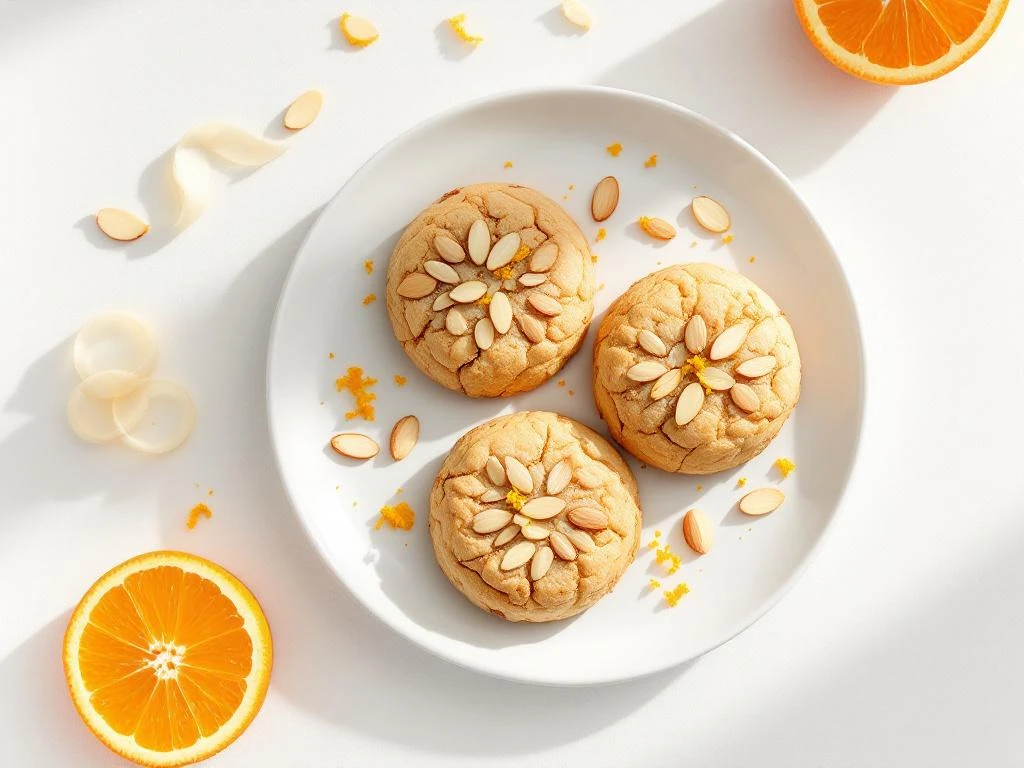
Morning energy shouldn’t come with digestive discomfort. These orange almond breakfast cookies offer a gentle, satisfying start to your day whilst staying fully compliant with low FODMAP guidelines. Made with simple ingredients like almond flour and fresh orange zest, they provide protein and sustained energy without triggering IBS symptoms.
This recipe is suitable for beginners and takes about 30 minutes total, including 20 minutes of baking time. You’ll need basic baking equipment and readily available low FODMAP ingredients. The result is a batch of wholesome, gluten free breakfast cookies that stay fresh all week.
Why orange and almond breakfast cookies work for IBS
Almond flour forms the base of these IBS friendly cookies, providing a naturally gluten free foundation that’s gentle on sensitive digestive systems. Unlike wheat flour, almond flour is low FODMAP in servings up to 24 grams, making it an ideal choice for breakfast baking. It offers healthy fats and protein that help stabilise blood sugar levels throughout your morning.
Fresh orange zest and a small amount of juice add bright flavour without causing digestive distress. Oranges are considered low FODMAP when consumed in moderate portions, and the zest contains beneficial oils that enhance taste without adding fermentable sugars. The combination creates a naturally sweet profile that reduces the need for excessive added sweeteners.
These healthy breakfast cookies deliver steady energy rather than the spike and crash you might experience with traditional sugary options. The protein from almond flour slows digestion in a good way, keeping you satisfied for hours. They’re portable, convenient, and eliminate the morning stress of preparing a complicated low FODMAP breakfast when you’re rushing.
Gather your low FODMAP ingredients and tools
You’ll need 200 grams of almond flour, which should be finely ground for the best texture. Check that your almond flour hasn’t been mixed with other flours or additives. For sweetness, use 60 grams of maple syrup or a low FODMAP alternative like rice malt syrup. Both options are safe in these quantities and provide moisture to the dough.
Collect the zest from one large orange and 30 millilitres of fresh orange juice. One egg will bind everything together, and you’ll want 30 millilitres of a neutral oil like light olive oil or rice bran oil. Add half a teaspoon of baking powder, a quarter teaspoon of salt, and half a teaspoon of vanilla extract if desired. A pinch of cinnamon works beautifully with the orange flavour.
For equipment, prepare a mixing bowl, whisk or fork, measuring cups and spoons, a baking tray, and parchment paper. A microplane or fine grater is essential for the orange zest. If you’re checking FODMAP certification, look for products marked by Monash University or similar trusted organisations, though plain almond flour and pure maple syrup are naturally compliant.
Substitutions maintain FODMAP compliance when done carefully. Replace maple syrup with an equal amount of rice malt syrup for a milder sweetness. If eggs are problematic, one tablespoon of ground flaxseed mixed with three tablespoons of water can work, though texture will be slightly different. Avoid substituting the almond flour with coconut flour, as the ratios would need complete adjustment.
Mix and prepare your cookie dough
Preheat your oven to 175°C (350°F) and line your baking tray with parchment paper. In your mixing bowl, combine the almond flour, baking powder, salt, and cinnamon. Whisk these dry ingredients together thoroughly to distribute the baking powder evenly. This prevents some cookies from rising more than others.
Create a well in the centre of your dry ingredients. Crack the egg into this well, then add the maple syrup, oil, orange zest, orange juice, and vanilla extract. Use a fork to beat the wet ingredients together in the centre before gradually incorporating the dry mixture from the edges. This technique helps prevent lumps.
Stir until you have a thick, slightly sticky dough. The consistency should hold together when pressed but feel softer than traditional wheat-based cookie dough. If your dough seems too wet, let it rest for five minutes. The almond flour will absorb more moisture during this time. If it’s too dry and crumbly, add a teaspoon of water or orange juice.
The orange zest should be visible throughout the dough as bright flecks. If you notice clumps of zest, break them apart with your fingers to distribute the flavour more evenly. The dough will smell wonderfully citrusy at this stage. Let the mixed dough rest whilst your oven finishes preheating.
Shape and bake your breakfast cookies
Scoop approximately two tablespoons of dough for each cookie. Roll each portion between your palms to form a ball, then place it on your prepared baking tray. Leave about five centimetres between cookies, as they’ll spread slightly during baking. Once all portions are on the tray, gently flatten each ball to about one centimetre thickness using the bottom of a glass or your palm.
The flattening step is important because these cookies don’t spread much on their own. Almond flour cookies hold their shape more than wheat-based ones. If the dough sticks to your hands whilst shaping, lightly dampen your palms with water. This makes handling easier without adding too much extra moisture.
Bake for 18 to 20 minutes, checking at the 18-minute mark. Look for edges that have turned golden brown whilst centres remain slightly soft to the touch. The cookies will firm up considerably as they cool, so don’t wait for them to feel completely hard in the oven. Overbaking creates dry, crumbly cookies rather than the ideal texture.
Remove the tray from the oven and let the cookies cool on the tray for five minutes. They’re fragile when hot and will break if moved too soon. After five minutes, transfer them to a wire rack using a spatula. Let them cool completely before storing. The texture transforms from soft and cake-like when warm to pleasantly chewy with crisp edges once cooled.
Store and enjoy your cookies throughout the week
Store your cooled orange almond breakfast cookies in an airtight container at room temperature. They’ll stay fresh for up to five days when properly sealed. Place parchment paper between layers if you’re stacking them to prevent sticking. The cookies actually improve slightly after a day, as the flavours meld together and the texture becomes more uniform.
For longer storage, these FODMAP friendly breakfast cookies freeze beautifully. Arrange them in a single layer on a tray and freeze until solid, then transfer to a freezer bag or container. They’ll keep for up to three months frozen. Thaw individual cookies at room temperature for 30 minutes, or warm them in a 150°C oven for five minutes for a fresh-baked taste.
Enjoy two cookies as a complete breakfast alongside a cup of black coffee or tea. They pair wonderfully with lactose-free yoghurt and a handful of blueberries for a more substantial morning meal. The cookies also work well as a mid-morning snack or afternoon energy boost when you need something gentle on your digestive system.
Try spreading a thin layer of peanut butter or almond butter on top for extra protein. A small glass of lactose-free milk makes these cookies feel more indulgent whilst keeping everything low FODMAP compliant. Some people enjoy crumbling a cookie over their morning yoghurt for added texture and flavour.
These orange cookies recipe variations are simple to create. Add 40 grams of dark chocolate chips to the dough for a sweeter treat, or include a tablespoon of chia seeds for extra fibre. The basic formula adapts well to other citrus flavours too. Try lemon zest instead of orange for a different bright taste that’s equally IBS friendly.
Orange and almond breakfast cookies
Cooking Time: 30 minutes | Portions: 12 cookies
- 200g almond flour (finely ground)
- 60g maple syrup or rice malt syrup
- 1 large egg
- 30ml neutral oil (light olive or rice bran)
- Zest of 1 large orange
- 30ml fresh orange juice
- ½ tsp baking powder
- ¼ tsp salt
- ½ tsp vanilla extract (optional)
- Pinch of cinnamon
Steps:
- Preheat oven to 175°C and line a baking tray with parchment paper
- Mix almond flour, baking powder, salt, and cinnamon in a bowl
- Create a well in the centre and add egg, syrup, oil, orange zest, juice, and vanilla
- Beat wet ingredients together, then incorporate dry mixture until thick dough forms
- Let dough rest for 5 minutes
- Scoop 2 tablespoons of dough per cookie, roll into balls, and place on tray
- Flatten each ball to 1cm thickness
- Bake for 18 to 20 minutes until edges are golden
- Cool on tray for 5 minutes, then transfer to wire rack
- Store in airtight container for up to 5 days or freeze for 3 months
This recipe is for informational purposes only and is not medical or dietary advice. Please consult a healthcare professional before making any changes to your diet.
Related Articles
- Chia Seed Pudding with Raspberries
- Peanut Butter Banana Bread
- Does Gatorade help with IBS?
- What is the gentlest food on the stomach?
- Can I eat steak on a FODMAP diet?