
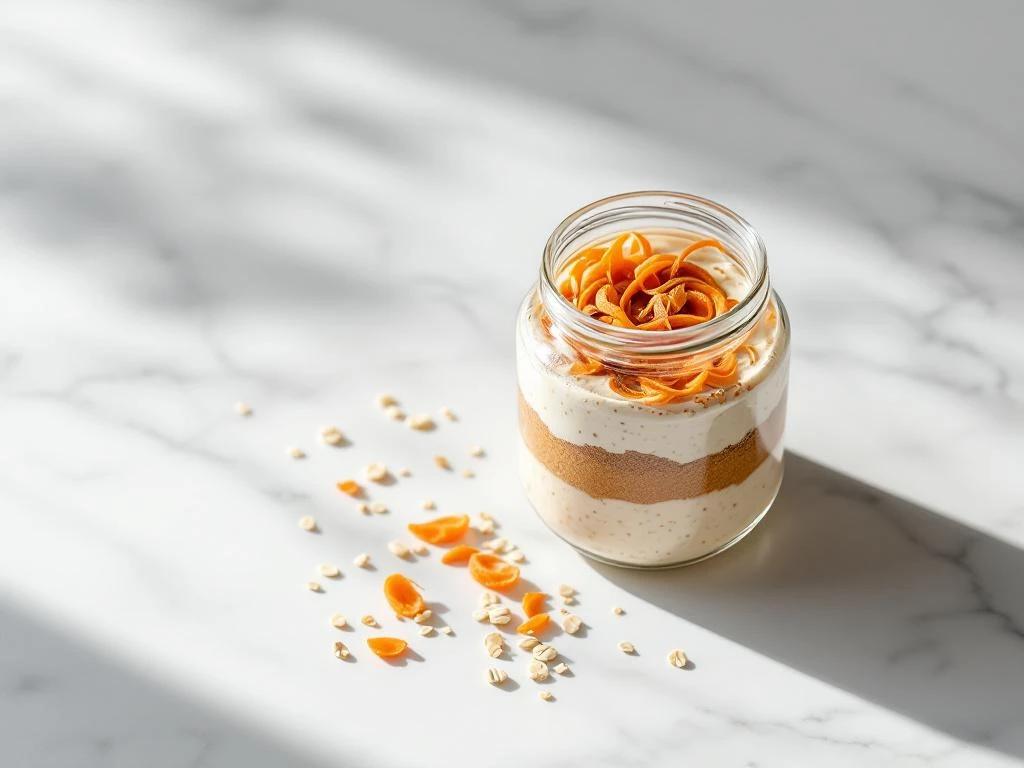
Carrot cake overnight oats bring the warm spices and comforting flavour of dessert to your breakfast table while supporting your digestive health. This FODMAP-friendly breakfast option requires minimal effort and delivers maximum convenience for busy mornings. You’ll prepare everything the night before, allowing the oats to soften whilst you sleep.
This recipe works for beginners and takes about 5 minutes of active preparation time. You’ll need basic kitchen tools like measuring cups, a mixing bowl, and storage containers. The oats require at least 4 hours of refrigeration, though overnight is ideal for the best texture and flavour development.
Why carrot cake overnight oats work for IBS
Overnight oats provide gentle, easily digestible nutrition that won’t trigger your digestive symptoms. The soaking process breaks down some of the starches in oats, making them easier on your stomach compared to cooked porridge. This method creates a creamy texture without adding high FODMAP ingredients like honey or regular milk.
The low FODMAP overnight oats recipe delivers essential fibre that supports gut health during your elimination phase. Carrots contain beta-carotene and vitamins whilst remaining low FODMAP in appropriate portions. The warming spices like cinnamon add flavour without irritating your digestive system.
Meal prep convenience makes this carrot cake oatmeal perfect for managing IBS symptoms. You’ll have grab-and-go breakfasts ready throughout the week, reducing morning stress that can trigger digestive issues. The consistent breakfast routine helps your body establish regular eating patterns that support better digestion.
Gather your low FODMAP ingredients
Select certified gluten free oats to ensure FODMAP safety and avoid cross-contamination. You’ll need 40g of rolled oats per serving, which stays within the recommended low FODMAP portion. Quick oats work too, though they create a softer texture than traditional rolled oats.
Choose lactose free milk or a suitable plant-based alternative for your carrot cake breakfast. Almond milk (made from almonds only) works well in 120ml portions per serving. Rice milk, coconut milk (from a carton), and lactose free dairy milk all make excellent choices. Avoid soy milk made from whole soybeans, as it contains high FODMAP levels.
Gather these additional ingredients for authentic carrot cake flavour:
- 40g finely grated carrot per serving
- 1 tablespoon maple syrup (low FODMAP sweetener)
- 1/2 teaspoon ground cinnamon
- 1/4 teaspoon ground ginger
- Pinch of nutmeg
- 1 tablespoon chia seeds (optional for thickness)
Substitute maple syrup with rice malt syrup or a small amount of brown sugar if needed. Avoid honey and agave nectar, as both contain high FODMAP levels that can trigger symptoms.
Prepare your carrot cake overnight oats
Combine your oats and lactose free milk in a jar or container with a tight-fitting lid. Stir thoroughly to ensure all oats make contact with the liquid. This prevents dry patches that won’t soften properly overnight.
Add your finely grated carrot to the oat mixture. Use the small holes on a box grater for the finest texture. Larger carrot pieces won’t soften as well and can affect the creamy consistency you’re aiming for.
Mix in your spices and sweetener. Add the cinnamon, ginger, nutmeg, and maple syrup. Stir everything together until the spices distribute evenly throughout the mixture. The colour should look uniform with no clumps of spice remaining.
Add chia seeds if you want a thicker consistency. These tiny seeds absorb liquid and create a pudding-like texture. Skip them if you prefer thinner, more pourable healthy breakfast meal prep.
Seal your container and refrigerate for at least 4 hours. The oats will absorb the liquid and soften to a creamy texture. Overnight soaking (8-12 hours) produces the best results. Give the container a shake before refrigerating to prevent settling.
Customize with FODMAP-friendly toppings
Enhance your IBS friendly breakfast with safe toppings that add texture and nutrition. Stick to recommended portion sizes to maintain FODMAP compliance. These additions transform basic overnight oats into a more satisfying meal.
Try these low FODMAP topping options:
- 10-15 walnut halves or pecan pieces
- 1 tablespoon pumpkin seeds
- 1 tablespoon shredded coconut (unsweetened)
- Small handful of blueberries (28g maximum)
- Sliced strawberries (5 medium berries)
- Extra cinnamon or ginger for warmth
- Drizzle of additional maple syrup
Add fresh toppings just before eating rather than the night before. This keeps nuts crunchy and berries fresh. Prepare your toppings in small containers alongside your oats for convenient morning assembly.
Watch your portions with nuts and seeds. Whilst they’re nutritious and low FODMAP in small amounts, larger servings can trigger symptoms. Ten walnut halves provide healthy fats and protein without exceeding safe limits.
Store and meal prep for the week
Prepare multiple servings at once for efficient easy overnight oats recipe execution. Mix individual portions in separate jars or containers rather than one large batch. This approach makes grab-and-go mornings simpler and helps control portion sizes.
Use glass jars or BPA-free plastic containers with secure lids. Mason jars work brilliantly for overnight oats storage. Choose containers that hold at least 300ml to accommodate the oats plus toppings without overflow.
Store your prepared carrot cake overnight oats in the refrigerator for up to 5 days. Keep them towards the back of the fridge where temperature stays most consistent. Avoid storing them in the door, as temperature fluctuations can affect texture and freshness.
Label each container with the preparation date. This helps you track freshness and use the oldest portions first. The oats remain safe to eat throughout the storage period, though texture may become slightly softer by day five.
Prepare carrots in advance by grating them and storing in an airtight container. Grated carrot keeps for 3-4 days in the fridge. This saves time when assembling multiple servings and ensures consistent texture across all portions.
Troubleshoot common overnight oats issues
Fix oats that turn out too thick by adding more lactose free milk. Stir in one tablespoon at a time until you reach your preferred consistency. Some oats absorb more liquid than others depending on their processing method.
Address watery overnight oats by adding more oats or chia seeds. Mix in an extra tablespoon of oats and let them sit for 30 minutes to absorb excess liquid. Chia seeds work faster, thickening the mixture within 10-15 minutes.
Prevent mushy texture by reducing soaking time. If your gluten free overnight oats become too soft, try refrigerating for only 4-6 hours instead of overnight. Different oat brands soften at different rates.
Adjust sweetness levels to match your preferences. Add maple syrup gradually, tasting as you go. Remember you can always add more sweetener in the morning, but you can’t remove it once mixed in.
Combat separation by stirring your oats before eating. The liquid naturally separates from solids during storage. A quick stir brings everything back together. If separation bothers you, add a bit more chia seeds to bind the mixture.
Address digestive concerns by checking your portion sizes. Even low FODMAP foods can cause symptoms in large amounts. Stick to 40g of oats per serving and monitor your individual tolerance. If symptoms persist, try reducing the carrot portion or eliminating chia seeds temporarily.
You’ve now mastered the art of creating delicious, gut-friendly carrot cake overnight oats that support your digestive health. This FODMAP-friendly breakfast option saves time whilst delivering the comforting flavours you crave. The meal prep approach ensures you’ll have nutritious breakfasts ready throughout your busy week, reducing stress and supporting your IBS management routine.
Carrot cake overnight oats
Preparation time: 5 minutes (plus 4-12 hours refrigeration) | Portions: 1 serving
Ingredients per serving:
- 40g certified gluten free rolled oats
- 120ml lactose free milk or low FODMAP plant milk
- 40g finely grated carrot
- 1 tablespoon maple syrup
- 1/2 teaspoon ground cinnamon
- 1/4 teaspoon ground ginger
- Pinch of nutmeg
- 1 tablespoon chia seeds (optional)
Instructions:
- Combine oats and milk in a jar or container with lid
- Add finely grated carrot and stir thoroughly
- Mix in cinnamon, ginger, nutmeg, and maple syrup
- Add chia seeds if desired for thicker consistency
- Seal container and refrigerate 4-12 hours
- Stir before eating and add FODMAP-friendly toppings
Storage: Keeps for up to 5 days refrigerated in sealed container
Optional toppings: Walnuts (10-15 halves), pumpkin seeds, shredded coconut, blueberries (28g), or sliced strawberries (5 medium)
This recipe is for informational purposes only and is not medical or dietary advice. Please consult a healthcare professional before making any changes to your diet.
Related Articles
- Coconut Flour Orange Muffins
- Blueberry Quinoa Porridge
- Gluten-Free Banana Nut Muffins
- Scrambled Eggs with Fresh Dill
- Can I eat pasta with IBS?