
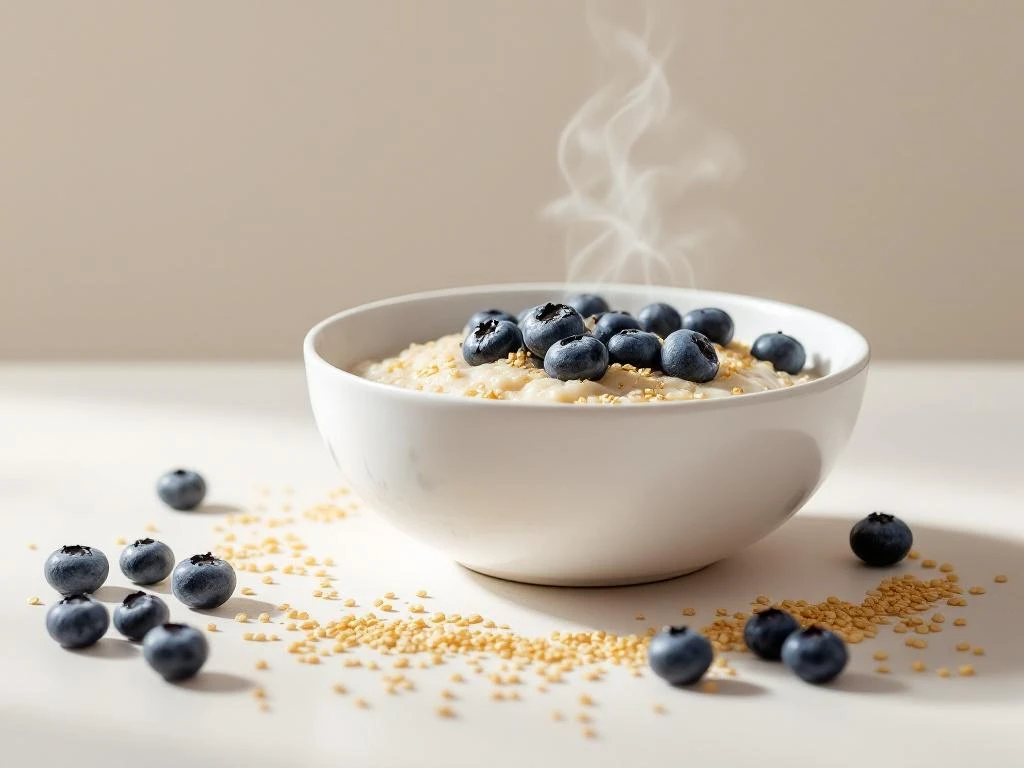
When you’re managing IBS symptoms, breakfast can feel like a minefield. Blueberry quinoa porridge offers a warm, comforting start to your day without triggering digestive discomfort. This gluten free porridge combines protein-rich quinoa with sweet blueberries for a satisfying meal that’s gentle on your gut.
This recipe is suitable for beginners and takes about 20 minutes from start to finish. You’ll need basic cooking equipment and simple low FODMAP ingredients. The result is a creamy, nutritious bowl that you can customise to your taste preferences while staying within FODMAP limits.
Why quinoa makes the perfect low FODMAP porridge base
Quinoa stands out as an excellent alternative to traditional oat porridge for anyone following a low FODMAP diet. This ancient grain is naturally gluten free and contains all nine essential amino acids, making it a complete protein source. Each serving provides about 8 grams of protein, which helps keep you full throughout the morning.
The texture of cooked quinoa transforms beautifully into a creamy porridge consistency. When you cook it with extra liquid and stir regularly, the grains soften and release their natural starches. This creates that comforting, thick texture you expect from a proper breakfast bowl.
Quinoa is certified low FODMAP in servings up to 155 grams of cooked quinoa per meal. This generous portion size means you can enjoy a full breakfast bowl without worry. The grain is gentle on sensitive digestive systems because it’s naturally low in fermentable carbohydrates that can trigger IBS symptoms.
The mild, slightly nutty flavour of quinoa works well with both sweet and savoury toppings. Unlike some alternative grains, it doesn’t have a strong taste that competes with your other ingredients. This makes it perfect for a blueberry quinoa recipe where you want the fruit flavour to shine through.
Gather your ingredients and kitchen tools
Here’s everything you need to make this healthy quinoa breakfast:
Essential ingredients
- 100 grams white or golden quinoa (rinsed thoroughly)
- 400 ml lactose-free milk or suitable plant-based alternative (almond milk in small amounts, coconut milk from carton)
- 100 ml water
- 75 grams fresh or frozen blueberries
- 1 tablespoon maple syrup (optional, for sweetness)
- Pinch of salt
Optional FODMAP friendly toppings
- 10 grams walnuts or pecans (roughly chopped)
- 1 tablespoon pumpkin seeds or sunflower seeds
- Small handful of strawberries (sliced, about 65 grams)
- 1 teaspoon chia seeds
- Extra maple syrup or rice malt syrup for drizzling
Kitchen equipment needed
- Medium saucepan with lid
- Fine mesh strainer or sieve
- Measuring cups and spoons
- Wooden spoon or silicone spatula for stirring
- Serving bowls
Make sure your quinoa is properly rinsed before you start. This step removes the natural coating called saponin, which can taste bitter and may cause mild digestive upset even though quinoa itself is low FODMAP.
Cook quinoa to creamy porridge perfection
Place your quinoa in a fine mesh strainer and rinse it under cold running water for about 30 seconds. Rub the grains gently with your fingers while rinsing. You’ll know it’s ready when the water runs clear instead of looking slightly soapy.
Pour the rinsed quinoa into your saucepan. Add the lactose-free milk, water, and a pinch of salt. The liquid ratio here is higher than standard quinoa cooking because you want a porridge consistency rather than fluffy grains. Stir everything together before you turn on the heat.
Place the pan over medium-high heat and bring the mixture to a gentle boil. This should take about 3 to 4 minutes. Watch it carefully because milk-based liquids can boil over quickly. Once you see bubbles forming around the edges and across the surface, reduce the heat to low.
Cover the pan with a lid, leaving it slightly ajar to let steam escape. Simmer for 15 minutes, stirring every 3 to 4 minutes. Each time you stir, scrape the bottom of the pan to prevent sticking. You’ll notice the mixture thickening gradually as the quinoa absorbs the liquid.
Texture checkpoint at 10 minutes: The quinoa should be starting to soften, and you’ll see the characteristic little spiral tails separating from the grains. The mixture should coat your spoon but still look quite liquid.
Texture checkpoint at 15 minutes: The porridge should be thick and creamy. The quinoa grains will be tender but still have a slight bite. If it looks too thick, add a splash more milk. If it’s too thin, cook for another 2 to 3 minutes uncovered while stirring constantly.
Remove the pan from heat once you’ve achieved a consistency similar to traditional oatmeal. The porridge will continue to thicken slightly as it cools, so aim for just slightly looser than your ideal texture.
Add blueberries and customize your bowl
Stir your blueberries into the hot quinoa porridge immediately after removing it from the heat. Fresh blueberries will soften slightly from the warmth and release some of their juice, creating pretty purple swirls throughout your bowl. Frozen blueberries work just as well. Add them straight from the freezer and they’ll cool your porridge to the perfect eating temperature while defrosting.
For sweetness, drizzle maple syrup over your porridge now. Start with one tablespoon and taste before adding more. Some people prefer their blueberry quinoa breakfast less sweet, letting the natural fruit flavour dominate. Remember that maple syrup is low FODMAP up to one tablespoon per serving.
Safe topping combinations within FODMAP limits
Nuts add lovely crunch and healthy fats to your FODMAP friendly breakfast. Stick to 10 grams of walnuts or pecans per serving. Roughly chop them so you get a bit of texture in every spoonful rather than whole nuts that might sink to the bottom.
Seeds are another excellent choice. Pumpkin seeds and sunflower seeds are low FODMAP in reasonable portions and provide extra protein. Sprinkle about one tablespoon over your bowl. Chia seeds work well too, though they’ll absorb liquid and create a gel-like texture if you let them sit.
Add more fruit if you’d like extra colour and flavour. Sliced strawberries are low FODMAP up to 65 grams per serving. A small handful scattered on top looks beautiful and adds vitamin C. You could also try a few raspberries (about 10 berries) or a sliced kiwi fruit.
Avoid high FODMAP toppings like honey, regular cow’s milk yoghurt, dried fruits, apples, pears, and cashews. These can trigger symptoms even in small amounts. Stick to the tested low FODMAP options to keep your breakfast gentle on your digestive system.
Store and reheat for meal prep success
This quinoa porridge recipe is perfect for batch cooking. Make a large batch on Sunday evening and you’ll have breakfast sorted for the week ahead. Let the porridge cool completely before storing it. This takes about 30 minutes at room temperature.
Transfer cooled porridge to airtight containers. Glass containers with snap-on lids work brilliantly because they don’t absorb odours or stains. Divide it into single serving portions of about 300 grams each. This makes morning reheating much faster than scooping from one large container.
Store your containers in the refrigerator where the porridge will keep fresh for up to 5 days. Don’t add fresh blueberries or other toppings before storing. Add these when you reheat each portion so they stay fresh and maintain their texture.
Reheating methods for creamy texture
The microwave is the quickest reheating option. Spoon your portion into a microwave-safe bowl and add 2 to 3 tablespoons of lactose-free milk. Stir well to incorporate the liquid. Microwave on high for 1 minute, stir, then heat for another 30 to 60 seconds until steaming hot. The extra milk restores that creamy consistency.
Stovetop reheating gives you more control over texture. Place your portion in a small saucepan with a splash of milk or water. Heat over medium-low, stirring frequently, until warmed through. This takes about 4 to 5 minutes. Add more liquid as needed to reach your preferred consistency.
The porridge will thicken considerably in the fridge, so don’t worry if it looks quite solid when you take it out. The added liquid during reheating brings back that smooth, flowing texture. Taste and adjust sweetness after reheating, adding a drizzle of maple syrup if needed.
Add your fresh blueberries, nuts, seeds, and other toppings after reheating. This keeps everything at its best texture and prevents soggy nuts or overcooked fruit. Your meal prep breakfast will taste just as good as freshly made porridge.
Batch cooking tips
When cooking multiple servings at once, use a larger pot to prevent overflow. You can easily triple or quadruple this recipe. Just maintain the same ratio of quinoa to liquid (1 part quinoa to 5 parts total liquid). Cooking time stays roughly the same, though you might need an extra 2 to 3 minutes for larger batches.
Cook your quinoa plain if you’re meal prepping, then add individual flavourings when you reheat each portion. This gives you variety throughout the week. One day you might fancy blueberries, another day you might prefer it with cinnamon and sliced banana (small, unripe banana is low FODMAP).
This healthy quinoa breakfast has become a staple in many low FODMAP kitchens. It’s filling, nutritious, and gentle on sensitive stomachs. The combination of complete protein, complex carbohydrates, and antioxidant-rich blueberries gives you sustained energy without the digestive distress that other breakfast options might cause.
Experiment with different low FODMAP toppings to keep your mornings interesting. The basic quinoa porridge recipe is your blank canvas. Some days you might want it warming and spiced with cinnamon, other days fresh and fruity with berries and seeds. The flexibility makes it easy to stick with this FODMAP friendly breakfast long term.
We’ve found that having reliable recipes like this blueberry quinoa porridge makes following the low FODMAP diet much more sustainable. When breakfast is this straightforward and delicious, you’re setting yourself up for a good day ahead.
Blueberry quinoa porridge
Cooking Time: 20 minutes | Portions: 2 servings
- Rinse 100g quinoa thoroughly under cold water
- Combine quinoa with 400ml lactose-free milk, 100ml water, and pinch of salt in saucepan
- Bring to boil over medium-high heat, then reduce to low simmer
- Cover partially and cook for 15 minutes, stirring every 3-4 minutes
- Remove from heat when thick and creamy
- Stir in 75g fresh or frozen blueberries
- Add 1 tablespoon maple syrup if desired
- Top with 10g chopped nuts, seeds, or extra berries
- Serve immediately or store in airtight containers for up to 5 days
- Reheat with extra milk to restore creamy texture
This recipe is for informational purposes only and is not medical or dietary advice. Please consult a healthcare professional before making any changes to your diet.
Related Articles
- What happens when you eat sourdough bread every day?
- Lactose-Free Vanilla Chia Pudding
- What alcohol is the least irritating for your stomach?
- Rice Cakes with Almond Butter
- What foods are surprisingly low in FODMAP?