
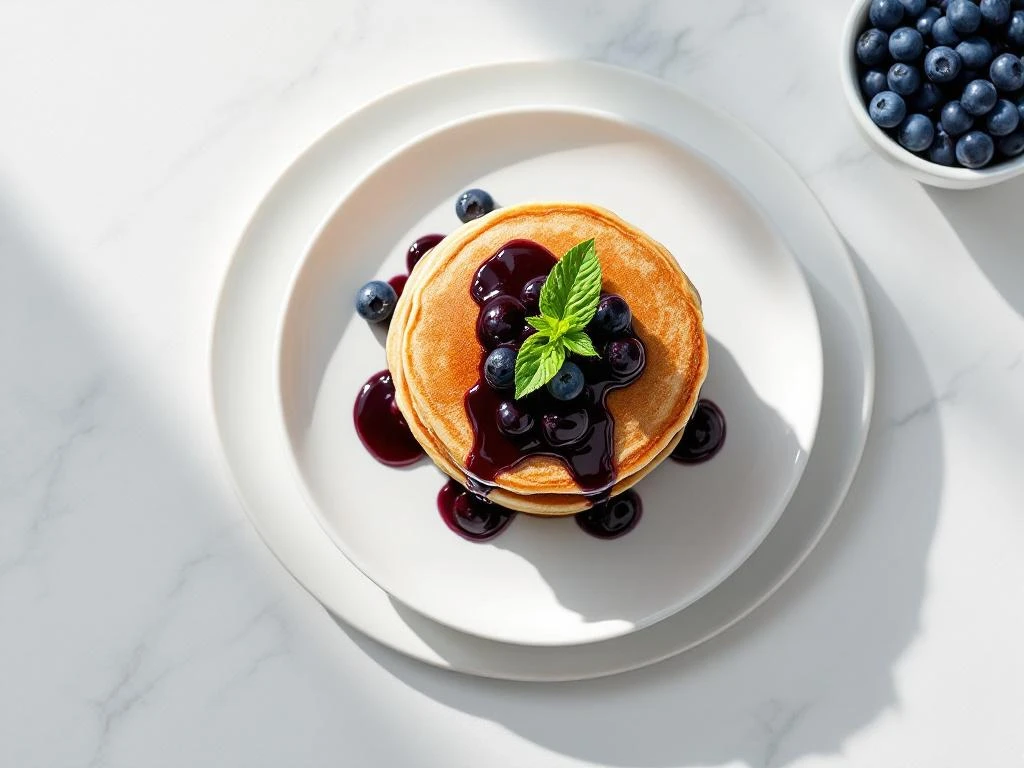
Pancakes feel like a forbidden breakfast when you live with IBS, but buckwheat pancakes with blueberry compote change that completely. This gluten free pancakes recipe uses naturally low FODMAP ingredients that won’t trigger digestive symptoms while delivering the fluffy, satisfying pancakes you’ve been missing. The homemade blueberry compote adds natural sweetness without high FODMAP fruits or processed syrups.
This is a beginner-friendly recipe that takes about 30 minutes from start to finish. You’ll need basic kitchen tools like a mixing bowl, whisk, non-stick pan, and a small saucepan. The buckwheat pancake recipe works perfectly for anyone following the low FODMAP diet, whether you’re in the elimination phase or maintaining your safe foods list.
Why buckwheat pancakes work for sensitive stomachs
Buckwheat is naturally gluten free and low in FODMAPs, making it an ideal choice for IBS friendly breakfast recipes. Despite its name, buckwheat isn’t related to wheat at all. It’s actually a seed that provides a mild, slightly nutty flavour without the digestive distress that wheat flour causes for many people.
The nutritional profile supports digestive health in several ways. Buckwheat contains resistant starch and fibre that feed beneficial gut bacteria without fermenting rapidly like high FODMAP foods do. It’s also rich in magnesium, which helps relax intestinal muscles and reduce cramping.
This FODMAP breakfast recipe avoids common pancake triggers. Regular pancakes often contain wheat flour, milk, and sometimes high FODMAP fruits or sweeteners. Our version uses lactose-free milk or a suitable plant-based alternative, maple syrup in controlled amounts, and blueberries which are low FODMAP in small servings. You get the comfort food experience without spending the morning in discomfort.
Gather your ingredients and tools
For the buckwheat pancakes, you’ll need 150g buckwheat flour, 1 teaspoon baking powder, a pinch of salt, 1 tablespoon maple syrup, 1 egg, 200ml lactose-free milk (or almond milk), and 1 tablespoon melted butter or oil. These proportions make approximately 8 medium pancakes.
The blueberry compote requires 150g fresh or frozen blueberries, 2 tablespoons maple syrup, and 2 tablespoons water. Blueberries are low FODMAP up to 28g per serving, so this compote should be divided among multiple servings.
Essential kitchen tools include a medium mixing bowl, whisk or fork, measuring cups and spoons, a small saucepan for the compote, and a non-stick frying pan or griddle. A ladle or large spoon helps portion the batter consistently.
Substitution options maintain FODMAP compliance while accommodating other needs. Swap the egg for a chia egg (1 tablespoon ground chia seeds mixed with 3 tablespoons water, left to gel for 5 minutes) for a vegan version. Replace lactose-free milk with oat milk made from oats only, or use rice milk. If you can’t find buckwheat flour, certified gluten free oat flour works as a substitute, though the texture will differ slightly.
Optional toppings and additions
Keep toppings low FODMAP by choosing lactose-free yoghurt, a small handful of walnuts, a sprinkle of cinnamon, or a drizzle of extra maple syrup. Avoid honey, agave, and high FODMAP fruits like apples or pears.
Prepare the blueberry compote first
Place the blueberries, maple syrup, and water in a small saucepan over medium heat. Stir gently to combine the ingredients as the mixture begins to warm.
Bring the mixture to a gentle simmer. You’ll see small bubbles forming around the edges after about 3 minutes. Reduce the heat slightly to maintain a steady simmer without vigorous boiling.
Cook for 8 to 10 minutes, stirring occasionally. The blueberries will burst and release their juices, creating a thick, glossy sauce. You’ll know it’s ready when the compote coats the back of a spoon and has reduced by about a third.
Remove from heat and let it cool slightly. The compote will thicken further as it cools. If it seems too thin, simmer for another 2 minutes. If it’s too thick, add a teaspoon of water and stir through.
Storage tip: This homemade blueberry compote keeps in an airtight container in the fridge for up to 5 days. You can also freeze it in portions for up to 3 months. Reheat gently before serving or use it cold.
Mix the buckwheat pancake batter
Combine the buckwheat flour, baking powder, and salt in your mixing bowl. Whisk these dry ingredients together to distribute the baking powder evenly. This prevents clumps and ensures your pancakes rise uniformly.
Create a well in the centre of the dry ingredients. Crack the egg into this well, then add the maple syrup, lactose-free milk, and melted butter. Whisk from the centre outward, gradually incorporating the flour into the wet ingredients.
Mix until just combined. The batter should look slightly lumpy, not completely smooth. Overmixing develops the proteins in buckwheat and creates tough, rubbery pancakes instead of fluffy ones. A few small lumps are perfectly fine and will disappear during cooking.
Check the consistency. The batter should pour easily but not be watery. It should coat a spoon with a thin layer. If it’s too thick, add milk one tablespoon at a time. If too thin, add a tablespoon of buckwheat flour.
Let the batter rest for 5 minutes. This brief rest allows the buckwheat flour to absorb the liquid fully and gives the baking powder time to activate. You’ll see small bubbles forming on the surface when it’s ready to cook.
Cook perfect buckwheat pancakes every time
Heat your non-stick pan over medium heat. This temperature is lower than you might expect, but buckwheat pancakes burn easily on high heat. Let the pan warm for 2 minutes before adding any batter.
Add a small amount of oil or butter to the pan. Use about half a teaspoon, spreading it evenly across the surface. Wipe away any excess with kitchen paper. Too much fat makes the pancakes greasy rather than golden.
Pour approximately 60ml of batter per pancake into the pan. A ladle or quarter-cup measure works well for consistent sizing. Leave space between pancakes as they’ll spread slightly. Most pans fit 2 or 3 pancakes comfortably.
Watch for bubbles to appear on the surface. This takes about 2 to 3 minutes. When you see bubbles forming and popping across the entire surface, and the edges look set and slightly dry, it’s time to flip.
Flip gently using a wide spatula. Cook the second side for 1.5 to 2 minutes. This side cooks faster than the first. You’re looking for golden-brown colour on both sides. Press gently in the centre. The pancake should spring back when it’s cooked through.
Visual cues matter. The first side should be deep golden with slightly darker spots. If it’s pale, your pan isn’t hot enough. If it’s dark brown within a minute, reduce the heat. The second side typically has a lighter, more mottled appearance.
Keeping pancakes warm
Place cooked pancakes on a plate in a low oven (around 100°C) while you finish the batch. Cover loosely with foil to prevent drying. Don’t stack them too high or the bottom ones will become soggy from steam.
Troubleshoot common pancake problems
Dense or heavy pancakes usually result from overmixing the batter. Mix only until the ingredients combine. Some lumps are fine. Let the batter rest before cooking, which helps create lighter texture.
Pancakes falling apart when you flip them means the batter is too thin or you’re flipping too early. Add another tablespoon of buckwheat flour if the batter seems watery. Wait for those surface bubbles before attempting to flip. The edges should look dry and set.
Uneven cooking happens when the pan temperature varies. Medium heat works best for buckwheat pancakes. If the outside burns while the inside stays raw, lower the heat. If they cook too slowly and turn pale, increase it slightly. Give your pan time to return to the right temperature between batches.
Batter that’s too thick won’t spread properly and creates small, thick pancakes. Thin it with milk one tablespoon at a time until it pours smoothly. Batter that’s too thin creates large, flat pancakes with lacy edges. Add flour gradually until it reaches the right pouring consistency.
Rubbery texture comes from overcooking or using too much liquid. Buckwheat pancakes should feel tender, not chewy. Cook just until the centre springs back when pressed. If your pancakes consistently turn rubbery, try reducing the milk by 2 tablespoons next time.
Altitude adjustments matter if you live above 900 metres. Reduce the baking powder by a quarter and add an extra tablespoon of liquid. The lower air pressure affects how pancakes rise and cook.
Ingredient variation solutions
Different brands of buckwheat flour absorb liquid differently. Some are finely ground while others are coarser. Start with the recipe amounts, then adjust the consistency as needed. Your batter should always pour easily but maintain body.
Serve your buckwheat pancakes warm with the blueberry compote spooned over the top. Add your choice of low FODMAP toppings. These pancakes reheat well in a toaster or microwave, making them practical for meal prep. You can make a double batch and freeze extras between sheets of baking paper for quick IBS friendly breakfasts throughout the week.
Buckwheat pancakes with blueberry compote
Cooking Time: 30 minutes | Portions: 4 servings (2 pancakes each)
For the blueberry compote:
- 150g fresh or frozen blueberries
- 2 tablespoons maple syrup
- 2 tablespoons water
For the buckwheat pancakes:
- 150g buckwheat flour
- 1 teaspoon baking powder
- Pinch of salt
- 1 tablespoon maple syrup
- 1 egg (or chia egg for vegan)
- 200ml lactose-free milk or suitable plant milk
- 1 tablespoon melted butter or oil
Method:
- Make the compote by simmering blueberries, maple syrup, and water for 8 to 10 minutes until thick. Set aside to cool.
- Whisk together buckwheat flour, baking powder, and salt in a bowl.
- Add egg, maple syrup, milk, and melted butter to the dry ingredients. Mix until just combined with some lumps remaining.
- Let batter rest for 5 minutes while heating a non-stick pan over medium heat.
- Lightly grease the pan and pour 60ml batter per pancake.
- Cook for 2 to 3 minutes until bubbles form on the surface, then flip.
- Cook the second side for 1.5 to 2 minutes until golden brown.
- Serve warm with blueberry compote and optional low FODMAP toppings.
This recipe is for informational purposes only and is not medical or dietary advice. Please consult a healthcare professional before making any changes to your diet.
Related Articles
- Scrambled Eggs with Smoked Turkey
- What is Type 5 IBS poop?
- Grilled Halloumi with Cherry Tomatoes
- Can I eat pasta with IBS?
- Gluten-Free Raspberry Lemon Muffins