
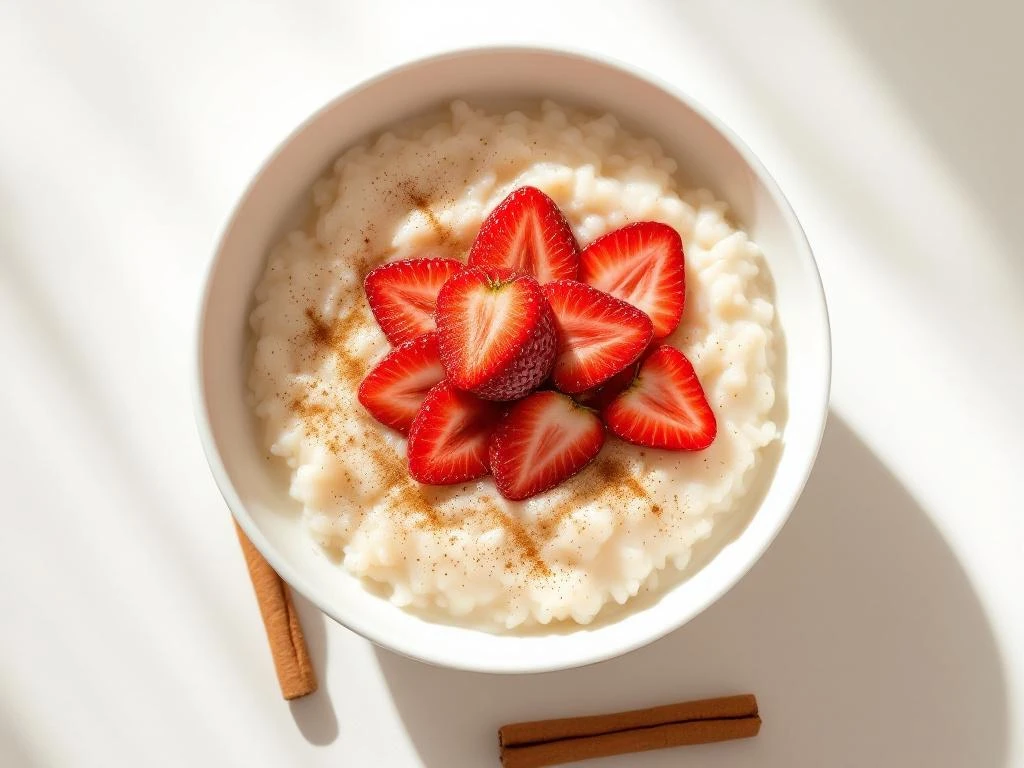
Rice porridge with cinnamon and strawberries is a gentle, warming breakfast that’s easy on sensitive stomachs. This low FODMAP breakfast requires just a few ingredients and about 20 minutes to prepare. You’ll need basic kitchen equipment including a medium pot, measuring cups, and a stirring spoon. The combination of creamy rice, warming cinnamon, and fresh strawberries creates an IBS friendly breakfast that keeps you satisfied all morning. This easy breakfast recipe works well for anyone following a gluten free porridge or lactose free breakfast plan.
Why rice porridge is perfect for sensitive stomachs
Rice porridge stands out as an ideal low FODMAP breakfast choice because white rice is naturally low in fermentable carbohydrates. Your digestive system can break down rice easily without triggering IBS symptoms. The soft, creamy texture requires minimal digestive effort compared to raw vegetables or heavy proteins.
This FODMAP rice recipe provides steady energy release throughout your morning. The carbohydrates in rice convert to glucose gradually, preventing the blood sugar spikes that can leave you feeling tired. When you cook rice into porridge, the extended cooking time breaks down the starches even further, making them gentler on your gut.
Rice porridge offers valuable nutritional benefits for digestive health. White rice provides easily absorbed calories when your stomach feels unsettled. The lactose free breakfast option allows you to add calcium through lactose-free milk alternatives without discomfort. Cinnamon adds flavour while potentially helping to regulate blood sugar levels.
Gather your ingredients and kitchen tools
You’ll need these low FODMAP ingredients for two servings. Measure 100g of white rice, either short grain or medium grain works well. Get 500ml of lactose-free milk or a suitable alternative like almond milk (check the label for low FODMAP certification). Add one teaspoon of ground cinnamon and 140g of fresh strawberries (about 10 medium berries per person stays within low FODMAP limits).
For sweetening, choose maple syrup or a small amount of white sugar if needed. Avoid honey during the elimination phase as it contains high FODMAP fructose. A pinch of salt enhances the overall flavour without adding FODMAPs.
Your essential kitchen equipment includes a medium-sized pot with a heavy bottom to prevent burning. Grab measuring cups, a wooden stirring spoon, and a sharp knife for slicing strawberries. Keep a ladle nearby for serving.
Ingredient substitutions that maintain low FODMAP compliance include using oat milk (check for added ingredients), coconut milk from a carton (not canned as it’s too thick), or rice milk. If strawberries aren’t available, substitute with blueberries (28g per serving), raspberries (60g per serving), or sliced kiwi fruit (two medium kiwis).
Cook the perfect creamy rice porridge
Rinse your rice under cold water until the water runs clear. This removes excess starch that can make your porridge gummy. Place the rinsed rice in your pot with 500ml of lactose-free milk. The standard ratio is 1 part rice to 5 parts liquid for a creamy consistency.
Bring the mixture to a gentle boil over medium heat. Stir occasionally to prevent the rice from sticking to the bottom. Once boiling, reduce the heat to low and let it simmer. This digestive friendly porridge needs about 15 to 20 minutes of cooking time.
Stir every 3 to 4 minutes during cooking. The rice releases starch as it cooks, creating that signature creamy texture. If the porridge gets too thick before the rice is tender, add 50ml more liquid at a time. The rice grains should be soft and the mixture should coat the back of your spoon.
Temperature control matters for preventing sticking. Keep the heat low enough that you see gentle bubbling, not vigorous boiling. If you notice the bottom starting to catch, immediately lower the heat and stir more frequently. The porridge continues to thicken as it cools, so aim for a slightly looser consistency than your final preference.
Add cinnamon and strawberries for flavor
Add the ground cinnamon during the last 5 minutes of cooking. This timing allows the cinnamon to infuse throughout the porridge without losing its aromatic qualities to extended heat. Stir it in thoroughly so every spoonful carries that warm, sweet spice flavour.
While the porridge finishes cooking, prepare your strawberries. Wash them under cool water and remove the green tops. Slice each strawberry into quarters or thin slices, depending on your preference. Keep the strawberry portion to 70g per serving (about 5 medium strawberries) to stay within low FODMAP guidelines.
Once your porridge reaches the right consistency, remove it from heat. Let it sit for 2 minutes to cool slightly and thicken further. Divide the porridge between two bowls and arrange the fresh strawberry slices on top. The contrast between warm, creamy porridge and cool, juicy strawberries creates an appealing temperature variation.
For presentation, fan the strawberry slices in a circular pattern or pile them in the centre. Sprinkle a tiny pinch of extra cinnamon on top for visual appeal. The bright red strawberries against the pale porridge look inviting and appetising.
Customize your porridge with low FODMAP toppings
Add variety to your gluten free porridge with these low FODMAP friendly toppings. Sprinkle 10g of chopped walnuts or 15g of pumpkin seeds for extra protein and healthy fats. These portions stay within safe limits while adding satisfying crunch.
Try alternative fruits based on what’s in season. Sliced banana (one small unripe banana per serving) works well, though riper bananas contain more FODMAPs. Fresh blueberries (28g), raspberries (60g), or diced cantaloupe (75g) all comply with FODMAP guidelines. Passion fruit pulp adds tangy sweetness without triggering symptoms.
For sweetener options, drizzle one tablespoon of maple syrup or rice malt syrup over your porridge. A teaspoon of brown sugar adds molasses notes. Avoid agave nectar and honey during the elimination phase. If you tolerate small amounts of lactose, a dollop of Greek yoghurt (23g) adds protein and creaminess.
Experiment with spices beyond cinnamon. Ground ginger adds warmth, vanilla extract brings sweetness without sugar, and a pinch of cardamom creates an exotic flavour profile. Nutmeg pairs beautifully with strawberries but use it sparingly as the flavour is strong.
Troubleshoot common rice porridge problems
If your porridge turns out too thick, stir in additional lactose-free milk 50ml at a time. Heat it gently on the stove while stirring until you reach your desired consistency. Porridge thickens as it cools, so slightly runny is better than too thick when you first finish cooking.
Too thin and watery? Continue cooking uncovered over low heat, stirring frequently. The liquid will evaporate and the rice will release more starch to thicken the mixture. This process takes 5 to 10 extra minutes. Alternatively, let it sit off the heat for 5 minutes as it naturally thickens while cooling.
A burnt bottom happens when the heat is too high or you don’t stir enough. If you smell burning, immediately remove the pot from heat. Transfer the unburnt porridge to a clean pot without scraping the bottom. Lower your heat next time and stir every 3 to 4 minutes without fail.
Lumpy texture occurs when rice clumps together during cooking. Prevent this by rinsing your rice thoroughly before cooking and stirring regularly. If you already have lumps, use a whisk to break them apart while the porridge is still hot. The vigorous whisking action separates the grains and creates smoother texture.
Bland flavour means you need more seasoning. Add a pinch of salt to enhance all the other flavours. Increase the cinnamon to one and a half teaspoons if you prefer stronger spice notes. Stir in a quarter teaspoon of vanilla extract or add more fresh fruit on top. Remember that toppings contribute significant flavour, so don’t judge your porridge until it’s fully assembled.
You’ve now mastered a comforting low FODMAP breakfast that supports your digestive health without sacrificing flavour. This cinnamon rice porridge with strawberries gives you a reliable morning option that’s quick to prepare and gentle on your stomach. The techniques you’ve learned work for countless variations, so feel free to experiment with different low FODMAP fruits and toppings. Keep this recipe in your regular rotation for those mornings when you need something warm, satisfying, and IBS friendly.
Rice porridge with cinnamon and strawberries
Cooking Time: 20 minutes | Portions: 2 servings
- 100g white rice (short or medium grain)
- 500ml lactose-free milk or low FODMAP alternative
- 1 teaspoon ground cinnamon
- 140g fresh strawberries, sliced
- Maple syrup or sugar to taste (optional)
- Pinch of salt
- Rinse rice under cold water until water runs clear
- Combine rice and lactose-free milk in a medium pot
- Bring to a boil over medium heat, then reduce to low simmer
- Cook for 15 to 20 minutes, stirring every 3 to 4 minutes
- Add cinnamon during the last 5 minutes of cooking
- Remove from heat when rice is tender and mixture is creamy
- Let sit for 2 minutes to thicken
- Divide between two bowls and top with sliced strawberries
- Add optional toppings like nuts, seeds, or sweetener
This recipe is for informational purposes only and is not medical or dietary advice. Please consult a healthcare professional before making any changes to your diet.
Related Articles
- Gluten-Free Pumpkin Walnut Bread
- What ice cream is low FODMAP?
- Is Greek yogurt safe on a low-FODMAP diet?
- What happens when you eat sourdough bread every day?
- Gluten-Free Raspberry Muffins