
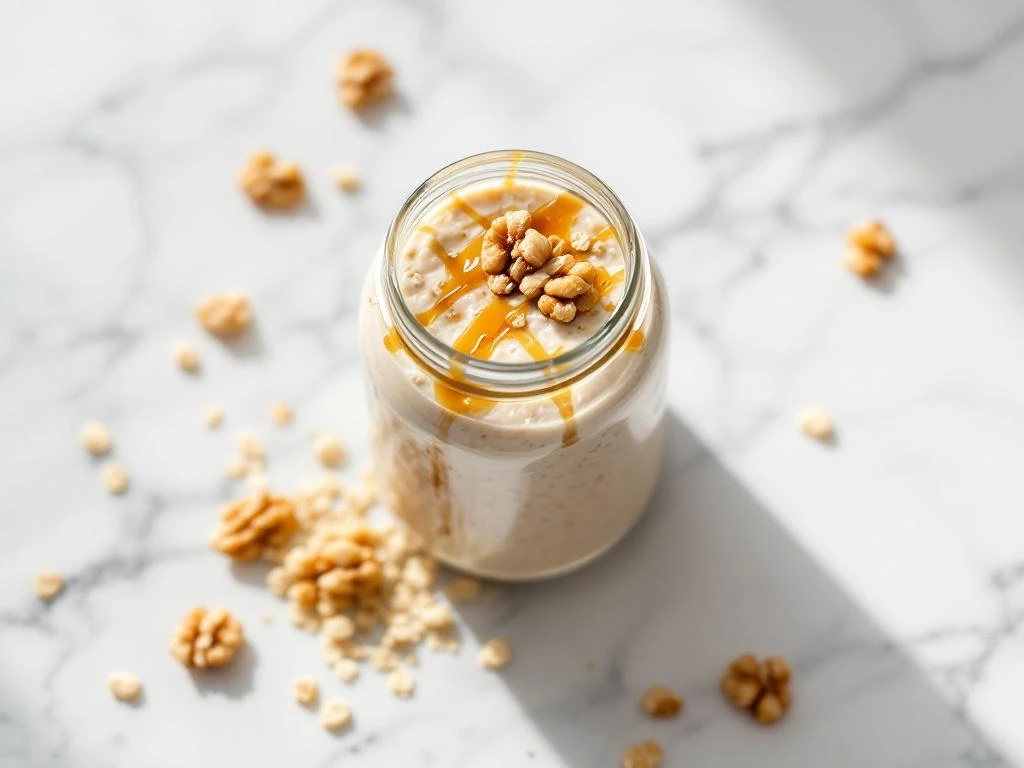
Managing IBS symptoms shouldn’t mean sacrificing a delicious breakfast. This maple walnut overnight oats recipe gives you a FODMAP-friendly breakfast that’s ready when you wake up. You’ll need about 5 minutes of active prep time the night before, plus overnight soaking. No cooking skills required, just mixing and refrigerating. Grab a jar or container, gluten-free oats, lactose-free milk, pure maple syrup, and walnuts. By morning, you’ll have a creamy, naturally sweet breakfast that won’t trigger digestive discomfort.
Why maple walnut overnight oats work for IBS
Overnight oats fit perfectly into a low FODMAP diet when you choose the right ingredients. Soaking oats overnight makes them easier to digest because the process breaks down some of the starches before they reach your gut. This means less work for your digestive system and fewer potential triggers.
Gluten-free oats are naturally low FODMAP in portions up to 52 grams. They provide soluble fibre that helps regulate digestion without the harsh insoluble fibre that can irritate sensitive stomachs. The soaking process softens this fibre even further.
Pure maple syrup is FODMAP-friendly in small amounts (up to one tablespoon per serving). Unlike honey or agave, it won’t trigger fructose sensitivity. Walnuts are safe up to 10 nuts (about 30 grams) and add healthy fats that slow digestion, preventing blood sugar spikes that can worsen IBS symptoms.
This combination gives you sustained energy without the digestive distress that comes from high FODMAP breakfast options like wheat cereals, regular milk, or dried fruits.
What you need for low FODMAP overnight oats
Your ingredient list is simple and stomach-friendly. Here’s exactly what to gather:
Core ingredients for one serving:
- 50 grams gluten-free rolled oats (certified gluten-free if you’re coeliac)
- 120 ml lactose-free milk or almond milk (check labels for added FODMAPs)
- 1 tablespoon pure maple syrup
- 20 grams chopped walnuts (about 8 walnut halves)
- Pinch of salt
- Optional: 1/4 teaspoon vanilla extract
Equipment needed:
- Glass jar with lid (250-300 ml capacity) or airtight container
- Measuring cups and spoons
- Spoon for mixing
- Kitchen scale for precise oat measurement
Choose certified gluten-free oats if you have coeliac disease or gluten sensitivity. Regular oats can be contaminated with wheat during processing. For milk alternatives, plain lactose-free dairy milk works well, as does almond milk in portions up to 250 ml. Avoid soy milk made from whole soybeans, but soy milk made from soy protein is safe.
Checking your ingredients
Read labels carefully on your lactose-free milk. Some brands add inulin or other high FODMAP fibres. The ingredient list should be short and simple. Your maple syrup should say “pure maple syrup” with no added ingredients. Avoid “pancake syrup” which often contains high fructose corn syrup.
Prepare your maple walnut overnight oats
Measure your oats first. Use a kitchen scale for accuracy because FODMAP thresholds matter. Going over 52 grams might trigger symptoms, so don’t eyeball this measurement.
Pour the oats into your jar or container. Add the pinch of salt and vanilla extract if using. These dry ingredients should sit at the bottom.
Pour in your lactose-free milk. The standard ratio is about 120 ml liquid to 50 grams oats. This creates a creamy texture. If you prefer thicker oats, use 100 ml. For thinner consistency, go up to 150 ml.
Drizzle in your tablespoon of maple syrup. Stir everything together with a spoon until the oats are fully submerged and the maple syrup is distributed. Scrape down the sides so no dry oats are stuck above the liquid line.
Add your chopped walnuts on top. You can stir them in or leave them on the surface. Leaving them on top keeps them slightly crunchier.
Seal your container with the lid. Place it in the refrigerator. The oats need at least 6 hours to soak properly, but 8-12 hours is ideal. Make them before bed and they’ll be ready for breakfast.
Checking consistency in the morning
Open your jar in the morning. The oats should have absorbed most of the liquid and look creamy. If they’re too thick, stir in a splash of lactose-free milk (1-2 tablespoons). If they’re too runny, you’ll know to use less liquid next time, but they’re still safe to eat.
You can eat them cold straight from the fridge or warm them gently. To warm, transfer to a microwave-safe bowl and heat for 30-45 seconds, stirring halfway through.
Customise your overnight oats without FODMAPs
Variety keeps breakfast interesting without risking your digestion. These additions stay within FODMAP limits when measured properly.
Safe fruit options
Add one of these FODMAP-friendly fruits in the morning:
- Half a small banana (firm, not overripe)
- 40 grams blueberries
- 70 grams strawberries, sliced
- 2 tablespoons canned pumpkin (pure pumpkin, not pie filling)
Don’t add fruit the night before. It can become mushy and affect the oat texture. Stir it in just before eating.
Alternative nuts and seeds
Swap walnuts for these options in safe portions:
- 23 almonds (about 30 grams)
- 2 tablespoons pumpkin seeds
- 1 tablespoon chia seeds (adds extra thickness)
- 2 tablespoons shredded coconut (unsweetened)
Chia seeds need extra liquid. If using them, increase your milk by 2 tablespoons because they absorb a lot of moisture.
Sweetener substitutions
If you can’t use maple syrup, try these FODMAP-friendly alternatives:
- 1 tablespoon brown sugar
- 1 tablespoon white sugar
- 1 tablespoon rice malt syrup
Avoid honey, agave nectar, and high fructose sweeteners. These contain excess fructose that triggers IBS symptoms.
Flavour variations
Change up the taste profile while staying safe:
- Add 1 tablespoon cocoa powder with an extra teaspoon of maple syrup
- Mix in 1/2 teaspoon cinnamon for warmth
- Use 1/4 teaspoon almond extract instead of vanilla
- Stir in 1 tablespoon peanut butter (check it’s just peanuts and salt)
Store and meal prep overnight oats safely
Batch preparation makes healthy breakfast meal prep simple. You can prepare up to 5 servings at once for weekday breakfasts.
Use individual jars or containers for each serving. This prevents you from having to portion out servings each morning. Label each container with the date you made it.
Overnight oats stay fresh in the refrigerator for up to 5 days. After that, the texture deteriorates and food safety becomes a concern. Always store them in the coldest part of your fridge, not in the door where temperature fluctuates.
Best containers for storage
Glass jars with tight-fitting lids work better than plastic containers. Glass doesn’t absorb odours and keeps oats fresher. Mason jars in 250-300 ml size are perfect for single servings.
If using plastic, choose BPA-free containers with snap-lock lids. Make sure they seal completely to prevent the oats from absorbing refrigerator smells.
Meal prep strategy
Sunday evening is ideal for weekly prep. Make 5 jars at once using this process:
Line up your 5 jars. Add dry ingredients (oats, salt, vanilla) to each jar. Pour milk into each container. Add maple syrup and stir each jar individually. Top with walnuts. Seal and refrigerate all at once.
Keep toppings like fresh fruit separate. Store them in small containers and add each morning. This prevents fruit from getting soggy or browning.
Serving methods
Eat them cold directly from the jar for convenience. This is perfect for busy mornings or eating at your desk.
To serve warm, never microwave in glass jars (they can crack from uneven heating). Transfer to a microwave-safe bowl, heat for 30-45 seconds, stir, then heat another 15-30 seconds if needed. Don’t overheat or the oats become gummy.
You can also warm them gently on the stovetop. Empty into a small pot, add a splash of milk, and heat on low while stirring constantly for 2-3 minutes.
Food safety checks
Before eating, check that your oats smell fresh and look normal. If you see any mould, discolouration, or smell anything sour, throw them away. When in doubt, toss it out.
Never leave overnight oats at room temperature for more than 2 hours. If you’re taking them to work, use an insulated lunch bag with an ice pack.
This IBS-friendly breakfast gives you a reliable, delicious start to your day without the worry of triggering symptoms. The preparation is simple enough to become part of your regular routine, and the flexibility means you won’t get bored eating the same thing every morning.
Maple walnut overnight oats
Prep time: 5 minutes | Soaking time: 8 hours | Servings: 1
Ingredients:
- 50 grams gluten-free rolled oats
- 120 ml lactose-free milk or almond milk
- 1 tablespoon pure maple syrup
- 20 grams chopped walnuts
- Pinch of salt
- 1/4 teaspoon vanilla extract (optional)
Instructions:
- Add oats, salt, and vanilla extract to a jar or container
- Pour in lactose-free milk and maple syrup
- Stir until oats are fully submerged
- Top with chopped walnuts
- Seal container and refrigerate for 8-12 hours
- Stir before eating, add extra milk if needed for consistency
- Eat cold or warm gently in microwave for 30-45 seconds
Storage: Keeps in refrigerator for up to 5 days in sealed container
This recipe is for informational purposes only and is not medical or dietary advice. Please consult a healthcare professional before making any changes to your diet.
Related Articles
- Bacon and Egg Breakfast Bowl
- Orange Raspberry Overnight Oats
- Gluten-Free Lemon Poppy Seed Bread
- Gluten-Free Waffles with Maple Syrup
- What food calms an IBS flare-up?