
Living with IBS means navigating dinner choices carefully, but it doesn’t mean sacrificing flavor or satisfaction. The key to a good IBS dinner lies in understanding which foods support digestive comfort while still creating meals you’ll genuinely enjoy. Following a low-FODMAP diet can be particularly helpful, as it systematically identifies trigger foods and guides you toward ingredients that are gentler on your digestive system.
Whether you’re newly diagnosed with IBS or looking to refine your evening meal approach, the right dinner strategy can make a significant difference in how you feel both during and after eating. Let’s explore the essential elements of planning IBS-friendly dinners that work for your lifestyle and symptoms.
What foods should you avoid for IBS dinner?
High-FODMAP foods are the primary culprits to avoid at dinner, including onions, garlic, wheat-based products, beans, and certain fruits like apples and pears. These fermentable carbohydrates can trigger bloating, gas, and digestive discomfort, especially when consumed in the larger portions typical of dinner meals.
Beyond high-FODMAP foods, fatty and fried foods can slow digestion and worsen IBS symptoms when eaten later in the day. Spicy foods, caffeine, and alcohol should also be limited at dinnertime, as they can stimulate the digestive system when you want it to wind down for the evening.
Common dinner ingredients to substitute include regular pasta (switch to gluten-free options), onion and garlic (use garlic-infused oil instead), and high-lactose dairy products. The low-FODMAP diet provides a structured approach to identifying your personal trigger foods through elimination and reintroduction phases.
What are the best IBS-friendly dinner ingredients?
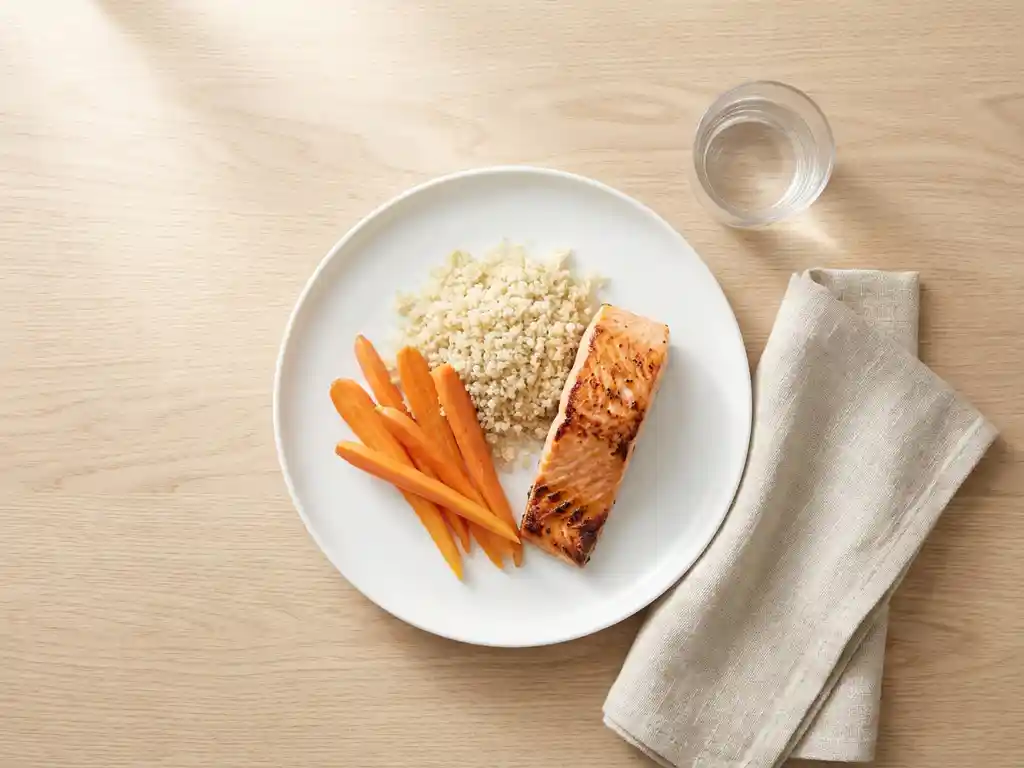
Low-FODMAP proteins like chicken, fish, eggs, and firm tofu form excellent dinner foundations, as they’re naturally gentle on the digestive system. Pair these with low-FODMAP vegetables such as carrots, zucchini, bell peppers, and leafy greens for nutrients without digestive stress.
For carbohydrates, choose rice, quinoa, gluten-free pasta, or small portions of sourdough bread. These options provide energy without the fermentable compounds found in wheat and other high-FODMAP grains. Potatoes are also excellent, whether baked, boiled, or roasted with suitable seasonings.
Safe flavor enhancers include fresh herbs like basil and chives, ginger, lemon juice, and garlic-infused oils. Small amounts of hard cheeses and lactose-free dairy products can add richness to meals. We recommend keeping a list of your tested low-FODMAP ingredients handy for quick meal-planning decisions.
How do you plan IBS dinner meals for the week?
Start by selecting 3–4 base proteins and 5–6 low-FODMAP vegetables you enjoy, then mix and match these throughout the week for variety. Batch-cook grains like rice or quinoa on weekends to streamline weeknight preparation and reduce decision fatigue when symptoms flare.
Create a simple rotation system in which you alternate cooking methods—grilling, roasting, and stir-frying—to keep meals interesting without introducing trigger ingredients. Plan to incorporate leftovers, as IBS-friendly meals often reheat well and provide convenient options when you’re not feeling up to cooking.
Keep emergency backup meals in mind, such as plain rice with grilled chicken or a simple egg scramble with safe vegetables. Stock your pantry with low-FODMAP staples so you can always prepare something suitable, even when fresh ingredients run low.
What’s the difference between IBS-C and IBS-D dinner needs?
IBS-C (constipation-predominant) benefits from dinners that include soluble-fiber sources like oats, carrots, and small portions of kiwi fruit, while maintaining adequate hydration. These individuals can often tolerate slightly larger portions and may need more substantial evening meals to support regular bowel movements.
IBS-D (diarrhea-predominant) requires more careful portion control and may benefit from binding foods like white rice, bananas, and well-cooked vegetables. These individuals often do better with smaller, less fatty dinners and should be particularly cautious with high-fiber foods that might trigger urgent symptoms.
Both types should follow low-FODMAP principles, but the timing and composition may differ. People with IBS-C might benefit from eating dinner earlier to allow time for digestion, while those with IBS-D may prefer lighter evening meals to minimize overnight symptoms.
How late can you eat dinner with IBS?
Most people with IBS should finish dinner at least 3–4 hours before bedtime to allow proper digestion and minimize nighttime symptoms. Eating too close to sleep can worsen bloating, discomfort, and sleep quality, regardless of whether you choose low-FODMAP foods.
The timing becomes more critical if you experience nighttime symptoms or morning urgency. Earlier dinner times—around 6–7 PM—often work better for IBS management than the typical 8–9 PM schedule many people follow.
If your schedule requires eating later, opt for smaller portions and easily digestible foods. A light meal of rice with grilled fish and cooked vegetables will be gentler than a large, complex dish eaten at the same time.
What are quick 30-minute IBS dinner ideas?
Simple stir-fries using pre-cooked rice, your choice of protein, and low-FODMAP vegetables like bok choy, carrots, and bell peppers can be ready in 15–20 minutes. Season with ginger, soy sauce (check for garlic), and a touch of sesame oil for satisfying flavor.
Sheet-pan dinners work excellently for quick preparation—toss chicken thighs with cubed potatoes, zucchini, and herbs, then roast everything together. While it cooks, prepare a simple salad with lettuce, cucumber, and a lemon vinaigrette.
Other rapid options include rice bowls with canned salmon and steamed vegetables, scrambled eggs with spinach served over rice cakes, or gluten-free pasta with olive oil, herbs, and grilled chicken strips. Keep pre-washed salad greens and pre-cooked proteins on hand to speed up assembly even further.
Simple Chicken and Vegetable Stir-Fry
Cooking Time: 25 minutes | Portions: 4 servings
Ingredients:
- 1 lb chicken breast, thinly sliced
- 2 cups pre-cooked rice
- 1 red bell pepper, sliced
- 2 medium carrots, julienned
- 2 cups bok choy, chopped
- 2 tbsp garlic-infused oil
- 1 tbsp fresh ginger, grated
- 2 tbsp gluten-free soy sauce
- 1 tsp sesame oil
Instructions:
- Heat the garlic-infused oil in a large pan over medium-high heat.
- Add the chicken and cook until golden, about 5–6 minutes.
- Add the carrots and bell pepper, and stir-fry for 3 minutes.
- Add the bok choy and ginger, and cook until wilted, about 2 minutes.
- Add the rice, soy sauce, and sesame oil, and toss to combine.
- Serve immediately.
This recipe is for informational purposes only and is not medical or dietary advice. Please consult a healthcare professional before making any changes to your diet.
Related Articles
- Gluten-Free Banana Pancakes
- Blueberry Walnut Breakfast Bars
- What sandwiches can I eat with IBS?
- What breakfast foods are low FODMAP?
- Ham and Spinach Frittata