
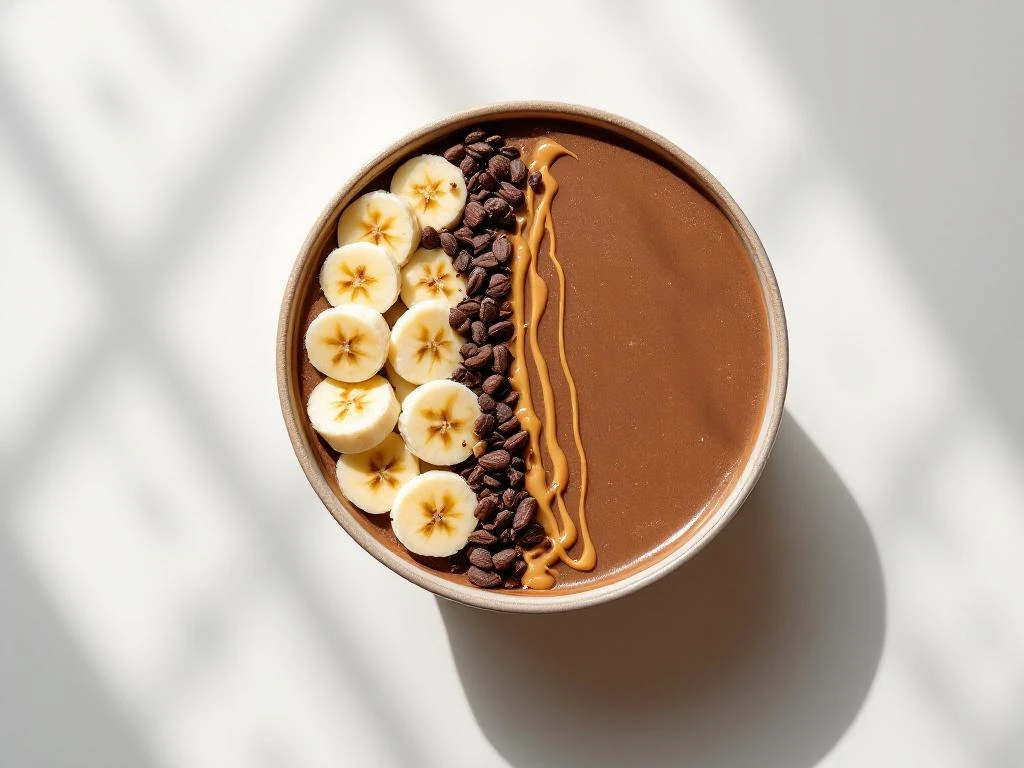
Managing IBS doesn’t mean giving up the foods you love. This peanut butter chocolate smoothie bowl delivers rich flavour while staying gentle on your digestive system. It’s perfect for busy mornings when you need something satisfying that won’t trigger symptoms.
This recipe works for beginners and takes about 10 minutes to prepare. You’ll need a decent blender, low FODMAP ingredients, and a bowl. By the end, you’ll have a delicious, IBS friendly smoothie that looks as good as it tastes.
Why this smoothie bowl works for sensitive stomachs
The combination of peanut butter and chocolate fits perfectly within low FODMAP guidelines when you use the right portions. Natural peanut butter contains no added FODMAPs, and pure cocoa powder is safe in moderate amounts. This healthy smoothie bowl recipe keeps portions controlled to avoid triggering symptoms.
Smoothie bowls offer digestive benefits because blending breaks down food particles before they reach your gut. Your digestive system doesn’t have to work as hard, which means less bloating and discomfort. The smooth texture makes nutrients easier to absorb whilst being gentle on your intestines.
This chocolate peanut butter breakfast manages IBS symptoms without sacrificing taste or nutrition. You get protein from the peanut butter, antioxidants from the cocoa, and essential vitamins from your choice of low FODMAP milk. The thick consistency keeps you full longer than regular smoothies, making it ideal for starting your day.
Gather your low FODMAP ingredients and tools
For the base of your peanut butter chocolate smoothie bowl, you’ll need natural peanut butter without added sugars or oils. Check the label to ensure it contains only peanuts and perhaps salt. Use 2 tablespoons maximum to stay within safe FODMAP limits.
Choose pure unsweetened cocoa powder rather than drinking chocolate mixes. You’ll need 1 tablespoon for rich chocolate flavour without excess sugar. For your liquid base, select lactose free milk, almond milk (made from almonds only), or oat milk in 240ml portions. Avoid coconut milk as it can be high FODMAP in larger amounts.
Add one frozen banana for natural sweetness and creamy texture. Bananas are low FODMAP when firm and unripe, but frozen works perfectly in this gluten free smoothie bowl. Include 5-6 ice cubes to achieve the right thickness.
Essential kitchen equipment
Your blender needs at least 500 watts of power to handle frozen ingredients properly. High speed blenders work best, but standard models will work if you let ingredients thaw slightly. A tamper tool helps push ingredients down whilst blending, though you can use a spatula if you pause the blender.
Select a wide, shallow bowl rather than a deep one. This gives you more surface area for toppings and makes your digestive friendly breakfast look more appealing. Keep a sturdy spoon handy as the consistency should be thick enough to eat with a spoon rather than drink.
Blend your chocolate peanut butter base perfectly
Start by adding your liquid to the blender first. This prevents ingredients from sticking to the bottom and helps the blades move freely. Pour in your 240ml of lactose free milk or chosen alternative.
Add the peanut butter next, dropping it directly into the liquid. This helps it incorporate smoothly rather than clumping. Follow with your tablespoon of cocoa powder, then place the frozen banana pieces on top. Add your ice cubes last.
Blend on low speed for 10 seconds to break up the larger pieces. Increase to medium speed for another 20 seconds, then finish on high speed for 10-15 seconds. Stop and check the consistency. Your low FODMAP smoothie bowl should be thick like soft serve ice cream, not pourable like a regular smoothie.
Texture troubleshooting tips
If your mixture is too thin, add more ice cubes one at a time and blend briefly after each addition. Too thick to blend? Add liquid in small amounts, just 1-2 tablespoons at a time. Patience works better than adding too much liquid at once.
The blender struggling? Let frozen ingredients sit at room temperature for 2-3 minutes before blending. This softens them slightly without making them too warm. Your smoothie bowl should stay cold and thick.
For personal preference adjustments, more ice creates a lighter texture whilst more banana makes it creamier. Keep the peanut butter and cocoa measurements consistent to maintain the chocolate peanut butter flavour balance.
Choose low FODMAP toppings that add flavour safely
Safe fruit options include strawberries (5 medium), blueberries (20 berries), or kiwi fruit (2 small). Slice them thinly so they spread across your bowl beautifully. Avoid high FODMAP fruits like apples, pears, mangoes, and watermelon even in small amounts.
Seeds provide crunch without FODMAP concerns. Sprinkle 1 tablespoon of pumpkin seeds, sunflower seeds, or chia seeds across your bowl. These add healthy fats and protein whilst being completely digestive friendly.
Nuts and granola selections
Stick to 10-15 almonds or a small handful of walnuts for safe nut toppings. Cashews and pistachios are high FODMAP, so avoid them. Crush nuts slightly for better distribution and easier eating.
Look for certified low FODMAP granola brands, or make your own using gluten free oats, seeds, and maple syrup. Use 2-3 tablespoons as a topping. Regular granola often contains honey, dried fruits, or wheat, which can trigger symptoms.
Creative topping combinations
Try the tropical mix with sliced kiwi, shredded coconut (1 tablespoon), and pumpkin seeds. The berry blend uses strawberries, blueberries, and slivered almonds. For extra chocolate lovers, add dark chocolate chips (check they’re low FODMAP certified) and crushed walnuts.
Arrange toppings in sections rather than mixing them together. This creates visual appeal and lets you taste different flavour combinations with each spoonful. Your IBS friendly smoothie becomes Instagram worthy whilst staying safe for your stomach.
Remember that portion control matters even with safe ingredients. More isn’t always better when managing digestive sensitivities. Stick to the recommended amounts to enjoy your breakfast without worrying about symptoms later.
Peanut butter chocolate smoothie bowl
Cooking Time: 10 minutes | Portions: 1 serving
Base ingredients
- 240ml lactose free milk or low FODMAP milk alternative
- 2 tablespoons natural peanut butter
- 1 tablespoon unsweetened cocoa powder
- 1 frozen banana
- 5-6 ice cubes
Recommended toppings
- 5 medium strawberries or 20 blueberries
- 1 tablespoon pumpkin or sunflower seeds
- 10-15 almonds or small handful of walnuts
- 2-3 tablespoons low FODMAP granola
Quick steps
- Add milk to blender first
- Layer in peanut butter, cocoa powder, frozen banana, and ice
- Blend on low for 10 seconds, medium for 20 seconds, high for 10-15 seconds
- Check consistency (should be thick like soft serve)
- Pour into wide, shallow bowl
- Arrange chosen toppings in sections
- Serve immediately whilst cold
This recipe is for informational purposes only and is not medical or dietary advice. Please consult a healthcare professional before making any changes to your diet.
Related Articles
- What is the gentlest food on the stomach?
- Gluten-Free Cinnamon Raisin Bread
- Turkey Bacon and Egg Scramble
- Orange and Almond Breakfast Cookies
- Which brand of sourdough bread is low FODMAP?