
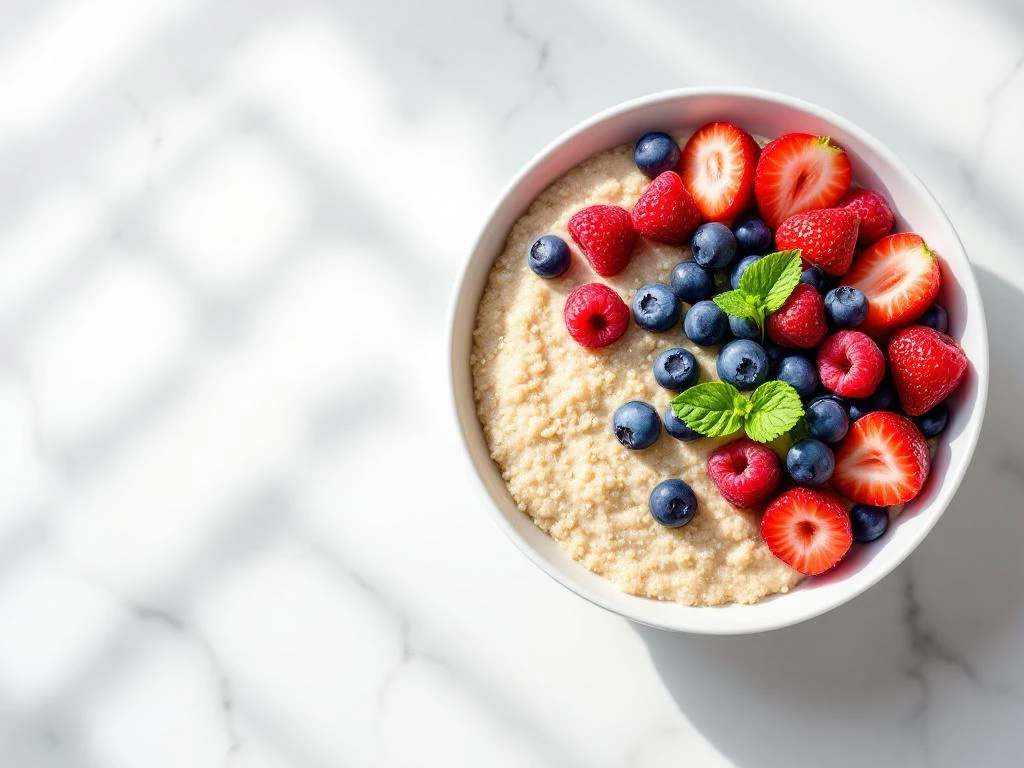
Starting your day with a warm, nourishing bowl of quinoa breakfast porridge with berries gives you sustained energy without triggering IBS symptoms. This gluten free breakfast porridge takes about 20 minutes to prepare and offers a satisfying alternative to traditional oat-based breakfasts. You’ll create a creamy, protein-rich meal that supports your gut health while keeping you full until lunch.
This beginner-friendly recipe requires basic cooking skills and minimal kitchen equipment. You’ll need a saucepan, measuring cups, and a wooden spoon. The process involves rinsing quinoa, simmering it with lactose free milk, and topping it with FODMAP friendly berries and toppings. By following these clear steps, you’ll master a reliable breakfast that fits perfectly into your low FODMAP diet.
Why quinoa porridge is perfect for IBS
Quinoa stands out as an IBS friendly breakfast choice because it’s naturally low FODMAP in servings up to 155g of cooked quinoa. Unlike wheat-based cereals that contain fructans, quinoa is a gluten-free seed that won’t trigger digestive discomfort. This makes quinoa oatmeal alternative particularly valuable for those following the elimination phase of the low FODMAP diet.
The nutritional profile of quinoa breakfast porridge supports both gut health and sustained energy throughout your morning. Each serving delivers complete protein with all nine essential amino acids, something rare in plant-based foods. You’ll get around 8g of protein per cup of cooked quinoa, helping stabilise blood sugar levels and preventing mid-morning energy crashes.
Quinoa provides gentle, soluble fibre that supports digestive health without overwhelming sensitive systems. The mineral content includes magnesium, iron, and zinc, nutrients that many people with IBS struggle to absorb adequately. Compared to traditional oat porridge, which can be high FODMAP depending on portion size and processing, quinoa offers more predictable tolerance and better protein content for those managing food sensitivities.
Gather your ingredients and tools
For this healthy breakfast porridge, you’ll need 100g of uncooked white or red quinoa as your base. Choose lactose free milk or a suitable alternative like almond milk (made from almonds only, without high FODMAP additives). You’ll need 375ml of liquid for a creamy consistency. Select fresh or frozen blueberries and strawberries, keeping portions to about 40g of blueberries or 65g of strawberries per serving to stay within FODMAP limits.
Your sweetener options include pure maple syrup (one tablespoon maximum per serving), brown sugar, or a low FODMAP sweetener of your choice. For toppings, consider crushed walnuts (up to 10 nuts), pumpkin seeds (two tablespoons), or a sprinkle of cinnamon. All these additions remain gut-friendly when you stick to the recommended portions.
Essential kitchen tools include a medium saucepan with a heavy bottom to prevent burning, a fine mesh strainer for rinsing quinoa, measuring cups and spoons, a wooden spoon for stirring, and serving bowls. Having a timer nearby helps you track cooking time accurately. If you prefer a smoother texture, keep a whisk handy for the final minutes of cooking.
Ingredient substitutions work well with this quinoa breakfast recipe. Swap lactose free cow’s milk for coconut milk (use the carton version, not canned), rice milk, or homemade oat milk made from low FODMAP oats. Replace berries with other low FODMAP fruits like kiwi (two small fruits) or orange segments (one medium orange). For a warmer flavour profile, add a pinch of nutmeg or cardamom instead of cinnamon.
Ingredient checklist
- 100g uncooked quinoa (white or red)
- 375ml lactose free milk or suitable alternative
- 40g blueberries or 65g strawberries
- 1 tablespoon maple syrup or preferred sweetener
- Optional toppings (nuts, seeds, spices)
Cook perfect creamy quinoa porridge
Place your uncooked quinoa in a fine mesh strainer and rinse it under cold running water for 30 seconds. This crucial step removes the natural coating called saponin, which causes bitterness. Rub the grains gently between your fingers while rinsing. You’ll notice the water runs clear when the quinoa is properly rinsed.
Transfer the rinsed quinoa to your saucepan and add 375ml of lactose free milk. This 1:3.75 ratio creates the ideal creamy consistency for porridge. Place the pan over medium heat and bring the mixture to a gentle boil. You’ll see small bubbles forming around the edges within 3 to 4 minutes.
Once boiling, reduce the heat to low and partially cover the pan with a lid. Simmer the quinoa for 15 minutes, stirring every 3 to 4 minutes to prevent sticking. The quinoa is ready when the grains become translucent and you can see the small spiral germ separating from each seed. The texture should be soft but still have a slight bite.
Monitor the consistency during the last 5 minutes of cooking. If the mixture looks too thick, add 2 to 3 tablespoons of extra milk and stir well. For a creamier finish, use a whisk to break down some of the quinoa grains during the final 2 minutes of cooking. This releases more starch and creates a porridge-like texture.
Remove the pan from heat when the quinoa has absorbed most of the liquid but still looks slightly wet. The porridge will thicken as it cools. Let it rest for 2 minutes before serving. This resting time allows the remaining liquid to be absorbed evenly throughout the porridge.
Temperature and timing guide
- Medium heat for bringing to boil (3 to 4 minutes)
- Low heat for simmering (15 minutes total)
- Stir every 3 to 4 minutes
- Rest for 2 minutes before serving
Add berries and customize your bowl
Select your low FODMAP berries based on what’s fresh and appealing. Strawberries work beautifully when sliced, offering a sweet-tart flavour that complements quinoa’s nutty taste. Use up to 65g (about 5 medium strawberries) per serving. Blueberries provide bursts of sweetness throughout the porridge, stick to 40g (roughly a quarter cup) to maintain FODMAP friendliness.
Layer your toppings strategically for the best eating experience. Spoon the warm quinoa porridge into your serving bowl, creating a smooth surface. Arrange your berries on top in a pattern or scatter them randomly. This presentation keeps the berries fresh and prevents them from becoming mushy in the hot porridge.
Drizzle one tablespoon of pure maple syrup over the berries for natural sweetness. The syrup will pool slightly and create pockets of flavour as you eat. If you prefer a different sweetness level, start with half a tablespoon and add more to taste. Remember that some berries are naturally sweeter than others.
Add texture with gut-friendly toppings that provide healthy fats and extra nutrients. Sprinkle 10 crushed walnuts for omega-3 fatty acids and a satisfying crunch. Pumpkin seeds (two tablespoons) offer a mild, nutty flavour and boost your zinc intake. A light dusting of cinnamon adds warmth without any FODMAPs.
Create variety by rotating your toppings throughout the week. Try shredded coconut (one tablespoon), a small handful of low FODMAP granola, or a dollop of lactose free yoghurt. Each combination keeps your quinoa breakfast porridge interesting while maintaining digestive comfort. Mix and match based on your preferences and what you have available.
Portion guide for toppings
- Strawberries: up to 65g per serving
- Blueberries: up to 40g per serving
- Walnuts: maximum 10 nuts
- Pumpkin seeds: 2 tablespoons
- Maple syrup: 1 tablespoon
Fix common quinoa porridge problems
Bitter-tasting porridge almost always means you didn’t rinse the quinoa thoroughly enough. The saponin coating protects the seeds in nature but tastes soapy and unpleasant. If your finished porridge tastes bitter, you can’t fix it after cooking. Next time, rinse for a full minute under running water, agitating the grains with your fingers until the water runs completely clear.
Porridge that’s too thick happens when you’ve used too much quinoa or cooked it too long. Rescue thick porridge by stirring in warm lactose free milk, two tablespoons at a time, until you reach your desired consistency. Heat it gently for 30 seconds between additions. For future batches, measure your quinoa and liquid precisely, and check the texture at 12 minutes instead of waiting the full 15.
Watery porridge results from too much liquid or not cooking long enough. Continue simmering uncovered over low heat, stirring frequently, until excess liquid evaporates. This takes 2 to 3 extra minutes. If you’re in a hurry, remove some of the excess liquid with a spoon before continuing to cook. Next time, use the exact 1:3.75 ratio and ensure your simmer is gentle but steady.
A burnt bottom occurs when the heat is too high or you haven’t stirred frequently enough. If you smell burning, immediately transfer the porridge to a clean pan, leaving the burnt layer behind. Don’t scrape the bottom. The remaining porridge is usually fine. Prevent this by keeping your heat on low during simmering and setting a timer to remind you to stir every 3 to 4 minutes.
Grainy texture means the quinoa needs more cooking time. Add 60ml of extra liquid and continue simmering for another 3 to 5 minutes. The grains should soften and become translucent. Some quinoa varieties naturally take longer to cook than others. Red quinoa typically needs an extra 2 to 3 minutes compared to white quinoa. Check the package instructions for variety-specific guidance.
Clumpy porridge happens when you don’t stir enough during cooking. Break up clumps by whisking vigorously for 30 seconds. Add a splash of warm milk if needed to loosen the mixture. The whisking action releases more starch and creates a smoother consistency. For your next batch, stir more frequently during the last 5 minutes of cooking when the porridge thickens most rapidly.
Your morning routine just got easier
You now have a reliable quinoa breakfast recipe that supports your digestive health while delivering complete nutrition. This FODMAP friendly breakfast takes just 20 minutes from start to finish, making it practical for busy mornings. The protein and fibre content keeps you satisfied for hours, eliminating the need for mid-morning snacks that might trigger symptoms.
Batch cooking makes this healthy breakfast porridge even more convenient. Cook a larger quantity and store portions in the fridge for up to 4 days. Reheat individual servings with a splash of lactose free milk, stirring until warm and creamy. This preparation strategy means you’ll always have a safe, nourishing breakfast ready when you need it.
Experiment with the topping combinations we’ve covered to keep your breakfasts interesting. The basic quinoa porridge recipe stays the same, but rotating your fruits, nuts, and flavourings prevents breakfast boredom. You’ll discover your favourite combinations while maintaining the digestive benefits of this low FODMAP breakfast. Track which variations you enjoy most and build them into your weekly meal rotation.
Quinoa breakfast porridge with berries
Cooking Time: 20 minutes | Portions: 2 servings
Ingredients:
- 100g uncooked quinoa (white or red)
- 375ml lactose free milk or low FODMAP alternative
- 40g blueberries or 65g strawberries per serving
- 1 tablespoon pure maple syrup per serving
- Optional: 10 walnuts (crushed), 2 tablespoons pumpkin seeds, pinch of cinnamon
Method:
- Rinse quinoa thoroughly in a fine mesh strainer for 30 seconds under cold water
- Combine rinsed quinoa and lactose free milk in a medium saucepan
- Bring to a gentle boil over medium heat (3 to 4 minutes)
- Reduce heat to low, partially cover, and simmer for 15 minutes
- Stir every 3 to 4 minutes to prevent sticking
- Remove from heat when quinoa is translucent and soft
- Let rest for 2 minutes
- Divide into bowls and top with berries, maple syrup, and optional toppings
- Serve warm
Storage: Refrigerate in an airtight container for up to 4 days. Reheat with extra milk to restore creamy consistency.
This recipe is for informational purposes only and is not medical or dietary advice. Please consult a healthcare professional before making any changes to your diet.
Related Articles
- Zucchini and Feta Frittata
- Egg and Bacon Breakfast Burrito
- What chips or crackers are low in FODMAP?
- Maple Walnut Overnight Oats
- Rice Porridge with Cinnamon and Strawberries