
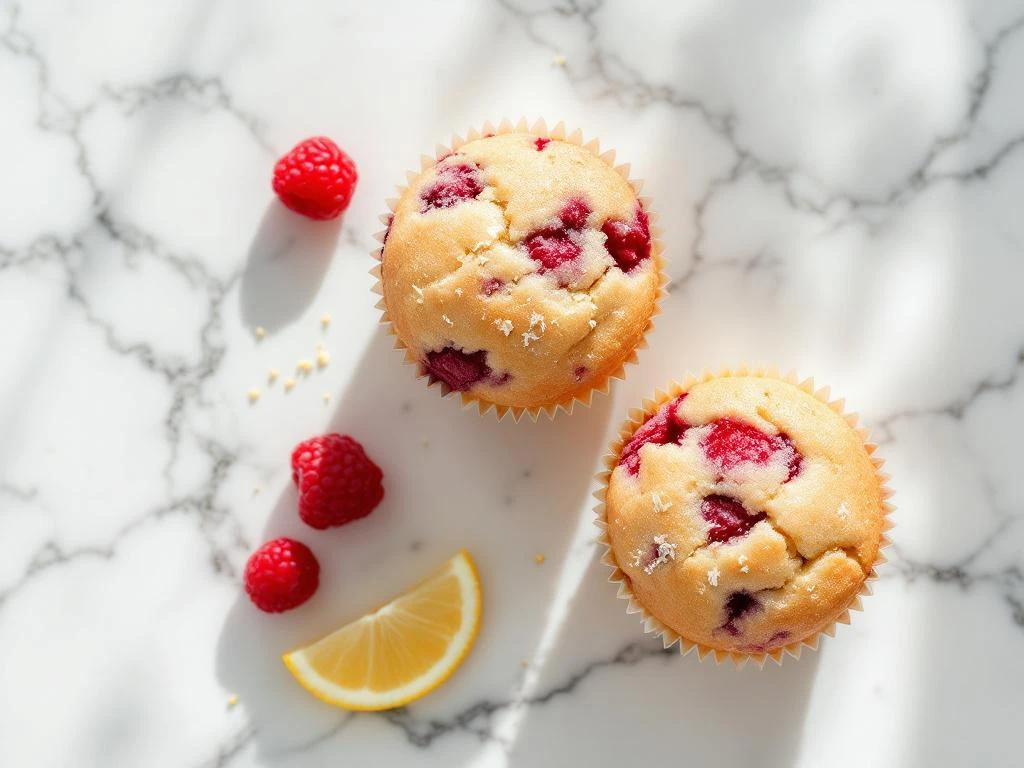
These gluten-free raspberry lemon muffins bring together bright, fresh flavours while staying completely low FODMAP friendly. You’ll create tender, fluffy muffins that work perfectly for breakfast or snacks without triggering IBS symptoms. The recipe uses simple ingredients and straightforward techniques that anyone can master.
This guide is suitable for beginners with basic baking experience. You’ll need about 45 minutes total, including 15 minutes of preparation and 20 to 25 minutes of baking time. The muffins come together quickly with minimal fuss.
Before starting, gather these essential items: a gluten-free flour blend suitable for low FODMAP diets, fresh raspberries, a lemon, lactose-free milk or a suitable alternative, and standard baking equipment including a muffin tin and mixing bowls. You’ll also need measuring cups, a whisk, and paper muffin cases.
Why these gluten-free raspberry lemon muffins work
This recipe solves a common challenge for people following low FODMAP diets. Finding baked goods that taste good without triggering symptoms can feel impossible. These muffins use carefully selected ingredients that avoid high FODMAP triggers whilst delivering proper texture and flavour.
The combination of raspberry and lemon creates natural brightness without needing problematic ingredients like honey or apple. Raspberries are low FODMAP in servings up to 60 grams, making them perfect for muffins. Lemon juice and zest add tangy freshness that complements the berries beautifully.
Gluten-free baking often produces dry, crumbly results. This recipe addresses that problem through proper fat content and careful mixing techniques. The muffins stay moist for several days when stored correctly. You won’t sacrifice texture or taste whilst managing your IBS symptoms.
These IBS-friendly muffins work for meal prep too. Bake a batch on Sunday and have quick breakfast options ready all week. They freeze well and reheat without losing quality.
Essential ingredients for low FODMAP muffins
Start with a quality gluten-free flour blend. Look for mixes containing rice flour, potato starch, and tapioca starch. Avoid blends with chickpea flour or soy flour, as these contain higher FODMAP levels. Most supermarkets now stock suitable options in their free-from sections.
For sweetness, use regular white sugar or caster sugar. Both are low FODMAP in typical serving amounts. Avoid honey, agave syrup, or coconut sugar, which can trigger symptoms. You’ll need about 100 grams for this recipe.
Choose lactose-free milk or a suitable plant-based alternative. Almond milk works well if you can tolerate it in small amounts (check your individual tolerance). Rice milk or oat milk in lactose-free versions are other good options. You’ll need 240 millilitres.
Fresh raspberries give the best results. Frozen raspberries work too, but don’t thaw them before adding to the batter. This prevents excess moisture and colour bleeding. You’ll need about 150 grams total.
Use one medium lemon for both zest and juice. Zest the lemon before juicing it. You’ll need the zest from the whole lemon and about 2 tablespoons of juice. The acidity helps activate the baking powder and adds brightness.
Other key ingredients include eggs (2 large), vegetable oil or melted butter alternatives (80 millilitres), baking powder (2 teaspoons), and a pinch of salt. Make sure your baking powder is gluten-free, as some brands contain wheat starch.
If you can’t find specific ingredients locally, most are available through online retailers that specialise in dietary requirements. We recommend keeping a well-stocked pantry of low FODMAP baking essentials for whenever the mood strikes.
Suitable substitutions
Replace vegetable oil with melted coconut oil if you prefer. Use the same quantity. Coconut oil adds subtle flavour that pairs nicely with lemon.
Swap raspberries for blueberries in the same amount. Blueberries are low FODMAP in 40-gram servings, so stick to the recipe quantity. The flavour combination still works beautifully.
If you need egg-free muffins, try a commercial egg replacer suitable for baking. Follow the package directions for replacing 2 eggs. Results may vary slightly in texture.
Prepare your muffin batter step-by-step
Preheat your oven to 180°C (160°C fan). Line a 12-cup muffin tin with paper cases. This prevents sticking and makes cleanup easier.
Combine the dry ingredients in a large mixing bowl. Add 250 grams of gluten-free flour blend, 100 grams of sugar, 2 teaspoons of baking powder, and a pinch of salt. Whisk these together thoroughly to distribute the baking powder evenly. This step prevents pockets of bitter baking powder taste in the finished muffins.
Zest your lemon directly into a separate medium bowl. Add 2 eggs, 240 millilitres of lactose-free milk, 80 millilitres of oil, and 2 tablespoons of lemon juice. Whisk until everything combines into a smooth mixture. The wet ingredients should look uniform with no streaks of egg yolk visible.
Pour the wet ingredients into the dry ingredients. Stir gently with a wooden spoon or spatula until just combined. Stop mixing when you no longer see dry flour. The batter will look slightly lumpy, which is exactly right. Overmixing creates tough, dense gluten-free muffins instead of tender ones.
Add the raspberries to the batter. Fold them in with a gentle motion, turning the bowl as you work. Use a spatula to scoop from the bottom and fold over the top. Make about 8 to 10 folds total. Some raspberries will break slightly, which is fine. You want to avoid crushing them all into the batter.
The finished batter should be thick but pourable. It will hold its shape slightly when you scoop it but still flow off the spoon. If it seems too thick, add a tablespoon of milk. If it’s too thin, sprinkle in a tablespoon of flour and fold gently.
Success indicators
Your batter is ready when you see these signs: no dry flour pockets remain, the mixture looks slightly lumpy rather than smooth, whole raspberries are visible throughout, and the colour is pale yellow with pink streaks from the berries.
Bake perfect gluten-free muffins every time
Divide the batter evenly among the 12 muffin cases. Fill each about two-thirds full. This gives the muffins room to rise without overflowing. A spring-loaded ice cream scoop works brilliantly for even portions.
Place the tin on the middle rack of your preheated oven. Bake for 20 to 25 minutes without opening the oven door during this time. Opening the door releases heat and can cause the muffins to sink in the centre.
Watch for these doneness indicators: the tops turn golden brown, the edges pull slightly away from the paper cases, and the muffins spring back when you gently press the top. The most reliable test involves inserting a wooden toothpick into the centre of a muffin. It should come out clean or with just a few moist crumbs attached.
If your toothpick comes out with wet batter, continue baking for 3 more minutes and test again. Gluten-free batters can go from underdone to overdone quickly, so check frequently once you reach the 20-minute mark.
Remove the tin from the oven when the muffins are done. Let them cool in the tin for 5 minutes. This brief rest helps them set properly. After 5 minutes, transfer the muffins to a wire cooling rack. Leave them in their paper cases.
Cool the muffins completely before storing them. Warm muffins create condensation in storage containers, leading to soggy bottoms and potential mould. Complete cooling takes about 30 minutes at room temperature.
Troubleshooting common issues
If your muffins sink in the middle, your oven temperature might be too high. Use an oven thermometer to verify the actual temperature matches your setting. Sinking can also happen if you open the oven door too early.
Dry, crumbly muffins mean overbaking. Reduce your baking time by 2 minutes next time. Remember that gluten-free baked goods dry out faster than wheat-based ones.
Dense, heavy texture suggests overmixing. Mix just until the flour disappears and no more. The batter should look rough, not smooth.
Storage tips and serving suggestions
Store cooled muffins in an airtight container at room temperature for up to 3 days. Place a piece of paper towel in the bottom of the container to absorb excess moisture. This keeps the bottoms from getting soggy.
For longer storage, freeze the muffins. Wrap each one individually in cling film, then place all wrapped muffins in a freezer bag. Remove as much air as possible before sealing. They’ll keep for up to 3 months in the freezer.
Thaw frozen muffins overnight in the refrigerator or at room temperature for 2 hours. For a fresh-baked taste, warm thawed muffins in a 150°C oven for 5 minutes.
These lactose-free muffins taste delicious at room temperature or slightly warm. Serve them for breakfast with a cup of tea or coffee. They also work as a mid-morning snack or light dessert.
Pair them with lactose-free yoghurt and extra fresh berries for a more substantial breakfast. The combination stays low FODMAP if you watch your portion sizes. A small handful of raspberries alongside your muffin keeps you within safe limits.
For special occasions, dust the cooled muffins with icing sugar just before serving. This adds a professional bakery look without extra effort. Skip glazes or frostings, which often contain high FODMAP ingredients.
Meal prep strategy
Bake a double batch if you have freezer space. Having ready-made breakfast options reduces morning stress, especially on busy weekdays. Grab a frozen muffin the night before and let it thaw in the refrigerator overnight.
These muffins pack well for lunches or travel. Wrap one in a paper napkin and toss it in your bag for an easy snack. They hold up better than many gluten-free baked goods, which tend to crumble during transport.
You’ve now mastered a reliable recipe for easy gluten-free muffins that support your low FODMAP lifestyle. The bright raspberry lemon flavour makes them feel special rather than restrictive. Bake them whenever you need a quick breakfast solution or want something sweet without the digestive consequences.
The techniques you’ve learned here apply to other FODMAP-friendly baking projects too. Gentle mixing, proper ingredient selection, and careful baking create success with gluten-free recipes. Keep experimenting with different low FODMAP fruit combinations using this base recipe as your foundation.
Gluten-free raspberry lemon muffins
Cooking time: 45 minutes | Portions: 12 muffins
Ingredients
- 250g gluten-free flour blend
- 100g white sugar
- 2 tsp gluten-free baking powder
- Pinch of salt
- 2 large eggs
- 240ml lactose-free milk
- 80ml vegetable oil
- Zest of 1 lemon
- 2 tbsp lemon juice
- 150g fresh raspberries
Method
- Preheat oven to 180°C (160°C fan) and line a 12-cup muffin tin with paper cases
- Whisk together flour, sugar, baking powder, and salt in a large bowl
- In a separate bowl, combine eggs, milk, oil, lemon zest, and lemon juice
- Pour wet ingredients into dry ingredients and stir until just combined
- Gently fold in raspberries with 8 to 10 folding motions
- Divide batter evenly among muffin cases, filling each two-thirds full
- Bake for 20 to 25 minutes until golden and a toothpick comes out clean
- Cool in tin for 5 minutes, then transfer to a wire rack
- Store in an airtight container for up to 3 days or freeze for up to 3 months
This recipe is for informational purposes only and is not medical or dietary advice. Please consult a healthcare professional before making any changes to your diet.
Related Articles
- Egg and Tomato Breakfast Wrap
- Gluten-Free Pumpkin Walnut Bread
- Is Greek yogurt safe on a low-FODMAP diet?
- Is broccoli good for IBS?
- Lactose-Free Vanilla Chia Pudding