
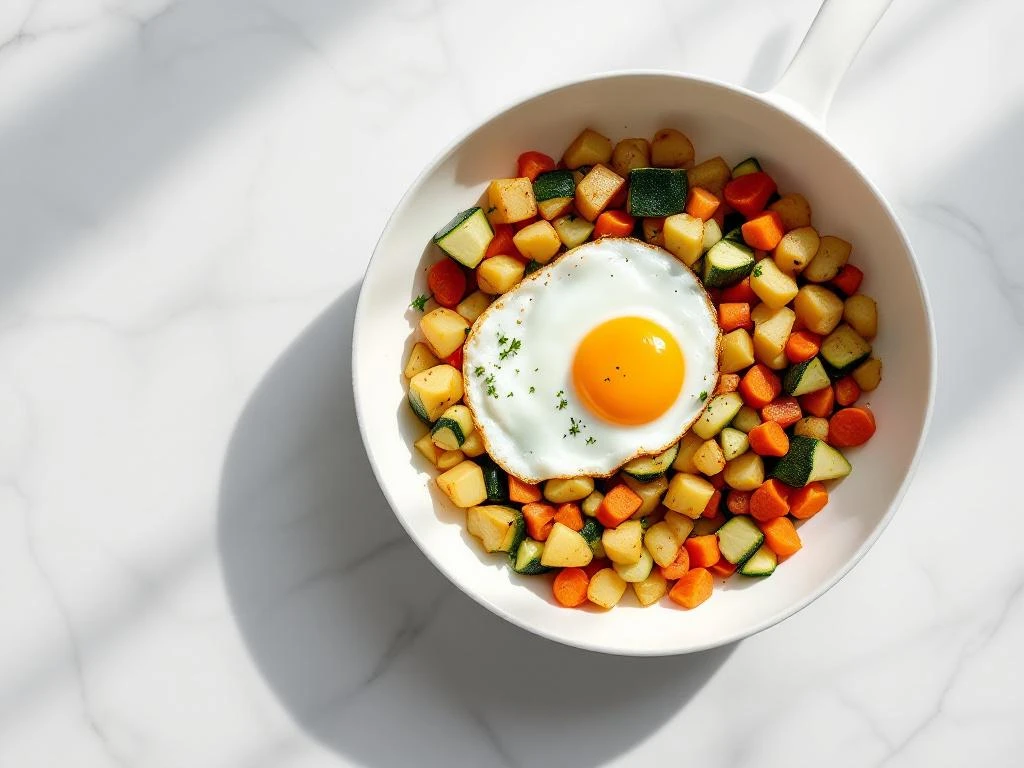
Starting your morning with an egg and vegetable breakfast hash gives you a satisfying meal that won’t upset your stomach. This IBS friendly breakfast combines protein-rich eggs with carefully selected low FODMAP vegetables to fuel your day without triggering digestive symptoms. The recipe takes about 25 minutes from start to finish and works well for beginners who are new to low FODMAP cooking. You’ll need a large frying pan, a sharp knife, a cutting board, and basic seasonings. The result is a colourful, flavourful breakfast hash that proves eating for digestive health doesn’t mean sacrificing taste or variety.
Why egg and vegetable hash works for IBS
This breakfast hash supports your digestive system by combining safe ingredients that provide sustained energy without causing flare-ups. Eggs offer complete protein that’s naturally low FODMAP, helping you feel full throughout the morning while being gentle on your gut. The protein also stabilises blood sugar levels, preventing energy crashes that can worsen IBS symptoms.
The vegetables in this hash are chosen specifically for their low FODMAP status. Bell peppers, courgettes, and spinach provide essential vitamins and fibre without the high FODMAP compounds found in onions or garlic. These vegetables cook quickly and digest easily, making them ideal for a morning meal when your digestive system needs gentle support.
Cooking everything in one pan with a small amount of oil keeps the dish simple and maintains FODMAP-safe preparation methods. The gentle sautéing process makes the vegetables easier to digest whilst developing rich flavours through caramelisation. This healthy breakfast hash delivers nutrients your body needs without the worry of triggering uncomfortable symptoms.
Gather your low FODMAP ingredients and tools
You’ll need the following ingredients for two servings of this low FODMAP breakfast:
- 4 large eggs
- 1 medium red bell pepper (about 150g), diced
- 1 small courgette (about 150g), diced
- 2 handfuls of fresh spinach (about 60g)
- 2 tablespoons garlic-infused olive oil (shop-bought only, not homemade)
- 1/2 teaspoon paprika
- Salt and pepper to taste
- Fresh chives for garnish (optional)
If you can’t find certain vegetables, swap the courgette for aubergine (use only 75g as larger portions become high FODMAP). Replace bell peppers with cherry tomatoes (limit to 5 tomatoes per serving). Always avoid onions, garlic cloves, mushrooms, and cauliflower as these trigger IBS symptoms even in small amounts.
For kitchen equipment, gather a large non-stick frying pan (about 28cm diameter), a sharp knife for chopping, a cutting board, a wooden spoon or spatula, and measuring spoons. Having everything ready before you start cooking makes the process smooth and prevents vegetables from overcooking whilst you search for tools.
Portion size guidance
Stick to the recommended vegetable portions listed above. Bell peppers remain low FODMAP up to 75g per serving, whilst courgette is safe up to 65g. Spinach is low FODMAP in the portions used here. Exceeding these amounts may introduce problematic FODMAPs that could trigger symptoms.
Prepare and chop vegetables for even cooking
Wash all vegetables thoroughly under cold running water. Pat them dry with a clean tea towel to remove excess moisture, which helps achieve better browning during cooking.
Cut the bell pepper in half and remove the seeds and white membrane. Dice the pepper into 1cm cubes. Uniform pieces cook at the same rate, preventing some bits from burning whilst others remain undercooked. Take your time with this step as consistent sizing makes a real difference to the finished texture.
Trim the ends off the courgette and cut it lengthwise into quarters. Slice each quarter into 1cm pieces. The courgette pieces should match the pepper size so everything finishes cooking together. If your courgette contains lots of seeds in the centre, scoop some out as they release excess water during cooking.
Roughly chop the spinach if the leaves are large. Baby spinach can go in whole. Set the spinach aside separately as it cooks much faster than the other vegetables. Having your vegetables prepped and organised before you start cooking prevents rushed decisions and overcooked ingredients.
Cook the vegetable hash base to perfection
Heat the garlic-infused olive oil in your large frying pan over medium heat. Wait about one minute until the oil shimmers slightly but doesn’t smoke. The right temperature is important for developing flavour without burning.
Add the diced bell pepper to the hot pan. Cook for 4 minutes, stirring occasionally, until the edges start to soften and develop light brown spots. These caramelised bits add depth of flavour to your vegetable breakfast hash.
Add the courgette pieces to the pan with the peppers. Cook for another 5 minutes, stirring every minute or so. The courgette should become tender and golden in places. If vegetables start sticking to the pan, reduce the heat slightly rather than adding more oil.
Sprinkle the paprika over the vegetables along with a pinch of salt and pepper. Stir well to distribute the seasonings evenly. The paprika adds a subtle smokiness without any FODMAP concerns. Cook for one more minute to let the spices bloom in the heat.
Add the spinach to the pan and stir it through the warm vegetables. The residual heat wilts the spinach in about 30 seconds. Remove the pan from the heat once the spinach has collapsed but still looks bright green. Overcooked spinach turns grey and loses its fresh taste.
Add eggs and finish your breakfast hash
Push the cooked vegetables to the sides of the pan, creating four small wells in the centre. Return the pan to medium-low heat. Crack one egg into each well, being careful not to break the yolks if you prefer them runny.
Cover the pan with a lid and cook for 3 to 4 minutes for soft, runny yolks, or 5 to 6 minutes for fully set yolks. The lid traps steam that gently cooks the egg whites and tops. Check after 3 minutes to see how the eggs are setting.
Alternatively, scramble the eggs if you prefer. Beat the eggs in a bowl with a pinch of salt. Push all vegetables to one side of the pan, add a small knob of butter to the empty side, and pour in the beaten eggs. Stir gently for 2 to 3 minutes until just set, then mix everything together.
For poached eggs, cook them separately in simmering water whilst the vegetables finish. This method takes a bit more time but gives you perfect eggs every time. Place the poached eggs on top of the hash just before serving.
Taste the hash and adjust seasoning with more salt and pepper if needed. Sprinkle fresh chives over the top if using. The mild onion flavour of chives is safe in small garnish amounts and adds a fresh finish to this easy breakfast hash.
Customize your hash with safe variations
Try different low FODMAP vegetables to keep your breakfasts interesting. Diced aubergine (remember the 75g limit), green beans cut into short pieces, or firm tofu cubes all work well. Swap spinach for rocket or kale, keeping portion sizes appropriate for FODMAP content.
Add extra protein by including cooked bacon, ham, or leftover chicken. Check that processed meats don’t contain onion or garlic powder in the ingredients list. Crumbled feta cheese (limit to 40g per serving) adds salty richness without FODMAP concerns, making this gluten free breakfast hash even more satisfying.
Fresh herbs transform the flavour profile completely. Basil gives an Italian feel, whilst coriander adds brightness. Parsley works with almost any vegetable combination. Add herbs at the end of cooking to preserve their fresh taste and vibrant colour.
Serve your hash with gluten free toast, a small portion of sourdough (if tolerated), or wrap it in a corn tortilla. A dollop of lactose-free yoghurt on the side adds cooling contrast. Some people enjoy hot sauce, but check labels for high FODMAP ingredients like onion or garlic.
Make the hash ahead by cooking the vegetables the night before. Store them in the fridge and reheat in the morning, then add fresh eggs. This saves time on busy mornings whilst still giving you a hot, nutritious low FODMAP hash recipe to start your day right.
Batch cooking works well too. Double the vegetable portion and store half in an airtight container for up to 3 days. Cook fresh eggs each morning and reheat the vegetables in a pan. This approach makes following a low FODMAP diet more manageable when time is tight.
Egg and vegetable breakfast hash
Cooking Time: 25 minutes | Portions: 2 servings
- Heat 2 tablespoons garlic-infused olive oil in a large frying pan over medium heat
- Cook 1 diced red bell pepper for 4 minutes until softening
- Add 1 diced courgette and cook for 5 minutes until golden
- Stir in 1/2 teaspoon paprika, salt, and pepper
- Add 2 handfuls of spinach and wilt for 30 seconds
- Create 4 wells in the vegetables and crack in 4 eggs
- Cover and cook for 3 to 6 minutes depending on preferred yolk consistency
- Garnish with fresh chives and serve immediately
This recipe is for informational purposes only and is not medical or dietary advice. Please consult a healthcare professional before making any changes to your diet.
Related Articles
- Raspberry Chia Breakfast Pudding
- Scrambled Eggs with Spinach and Cherry Tomatoes
- Blueberry Coconut Smoothie Bowl
- Scrambled Eggs with Fresh Dill
- Is bacon ok on FODMAP?