
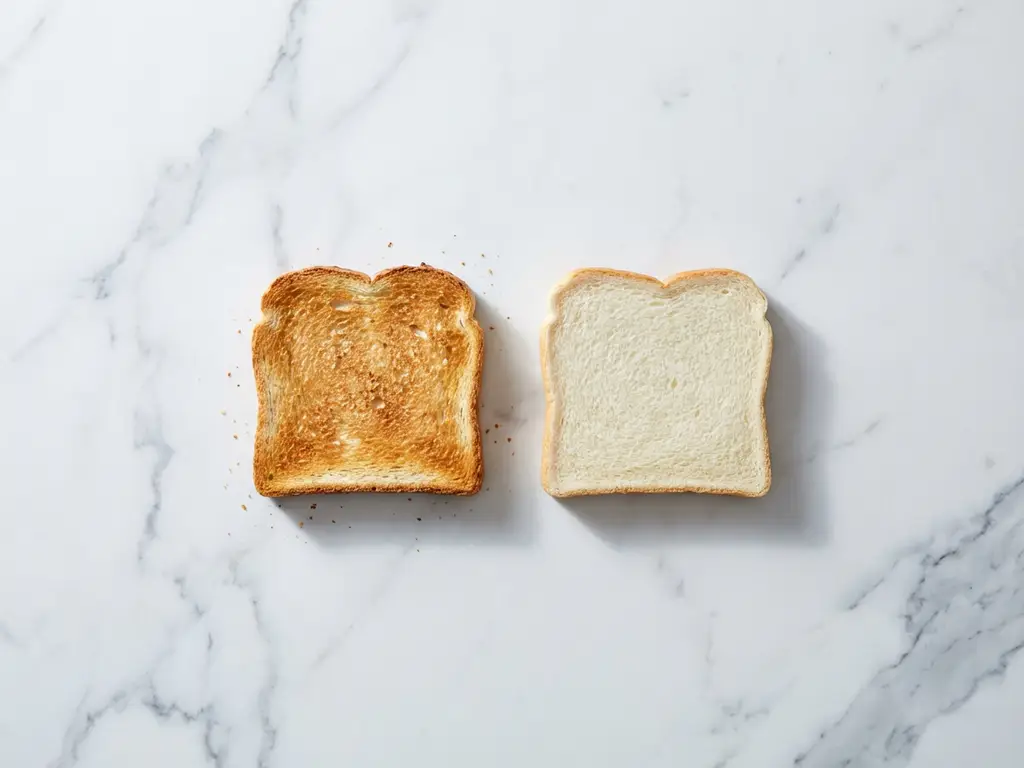
If you have IBS, you’ve probably noticed that certain foods can trigger symptoms, while others seem easier to digest. One common question is whether toast might be gentler on your digestive system than fresh bread. This isn’t just in your head—there are scientific reasons why toasting bread can make it more tolerable for people following a low-FODMAP diet or managing IBS symptoms.
The relationship between bread, toast, and digestive comfort involves several factors, including starch structure, moisture content, and even FODMAP levels. Understanding these differences can help you make better choices for your gut health while still enjoying one of life’s simple pleasures.
What makes toast different from bread for digestion?
Toasting bread causes several chemical and physical changes that can make it easier to digest than fresh bread. The heat breaks down some complex starches into simpler forms, reduces moisture content, and creates a firmer texture that requires more chewing, which aids digestion.
When bread is toasted, the Maillard reaction occurs—the same process that browns and crisps the surface. This reaction not only creates the appealing golden color and nutty flavor but also partially breaks down proteins and carbohydrates. The reduced moisture content means your stomach doesn’t have to work as hard to break down the bread’s structure.
The firmer texture of toast also encourages more thorough chewing, which increases saliva production and kick-starts digestion. This extra mechanical breakdown can be particularly helpful for people with sensitive digestive systems who struggle with inadequately chewed food.
Does toasting bread change its FODMAP content?
Toasting bread may slightly reduce certain FODMAP compounds, particularly fructans, though the change is modest rather than dramatic. The heat and reduced moisture during toasting may break down some oligosaccharides, but don’t expect toast to turn high-FODMAP bread into a low-FODMAP option.
The most significant FODMAP-related benefit of toast comes from portion control and improved tolerance rather than substantial changes in FODMAP levels. When bread is toasted, it can feel more satisfying because of its enhanced flavor and texture, which may naturally lead to smaller portions—a key strategy in low-FODMAP eating.
For those following a low-FODMAP diet, the type of bread you choose matters more than whether you toast it. Sourdough breads made with traditional fermentation processes naturally have lower FODMAP content because fermentation breaks down many problematic compounds before you even take your first bite.
Why do some people with IBS tolerate toast better than fresh bread?
People with IBS often tolerate toast better than fresh bread because toasting reduces moisture, creates a firmer texture that promotes better chewing, and may partially break down some harder-to-digest compounds. The slower eating pace that toast encourages can also help prevent rapid food intake, which may trigger IBS symptoms.
Fresh bread, especially soft commercial varieties, can be easy to eat quickly without adequate chewing. This can lead to larger pieces reaching your stomach, where they require more digestive work and may sit longer, potentially causing bloating or discomfort. Toast naturally slows your eating pace.
The reduced moisture content in toast means less liquid entering your digestive system with the meal, which can be beneficial for people whose IBS symptoms include bloating or a feeling of fullness. Additionally, the slightly caramelized surface of toast may be easier for some people to break down than the gummy texture of fresh bread.
Which types of bread are best for IBS when toasted?
Sourdough bread made with traditional fermentation is generally the best choice for people with IBS when toasted, followed by spelt bread and gluten-free options made with low-FODMAP ingredients. Avoid breads with high fructan content, such as those made with wheat or rye, or those containing inulin and chicory root fiber.
When selecting bread for toasting, look for these IBS-friendly options:
- Genuine sourdough bread with long fermentation times
- Spelt sourdough bread in small portions
- Gluten-free breads made with rice, potato, or tapioca
- Breads without added high-FODMAP ingredients like honey, agave, or inulin
Read ingredient lists carefully, as many commercial breads contain hidden high-FODMAP ingredients. We recommend sticking to simple ingredient lists and avoiding breads with multiple types of flour, sweeteners, or fiber additives that can trigger IBS symptoms, even when toasted.
How should you prepare toast to minimize IBS symptoms?
To minimize IBS symptoms, toast bread until it’s golden brown but not burnt, eat it slowly and chew thoroughly, and pair it with low-FODMAP toppings. Start with one slice to test your tolerance, and avoid eating toast on an empty stomach if you’re sensitive to acidic foods.
Follow these preparation tips for the most IBS-friendly toast experience:
- Toast to a medium-golden color—avoid charring, which can create potentially irritating compounds
- Allow toast to cool slightly before eating to reduce temperature-related digestive stress
- Choose low-FODMAP toppings like butter, olive oil, or small amounts of aged cheese
- Avoid high-FODMAP spreads like honey, certain jams, or large amounts of cream cheese
- Eat toast as part of a balanced meal rather than on its own to slow digestion
Timing matters, too—many people with IBS find toast easier to tolerate earlier in the day, when digestive function is typically stronger. If you’re testing your tolerance to a new type of bread, try it toasted first during a period when your IBS symptoms are well controlled.
This recipe is for informational purposes only and is not medical or dietary advice. Please consult a healthcare professional before making any changes to your diet.
Related Articles
- What is a good dinner for someone with IBS?
- Orange Ginger Overnight Oats
- Are potatoes allowed on a FODMAP diet?
- Scrambled Eggs with Smoked Turkey
- What can I put on toast that is low FODMAP?