
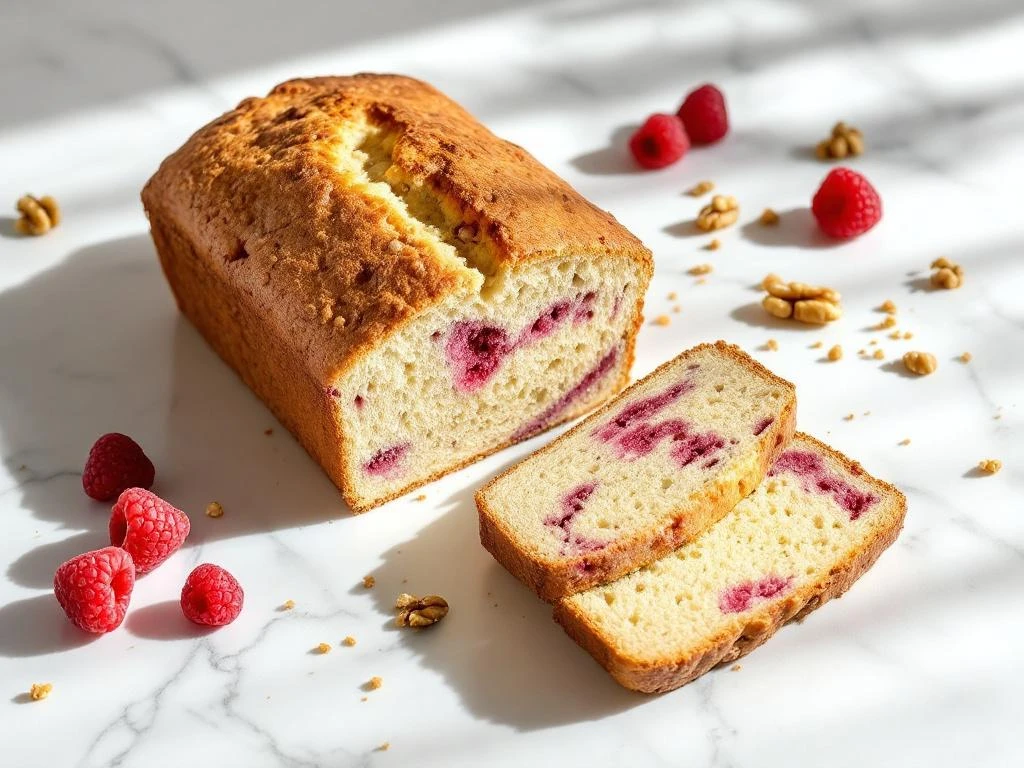
Baking gluten-free bread that doesn’t trigger IBS symptoms can feel like a challenge. This recipe combines sweet raspberries and crunchy walnuts in a tender, satisfying loaf that follows low FODMAP guidelines. You’ll create a breakfast or snack option that tastes delicious without causing digestive distress.
This recipe suits beginners who have basic baking experience. You’ll need about 90 minutes total, including 60 minutes of baking time. The mixing process is straightforward and doesn’t require special techniques.
You’ll need a standard loaf pan, mixing bowls, measuring cups and spoons, and basic baking ingredients. All ingredients follow low FODMAP serving sizes to keep your digestive system comfortable. The result is a moist, flavourful bread that proves gluten-free baking can deliver excellent taste and texture.
Why gluten-free raspberry walnut bread works for IBS
This gluten-free raspberry walnut bread recipe addresses multiple digestive sensitivities while delivering satisfying flavour. The bread uses a carefully balanced flour blend that avoids wheat and high FODMAP grains. Gluten-free baking eliminates the protein that triggers symptoms in people with coeliac disease or gluten sensitivity.
Raspberries fit within low FODMAP guidelines when you stick to appropriate serving sizes. A portion of 10 raspberries remains low FODMAP, providing natural sweetness and fibre without excess fructose. The berries add moisture to the bread and create pockets of fruity flavour throughout each slice.
Walnuts contribute healthy fats and protein whilst staying within FODMAP limits. A serving of 10 walnut halves is considered low FODMAP. The nuts provide satisfying texture and help the bread feel more substantial. They also add omega-3 fatty acids and minerals that support overall health.
The combination creates a bread that tastes indulgent without triggering IBS symptoms. Traditional wheat bread often causes bloating, cramping, and other digestive issues for people with sensitivities. This recipe eliminates those triggers whilst maintaining the comforting qualities of homemade bread.
Gather ingredients and tools for perfect bread
Start with your dry ingredients. You’ll need 300g gluten-free flour blend (look for one containing rice flour, tapioca starch, and potato starch), 2 teaspoons baking powder, 1/2 teaspoon bicarbonate of soda, 1/4 teaspoon salt, and 80g caster sugar. Make sure your flour blend doesn’t contain wheat starch or other high FODMAP ingredients.
For wet ingredients, gather 3 large eggs, 120ml lactose-free milk, 80ml vegetable oil (or melted coconut oil), and 1 teaspoon vanilla extract. The lactose-free milk keeps the recipe suitable for those with lactose intolerance, another common sensitivity for IBS sufferers.
You’ll need 100g fresh or frozen raspberries and 60g roughly chopped walnuts. If using frozen raspberries, don’t thaw them before adding to the batter. This prevents them from breaking down and creating too much moisture.
Essential baking tools include a 23cm x 13cm loaf pan, two mixing bowls (one large, one medium), measuring cups and spoons, a whisk, a spatula, and baking parchment or cooking spray for the pan. A kitchen thermometer helps verify doneness but isn’t required.
Check that all ingredients are at room temperature except the raspberries. Cold eggs and milk can affect how the batter comes together. Set everything out before you start mixing to make the process smoother.
Prepare the gluten-free bread batter
Preheat your oven to 180°C (160°C fan). Line your loaf pan with baking parchment or grease it thoroughly with cooking spray. Gluten-free batters can stick more than wheat-based ones, so proper pan preparation matters.
Combine all dry ingredients in your large bowl. Whisk together the gluten-free flour blend, baking powder, bicarbonate of soda, salt, and sugar until evenly mixed. This step distributes the leavening agents throughout the flour, ensuring even rising.
In your medium bowl, whisk together the eggs, lactose-free milk, oil, and vanilla extract. Beat until the mixture looks smooth and slightly frothy. The eggs provide structure that gluten would normally give in traditional bread recipes.
Pour the wet ingredients into the dry ingredients. Stir gently with your spatula until just combined. The batter will look thicker than regular cake batter but thinner than cookie dough. Don’t overmix, as this can make the bread dense and gummy. A few small lumps are fine.
Reserve about 10 raspberries and a tablespoon of chopped walnuts for topping. Gently fold the remaining raspberries and walnuts into the batter using a folding motion. Scrape down the sides and bottom of the bowl to catch any unmixed flour. The batter should look evenly distributed with fruit and nuts throughout.
Pour the batter into your prepared loaf pan. Tap the pan gently on your counter twice to release any air bubbles. Scatter the reserved raspberries and walnuts on top for an attractive finish.
Bake and test for perfect doneness
Place the loaf pan in the centre of your preheated oven. Bake for 55 to 65 minutes without opening the oven door for the first 45 minutes. Opening the door early can cause the bread to sink in the middle.
The bread is done when the top turns golden brown and springs back slightly when touched. A toothpick inserted into the centre should come out clean or with just a few moist crumbs attached. If you see wet batter on the toothpick, bake for another 5 minutes and test again.
For precise results, use a kitchen thermometer to check the internal temperature. The centre should reach 95°C to 98°C. This ensures the middle is fully cooked without overbaking the edges.
Visual cues help confirm doneness even without a thermometer. The edges should pull away slightly from the pan sides. The top should feel firm rather than squishy when gently pressed. Cracks on the surface are normal and indicate proper rising.
Remove the pan from the oven and place it on a wire cooling rack. Let the bread cool in the pan for 15 minutes. This resting period allows the structure to set, making the bread easier to remove without breaking.
After 15 minutes, run a knife around the edges if needed. Turn the pan upside down and gently tap to release the bread. If you used parchment paper, lift the bread out using the paper edges. Place the bread directly on the wire rack to finish cooling completely, about 45 minutes.
Store and serve your raspberry walnut bread
Wait until the bread cools completely before slicing. Warm gluten-free bread is fragile and crumbles easily. Use a sharp serrated knife and a gentle sawing motion for clean slices. Wipe the knife between cuts to prevent sticking.
Store the bread at room temperature for up to 3 days. Wrap it tightly in cling film or place it in an airtight container. Gluten-free bread dries out faster than wheat bread, so proper storage matters. Don’t refrigerate the bread, as this accelerates staling.
For longer storage, freeze individual slices between pieces of baking parchment. Place the wrapped slices in a freezer bag and freeze for up to 3 months. Thaw slices at room temperature for 30 minutes or toast them directly from frozen.
This bread works beautifully for breakfast with lactose-free butter or cream cheese. Try it toasted with a thin layer of low FODMAP jam. The combination of raspberries and walnuts also pairs well with a cup of tea or coffee for an afternoon snack.
Serving suggestions include topping slices with lactose-free yoghurt and extra fresh raspberries for a more substantial breakfast. You can also use the bread for French toast made with lactose-free milk and eggs. The slightly sweet flavour means it doesn’t need much additional sweetening.
One slice provides a satisfying portion that stays within low FODMAP guidelines. The bread contains enough protein from eggs and walnuts to help keep you full between meals. It’s substantial enough to feel like a treat whilst being gentle on sensitive digestive systems.
This gluten-free raspberry walnut bread proves that following a low FODMAP diet doesn’t mean sacrificing flavour or satisfaction. You’ve created a versatile bread that works for various meals and snacks. The recipe demonstrates how thoughtful ingredient choices can accommodate digestive sensitivities without compromising on taste or texture.
Gluten-free raspberry walnut bread
Cooking Time: 90 minutes | Portions: 10 slices
- 300g gluten-free flour blend (rice flour, tapioca starch, potato starch)
- 2 teaspoons baking powder
- 1/2 teaspoon bicarbonate of soda
- 1/4 teaspoon salt
- 80g caster sugar
- 3 large eggs
- 120ml lactose-free milk
- 80ml vegetable oil
- 1 teaspoon vanilla extract
- 100g fresh or frozen raspberries
- 60g roughly chopped walnuts
Steps:
- Preheat oven to 180°C (160°C fan) and prepare a 23cm x 13cm loaf pan
- Whisk dry ingredients in large bowl
- Beat wet ingredients in medium bowl until smooth
- Pour wet into dry and stir until just combined
- Fold in most of the raspberries and walnuts, reserving some for topping
- Pour batter into prepared pan and top with reserved fruit and nuts
- Bake 55 to 65 minutes until toothpick comes out clean
- Cool in pan 15 minutes, then transfer to wire rack
- Slice when completely cool and store in airtight container
This recipe is for informational purposes only and is not medical or dietary advice. Please consult a healthcare professional before making any changes to your diet.
Related Articles
- Orange Ginger Overnight Oats
- What are the 5 best foods for IBS?
- Gluten-Free Raspberry Muffins
- Is Greek yogurt safe on a low-FODMAP diet?
- Scrambled Tofu with Turmeric