
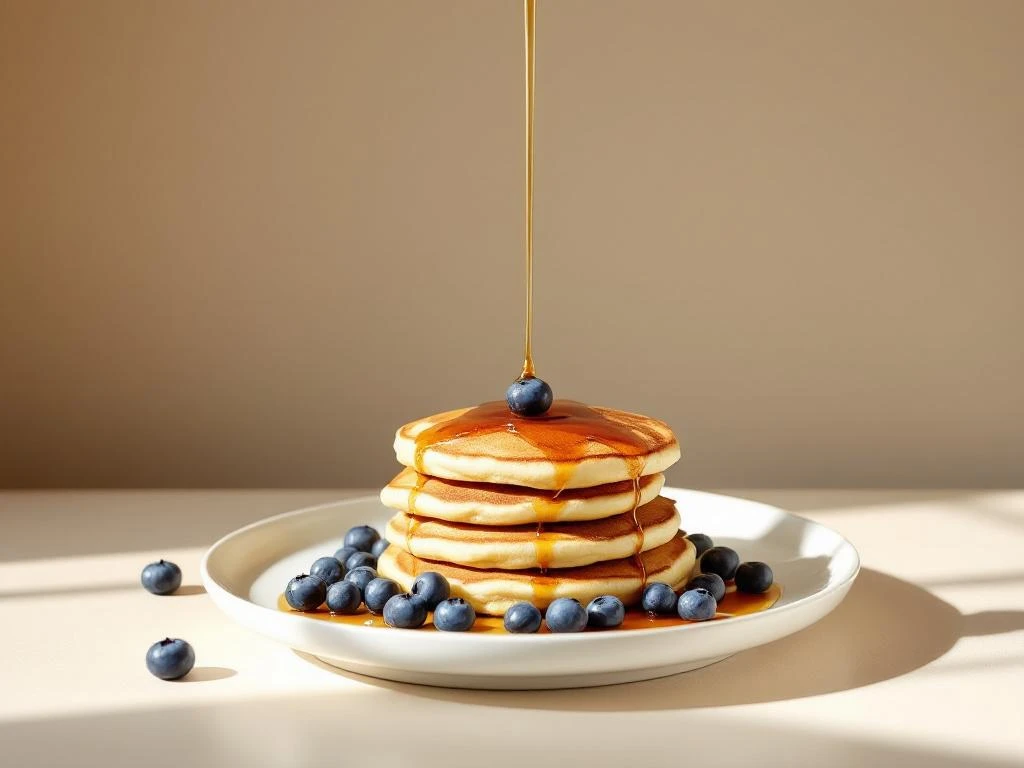
Quinoa blueberry pancakes offer a delicious solution for anyone following a low FODMAP diet. These gluten free pancakes combine the nutty flavour of quinoa flour with the natural sweetness of blueberries, creating an IBS friendly breakfast that doesn’t compromise on taste. Whether you’re in the elimination phase or reintroduction stage of the low FODMAP diet, this healthy quinoa pancakes recipe provides a satisfying meal that’s gentle on your digestive system. You’ll create fluffy, golden pancakes in about 25 minutes using simple ingredients and basic kitchen tools. This beginner-friendly recipe requires no special equipment beyond what most home kitchens already have.
Why quinoa and blueberry pancakes work for IBS
Quinoa flour provides a naturally gluten free base that’s easier on sensitive stomachs. Unlike wheat-based flours, quinoa contains protein and fibre without the FODMAPs that trigger IBS symptoms. A single serving of quinoa flour stays within safe limits for the low FODMAP diet, making these pancakes suitable even during the strict elimination phase.
Blueberries count as a low FODMAP fruit when you stick to appropriate portions. A quarter cup of blueberries per serving keeps you within safe limits whilst adding natural sweetness and antioxidants. This makes blueberry pancakes recipe options particularly valuable for anyone missing fruit-based breakfasts.
The nutritional profile supports digestive health. Quinoa delivers all nine essential amino acids, making it a complete protein source. This helps maintain steady energy levels without the blood sugar spikes that can worsen IBS symptoms. The moderate fibre content promotes regular digestion without overwhelming sensitive systems.
These easy quinoa pancakes fit into all phases of the low FODMAP diet. During elimination, they provide variety when food choices feel limited. In the reintroduction phase, the simple ingredient list makes it easy to test individual foods. Once you’ve established your tolerances, you can adapt the recipe with confidence.
Gather your ingredients and tools
You’ll need these low FODMAP ingredients for approximately 8 medium pancakes:
- 150g quinoa flour
- 2 teaspoons gluten free baking powder
- 1 tablespoon maple syrup
- 2 large eggs
- 200ml lactose-free milk
- 60g fresh or frozen blueberries
- 2 tablespoons neutral oil (plus extra for cooking)
- Pinch of salt
Verify that your baking powder is certified gluten free. Some brands contain wheat-based additives that can trigger symptoms. The lactose-free milk can be any variety you tolerate, such as almond milk in low FODMAP quantities (250ml maximum per serving).
Essential kitchen tools include:
- Two mixing bowls (one medium, one large)
- Whisk or fork for mixing
- Measuring cups and spoons
- Non-stick frying pan or griddle
- Spatula for flipping
- Ladle or quarter-cup measure for portioning
A non-stick pan prevents sticking without requiring excessive oil. If you’re using a regular pan, you’ll need more oil between batches. Keep a small bowl of oil and a pastry brush nearby for easy pan maintenance.
Prepare the quinoa pancake batter
Start with your dry ingredients. Combine the quinoa flour, baking powder and salt in your large mixing bowl. Whisk them together thoroughly to distribute the baking powder evenly. This prevents pockets of leavening agent that create uneven rising.
Mix your wet ingredients separately in the medium bowl. Crack both eggs into the bowl and whisk until the yolks and whites combine completely. Add the lactose-free milk, maple syrup and 2 tablespoons of oil. Whisk again until you see no separation between the oil and liquid.
Pour the wet mixture into the dry ingredients. Use gentle folding motions with your whisk or a spatula. Stop mixing as soon as you no longer see dry flour. The batter should look slightly lumpy. Overmixing develops the protein structure in quinoa flour, resulting in tough, dense pancakes instead of fluffy ones.
Fold in the blueberries last. If using frozen berries, don’t thaw them. Frozen blueberries release less juice during cooking, preventing purple streaks throughout your batter. Gently stir them through, distributing evenly but avoiding crushing the berries.
Let the batter rest for 5 minutes. This allows the quinoa flour to absorb the liquid fully, creating better texture. The batter will thicken slightly as it sits. If it becomes too thick after resting, add lactose-free milk one tablespoon at a time until it reaches a pourable consistency.
Cook perfect fluffy pancakes every time
Heat your non-stick pan over medium heat. This takes about 3 minutes. Test the temperature by flicking a few drops of water onto the surface. They should sizzle and evaporate within 2 seconds. Too hot and your pancakes burn before cooking through. Too cool and they spread too thin and turn rubbery.
Brush the pan lightly with neutral oil. Avoid butter or coconut oil at this stage, as they can burn at pancake-cooking temperatures. A thin coating prevents sticking without making the pancakes greasy.
Pour a quarter cup of batter per pancake into the pan. Don’t spread it with your spoon. Let it settle naturally into a round shape. This creates pancakes about 10cm across, the ideal size for even cooking and easy flipping.
Watch for bubbles to appear across the surface. This takes about 2 to 3 minutes. When you see bubbles forming around the edges and a few in the centre, check the underside. Slide your spatula gently under the edge. The bottom should be golden brown with some darker spots.
Flip the pancake with a quick, confident motion. Cook the second side for 1.5 to 2 minutes. It needs less time because the pan is now fully heated and the batter is partially cooked. The second side typically browns faster and shows less pattern than the first.
Press gently on the centre of the pancake. It should spring back when fully cooked. If your finger leaves an impression, give it another 30 seconds. Transfer finished pancakes to a plate and cover loosely with a clean tea towel to keep warm whilst you cook the remaining batter.
Maintaining consistent results
Adjust your heat between batches if needed. The pan gets hotter as you cook multiple pancakes. If you notice burning, reduce the heat slightly. Wipe the pan with a paper towel between batches to remove any stuck bits that could burn.
Add a small amount of oil before each batch. Even non-stick pans need refreshing to prevent the fourth or fifth pancake from sticking. A light brush coat is enough.
Troubleshoot common pancake problems
Pancakes sticking to the pan means insufficient oil or incorrect temperature. Add more oil and ensure your pan is properly heated before pouring batter. If you’re using a ceramic non-stick pan, these require more oil than traditional non-stick coatings.
Batter that’s too thick produces small, dense pancakes. Thin it with lactose-free milk, adding one tablespoon at a time. Mix gently after each addition until the batter flows smoothly from your ladle. Properly mixed batter should ribbon off the spoon but still hold its shape when poured.
Batter that’s too thin creates crepe-like pancakes that don’t rise. This happens if you add too much liquid or if your quinoa flour is particularly fine. Add more quinoa flour one tablespoon at a time, mixing gently between additions. Let the adjusted batter rest for 5 minutes before cooking.
Uneven cooking with burnt edges and raw centres indicates your heat is too high. Reduce to medium-low and give the pan 2 minutes to adjust. Quinoa flour browns faster than wheat flour, so these gluten free blueberry pancakes need gentler heat than traditional recipes.
Flat, dense texture instead of fluffy pancakes suggests overmixing or old baking powder. Check your baking powder is fresh by dropping a spoonful into warm water. It should fizz vigorously. Replace it if there’s little reaction. When making your next batch, mix the batter just until combined, leaving small lumps.
Blueberries sinking to the bottom happens when the batter is too thin or the berries are too wet. Thicken your batter slightly and pat frozen berries dry with a paper towel before folding them in. Toss the berries in a teaspoon of quinoa flour before adding them. This coating helps suspend them in the batter.
Adjustments for different conditions
High altitude cooking requires modifications. Add an extra tablespoon of lactose-free milk and reduce baking powder by a quarter teaspoon. The lower air pressure affects rising, so these adjustments compensate.
Electric griddles work well but heat differently. Set yours to 175°C and allow longer preheating time. Test with one pancake before cooking a full batch.
Cast iron pans need more oil and careful temperature management. Heat them slowly over medium-low and increase to medium only when fully warmed. Cast iron retains heat intensely, so you may need to reduce temperature after the first batch.
Serve and store your blueberry pancakes
Top your low FODMAP pancakes with maple syrup for classic sweetness. Pure maple syrup contains no FODMAPs and adds rich flavour without triggering symptoms. Stick to 1 to 2 tablespoons per serving to keep sugar intake moderate.
Lactose-free yoghurt creates a creamy contrast. Choose plain varieties and add your own maple syrup to control sweetness. Greek-style lactose-free yoghurt adds protein whilst maintaining the low FODMAP profile.
Fresh blueberries make an obvious topping choice. A quarter cup per serving stays within low FODMAP limits whilst doubling the berry flavour. Scatter them over warm pancakes just before serving.
Other low FODMAP friendly options include a small knob of butter (check your personal tolerance), a sprinkle of icing sugar, or a drizzle of smooth peanut butter (check the 2-tablespoon serving limit).
Storing for later use
Refrigerate leftover pancakes in an airtight container for up to 3 days. Layer them with baking paper to prevent sticking. The texture stays best when pancakes cool completely before storage. Trapped steam creates sogginess if you seal them whilst warm.
Freeze pancakes for longer storage, up to 2 months. Stack them with baking paper between each pancake, then seal in a freezer bag. Remove as much air as possible to prevent freezer burn. Label with the date so you track freshness.
Reheat refrigerated pancakes in a toaster on medium setting. This restores crispness to the edges whilst warming the centre. Alternatively, microwave for 20 to 30 seconds, though this creates softer texture.
Reheat frozen pancakes without thawing. Toast them on a low setting for 2 cycles, or microwave for 45 to 60 seconds. Check they’re heated through to the centre before serving. The blueberries will be hot, so let them cool for a minute before eating.
Food safety guidelines
Consume refrigerated pancakes within 3 days for best quality and safety. The eggs and milk in the batter make these perishable. Discard any pancakes that smell off or show mould.
Frozen pancakes maintain quality for 2 months but remain safe longer if kept at a constant freezing temperature. Quality degrades over time, with texture becoming grainy and flavours fading. Use your oldest batches before making fresh ones.
These healthy quinoa pancakes have given you a versatile low FODMAP breakfast option that’s both satisfying and gentle on your digestive system. The simple preparation method means you can make a batch on the weekend and enjoy quick breakfasts throughout the week. As you become comfortable with this basic recipe, you’ll find it easy to adapt with different low FODMAP fruits or flavourings that suit your personal tolerances.
Quinoa and blueberry pancakes
Cooking Time: 25 minutes | Portions: 4 servings (2 pancakes each)
- Dry ingredients: 150g quinoa flour, 2 tsp gluten free baking powder, pinch of salt
- Wet ingredients: 2 eggs, 200ml lactose-free milk, 1 tbsp maple syrup, 2 tbsp neutral oil
- Add-ins: 60g fresh or frozen blueberries
- Step 1: Whisk dry ingredients together in a large bowl
- Step 2: Combine wet ingredients separately in a medium bowl
- Step 3: Pour wet into dry, fold gently until just combined (leave lumps)
- Step 4: Fold in blueberries, rest batter 5 minutes
- Step 5: Heat non-stick pan over medium heat, brush lightly with oil
- Step 6: Pour quarter-cup portions, cook 2-3 minutes until bubbles form
- Step 7: Flip when golden brown, cook second side 1.5-2 minutes
- Step 8: Serve warm with maple syrup, lactose-free yoghurt, or extra blueberries
- Storage: Refrigerate up to 3 days or freeze up to 2 months with baking paper between layers
This recipe is for informational purposes only and is not medical or dietary advice. Please consult a healthcare professional before making any changes to your diet.
Related Articles
- Blueberry Almond Overnight Oats
- Gluten-Free Pumpkin Walnut Bread
- Pumpkin Spice Oatmeal
- Chia Seed Pudding with Raspberries
- Ham and Cheese Egg Bake