
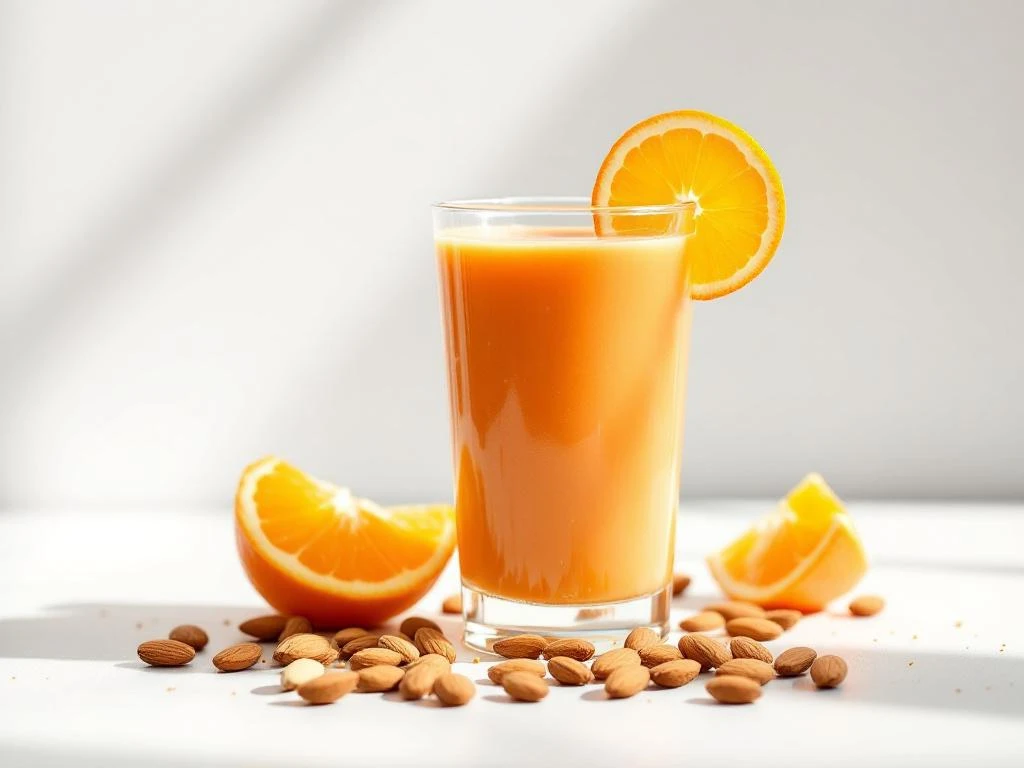
When you’re managing IBS symptoms, finding a quick breakfast that tastes good and won’t upset your stomach can feel impossible. This orange almond smoothie solves that problem with just five minutes of prep time and ingredients that follow low FODMAP guidelines.
This recipe is designed for beginners and requires no special cooking skills. You’ll need a blender, fresh oranges, low FODMAP almond milk, and a few simple add-ins. The result is a creamy, refreshing smoothie that provides energy without triggering digestive discomfort.
Why this orange almond smoothie works for IBS
This smoothie combines ingredients that are naturally low in FODMAPs when consumed in the right portions. Oranges contain moderate FODMAP levels, but a single orange stays within safe limits for most people following the diet. The natural sweetness means you don’t need added sugars that might cause problems.
Almond milk provides a lactose free base that’s gentle on your digestive system. Unlike regular dairy milk, it won’t trigger the bloating and discomfort that comes with lactose intolerance. The protein from almond butter adds staying power without heavy ingredients that slow digestion.
The balance between nutrients and gut-friendly properties makes this an ideal IBS friendly smoothie. You’re getting vitamin C from the oranges, healthy fats from the almonds, and enough substance to keep you satisfied until lunch. The cold temperature and smooth texture are also easier on sensitive stomachs than heavy breakfast foods.
What ingredients you need for the perfect blend
For one serving of this low FODMAP smoothie, gather these ingredients:
- 1 medium orange (peeled and segmented)
- 200ml low FODMAP almond milk (unsweetened)
- 1 tablespoon almond butter (check it contains only almonds and salt)
- ½ banana (firm, not overripe)
- 4-5 ice cubes
- Optional: 1 teaspoon maple syrup for extra sweetness
Choose navel or valencia oranges for the best flavour and texture. Avoid blood oranges if you find them too tart. The orange should be fresh rather than using juice, as whole fruit provides fibre that helps with digestion.
When selecting almond milk, read the label carefully. Many brands add high FODMAP ingredients like inulin or chicory root. Look for varieties with just almonds, water, and salt. If almond milk doesn’t work for you, try lactose free cow’s milk as an alternative.
The banana adds creaminess and natural sweetness. Use only half a banana to stay within low FODMAP limits. A firm banana works better than an overripe one, which contains higher FODMAP levels. If bananas trigger your symptoms, replace with 50g of strawberries instead.
Suitable substitutions for dietary needs
For a gluten free smoothie, all these ingredients naturally qualify. If you need a nut-free version, swap the almond milk for oat milk (check the FODMAP app for serving size) and skip the almond butter. Add a tablespoon of sunflower seed butter instead.
To boost protein content while staying low FODMAP, add a scoop of low FODMAP protein powder. Vanilla or unflavoured varieties work best with the orange flavour. Check that your protein powder doesn’t contain inulin, FOS, or other high FODMAP additives.
Blend your orange almond smoothie in 5 minutes
Start by peeling your orange and removing as much of the white pith as possible. The pith can make your smoothie bitter. Break the orange into segments and remove any large seeds.
Add the orange segments to your blender first. This creates a liquid base that helps everything blend smoothly. Pour in the almond milk next, followed by the almond butter and banana half.
Drop in your ice cubes. The ice creates that thick, frosty texture you want in a breakfast smoothie. It also keeps the smoothie cold enough to be refreshing.
Blend on high speed for 45-60 seconds. Stop when the mixture looks completely smooth with no chunks of ice or fruit visible. If your blender struggles, add a splash more almond milk and blend again.
Getting the texture right
The perfect consistency should be thick enough to drink through a straw but not so thick that you need a spoon. If your smoothie is too thick, add almond milk one tablespoon at a time until it reaches your preferred texture.
Too thin? Add another ice cube or two and blend again. You can also add a bit more banana (watch your FODMAP serving size) or a handful of frozen strawberries.
Pour into a tall glass immediately. This easy breakfast smoothie tastes best when served fresh. The longer it sits, the more the ingredients separate.
Customise your smoothie while staying low FODMAP
Transform this basic orange smoothie recipe by adding a tablespoon of chia seeds for extra fibre and omega-3 fatty acids. Let the smoothie sit for five minutes after blending to allow the chia seeds to soften and create a thicker texture.
For a tropical variation, replace the orange with 80g of fresh pineapple chunks. Pineapple stays low FODMAP at this serving size and pairs beautifully with almond flavours. Add a squeeze of lime juice for brightness.
Create a digestive health smoothie by stirring in a teaspoon of grated fresh ginger after blending. Ginger supports digestion and adds a warming spice note that complements the citrus. Start with a small amount as ginger can be strong.
Seasonal adaptations
During winter months, use mandarin oranges instead of regular oranges. They’re sweeter and easier to peel. Two small mandarins equal one medium orange in terms of FODMAP content.
In summer, freeze orange segments ahead of time. Use frozen orange pieces instead of ice cubes for a more intense orange flavour. This works especially well when oranges are in peak season and you want to preserve them.
Boost nutritional value by adding a handful of baby spinach. The orange flavour masks the taste of the greens completely. Spinach is low FODMAP and adds iron, folate, and vitamins without changing the smoothie’s texture.
Protein and energy additions
Turn this into a post-workout smoothie by adding a tablespoon of ground flaxseed. Flaxseed provides protein and healthy fats while staying low FODMAP. It also creates a slightly nutty flavour that enhances the almond notes.
For extra staying power, stir in a tablespoon of rolled oats before blending. Oats are low FODMAP in small amounts and make the smoothie more filling. This works well if you need breakfast to last through a busy morning.
Make it a lactose free smoothie with added creaminess by using coconut cream (2 tablespoons maximum). This creates a richer texture similar to a milkshake while maintaining FODMAP compliance.
The beauty of this orange almond smoothie lies in its simplicity and flexibility. You’ve learned how to create a base recipe that works for your digestive system, plus ways to adapt it to your taste preferences and nutritional needs. Keep experimenting with low FODMAP ingredients to find your perfect combination.
Orange almond smoothie
Cooking Time: 5 minutes | Portions: 1 serving
- 1 medium orange (peeled and segmented)
- 200ml low FODMAP almond milk (unsweetened)
- 1 tablespoon almond butter
- ½ banana (firm)
- 4-5 ice cubes
- Optional: 1 teaspoon maple syrup
Steps:
- Peel orange and remove pith, break into segments
- Add orange segments to blender
- Pour in almond milk, add almond butter and banana
- Add ice cubes
- Blend on high speed for 45-60 seconds until smooth
- Pour into glass and serve immediately
This recipe is for informational purposes only and is not medical or dietary advice. Please consult a healthcare professional before making any changes to your diet.
Related Articles
- Gluten-Free Raspberry Muffins
- Smoked Salmon and Scrambled Eggs
- Can I eat pasta with IBS?
- What ice cream is low FODMAP?
- Coconut Flour Crepes with Strawberries