
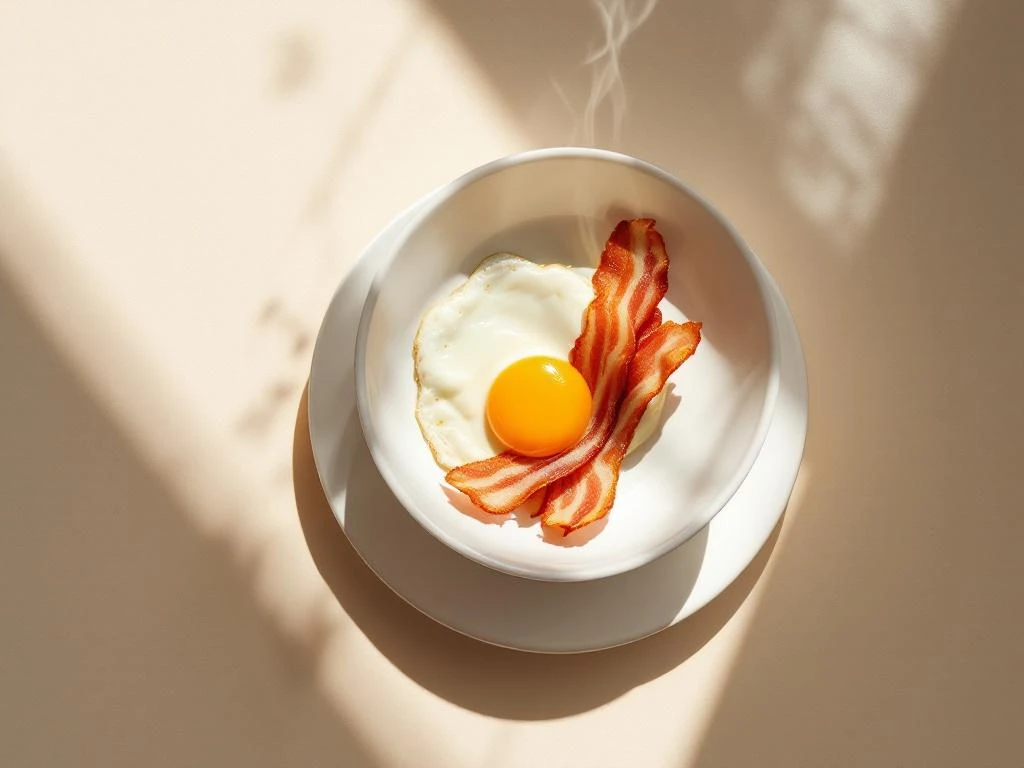
Starting your day with a bacon and egg breakfast bowl gives you lasting energy without triggering IBS symptoms. This FODMAP friendly breakfast bowl combines protein-rich ingredients with safe vegetables to support your digestive wellness while keeping you satisfied until lunch. Whether you’re new to the low FODMAP diet or looking for quick meal prep ideas, this easy breakfast bowl recipe takes about 15 minutes to prepare and can be customised to your taste preferences.
You’ll need basic cooking skills and access to a stovetop. The recipe works well for beginners and takes roughly 15 minutes from start to finish. All ingredients are readily available at most supermarkets, and we’ll show you how to identify FODMAP-safe options.
Before starting, gather a non-stick skillet, mixing bowl, spatula, and serving bowls. You’ll also need bacon without high FODMAP additives, fresh eggs, and your choice of low FODMAP vegetables. The process involves cooking each component separately, then assembling everything into a balanced, digestive friendly breakfast.
Why this breakfast bowl supports digestive wellness
This bacon and egg breakfast bowl fits perfectly into a low FODMAP diet because it focuses on naturally low FODMAP proteins and vegetables. Eggs and plain bacon contain no FODMAPs, making them ideal foundations for an IBS friendly breakfast. The high protein content helps stabilise blood sugar levels and provides sustained energy throughout your morning without causing digestive distress.
Protein takes longer to digest than simple carbohydrates, which means you’ll feel fuller for longer periods. This protein breakfast bowl typically contains 20 to 25 grams of protein per serving, depending on portion sizes. That amount supports muscle maintenance and keeps your metabolism steady without overloading your digestive system.
The nutritional advantages extend beyond protein. Eggs provide essential vitamins like B12 and D, whilst bacon adds satisfying flavour and fat that helps your body absorb fat-soluble vitamins. When you choose quality ingredients and control portions, this gluten free breakfast bowl delivers balanced nutrition that supports both digestive health and overall wellbeing.
Gather your low FODMAP ingredients and tools
Start with these essential ingredients for one serving. You’ll need 2 to 3 rashers of bacon without added onion or garlic powder, 2 large eggs, and a handful of spinach or rocket. Add a small portion of cherry tomatoes (maximum 5 tomatoes), a tablespoon of chives, and salt and pepper for seasoning.
Check bacon labels carefully. Avoid products listing onion powder, garlic powder, or high fructose corn syrup in the ingredients. Plain bacon with just pork, salt, and basic preservatives works best. Some brands add problematic ingredients for flavour, so reading labels becomes crucial for maintaining your low FODMAP meal prep success.
For kitchen equipment, gather a medium non-stick skillet, a spatula or wooden spoon, a small bowl for beating eggs if making scrambled eggs, paper towels for draining bacon, and your serving bowl. Having everything ready before you start cooking makes the process smoother and prevents overcooking whilst you search for tools.
Ingredient substitutions work well with this flexible recipe. Swap spinach for kale, use turkey bacon instead of pork bacon, or add diced courgette instead of tomatoes. Keep portions of vegetables to FODMAP-safe amounts. One cup of spinach, five cherry tomatoes, or half a medium courgette per serving stays within safe limits.
Prepare and cook your bacon perfectly
Place your bacon rashers in a cold skillet before turning on the heat. This technique allows the fat to render slowly and helps achieve even cooking without burning the edges. Turn the heat to medium and let the bacon cook gradually as the pan warms up.
Cook for 3 to 4 minutes on the first side. You’ll see the bacon begin to brown and curl slightly at the edges. Flip each rasher using tongs or a fork, then cook for another 3 to 4 minutes. Adjust cooking time based on your preferred crispness. Less time gives you chewier bacon, whilst more time creates crispy strips.
Watch the bacon closely during the final minutes. It can go from perfectly crispy to burnt quickly. When the bacon reaches your desired texture, transfer it to a plate lined with paper towels. The paper absorbs excess grease, making your breakfast bowl less oily and easier to digest.
Save about a teaspoon of bacon fat in the pan if you plan to fry your eggs. This adds flavour and prevents sticking. Pour off any remaining grease into a heat-safe container, never down your sink drain. Once the bacon cools for a minute, chop or break it into bite-sized pieces for easier eating.
Cook eggs to your preferred style
For fried eggs, keep the heat at medium-low and crack your eggs directly into the bacon fat remaining in your pan. Cook for 2 to 3 minutes until the whites set completely but the yolks stay runny. Cover the pan with a lid for the last minute if you want the tops to cook faster without flipping.
Scrambled eggs require a different approach. Beat your eggs in a small bowl with a pinch of salt and pepper. Pour them into the warm pan and let them sit for 30 seconds. Use a spatula to gently push the eggs from the edges towards the centre, creating soft curds. Remove from heat when the eggs look slightly wet, as they continue cooking from residual heat.
Poached eggs work well if you prefer to avoid added fat. Bring a small pot of water to a gentle simmer, add a splash of vinegar, and create a gentle whirlpool with a spoon. Crack your egg into the centre and cook for 3 to 4 minutes. Remove with a slotted spoon and drain on paper towels.
Season your eggs with salt and pepper only. Avoid garlic salt, onion powder, or mixed seasonings that might contain high FODMAP ingredients. Fresh or dried chives add flavour safely. The key to perfect texture is gentle heat and careful timing. Overcooked eggs become rubbery and less enjoyable.
Assemble your breakfast bowl with FODMAP-safe toppings
Start with your leafy greens at the bottom of the bowl. Use about one cup of fresh spinach or rocket. The warm bacon and eggs will slightly wilt the greens, creating a pleasant texture contrast. This base layer adds volume and nutrients without adding FODMAPs.
Layer your cooked bacon pieces over the greens, then add your eggs on top. If using fried eggs, place them in the centre so the yolk can act as a sauce when broken. Scrambled eggs can be spread more evenly across the bowl. Arrange ingredients so each bite contains a mix of flavours and textures.
Add your cherry tomatoes, halved or quartered, around the edges. Sprinkle fresh chives over everything for a mild onion-like flavour that’s completely FODMAP-safe. A small drizzle of olive oil adds healthy fats and helps blend the flavours together.
Portion guidance matters for digestive comfort. One serving contains 2 eggs, 2 to 3 bacon rashers, 1 cup greens, and small amounts of other vegetables. This provides balanced nutrition without overwhelming your system. You can add a slice of gluten free toast on the side if you need more carbohydrates, but keep portions moderate.
Customise and meal prep your breakfast bowls
Variation options let you adapt this recipe to your preferences. Try adding diced firm tofu for extra protein, swap bacon for grilled chicken strips, or include roasted red pepper strips. Some people enjoy adding a tablespoon of lactose-free cheese or a dollop of lactose-free Greek yoghurt for creaminess.
For make-ahead efficiency, cook bacon in batches on Sunday evening. Store cooked bacon in an airtight container in the fridge for up to 4 days. Wash and prep your vegetables at the same time. Hard-boiled eggs also work well for meal prep and last up to a week in the shell.
Assemble cold meal prep versions by placing cooked, cooled ingredients in separate compartments of a divided container. Keep eggs and bacon separate from greens until you’re ready to eat. Add fresh vegetables just before serving to maintain crispness. Store prepared bowls in the fridge for up to 3 days.
Reheating requires gentle heat to avoid rubbery eggs. Microwave bacon and eggs separately for 30 to 45 seconds on medium power. Add fresh greens after reheating rather than warming them. Alternatively, assemble your bowl with cold ingredients for a refreshing breakfast salad that needs no reheating.
This flexible approach to the bacon and egg breakfast bowl means you can enjoy an easy breakfast bowl recipe even during busy mornings. Prep components ahead, then mix and match based on what you feel like eating. The low FODMAP meal prep strategy saves time whilst supporting your digestive wellness throughout the week.
Bacon and egg breakfast bowl
Cooking Time: 15 minutes | Portions: 1 serving
- 2 to 3 rashers plain bacon (no onion or garlic powder)
- 2 large eggs
- 1 cup fresh spinach or rocket
- 5 cherry tomatoes, halved
- 1 tablespoon fresh chives, chopped
- Salt and pepper to taste
- Optional: drizzle of olive oil
Steps:
- Place bacon in cold skillet, turn heat to medium, cook 3 to 4 minutes per side until desired crispness
- Drain bacon on paper towels, chop into pieces
- Cook eggs in remaining bacon fat to your preferred style (fried, scrambled, or poached)
- Place spinach in serving bowl as base layer
- Add cooked bacon and eggs on top
- Arrange tomatoes around edges, sprinkle with chives
- Season with salt and pepper, add optional olive oil drizzle
- Serve immediately or store components separately for meal prep
This recipe is for informational purposes only and is not medical or dietary advice. Please consult a healthcare professional before making any changes to your diet.
Related Articles
- Egg and Veggie Breakfast Quesadilla
- What is a good dinner for someone with IBS?
- Turkey Sausage and Egg Skillet
- What are the best snacks for IBS?
- Gluten-Free English Muffin with Jam