
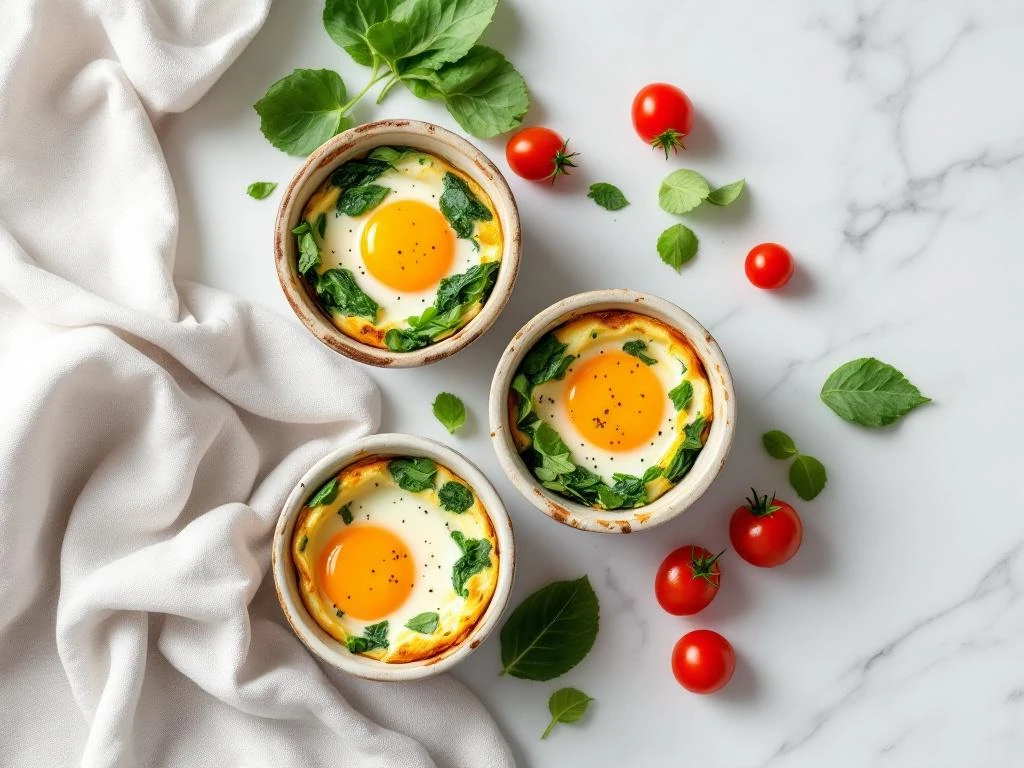
Rushed mornings and digestive sensitivities don’t mix well. These spinach and tomato egg cups solve that problem by giving you a grab-and-go breakfast that’s gentle on your stomach and ready when you are. This recipe is beginner-friendly and takes about 30 minutes from start to finish, including prep and baking time. You’ll need basic kitchen tools including a muffin tin, mixing bowl, and whisk. By the end, you’ll have a week’s worth of IBS-friendly breakfast cups that reheat beautifully and taste fresh every time.
Why egg cups are perfect for low FODMAP meal prep
Meal prep breakfast cups give you control over ingredients when your digestive system demands predictability. Each egg muffin cup provides protein, vegetables, and nutrients in a portable format that fits into busy mornings without triggering IBS symptoms.
Traditional breakfast options often hide high FODMAP ingredients. Bread contains wheat and sometimes onion powder. Yoghurt parfaits include lactose. Even seemingly safe cereals can contain inulin or high FODMAP fruits. These low FODMAP egg cups eliminate the guesswork.
The nutrient density matters when you’re managing digestive issues. Eggs provide complete protein and B vitamins. Spinach adds iron and folate without the fermentable fibres found in cruciferous vegetables. Tomatoes contribute lycopene and vitamin C whilst remaining low FODMAP in moderate portions.
Portability solves the breakfast skipping problem that many people with IBS face. When morning symptoms make eating difficult, having something ready to take with you means you won’t start your day on an empty stomach. These egg muffin cups travel well to work, reheat quickly, and don’t require utensils.
Gather your ingredients and equipment
Start with six large eggs as your base. Fresh spinach works better than frozen for this recipe because it releases less water during baking. You’ll need about two cups of fresh spinach leaves, which will cook down significantly. Cherry tomatoes are ideal because they’re naturally sweeter and contain less water than larger varieties. Plan for roughly ten cherry tomatoes, which you’ll halve.
For seasoning, stick to salt and black pepper. Both are low FODMAP and won’t irritate sensitive digestive systems. If you want additional flavour, fresh basil or chives work well. Avoid garlic powder and onion powder, as these are high FODMAP ingredients that commonly trigger symptoms.
A standard 12-cup muffin tin is essential. You’ll also need paper muffin liners or non-stick cooking spray. Paper liners make cleanup easier and help the egg cups release cleanly. Grab a medium mixing bowl, a whisk or fork for beating eggs, and a sharp knife for chopping vegetables.
Keep measuring cups handy for portioning spinach and a cutting board for tomato prep. A small pastry brush helps if you’re greasing the tin instead of using liners. Everything should be at room temperature before you start, as cold eggs don’t incorporate air as well when whisked.
Optional additions for variety
Lactose-free cheese adds richness without digestive distress. Cheddar and Swiss are naturally lower in lactose than soft cheeses. Use about half a cup, grated. Cooked bacon or ham provides extra protein, but check labels for hidden high FODMAP ingredients like garlic powder in processed meats.
Prepare the egg cup mixture step by step
Preheat your oven to 180°C (350°F). This temperature cooks the eggs through without creating a rubbery texture. Whilst the oven heats, prepare your muffin tin with liners or a light coating of oil.
Wash spinach leaves thoroughly under cold running water. Pat them dry with kitchen towel or use a salad spinner. Wet spinach adds unwanted moisture to your egg cups. Roughly chop the spinach into bite-sized pieces. You don’t need perfect uniformity, but smaller pieces distribute better throughout the mixture.
Slice cherry tomatoes in half. If you’re using larger tomatoes, dice them into small pieces no bigger than 1cm. Remove excess seeds and juice by gently squeezing each piece over the sink. This step prevents watery egg cups that don’t set properly.
Crack eggs into your mixing bowl. Whisk vigorously for about 30 seconds until the yolks and whites combine completely. You should see small bubbles forming on the surface. This incorporation of air creates lighter, fluffier egg cups.
Add chopped spinach and tomatoes directly into the whisked eggs. Season with a quarter teaspoon of salt and a pinch of black pepper. Stir gently with a spoon to distribute vegetables evenly throughout the mixture. The spinach should be coated with egg, and tomatoes should be suspended throughout.
Filling the muffin tin correctly
Use a ladle or measuring cup to pour the mixture into each muffin cup. Fill each cavity about three-quarters full. The eggs will puff up slightly during baking but won’t overflow if you leave this space. Try to get an equal amount of vegetables in each cup by stirring the mixture between pours.
Bake and store your egg cups properly
Place the muffin tin on the middle oven rack. Bake for 18 to 22 minutes. The egg cups are done when the centres are set and no longer jiggly. The tops should look slightly golden and feel firm when gently pressed with your finger.
Visual cues help determine doneness. The edges will pull away slightly from the muffin tin. The surface should appear dry rather than glossy. If you insert a toothpick into the centre, it should come out clean without wet egg mixture.
Remove the tin from the oven and let it cool for five minutes before removing the egg cups. This cooling period allows them to firm up and makes removal easier. Use a butter knife to gently loosen the edges if you didn’t use paper liners.
Transfer cooled egg cups to a wire rack for another ten minutes. This prevents condensation from forming on the bottoms, which can make them soggy. Once completely cool, they’re ready to eat or store.
Storage guidelines for meal prep success
Store healthy breakfast cups in an airtight container in the refrigerator for up to five days. Stack them with parchment paper between layers to prevent sticking. Glass containers work better than plastic because they don’t absorb odours.
For freezing, wrap each egg muffin cup individually in cling film, then place all wrapped cups in a freezer bag. They’ll keep for up to three months. Label the bag with the date so you can track freshness.
Reheat refrigerated egg cups in the microwave for 30 to 45 seconds. Frozen ones need about 90 seconds, or you can thaw them overnight in the fridge first. The texture stays best when you reheat at medium power rather than high, which can make eggs rubbery.
Customize your egg cups with low FODMAP variations
Red capsicum adds sweetness and colour whilst staying low FODMAP in portions up to half a cup. Dice it small and add it to the egg mixture alongside or instead of tomatoes. Courgette works similarly but requires extra preparation. Grate it and squeeze out excess moisture before adding.
Fresh herbs transform the flavour profile without adding FODMAPs. Basil pairs naturally with tomato and adds Italian flair. Chives provide a mild onion-like taste that’s safe for sensitive stomachs. Fresh parsley brightens the overall taste. Add about two tablespoons of chopped fresh herbs to the egg mixture.
Cheese options include aged cheddar, Swiss, mozzarella, and parmesan. All are naturally lower in lactose due to the aging process. Feta works in small amounts but check your personal tolerance. Sprinkle cheese on top of each cup before baking for a golden crust, or mix it into the egg mixture for even distribution throughout.
Protein additions that stay IBS-friendly
Cooked bacon crumbles add savoury depth. Cook bacon until crispy, drain on kitchen towel, and crumble into small pieces. Add about two tablespoons to the egg mixture. Check ingredient labels on packaged bacon for garlic or onion powder.
Diced ham provides protein without much fat. Use plain cooked ham rather than honey-glazed varieties, which may contain high FODMAP sweeteners. Smoked salmon offers omega-3 fats and a different flavour profile entirely. Tear it into small pieces and fold gently into the mixture.
Ground turkey or chicken works when cooked first and seasoned simply with salt and pepper. Brown about 100g of mince, drain any fat, and let it cool before adding to eggs. This turns your make ahead egg cups into a more substantial meal.
Preventing meal fatigue with rotation
Make different variations each week to keep your low FODMAP breakfast routine interesting. One week might feature spinach and tomato egg cups, whilst the next uses capsicum and cheese. The week after that could highlight herbs and ham. This rotation prevents the boredom that often derails healthy eating patterns.
Batch cooking different flavours on the same day gives you variety throughout the week. Use your 12-cup tin to make six of one variety and six of another. Mark the containers so you know which is which. This approach takes the same amount of time but doubles your options.
These gluten free egg muffins have become a staple in our own kitchen because they solve the morning time crunch whilst respecting digestive needs. The flexibility of the recipe means you’ll never get tired of them, and the meal prep aspect removes the daily decision-making that can feel overwhelming when you’re managing IBS.
Spinach and tomato egg cups
Cooking Time: 30 minutes | Portions: 12 egg cups
- 6 large eggs
- 2 cups fresh spinach, chopped
- 10 cherry tomatoes, halved and seeded
- 1/4 teaspoon salt
- Pinch of black pepper
- Optional: 1/2 cup grated lactose-free cheese, fresh herbs, cooked bacon or ham
- Preheat oven to 180°C (350°F) and prepare a 12-cup muffin tin with liners or oil
- Wash, dry, and chop spinach into bite-sized pieces
- Halve cherry tomatoes and remove excess seeds and juice
- Whisk eggs in a mixing bowl for 30 seconds until well combined
- Add spinach, tomatoes, salt, and pepper to eggs and stir to distribute evenly
- Pour mixture into muffin cups, filling each three-quarters full
- Bake for 18 to 22 minutes until centres are set and tops are golden
- Cool for 5 minutes in the tin, then transfer to a wire rack
- Store in an airtight container in the fridge for up to 5 days or freeze for up to 3 months
- Reheat refrigerated cups for 30 to 45 seconds or frozen cups for 90 seconds in the microwave
This recipe is for informational purposes only and is not medical or dietary advice. Please consult a healthcare professional before making any changes to your diet.
Related Articles
- Gluten-Free Banana Pancakes
- How to calm down IBS in the morning?
- Raspberry Almond Breakfast Bowl
- Orange Ginger Overnight Oats
- What is the most common FODMAP trigger?