
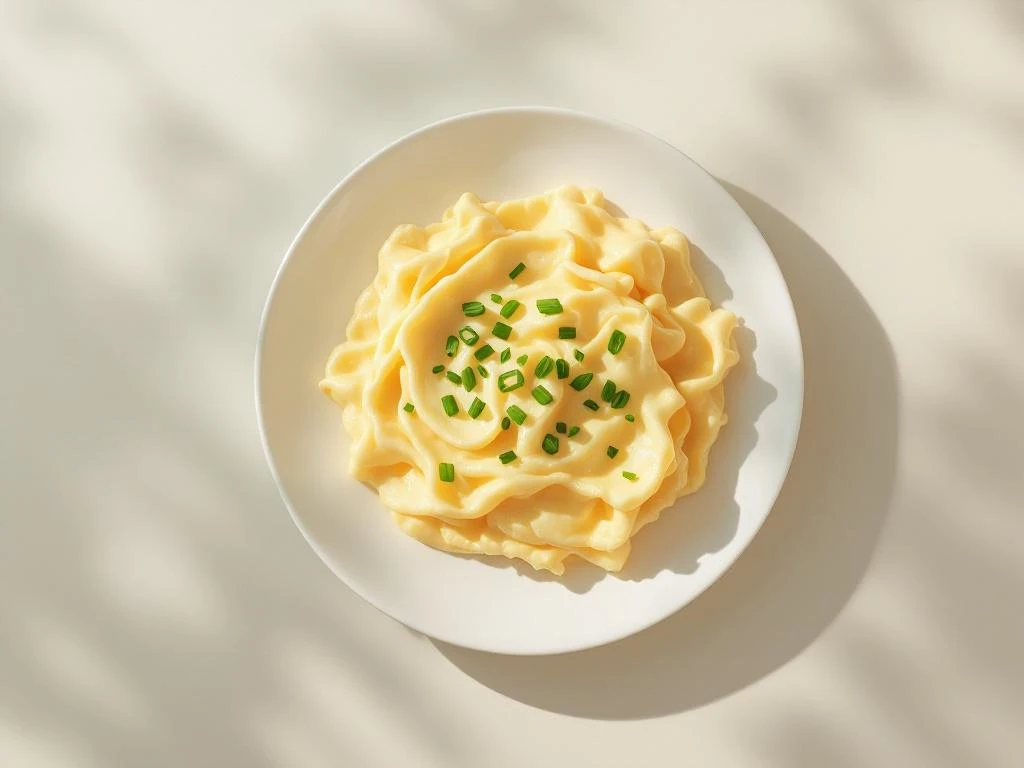
Scrambled eggs with chives make a quick, satisfying breakfast that’s gentle on sensitive stomachs. This IBS friendly breakfast takes just 10 minutes from start to finish and requires only a handful of ingredients. If you’ve been searching for an easy scrambled eggs recipe that won’t trigger digestive symptoms, this gluten free scrambled eggs dish delivers protein and flavour without compromise.
You’ll learn the proper whisking technique for fluffy scrambled eggs, the ideal heat setting to prevent rubbery texture, and why chives make a brilliant low FODMAP alternative to onions and garlic. This guide walks you through each step with clear indicators to help you achieve restaurant-quality results at home.
Why scrambled eggs with chives work for IBS
Eggs are naturally low FODMAP and safe for most people with digestive sensitivities. They contain no lactose, no fructose, and no problematic carbohydrates that trigger IBS symptoms. This makes them an ideal protein source when you’re managing digestive issues.
The nutritional profile of eggs supports gut health in several ways. Each egg provides about 6 grams of high-quality protein, essential amino acids, and B vitamins that help maintain energy levels throughout the morning. Protein also keeps you feeling satisfied longer, which matters when you’re being careful about what you eat.
Chives offer the fresh, mild flavour you might miss from onions and garlic without the FODMAP compounds that cause problems. According to Monash University’s FODMAP guidelines, chives remain low FODMAP in typical serving sizes. They add colour, taste, and nutrients to your scrambled eggs breakfast without triggering symptoms.
This simple combination gives you a breakfast that supports symptom management whilst providing genuine satisfaction. You’re not just avoiding problem foods, you’re actively choosing ingredients that nourish your body and taste good.
What you need for perfect scrambled eggs
The ingredient list for this low FODMAP breakfast recipe stays deliberately simple. You’ll need fresh eggs, chives, butter or a lactose-free alternative, salt, and pepper. That’s it.
Ingredients for two servings:
- 4 large eggs at room temperature
- 2 tablespoons fresh chives, finely chopped
- 15g butter or lactose-free spread
- Salt to taste
- Freshly ground black pepper
Essential equipment:
- Non-stick frying pan (20-24cm diameter)
- Whisk or fork for beating eggs
- Silicone or wooden spatula
- Small bowl for cracking eggs
Bringing eggs to room temperature before cooking helps them cook more evenly. Take them out of the fridge about 15 minutes before you start. Wash fresh chives thoroughly under cold water and pat them dry with kitchen paper before chopping. Use a sharp knife to cut them into small pieces, roughly 2-3mm in length.
Prepare your ingredients for cooking
Crack each egg into your bowl, checking for any shell fragments as you go. Tap the egg firmly on a flat surface rather than the bowl edge to get a cleaner break. Remove any bits of shell immediately, they’re easier to fish out now than after whisking.
Whisk the eggs with a fork or proper whisk for about 30 seconds. You want to see the yolks and whites fully combined with no streaks of clear egg white remaining. The mixture should look uniformly yellow and slightly frothy on top. This incorporation of air contributes to the fluffy texture you’re aiming for.
Add most of your chopped chives to the egg mixture, saving a small pinch for garnish. Stir them through gently. Hold off on adding salt until after cooking, as salt can make eggs watery if added too early. A small grind of pepper at this stage is fine if you prefer.
The consistency before cooking should be smooth and pourable, similar to single cream. If you’ve whisked properly, you’ll notice the mixture has increased slightly in volume. This preparation takes less than three minutes but makes a real difference to your final result.
Cook scrambled eggs to fluffy perfection
Place your non-stick pan over medium-low heat. This temperature control is the single most important factor in achieving fluffy scrambled eggs rather than rubbery ones. The pan should feel warm when you hold your hand 5cm above it, not hot.
Add your butter or lactose-free spread to the pan. Let it melt completely and coat the base, but don’t let it brown. Butter that’s foaming gently is perfect. Butter that’s sizzling loudly means your heat is too high, turn it down and wait 30 seconds.
Pour in your whisked egg mixture. Wait about 10 seconds before touching it. You’ll see the edges just starting to set. Now use your spatula to gently push the eggs from the edge toward the centre, tilting the pan so uncooked egg flows into the space you’ve created.
Continue this gentle pushing motion every 15-20 seconds. You’re creating soft curds, not stirring constantly. The eggs should look creamy and slightly wet even as they cook. This process takes 3-4 minutes total. Watch for the moment when the eggs are mostly set but still glossy with a bit of liquid remaining.
Remove the pan from heat whilst the eggs still look slightly underdone. They’ll continue cooking from residual heat for another 30 seconds. This is your key to avoiding overcooked, dry scrambled eggs. Transfer immediately to your serving plate.
Common mistakes and how to avoid them
Rubbery, overcooked eggs happen when the heat is too high or you leave them in the pan too long. The fix is simple but requires restraint. Keep your heat at medium-low and remove the eggs when they still look a bit wet. They finish cooking on the plate.
Watery scrambled eggs typically result from adding salt too early or not whisking thoroughly enough. Salt draws moisture out of eggs, creating liquid in your pan. Add it only after plating. If your eggs seem watery despite this, you may have undercooked them or used eggs that weren’t fresh.
Burning happens when your pan is too hot or you’re not moving the eggs enough during cooking. If you smell burning, immediately remove the pan from heat and transfer your eggs to a plate. Lower your temperature before trying again. A proper non-stick pan helps prevent this issue.
Uneven cooking creates some bits that are overdone whilst others remain raw. This means you’re either stirring too much (breaking up curds too small) or not enough (leaving large sections untouched). Aim for that gentle pushing motion every 15-20 seconds, creating soft, irregular curds.
Bland flavour is easily fixed. Season your eggs properly after cooking with salt and pepper. Don’t be shy with the chives either, their mild flavour needs a generous amount to come through. The reserved pinch for garnish adds a fresh hit right before eating.
Serving suggestions and variations
Serve your chive scrambled eggs recipe on low FODMAP toast made from sourdough spelt bread or gluten-free bread. A slice or two provides the carbohydrates to round out your breakfast. Spread with a thin layer of butter or lactose-free spread whilst the toast is still warm.
Suitable side dishes include grilled tomatoes, wilted spinach, or a small handful of rocket leaves dressed with olive oil and lemon juice. Smoked salmon makes an excellent protein addition if you want a more substantial meal. Keep portions moderate to maintain the low FODMAP status of your breakfast.
For plating, place your scrambled eggs slightly off-centre on the plate. Sprinkle the reserved chives over the top and add a small grind of black pepper. The visual appeal matters more than you might think, especially when you’re eating the same safe foods regularly.
Recipe variations worth trying:
- Add 30g grated lactose-free cheddar cheese to the eggs just before removing from heat
- Mix in other FODMAP-friendly herbs like parsley or basil alongside the chives
- Stir through 50g smoked salmon pieces for extra protein and omega-3 fats
- Top with a tablespoon of lactose-free sour cream for added richness
To meal prep this recipe, you can chop chives in advance and store them in an airtight container in the fridge for up to three days. However, scrambled eggs themselves don’t reheat well. They’re best made fresh each time, which only takes 10 minutes anyway. If you’re cooking for more people, simply multiply the ingredients. You can comfortably cook up to 8 eggs in a standard pan using the same technique.
This low FODMAP scrambled eggs recipe proves that eating for digestive health doesn’t mean sacrificing flavour or satisfaction. You’ve learned the techniques that separate mediocre scrambled eggs from genuinely good ones. The gentle heat, proper whisking, and knowing when to stop cooking all contribute to a breakfast that’s both kind to your gut and genuinely enjoyable. Keep these methods in mind for consistent results every time you make this IBS friendly breakfast.
Scrambled eggs with chives
Cooking time: 10 minutes | Portions: 2 servings
- 4 large eggs at room temperature
- 2 tablespoons fresh chives, finely chopped
- 15g butter or lactose-free spread
- Salt and pepper to taste
- Crack eggs into a bowl and whisk for 30 seconds until fully combined and slightly frothy
- Stir most of the chopped chives through the egg mixture, reserving a pinch for garnish
- Heat a non-stick pan over medium-low heat and melt the butter until gently foaming
- Pour in the egg mixture and wait 10 seconds before gently pushing eggs from edge to centre
- Continue gentle pushing every 15-20 seconds for 3-4 minutes until eggs are mostly set but still glossy
- Remove from heat whilst slightly underdone and transfer immediately to plates
- Season with salt and pepper, garnish with reserved chives, and serve straight away
This recipe is for informational purposes only and is not medical or dietary advice. Please consult a healthcare professional before making any changes to your diet.
Related Articles
- Egg and Cheddar Breakfast Sandwich
- Is scrambled egg on toast good for IBS?
- How Long Until Low FODMAP Works?
- What is the easiest protein to digest?
- What three foods make IBS worse?