
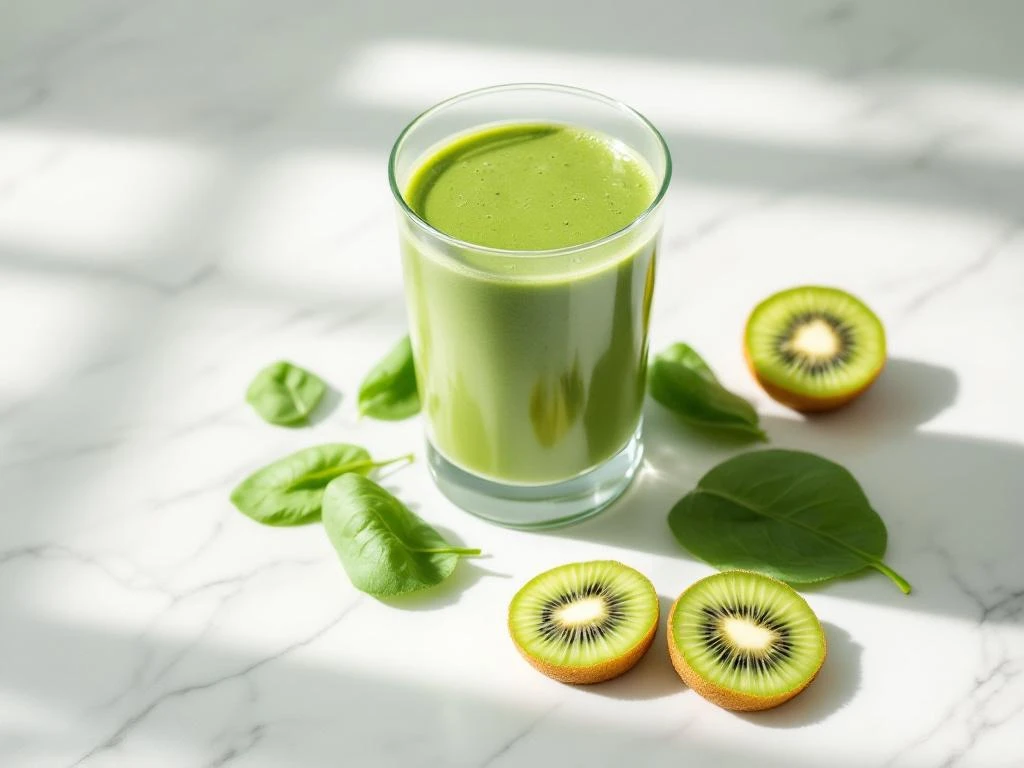
A green smoothie with spinach and kiwi offers a refreshing way to start your day whilst supporting your digestive health. This low FODMAP smoothie recipe combines nutrient-rich ingredients that are gentle on your stomach, making it perfect for anyone managing IBS or food sensitivities. You’ll need about 5 minutes to prepare this healthy green smoothie, and the simple recipe requires just a blender and a few fresh ingredients. Whether you’re new to low FODMAP eating or looking for quick breakfast ideas, this spinach kiwi smoothie provides essential vitamins without triggering uncomfortable symptoms.
Why this green smoothie supports digestive health
Spinach and kiwi are both excellent choices for a low FODMAP smoothie because they contain minimal amounts of fermentable carbohydrates that can trigger IBS symptoms. Baby spinach, in particular, is well tolerated in servings up to 75 grams, providing iron, folate, and vitamins A and C without causing digestive distress. Kiwi fruit is naturally low in FODMAPs and contains enzymes that may actually support digestion, making it an ideal base for this IBS friendly smoothie.
Green smoothies fit beautifully into a low FODMAP diet because they’re easy to digest and allow your body to absorb nutrients quickly. The blending process breaks down the cell walls of the ingredients, which means less work for your digestive system. This is particularly helpful during busy mornings when you need something nutritious but don’t want to risk uncomfortable symptoms before starting your day.
The convenience factor makes this digestive health smoothie a practical solution for meal planning. You can prepare ingredients ahead of time and blend them in minutes, creating a nutrient-dense breakfast that travels well. Unlike some breakfast options that might upset your stomach, this green smoothie recipe provides sustained energy without the bloating or discomfort that often comes with high FODMAP foods.
What ingredients you need for a low FODMAP green smoothie
For one serving of this spinach smoothie recipe, you’ll need 50 grams of fresh baby spinach leaves, which equals roughly two handfuls. This portion stays well within the low FODMAP limit whilst providing substantial nutritional benefits. Choose fresh, tender leaves for the smoothest texture and mildest flavour.
You’ll need one medium kiwi fruit, peeled and chopped. Kiwi adds natural sweetness and a vibrant green colour to your smoothie. The fruit is safe in servings up to two whole kiwis per sitting on the low FODMAP diet, so you can adjust based on your taste preferences. Green kiwis work perfectly, though gold kiwis are equally suitable.
For the liquid base, use 200ml of lactose-free milk or almond milk. Both options are low FODMAP friendly when consumed in appropriate amounts. Lactose-free milk provides protein and calcium, whilst almond milk offers a lighter, slightly nutty flavour. Check that your almond milk contains no high FODMAP additives like inulin or chicory root.
Optional additions include one tablespoon of chia seeds for added fibre and omega-3 fatty acids, or one scoop of low FODMAP protein powder if you want extra protein. A small handful of ice cubes creates a thicker, colder consistency. You can also add half a small frozen banana (around 50 grams) for creaminess, as this amount remains within low FODMAP guidelines.
Safe alternatives for customisation
If you don’t have spinach, you can substitute with rocket or kale in similar portions. Both are low FODMAP in measured amounts and provide different flavour profiles. For the liquid, coconut milk (from a carton, not canned) or oat milk work well, though check serving sizes as oat milk has a lower FODMAP threshold. Instead of kiwi, you could use strawberries (five medium berries) or blueberries (a quarter cup), both of which are low FODMAP options.
Prepare your ingredients for optimal blending
Start by washing your spinach thoroughly under cold running water. Even pre-washed spinach benefits from a quick rinse to remove any residual grit. Pat the leaves dry with a clean tea towel or use a salad spinner to remove excess water. Too much water dilutes your smoothie and creates a watery texture rather than the creamy consistency you want.
Peel your kiwi using a small knife or vegetable peeler, removing the fuzzy brown skin completely. Cut the fruit into quarters to help your blender process it more efficiently. If you’re using frozen banana, break it into smaller chunks before adding it to the blender. Smaller pieces blend more smoothly and put less strain on your blender motor.
Measure your liquid accurately using a measuring jug. The 200ml measurement provides the right balance between thickness and drinkability. Too little liquid makes the smoothie difficult to blend and creates an overly thick texture. Too much liquid results in a watery drink that lacks body.
Organise all your ingredients next to your blender before you start. This simple step makes the blending process quicker and helps ensure you don’t forget any components. If you’re adding ice or frozen ingredients, keep them in the freezer until the last moment to maintain their temperature.
Fresh versus frozen ingredients
Fresh ingredients work beautifully in this kiwi smoothie, but frozen options offer practical advantages. Frozen spinach can be used in the same quantity as fresh, though it may create a slightly thicker texture. If using frozen kiwi, you won’t need as much ice. Frozen ingredients also extend the shelf life of your smoothie components, reducing food waste and making meal prep easier. The nutritional value remains largely the same whether you use fresh or frozen produce.
Blend your spinach and kiwi smoothie perfectly
Pour your liquid into the blender first. This crucial step prevents the blades from spinning dry and helps create a vortex that pulls the other ingredients down for even blending. Starting with liquid also protects your blender motor from unnecessary strain.
Add the spinach next, pushing it down gently with a spoon if needed. The leaves will compress significantly once blending starts. Place the kiwi pieces on top of the spinach, followed by any optional ingredients like chia seeds or protein powder. If you’re using ice or frozen banana, add these last.
Begin blending on a low speed for about 10 seconds to break down the larger pieces. This initial pulse helps prevent chunks from getting stuck under the blades. Gradually increase to high speed and blend for 30 to 45 seconds until the mixture is completely smooth. You should see no visible specks of spinach or chunks of kiwi.
Stop the blender and check the consistency. Your smoothie should be thick enough to coat the back of a spoon but thin enough to pour easily. If it’s too thick, add a splash more liquid and blend for another 10 seconds. If it’s too thin, add a few ice cubes or a bit more fruit and blend again briefly.
Avoiding common blending mistakes
Don’t over-blend your green smoothie. Excessive blending generates heat through friction, which can warm your cold smoothie and potentially affect some nutrients. Once you achieve a smooth consistency, stop blending. If you notice foam forming on top, you’ve likely blended too long. Let the smoothie sit for a minute and the foam will settle, or simply stir it in before drinking.
Customise your smoothie with low FODMAP additions
Protein powder transforms this healthy green smoothie into a more substantial meal replacement. Choose a low FODMAP protein powder made from rice protein, pea protein isolate, or whey protein isolate. Avoid powders containing inulin, chicory root, or high amounts of sugar alcohols. One scoop typically provides 20 to 25 grams of protein without affecting the FODMAP status of your smoothie.
For healthy fats, add one tablespoon of natural peanut butter or almond butter. This amount stays within low FODMAP limits and creates a creamier texture whilst adding satisfying richness. The healthy fats also help you absorb the fat-soluble vitamins from the spinach. Make sure your nut butter contains only nuts and perhaps a small amount of salt, with no added sugars or oils.
Natural sweeteners can enhance the flavour if you prefer a sweeter spinach kiwi smoothie. One tablespoon of pure maple syrup is low FODMAP and adds a pleasant sweetness without refined sugar. Alternatively, you could use a small amount of glucose syrup or table sugar, both of which are low FODMAP options. Avoid honey, agave, and artificial sweeteners like sorbitol or mannitol.
Texture enhancers make your smoothie more enjoyable to drink. A handful of ice cubes creates a thicker, frostier consistency perfect for warm mornings. Half a small frozen banana (approximately 50 grams) adds natural creaminess and sweetness whilst remaining low FODMAP compliant. A tablespoon of rolled oats can add body, though keep in mind that oats have a lower FODMAP threshold of about a quarter cup.
Flavour variations to try
A small piece of fresh ginger (about one centimetre) adds a warming spice that may further support digestion. Fresh mint leaves provide a refreshing twist that pairs beautifully with the kiwi. A pinch of cinnamon or vanilla extract (check it’s pure extract, not essence) can create interesting flavour profiles without adding FODMAPs. Experiment with these additions one at a time to find your favourite combination.
Store and meal prep your green smoothies
Fresh smoothies taste best immediately after blending, but you can store this low FODMAP breakfast in the refrigerator for up to 24 hours. Pour your smoothie into an airtight container, filling it to the top to minimise air exposure. Glass jars or bottles with tight-fitting lids work particularly well. Give the container a good shake before drinking, as natural separation occurs during storage.
Freezing extends the life of your green smoothie recipe significantly. Pour the blended smoothie into freezer-safe containers or ice cube trays, leaving a small gap at the top for expansion. Frozen smoothies keep for up to three months. Thaw overnight in the refrigerator or blend the frozen cubes with a splash of fresh liquid for an instant smoothie bowl consistency.
Batch preparation makes weekday mornings effortless. Prepare individual portions of the dry ingredients (spinach and chopped kiwi) in small containers or freezer bags. Label each portion with the date and store in the freezer. When you’re ready for your smoothie, simply add one portion to your blender with fresh liquid and blend. This method preserves nutrients better than storing fully blended smoothies.
The best containers for smoothie storage are made from glass or BPA-free plastic with secure lids. Wide-mouth mason jars are excellent because they’re easy to clean and don’t retain odours. For grab-and-go convenience, invest in insulated smoothie cups with straws. These keep your drink cold during your commute whilst preventing spills.
Maintaining freshness and nutrients
Vitamin C and some B vitamins degrade when exposed to air and light, so minimise storage time when possible. Adding a small squeeze of lemon juice can help preserve the bright green colour, though check your FODMAP tolerance as citrus juice can be acidic. If your smoothie develops an off smell or changes colour significantly, discard it. Trust your senses when it comes to food safety.
This spinach and kiwi green smoothie offers a practical, delicious way to support your digestive health whilst following a low FODMAP diet. The simple preparation takes just minutes, and the customisation options mean you’ll never get bored with your morning routine. By preparing ingredients in advance and understanding proper storage methods, you can enjoy this IBS friendly smoothie whenever you need a quick, nutritious meal that won’t upset your stomach.
Green smoothie with spinach and kiwi
Prep time: 5 minutes | Portions: 1 serving
Ingredients:
- 50g baby spinach leaves
- 1 medium kiwi, peeled and chopped
- 200ml lactose-free milk or almond milk
- 1 tablespoon chia seeds (optional)
- Handful of ice cubes (optional)
- Half a small frozen banana, about 50g (optional)
Instructions:
- Wash spinach thoroughly and pat dry
- Peel and quarter the kiwi
- Pour liquid into blender first
- Add spinach, then kiwi and optional ingredients
- Blend on low speed for 10 seconds, then high speed for 30 to 45 seconds
- Check consistency and adjust if needed
- Pour into a glass and enjoy immediately
Storage: Refrigerate in an airtight container for up to 24 hours, or freeze for up to 3 months
This recipe is for informational purposes only and is not medical or dietary advice. Please consult a healthcare professional before making any changes to your diet.
Related Articles
- Lactose-Free Vanilla Berry Parfait
- Can I eat McDonald’s fries on low FODMAP?
- Bacon and Tomato Egg Bake
- Is scrambled egg on toast good for IBS?
- Scrambled Tofu with Turmeric