
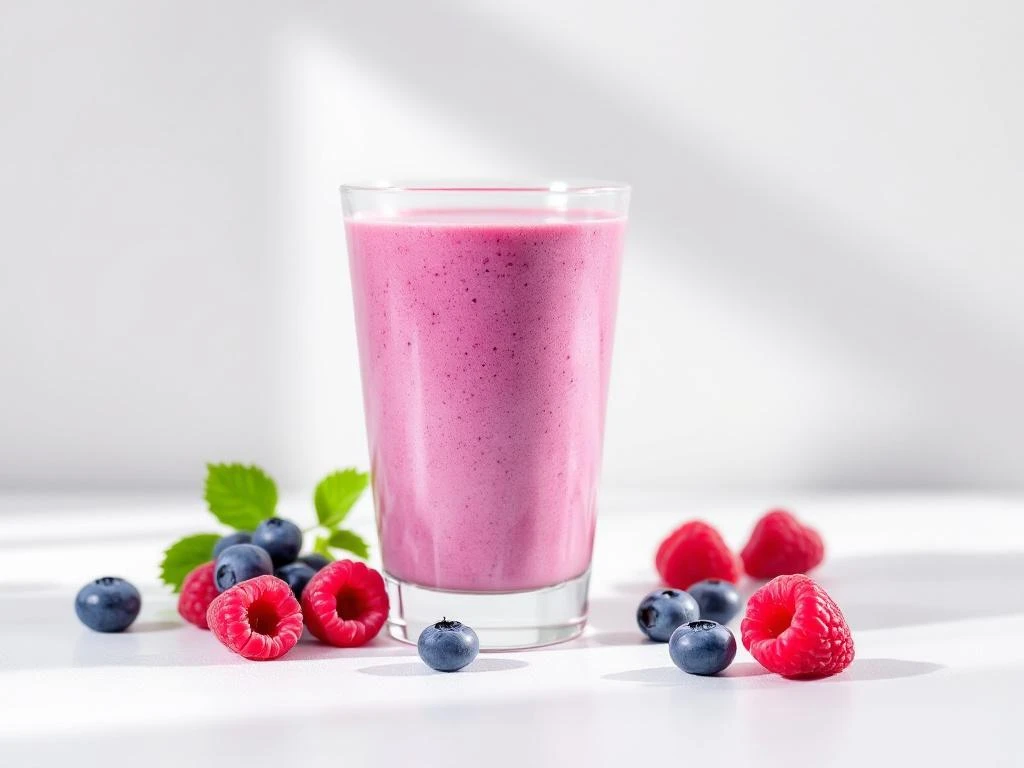
Making a lactose-free berry smoothie gives you a quick breakfast or snack that won’t upset your stomach. This guide shows you how to create an IBS-friendly smoothie using low FODMAP ingredients that taste great and support your digestive health. The process takes about 5 minutes and requires no cooking experience.
You’ll need a blender, measuring cups, and basic ingredients from your local shop. All berries and additions in this recipe follow low FODMAP guidelines, so you can enjoy your smoothie without worrying about triggering symptoms. By the end, you’ll know how to make a delicious dairy-free smoothie and customize it to your taste preferences.
Why lactose-free berry smoothies work for IBS
Lactose-free berry smoothies fit perfectly into a low FODMAP diet because they avoid the main triggers that cause digestive discomfort. Traditional dairy products contain lactose, which many people with IBS struggle to digest. When you swap regular milk for lactose-free alternatives, you remove this common problem ingredient while keeping the creamy texture you want in a smoothie.
Berries offer natural sweetness and nutrients without the high FODMAP content found in many fruits. Strawberries and blueberries are safe in controlled portions on a low FODMAP diet. They provide fibre, vitamins, and antioxidants that support your overall health. The key is sticking to the recommended serving sizes, which this recipe respects.
These IBS-friendly smoothies make ideal breakfast options because they’re gentle on your digestive system first thing in the morning. They’re also portable, so you can take them to work or drink them between meals when you need energy. The smooth, blended texture means your stomach doesn’t work as hard to break down the ingredients, which helps reduce bloating and discomfort.
Gather your ingredients and tools
Start by collecting all your ingredients before you begin blending. This makes the process smoother and helps you avoid missing anything important.
Low FODMAP berries and portions
- 20 strawberries (about 140g), fresh or frozen
- 40 blueberries (about 75g), fresh or frozen
- Raspberries (limit to 30g if using) as an optional addition
These portions follow low FODMAP serving guidelines. Don’t increase the amounts, as larger servings can trigger symptoms. Frozen berries work just as well as fresh ones and often cost less.
Lactose-free liquid bases
- 250ml lactose-free milk (dairy or plant-based)
- Almond milk (check it’s unsweetened)
- Coconut milk from a carton (not canned)
- Rice milk as another option
Pick one liquid base for your smoothie. Lactose-free dairy milk gives you protein and calcium. Plant-based options work if you prefer to avoid all dairy products. Check labels to make sure they don’t contain high FODMAP additives like inulin or chicory root.
Optional low FODMAP add-ins
- 1 tablespoon peanut butter (check for no added sweeteners)
- 1 tablespoon chia seeds
- Half a small banana (unripe is lower FODMAP)
- Handful of spinach (about 30g)
- 1 scoop lactose-free protein powder
- Ice cubes for thickness
Equipment needed
- Blender (any type works, but more powerful ones blend smoother)
- Measuring cups and spoons
- Tall glass for serving
- Spatula for scraping down sides
Make sure your blender is clean and dry before starting. Wet blenders can water down your smoothie.
Blend your lactose-free berry smoothie
Add your liquid base to the blender jar first. This prevents the berries from getting stuck at the bottom and helps everything blend evenly. Pour in your chosen 250ml of lactose-free milk or plant-based alternative.
Add your measured berries next. If you’re using frozen berries, you can put them straight into the blender without thawing. Frozen fruit actually makes your dairy-free smoothie thicker and colder, which many people prefer.
Include any optional add-ins at this point. Put softer ingredients like banana or spinach in before harder items like chia seeds. This layering helps your blender work more efficiently.
Secure the blender lid tightly. Start blending on low speed for about 10 seconds, then increase to high speed. Blend for 30 to 45 seconds until the mixture looks smooth and no chunks remain. You might need to blend a bit longer if you’re using a less powerful blender.
Stop the blender and check the consistency. Your smoothie should pour easily but still have some body to it. If it’s too thick, add 50ml more liquid and blend for another 10 seconds. If it’s too thin, add a few ice cubes or more frozen berries and blend again.
Scrape down the sides of the blender jar with a spatula if you notice unmixed ingredients stuck there. Give it one final 10-second blend to incorporate everything.
Pour your smoothie into a tall glass straight away. The texture is best when fresh, as separation can happen if you let it sit too long. If you see separation after a few minutes, just give it a quick stir.
Success check
Your finished smoothie should be smooth with no visible berry seeds or chunks. The colour will be a vibrant pink or purple depending on which berries you used. It should taste naturally sweet without any added sugar.
Customise your smoothie for variety
Change up your low FODMAP smoothie recipe to keep things interesting throughout the week. These variations all maintain gut-friendly properties while giving you different flavours and textures.
Flavour variations
Try a tropical version by adding 80g of fresh pineapple chunks. Pineapple is low FODMAP in this portion and adds a tangy sweetness. You can also add a quarter teaspoon of vanilla extract for a dessert-like flavour without any FODMAPs.
Make a green berry smoothie by increasing the spinach to 60g. The berries mask the spinach taste completely, but you get extra nutrients. This works well if you struggle to eat enough vegetables.
Add a tablespoon of cocoa powder for a chocolate berry smoothie. Make sure it’s pure cocoa without added milk powder or sweeteners. This creates a rich flavour that feels more indulgent.
Protein additions
Boost the protein content to make your smoothie more filling. Add one scoop of lactose-free whey protein or plant-based protein powder. Check the ingredients list carefully, as many protein powders contain high FODMAP sweeteners or additives.
Peanut butter adds both protein and healthy fats. One tablespoon is low FODMAP and makes the texture creamier. Almond butter works too, but check it’s pure nuts without added ingredients.
Greek-style lactose-free yoghurt (2 tablespoons) adds protein and makes the smoothie thicker. This works particularly well if you want a smoothie bowl instead of a drink.
Texture modifications
Make a smoothie bowl by using less liquid (about 150ml instead of 250ml) and adding more frozen berries. Blend until thick, then pour into a bowl and top with low FODMAP granola and extra fresh berries.
Create a thinner, more juice-like consistency by adding an extra 100ml of liquid. This works well if you prefer to drink your smoothie quickly or want something more refreshing on hot days.
Add 2 tablespoons of oats for a heartier texture. Oats are low FODMAP in small portions and make the smoothie more satisfying as a meal replacement.
Adapting for different dietary needs
Keep the recipe vegan by using plant-based milk and skipping any dairy-based protein powder. Stick with peanut butter or chia seeds for protein instead.
Make it nut-free by choosing rice milk or oat milk as your base. Skip the peanut butter and use sunflower seed butter if you want that creamy element.
Increase the calorie content for weight maintenance by adding a tablespoon of maple syrup (low FODMAP) and an extra tablespoon of peanut butter. This helps if you’re struggling to maintain your weight while managing IBS.
Your lactose-free breakfast smoothie can change based on what you have available and what you feel like drinking. The base recipe stays the same, so you always know you’re following low FODMAP guidelines even when you experiment with different additions.
Lactose-free berry smoothie
Cooking time: 5 minutes | Portions: 1 serving
Ingredients
- 250ml lactose-free milk or plant-based alternative
- 140g strawberries (about 20 berries), fresh or frozen
- 75g blueberries (about 40 berries), fresh or frozen
- Optional: 1 tablespoon peanut butter
- Optional: 1 tablespoon chia seeds
- Optional: ice cubes for thickness
Instructions
- Pour lactose-free milk into blender jar
- Add strawberries and blueberries
- Include any optional add-ins
- Blend on low speed for 10 seconds
- Increase to high speed and blend for 30 to 45 seconds
- Check consistency and adjust with more liquid or ice if needed
- Pour into glass and serve immediately
Tips
- Use frozen berries for a thicker, colder smoothie
- Add liquid first to prevent ingredients sticking to blender bottom
- Stick to portion sizes to keep the recipe low FODMAP
- Check all packaged ingredients for hidden high FODMAP additives
- Drink fresh for best texture and taste
This recipe is for informational purposes only and is not medical or dietary advice. Please consult a healthcare professional before making any changes to your diet.
Related Articles
- What three foods make IBS worse?
- What sandwiches can I eat with IBS?
- Spinach and Tomato Egg Cups
- Is Greek yogurt anti-inflammatory?
- What should I drink first in the morning with IBS?