
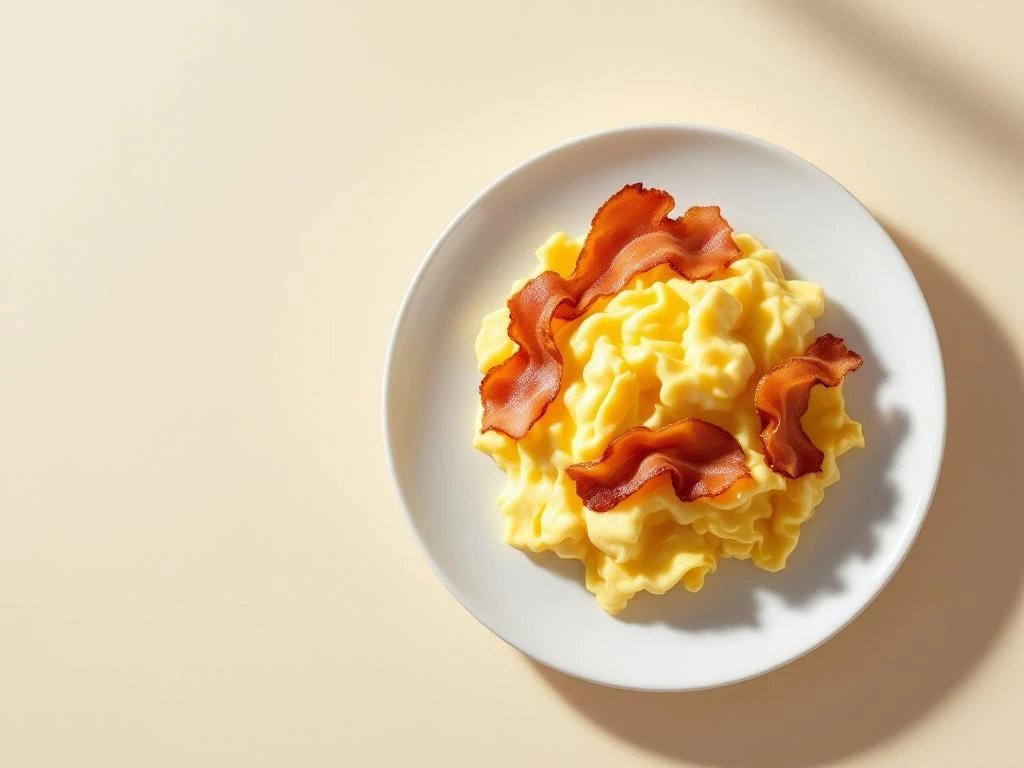
Finding an IBS friendly breakfast that’s quick, satisfying and gentle on your stomach can feel like a challenge. This turkey bacon and egg scramble solves that problem. It’s a low FODMAP breakfast that delivers protein, flavour and comfort without triggering digestive symptoms. You’ll learn exactly how to prepare this digestive friendly breakfast in about 15 minutes using ingredients that stay within FODMAP limits.
This guide is perfect for beginners. You don’t need advanced cooking skills. You’ll need a non-stick frying pan, a spatula, low FODMAP turkey bacon, eggs and a suitable cooking fat. We’ll walk you through choosing the right ingredients, cooking each component properly and avoiding the common mistakes that lead to rubbery eggs or burnt bacon.
By the end, you’ll have a reliable breakfast recipe that fits your low FODMAP diet and tastes delicious. You’ll also understand why this combination works so well for sensitive stomachs.
Why turkey bacon and egg scramble works for IBS
This turkey bacon eggs combination is naturally low FODMAP when you stick to proper portions. Eggs contain no FODMAPs at all, making them one of the safest protein sources for people managing IBS. Turkey bacon offers a leaner alternative to pork bacon, which can be harder to digest due to higher fat content.
The protein in both eggs and turkey bacon helps stabilise blood sugar and keeps you satisfied through the morning. Protein doesn’t ferment in your gut like certain carbohydrates do, so it won’t trigger the bloating and discomfort that high FODMAP foods cause. This makes your low FODMAP scramble an excellent choice for starting your day without digestive upset.
Turkey bacon typically contains less fat than traditional pork bacon. Lower fat content means easier digestion for sensitive stomachs. The reduced fat also means less risk of triggering symptoms in people whose IBS responds poorly to high fat meals. When you choose turkey bacon without high FODMAP additives like onion or garlic powder, you get all the savoury flavour without the digestive consequences.
Eggs are well tolerated on the low FODMAP diet because they’re pure protein and fat with no problematic carbohydrates. They cook quickly, scramble easily and provide essential nutrients like vitamin B12 and selenium. The gentle cooking method in this recipe keeps them soft and easy to digest, avoiding the tough, rubbery texture that can be harder on your stomach.
What you need for the perfect scramble
Start with 3 to 4 slices of low FODMAP turkey bacon. Check the ingredients list carefully. Avoid turkey bacon with onion powder, garlic powder or high FODMAP sweeteners like honey or agave. Plain turkey bacon seasoned only with salt, pepper and safe spices works best. Stick to this portion size to stay within FODMAP limits.
You’ll need 2 to 3 large eggs per person. Fresh eggs work better than older ones because they hold together nicely when scrambled. There’s no FODMAP limit on eggs, so adjust the quantity based on your hunger level.
Choose a cooking fat that suits your needs. One tablespoon of olive oil, garlic infused oil or lactose free butter works well. Garlic infused oil is low FODMAP because FODMAPs don’t transfer into oil. Regular butter contains lactose, so use lactose free butter if you’re sensitive to dairy.
Optional additions include fresh chives (up to 1 tablespoon chopped) or a handful of baby spinach. Both are low FODMAP in these portions and add colour, nutrients and extra flavour to your easy low FODMAP recipe. Salt and pepper are essential for seasoning.
For equipment, you need a non-stick frying pan (medium size works well), a spatula for stirring, a plate for resting the cooked bacon and a small bowl for beating the eggs. A fork or whisk helps beat the eggs until the yolks and whites combine fully.
If you can’t find turkey bacon, you can substitute with regular bacon in small portions (2 slices maximum to manage fat content). For a different protein option, try diced firm tofu as a gluten free breakfast alternative, though cooking times will differ slightly.
Portion guidance for FODMAP safety
Stick to 3 to 4 slices of turkey bacon per serving. This keeps fat content reasonable and ensures you’re not overdoing processed meat. For eggs, 2 to 3 per person is standard, but you can eat more if needed since eggs contain no FODMAPs. Keep added vegetables to low FODMAP serving sizes: 1 tablespoon chives or 1 cup fresh spinach maximum.
Cook your turkey bacon and egg scramble
Heat your non-stick pan over medium heat. Wait about 1 minute for the pan to warm up properly. You’ll know it’s ready when a drop of water sizzles gently on the surface. Don’t rush this step. The right temperature prevents sticking and ensures even cooking.
Add your turkey bacon slices to the dry pan. Turkey bacon releases its own fat as it cooks, so you don’t need oil yet. Cook for 3 to 4 minutes on the first side without moving the slices. You’re looking for golden brown edges and slight crispiness. Flip each slice and cook another 2 to 3 minutes on the second side.
Check for your preferred level of crispiness. Turkey bacon cooks faster than pork bacon because it’s leaner. When done, transfer the bacon to a plate and set aside. Don’t worry about keeping it warm. It will still taste good at room temperature when you serve your turkey bacon recipe.
Crack your eggs into a small bowl. Beat them with a fork until the yolks and whites mix completely. You should see a uniform yellow colour with no streaks of clear egg white. Add a pinch of salt and pepper now if you like.
Add your chosen cooking fat to the same pan you used for bacon. The pan should still be at medium heat. Let the oil or butter warm for about 20 seconds. Pour in your beaten eggs. Let them sit undisturbed for about 15 seconds. You’ll see the edges start to set.
Use your spatula to gently push the cooked edges toward the centre. Tilt the pan so uncooked egg flows to the empty spaces. Keep doing this every 15 to 20 seconds. The eggs will form soft curds. This is exactly what you want for a fluffy texture in your low FODMAP scramble.
When the eggs look mostly cooked but still slightly wet on top, remove the pan from heat. The eggs will continue cooking from residual heat. This prevents overcooking and keeps them soft. The whole egg cooking process takes about 2 to 3 minutes.
If you’re adding spinach or chives, stir them in during the last 30 seconds of cooking. The heat will wilt the spinach slightly and warm the chives. Don’t add them earlier or the spinach will release too much water.
Plate your scrambled eggs immediately. Break or chop the turkey bacon into pieces and arrange it on top or beside the eggs. Serve right away while everything is warm. Your IBS friendly breakfast is ready.
Visual cues for perfect doneness
Your turkey bacon should have golden brown edges with no raw pink areas in the centre. The surface should look slightly dry, not wet or shiny. For eggs, look for soft, fluffy curds with no liquid egg pooling on the plate. The eggs should look glossy and moist but not runny. If you see any clear liquid, they need another 20 seconds on the heat.
Common scramble mistakes to avoid
Cooking eggs over high heat is the biggest mistake. High heat makes eggs rubbery and tough. Always use medium heat and remove the pan from heat before the eggs look completely done. They’ll finish cooking from residual heat and stay soft.
Overcooking turkey bacon turns it dry and hard. Watch it carefully during the last minute of cooking. Turkey bacon goes from perfectly crispy to overdone quickly because it’s so lean. If you’re unsure, take it off the heat a bit early. Slightly undercooked turkey bacon is safer to eat than undercooked pork bacon because of how it’s processed.
Adding salt directly to raw eggs before cooking can make them watery. Salt draws out moisture. If you want to season before cooking, add salt just before the eggs go in the pan, not while they sit in the bowl. Better yet, season after cooking.
Stirring eggs constantly creates small, dry curds instead of soft, fluffy ones. Let the eggs sit for 15 seconds between each stir. This gives them time to form larger, creamier curds. Patience makes better scrambled eggs.
Using a pan that’s too large spreads the eggs too thin. They cook too fast and dry out. A medium sized pan for 2 to 3 eggs works best. The eggs should be about 1 cm thick in the pan.
If your eggs stick to the pan, the pan wasn’t hot enough when you added them, or you need a better non-stick surface. Make sure your pan is properly preheated. A drop of water should sizzle immediately when it hits the surface.
Fixing watery scrambles
Watery eggs usually mean you didn’t cook them long enough or you stirred them too much at the beginning. Let the eggs set for 15 seconds before your first stir. If your finished eggs have liquid pooling around them, return the pan to low heat for another 30 seconds, stirring gently. The excess moisture will cook off.
Reheating without ruining texture
Scrambled eggs don’t reheat perfectly, but you can make them acceptable. Use low power in the microwave (50% power) for 30 second intervals, stirring between each interval. Stop when they’re just warm, not hot. Alternatively, reheat gently in a pan over low heat with a tiny bit of butter or oil. Stir constantly and remove from heat as soon as they’re warm. Reheated eggs will never be as good as fresh, so this digestive friendly breakfast is best made and eaten immediately.
Turkey bacon reheats better than eggs. Use the microwave for 15 to 20 seconds or warm it in a dry pan over medium heat for about 1 minute per side.
You now have a reliable method for making a satisfying low FODMAP breakfast that won’t upset your stomach. This turkey bacon and egg scramble gives you protein, flavour and comfort in about 15 minutes. The combination works because both ingredients are naturally gentle on sensitive digestion when prepared correctly. You’ve learned how to choose the right turkey bacon, cook it to perfect crispiness, scramble eggs to fluffy softness and avoid the common mistakes that ruin texture.
This recipe works as a quick weekday breakfast or a relaxed weekend meal. Once you’re comfortable with the basic method, try adding other low FODMAP ingredients like cherry tomatoes (up to 5 per serving) or a sprinkle of grated parmesan (lactose free cheese in small amounts is low FODMAP). You can also wrap this scramble in a gluten free tortilla for a portable breakfast option.
The skills you’ve learned here apply to other egg dishes too. The gentle heat and proper timing work for omelettes, fried eggs and frittatas. Keep practising this easy low FODMAP recipe and you’ll have a breakfast solution that fits your dietary needs without sacrificing taste or satisfaction.
Turkey bacon and egg scramble
Cooking Time: 15 minutes | Portions: 1 serving
- Ingredients: 3 to 4 slices low FODMAP turkey bacon, 2 to 3 large eggs, 1 tablespoon olive oil or lactose free butter, salt and pepper to taste, optional: 1 tablespoon fresh chives or 1 cup baby spinach
- Equipment: Non-stick frying pan, spatula, small bowl, fork
- Step 1: Heat pan over medium heat for 1 minute
- Step 2: Cook turkey bacon 3 to 4 minutes per side until golden and crispy, then set aside
- Step 3: Beat eggs in bowl until uniform yellow colour, season with salt and pepper
- Step 4: Add cooking fat to pan, warm for 20 seconds
- Step 5: Pour eggs into pan, let sit 15 seconds, then gently push cooked edges to centre every 15 to 20 seconds
- Step 6: Remove from heat when eggs are mostly cooked but slightly wet on top (2 to 3 minutes total)
- Step 7: Add optional spinach or chives in last 30 seconds if using
- Step 8: Plate eggs immediately, add turkey bacon pieces on top or beside
- Success indicator: Soft, fluffy egg curds with no liquid pooling, golden brown bacon with slight crispiness
This recipe is for informational purposes only and is not medical or dietary advice. Please consult a healthcare professional before making any changes to your diet.
Related Articles
- Overnight Oats with Blueberries
- Spinach and Tomato Egg Cups
- Quinoa and Raspberry Breakfast Bowl
- Blueberry Walnut Breakfast Bars
- Egg and Veggie Breakfast Quesadilla