
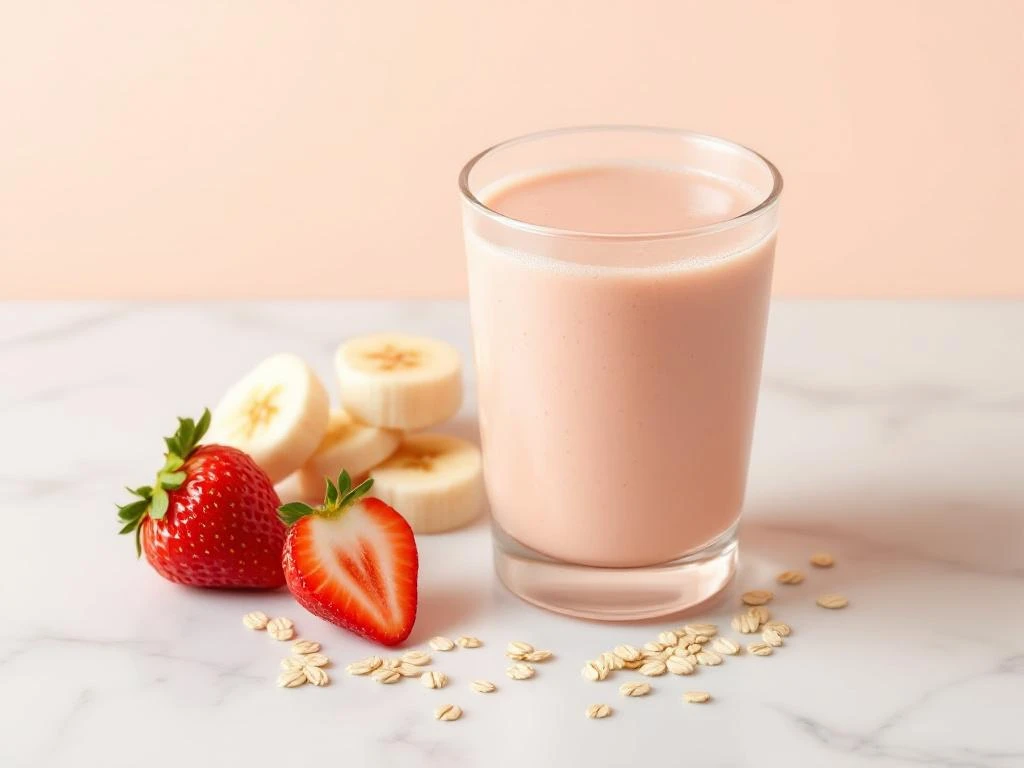
Living with IBS means finding breakfast options that won’t disrupt your morning. This strawberry banana oat smoothie delivers nutrition and flavour whilst respecting your digestive system’s needs. You’ll blend a creamy, satisfying drink that follows low FODMAP guidelines and takes just five minutes to prepare.
This recipe suits beginners and requires no special cooking skills. You’ll need a blender, measuring cups, and FODMAP-friendly ingredients readily available at most supermarkets. The result is a gluten free smoothie recipe that works during elimination phases and beyond.
Why this smoothie works for sensitive digestion
This IBS friendly smoothie combines three ingredients that work together without triggering symptoms. Strawberries provide vitamin C and antioxidants whilst staying within safe FODMAP limits at 65 grams per serving. The natural sweetness means you won’t need problematic additions like honey or agave.
One firm, unripe banana keeps the recipe low FODMAP. Ripe bananas contain higher levels of fructans, but a firm banana remains safe and adds creamy texture along with potassium. The ripeness matters more than you might think for digestive comfort.
Oats bring soluble fibre that supports gut health without irritation. They create thickness and staying power that makes this healthy breakfast smoothie feel substantial. Rolled oats work better than instant varieties, which can affect texture and FODMAP content.
Lactose free smoothie preparation requires the right milk alternative. Almond milk (made from almonds only, not with added inulin), lactose-free cow’s milk, or rice milk all work well. These options provide liquid without the digestive distress that regular dairy causes for many people with IBS.
Gather your ingredients and equipment
You’ll need these specific amounts to maintain FODMAP compliance. Precision matters when managing digestive symptoms, so measure carefully rather than estimating.
Low FODMAP ingredients:
- 65 grams fresh or frozen strawberries (about 5 medium berries)
- 1 firm, slightly green banana (approximately 100 grams)
- 30 grams rolled oats (roughly 3 tablespoons)
- 250 ml lactose-free milk, almond milk, or rice milk
- 3-4 ice cubes (optional, for temperature and thickness)
Choose fresh strawberries with bright colour and firm texture. Frozen strawberries work equally well and often cost less. Just ensure they contain no added sugars or syrups. For the banana, look for one that’s still slightly green at the ends. This indicates lower fructan content compared to spotty, fully ripe bananas.
Essential equipment:
- Blender (any type works, though higher-powered models create smoother texture)
- Measuring cups and kitchen scales
- Tall glass for serving
If you can’t find suitable almond milk, check labels carefully. Many brands add high FODMAP ingredients like inulin for thickness. Rice milk provides a safe alternative, though it creates a thinner consistency. Lactose-free cow’s milk offers the creamiest result and works well if you’re not avoiding dairy entirely.
FODMAP-safe substitutions
Replace strawberries with 75 grams of blueberries if needed. Swap the banana for half a cup of firm cantaloupe when you want variety. Both changes maintain low FODMAP status whilst creating different flavour profiles.
Blend your strawberry banana oat smoothie
The order you add ingredients affects the final texture. This sequence ensures everything blends evenly without leaving chunks or creating an overly thin consistency.
Pour your chosen milk into the blender first. This creates a liquid base that helps the blades move freely. Add the oats next, allowing them to soften slightly in the liquid whilst you prepare other ingredients.
Slice the banana into chunks and add them to the blender. Break or cut strawberries in half if using fresh ones. Frozen berries can go in whole. Drop in your ice cubes last if you’re using them.
Start blending on low speed for 10 seconds. This initial blend breaks down larger pieces without splashing liquid up the sides. Increase to high speed and blend for 30-45 seconds. The oat smoothie recipe should look uniformly smooth without visible oat pieces.
Texture assessment: Stop the blender and check consistency. The smoothie should coat a spoon but still pour easily. You shouldn’t see strawberry seeds floating separately or oat fragments. If you spot unmixed ingredients, blend for another 15 seconds.
Pour into your glass immediately. The smoothie thickens as it sits because the oats continue absorbing liquid. Drink within 10 minutes for the best texture and to prevent separation.
Achieving perfect consistency
Too thick? Add 50 ml more milk and blend briefly. The mixture should pour smoothly but feel substantial. Too thin? Add 10 grams more oats, but remember this increases the FODMAP load slightly. Stay within recommended serving sizes.
Blending too long creates a foamy, aerated texture that some people find less appealing. Keep total blending time under one minute for a creamy rather than frothy result.
Customise your smoothie for optimal results
Adjust sweetness carefully to avoid FODMAP troubles. Add one teaspoon of pure maple syrup if you need more sweetness. This amount stays within safe limits. Avoid honey, which contains fructose that can trigger symptoms even in small quantities.
Boost protein content by adding one tablespoon of smooth peanut butter. Check that it contains only peanuts and salt, nothing else. Alternatively, use a low FODMAP protein powder. Many whey protein isolates work well, but verify the ingredients list shows no inulin, chicory root, or artificial sweeteners ending in “ol”.
Modify thickness by adjusting ice cubes rather than changing ingredient ratios. More ice creates a thicker, colder drink without affecting FODMAP content. Fewer ice cubes or none at all gives you a thinner, less chilled smoothie that some people prefer for sensitive teeth or cold sensitivity.
Temperature preferences vary widely. Some people with IBS find very cold drinks uncomfortable. Try the smoothie at room temperature by skipping ice and using refrigerated rather than frozen strawberries. The flavour remains identical whilst being gentler on your system.
Low FODMAP flavour variations
Add one quarter teaspoon of pure vanilla extract for depth. Sprinkle in one eighth teaspoon of ground cinnamon for warmth. Both additions stay within FODMAP guidelines and create the digestive friendly smoothie variations that prevent flavour fatigue.
Try one tablespoon of cocoa powder for a chocolate version. Use pure cocoa without added sugar or milk powder. This transforms your strawberry banana oat smoothie into something that feels like dessert whilst maintaining its breakfast nutrition profile.
Experiment with texture by leaving oats slightly coarser. Blend for just 20 seconds instead of 45. This creates more body and makes the smoothie feel more filling. Some people prefer this heartier texture for a breakfast that sustains them longer.
The beauty of this low FODMAP smoothie lies in its flexibility within safe boundaries. You can adjust it to match your preferences whilst keeping your digestive system comfortable. That balance makes it sustainable for daily use rather than a recipe you try once and abandon.
Strawberry banana oat smoothie
Preparation time: 5 minutes | Portions: 1 serving
- 65g strawberries (fresh or frozen)
- 1 firm banana (approximately 100g)
- 30g rolled oats
- 250ml lactose-free milk or suitable alternative
- 3-4 ice cubes (optional)
Method:
- Pour milk into blender
- Add oats and let sit briefly
- Add sliced banana and strawberries
- Add ice cubes if using
- Blend on low for 10 seconds
- Increase to high speed and blend 30-45 seconds
- Check consistency and blend longer if needed
- Pour and serve immediately
Optional additions: 1 tsp maple syrup for sweetness, 1 tbsp peanut butter for protein, ¼ tsp vanilla extract or ⅛ tsp cinnamon for flavour
This recipe is for informational purposes only and is not medical or dietary advice. Please consult a healthcare professional before making any changes to your diet.
Related Articles
- Is bacon ok on FODMAP?
- Can I eat steak on a FODMAP diet?
- Can I eat dairy on a low FODMAP diet?
- Scrambled Eggs with Roasted Peppers
- What are common mistakes on a low FODMAP diet?