
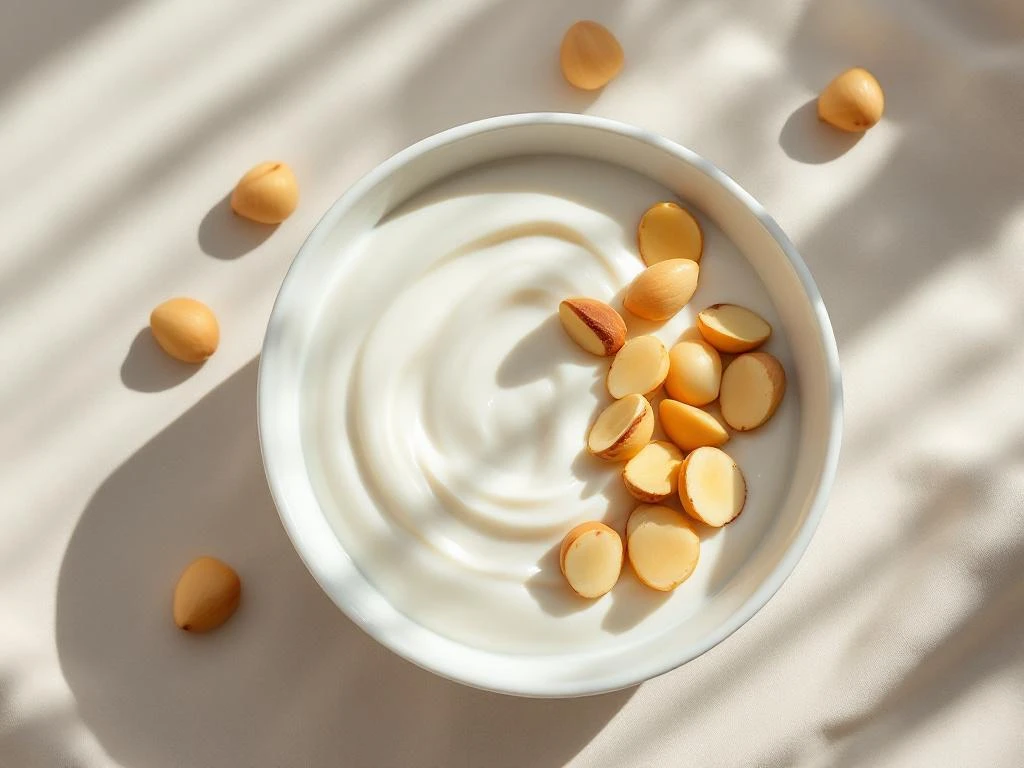
Living with IBS means finding breakfast options that won’t trigger symptoms. This coconut yogurt bowl with macadamia nuts offers a creamy, satisfying start to your day whilst respecting your digestive system. You’ll create a dairy-free yogurt bowl that’s naturally low FODMAP, lactose-free, and genuinely delicious.
This recipe works for beginners and takes about 5 minutes to prepare. You’ll need coconut yogurt, macadamia nuts, and your choice of low FODMAP toppings. No cooking required, just simple assembly that fits into busy mornings.
Why coconut yogurt with macadamia nuts works for IBS
Coconut yogurt provides a naturally lactose-free alternative to traditional dairy yogurt. Since lactose can trigger IBS symptoms in many people, switching to coconut yogurt removes this common irritant whilst maintaining the creamy texture you want from yogurt.
Macadamia nuts are one of the safest nuts for the low FODMAP diet. A serving of 20 macadamia nuts (about 40g) remains low FODMAP, making them ideal for portion-controlled breakfast bowls. They add healthy fats that help you feel satisfied throughout the morning without causing digestive distress.
The combination delivers nutritional benefits without compromise. Coconut yogurt contains medium-chain triglycerides that are easier to digest than other fats. Macadamia nuts provide monounsaturated fats, thiamine, and manganese. Together, they create a breakfast that supports both your energy needs and your digestive comfort.
This pairing works particularly well for IBS management because both ingredients are gentle on sensitive digestive systems. They don’t contain high FODMAP compounds like fructans, galactans, or excess fructose that commonly trigger symptoms. You get nutrition and flavour without the worry.
What you need for coconut yogurt with macadamia nuts
Start with plain, unsweetened coconut yogurt. Check the ingredients list to ensure it doesn’t contain high FODMAP additives like inulin, chicory root, or apple juice concentrate. Brands like CoYo and Coconut Collaborative often work well, but always verify the specific product ingredients.
Essential ingredients:
- 200g plain coconut yogurt (unsweetened)
- 30g macadamia nuts (about 12 nuts, roughly chopped)
- 1 tablespoon maple syrup (optional, for sweetness)
- Fresh blueberries (40g, about ¼ cup)
- 1 tablespoon chia seeds
Equipment needed:
- Serving bowl (medium size)
- Measuring spoons
- Small knife or chopping board for nuts
- Kitchen scales (for accurate portioning)
Accurate measuring matters for FODMAP compliance. Exceeding recommended portions can push ingredients into high FODMAP territory. A kitchen scale helps you stay within safe limits whilst building confidence about what works for your body.
Assemble your coconut yogurt bowl step by step
Measure 200g of coconut yogurt into your serving bowl. This amount provides a satisfying portion without overwhelming your digestive system. Give the yogurt container a good stir before measuring, as coconut yogurt can separate naturally.
Chop your macadamia nuts into rough pieces. Smaller pieces distribute better throughout the bowl and create more textural interest than whole nuts. Aim for halves or quarters rather than fine crumbs. Scatter the chopped nuts evenly over the yogurt surface.
Add your blueberries next. These berries stay low FODMAP at 40g servings and provide natural sweetness plus antioxidants. Place them around the bowl rather than piling them in one spot for better visual appeal and flavour distribution.
Sprinkle chia seeds over everything. They add omega-3 fatty acids and create a pleasant textural contrast. If you prefer softer seeds, mix them into the yogurt 10 minutes before eating to let them absorb moisture and swell slightly.
Drizzle maple syrup over the top if you want extra sweetness. One tablespoon remains low FODMAP and adds a lovely caramel note that complements both the coconut and macadamia flavours. You can also skip this step if the blueberries provide enough sweetness for your taste.
Success check: Your bowl should look colourful and inviting, with toppings distributed evenly. The yogurt should be creamy, not watery. If your coconut yogurt seems thin, try a different brand next time or strain it through cheesecloth for 30 minutes before use.
Customise your bowl with low FODMAP toppings
Strawberries work beautifully in this bowl. Use up to 65g of hulled strawberries (about 5 medium berries) to stay within low FODMAP limits. Slice them thinly for better distribution or leave small berries whole for a more rustic presentation.
Try adding a tablespoon of pumpkin seeds for extra crunch and zinc. They remain low FODMAP in this quantity and provide a different textural element than macadamia nuts. Toast them lightly in a dry pan for enhanced flavour if you have a few extra minutes.
Fresh kiwi fruit adds tangy brightness. One medium kiwi (about 70g) stays low FODMAP and provides vitamin C. Peel and slice it into rounds or dice it into small cubes. The green colour creates nice visual contrast against the white coconut yogurt.
Coconut flakes make an excellent topping when you want to emphasise the coconut flavour. Use up to 15g of dried coconut flakes. Look for unsweetened varieties without added sulphites, which can cause issues for some people with IBS.
A small pinch of cinnamon or vanilla extract transforms the flavour profile without adding FODMAPs. Start with just ¼ teaspoon of cinnamon or a few drops of pure vanilla extract. These subtle additions make the bowl feel more special without requiring extra ingredients or preparation.
Flavour combinations to try:
- Tropical: Add 40g diced pineapple plus extra coconut flakes
- Berry medley: Mix blueberries with strawberries and a drizzle of maple syrup
- Nutty crunch: Combine macadamia nuts with pumpkin seeds and a pinch of cinnamon
- Simple classic: Just yogurt, macadamia nuts, and maple syrup for minimal fuss
Remember that portion sizes matter. Whilst individual ingredients may be low FODMAP, combining too many toppings can create a cumulative FODMAP load. Stick to 2-3 toppings per bowl and measure carefully, especially when you’re still learning which foods work best for your body.
You’ve now created a nourishing, IBS-friendly breakfast that doesn’t sacrifice flavour or satisfaction. This coconut yogurt bowl provides healthy fats, protein from nuts and seeds, and natural sweetness from fruit. The best part is how quickly it comes together on busy mornings when you need something reliable and gentle on your digestive system.
This recipe adapts easily to your preferences and tolerances. As you become more confident with low FODMAP eating, you’ll discover which toppings you enjoy most and which portions work best for your individual needs. Keep experimenting within FODMAP guidelines to build a breakfast routine that truly works for you.
Coconut yogurt with macadamia nuts
Cooking Time: 5 minutes | Portions: 1 serving
Ingredients:
- 200g plain coconut yogurt (unsweetened, check for low FODMAP certification)
- 30g macadamia nuts (roughly chopped)
- 40g fresh blueberries
- 1 tablespoon chia seeds
- 1 tablespoon maple syrup (optional)
Instructions:
- Measure 200g coconut yogurt into a serving bowl
- Chop macadamia nuts into rough pieces and scatter over yogurt
- Add blueberries, distributing them evenly around the bowl
- Sprinkle chia seeds over the top
- Drizzle with maple syrup if desired
- Serve immediately or refrigerate for up to 2 hours
Optional variations:
- Replace blueberries with 65g sliced strawberries or 70g diced kiwi
- Add 1 tablespoon pumpkin seeds for extra crunch
- Top with 15g unsweetened coconut flakes
- Add a pinch of cinnamon or vanilla extract for flavour
This recipe is for informational purposes only and is not medical or dietary advice. Please consult a healthcare professional before making any changes to your diet.
Related Articles
- Grilled Bacon with Roasted Tomatoes
- Ham and Spinach Frittata
- Egg and Veggie Breakfast Quesadilla
- Spinach and Tomato Egg Cups
- Gluten-Free Pumpkin Chocolate Chip Muffins