
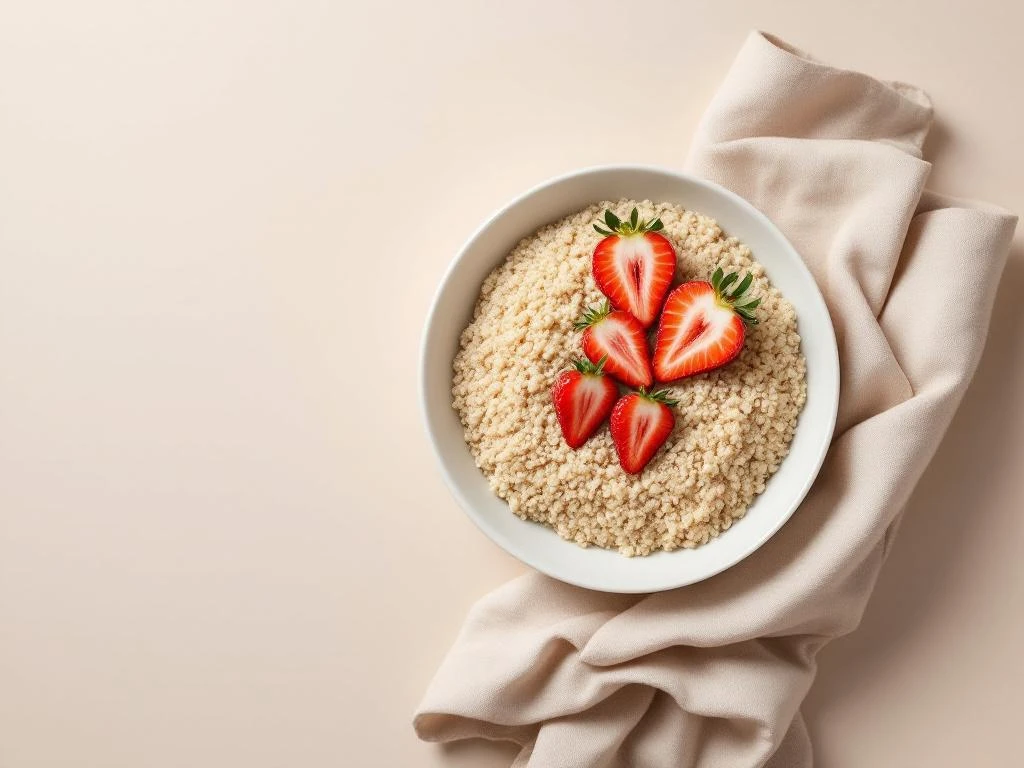
Living with IBS means finding breakfast options that fuel your morning without triggering symptoms. This strawberry quinoa breakfast bowl combines protein-rich quinoa with fresh strawberries and low FODMAP toppings for a satisfying, gut-friendly start to your day. Whether you’re new to the low FODMAP diet or looking for more variety in your breakfast rotation, this recipe delivers both nutrition and flavour.
This guide is perfect for beginners with basic cooking skills. You’ll need about 25 minutes total, with most of that time being hands-off cooking. The recipe makes one generous serving, though you can easily double or triple the quantities for meal prep.
You’ll need quinoa, fresh strawberries, a medium saucepan with lid, measuring cups, a fine mesh strainer, and your choice of low FODMAP toppings. All ingredients are readily available at most supermarkets, and we’ll cover substitution options for different dietary needs.
Why quinoa makes the perfect low FODMAP breakfast
Quinoa stands out as an exceptional breakfast grain for anyone managing IBS. Unlike wheat-based cereals or oats that can trigger symptoms in some people, quinoa is naturally gluten-free and remains low FODMAP at appropriate serving sizes. A 155g cooked portion stays within safe limits, making it ideal for the elimination phase of the diet.
The nutritional profile of this gluten free breakfast option is impressive. Quinoa contains all nine essential amino acids, making it a complete protein source. This matters for sustained energy throughout your morning, helping you avoid the blood sugar crashes that come from simple carbohydrate breakfasts. Each serving provides about 8g of protein along with iron, magnesium, and B vitamins that support digestive health.
The fibre content in quinoa works differently than other grains. It provides gentle, soluble fibre that supports regularity without the harsh insoluble fibre that can irritate sensitive digestive systems. This makes it particularly valuable for IBS friendly breakfast options. You get the benefits of whole grains without the bloating or discomfort that wheat or high FODMAP grains might cause.
Gather your ingredients and tools
For one serving of this healthy breakfast bowl, you’ll need 50g uncooked quinoa (white, red, or tri-colour all work), 100g fresh strawberries, 250ml water, and a pinch of salt. These form the base of your strawberry breakfast recipe.
Choose toppings that maintain low FODMAP compliance. Safe options include 1 tablespoon of pumpkin seeds or sunflower seeds, 10 walnut halves, 1 tablespoon of shredded coconut, or a small handful of blueberries. For sweetness, use pure maple syrup (1 tablespoon maximum) or a sprinkle of cinnamon. Lactose-free yoghurt (2 tablespoons) adds creaminess if desired.
Your kitchen tools are simple. You need a medium saucepan with a tight-fitting lid, a fine mesh strainer for rinsing, measuring cups and spoons, a serving bowl, and a fork for fluffing the quinoa. A sharp knife and cutting board are necessary for preparing the strawberries.
When selecting quinoa, look for pre-rinsed varieties to save time, though rinsing again ensures you remove any remaining saponins (the natural coating that can taste bitter). For strawberries, choose firm, bright red berries without soft spots. Frozen strawberries work in a pinch, just thaw them thoroughly before adding to your bowl.
Substitution options for dietary flexibility
If quinoa isn’t available, you can substitute with certified gluten-free oats (60g cooked maximum) during the reintroduction phase, though quinoa remains the safer choice during elimination. Replace strawberries with other low FODMAP fruits like kiwi fruit (2 small), orange segments (1 medium orange), or raspberries (60g maximum). For nut-free versions, stick with seeds only and add a tablespoon of chia seeds for extra nutrition.
Cook quinoa to fluffy perfection
Place your quinoa in the fine mesh strainer and rinse under cold running water for 30 seconds. Swirl it gently with your hand whilst rinsing. You’ll notice the water runs clear after proper rinsing, this step removes the bitter coating and improves the final texture of your quinoa breakfast bowl.
Transfer the rinsed quinoa to your saucepan and add 250ml of water plus a small pinch of salt. The ratio is important: use 2 parts water to 1 part quinoa by volume. Too much water creates mushy quinoa, whilst too little leaves it crunchy and undercooked.
Place the saucepan over high heat and bring to a full boil. Once boiling, reduce the heat to low and cover with the lid. Set a timer for 15 minutes and resist the urge to lift the lid during cooking. The steam trapped inside cooks the quinoa evenly.
After 15 minutes, remove the pan from heat but keep it covered. Let it sit for 5 minutes. This resting period allows the quinoa to absorb any remaining moisture and finish steaming. The grains should be translucent with a visible white ring around each seed when properly cooked.
Remove the lid and fluff the quinoa gently with a fork. Separate any clumps by dragging the fork through in different directions. The texture should be light and fluffy, not sticky or wet. If you see standing water in the pan, you’ve used too much liquid, drain it off and return the pan to low heat for 2 more minutes uncovered.
Testing for perfect doneness
Properly cooked quinoa has a slight bite similar to al dente pasta. Taste a small spoonful. It should be tender but not mushy, with a pleasant nutty flavour. If it tastes crunchy or you can see white centres in the grains, add 2 tablespoons of water, cover, and cook for 3 more minutes.
Assemble your breakfast bowl
Start with warm or room temperature quinoa as your base. Spoon the cooked quinoa into your serving bowl, creating an even layer. The warmth of the quinoa will slightly soften the strawberries whilst keeping them fresh and bright.
Slice your strawberries into quarters or thin slices, depending on your preference. Arrange them over half of the quinoa, leaving the other half visible for visual appeal. This creates an attractive presentation that makes your IBS friendly breakfast more enjoyable.
Add your chosen toppings in separate sections rather than mixing everything together. Place seeds on one area, nuts on another, and any additional fruits in their own spot. This arrangement lets you taste different flavour combinations with each spoonful and makes the bowl more visually interesting.
Drizzle maple syrup over the entire bowl if using, or place it on the side for controlled sweetness. If you’re adding lactose-free yoghurt, dollop it onto the quinoa rather than mixing it in. This keeps the textures distinct and prevents the bowl from becoming too wet.
Temperature and serving considerations
This strawberry quinoa breakfast bowl works at various temperatures. Warm quinoa with cold toppings creates a pleasant contrast, whilst completely cooled quinoa makes a refreshing option for warmer mornings. Avoid serving the quinoa piping hot, as extreme heat can make the strawberries release too much juice and become mushy.
Eat the bowl within 10 minutes of assembly for the best texture. The strawberries stay firm and the quinoa maintains its fluffiness. If you need to wait, keep the components separate and assemble just before eating.
Customise with low FODMAP toppings
Seeds offer crunch and nutrition without FODMAP concerns. Pumpkin seeds provide zinc and magnesium, whilst sunflower seeds add vitamin E. You can toast them in a dry pan for 2 minutes to enhance their flavour. Chia seeds (1 tablespoon) or ground flaxseed add omega-3 fatty acids and create a slightly thicker texture when they absorb moisture from the bowl.
For approved nuts, stick to walnuts (10 halves), pecans (10 halves), or macadamias (20 nuts). These remain low FODMAP at specified portions. Chop them roughly for easier eating and better distribution throughout your quinoa breakfast recipe. Avoid almonds during the elimination phase, as they become high FODMAP above 10 nuts.
Fruit variations keep your breakfast interesting through the seasons. In summer, add fresh blueberries (60g), sliced kiwi fruit, or a few raspberries. Winter options include orange segments or a small sliced banana (firm, unripe banana only, maximum one-third of a medium banana). Always measure fruit portions carefully to maintain low FODMAP compliance.
Spices transform the flavour profile without adding FODMAPs. A sprinkle of cinnamon adds warmth, whilst a pinch of cardamom creates an exotic twist. Vanilla extract (1/4 teaspoon) brings sweetness without sugar. Ground ginger (small pinch) can actually support digestion whilst adding a subtle spicy note.
Dairy-free and protein additions
Lactose-free yoghurt (2 tablespoons maximum) adds creaminess and extra protein. Choose plain varieties without added sweeteners or fruit pieces that might contain high FODMAP ingredients. Coconut yoghurt works as a dairy-free alternative, though check labels for added inulin or other FODMAP-containing thickeners.
For additional protein, add a tablespoon of smooth peanut butter or almond butter (limit almond butter to 1 tablespoon to stay low FODMAP). These nut butters create a satisfying richness and help the healthy breakfast bowl keep you full until lunch.
Store and meal prep for busy mornings
Cook quinoa in larger batches to save time throughout the week. Prepare 200g of uncooked quinoa (about 4 servings) following the same rinsing and cooking method, just multiply the water accordingly. Spread cooked quinoa on a baking sheet to cool quickly, this prevents it from becoming sticky or developing an off flavour.
Store cooled quinoa in an airtight container in the refrigerator for up to 5 days. Portion it into individual containers (about 155g cooked quinoa per serving) for grab-and-go convenience. The quinoa stays fluffy and separates easily even after refrigeration.
Keep toppings separate from the quinoa until you’re ready to eat. Store washed and sliced strawberries in a container lined with paper towel to absorb excess moisture. They’ll stay fresh for 2 days. Whole strawberries last longer, up to 5 days, so consider slicing them fresh each morning.
For freezer storage, portion cooked quinoa into freezer-safe containers or bags, removing as much air as possible. Label with the date and freeze for up to 3 months. Frozen quinoa maintains its texture better than many other grains. Don’t freeze assembled bowls, as the strawberries and toppings won’t survive freezing well.
Reheating for best results
Microwave refrigerated quinoa for 60 seconds on high power, stirring halfway through. Add a teaspoon of water before reheating if the quinoa seems dry. For frozen quinoa, microwave for 2 minutes, stirring every 30 seconds until heated through.
Alternatively, reheat quinoa in a small saucepan over medium-low heat with a splash of water. Stir frequently for 3 minutes until warmed. This stovetop method often produces fluffier results than the microwave.
You can also enjoy this gluten free breakfast cold. The quinoa has a pleasant, slightly chewy texture when eaten straight from the refrigerator, making it perfect for rushed mornings when you don’t have time to reheat.
This strawberry quinoa breakfast bowl proves that managing IBS doesn’t mean sacrificing flavour or satisfaction at breakfast. The combination of protein-rich quinoa, fresh fruit, and thoughtful toppings creates a meal that supports your digestive health whilst actually tasting good. By preparing components in advance, you’ll have a reliable, gut-friendly breakfast ready even on your busiest mornings. The versatility of this recipe means you can adapt it to your preferences and what’s in season, keeping breakfast interesting throughout the year.
Strawberry quinoa breakfast bowl
Cooking time: 25 minutes | Portions: 1 serving
- 50g uncooked quinoa, rinsed thoroughly
- 250ml water
- Pinch of salt
- 100g fresh strawberries, sliced
- 1 tablespoon pumpkin seeds or sunflower seeds
- 10 walnut halves, roughly chopped
- 1 tablespoon pure maple syrup
- Optional: 2 tablespoons lactose-free yoghurt
- Optional: pinch of cinnamon
Method:
- Rinse quinoa in fine mesh strainer under cold water for 30 seconds
- Combine quinoa, water, and salt in medium saucepan
- Bring to boil over high heat, then reduce to low and cover
- Cook covered for 15 minutes without lifting lid
- Remove from heat and let rest covered for 5 minutes
- Fluff quinoa with fork and transfer to serving bowl
- Arrange sliced strawberries over half the quinoa
- Add seeds, walnuts, and any optional toppings in separate sections
- Drizzle with maple syrup and serve immediately
This recipe is for informational purposes only and is not medical or dietary advice. Please consult a healthcare professional before making any changes to your diet.