
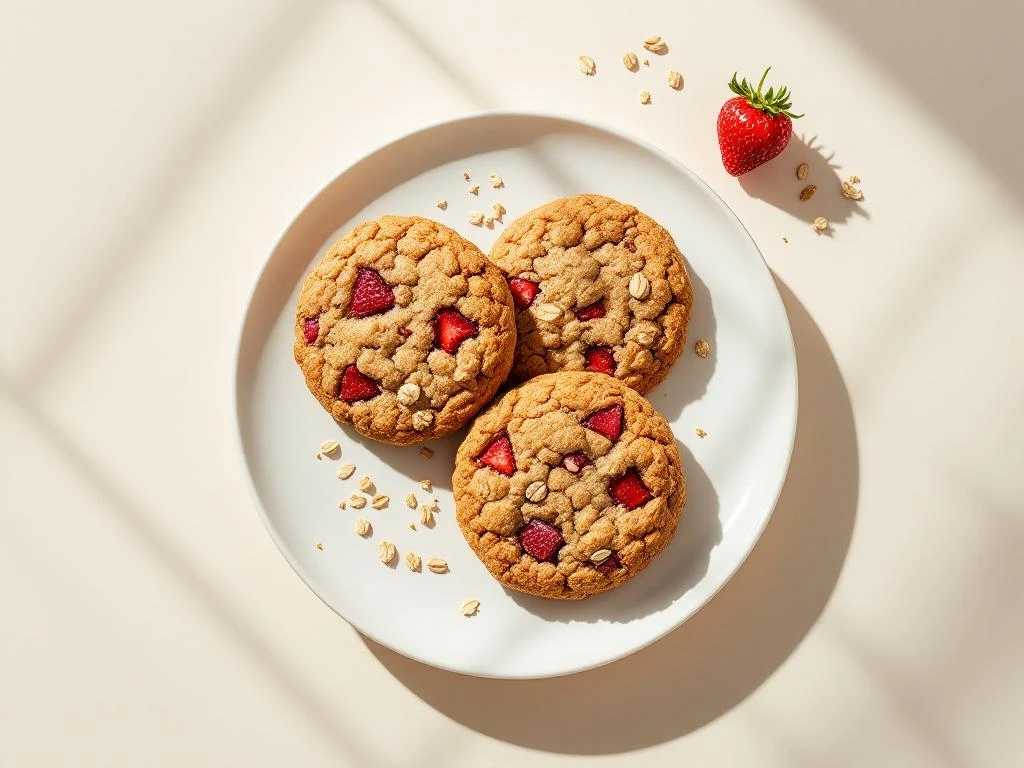
When you’re managing IBS, breakfast can feel like a minefield. These strawberry oatmeal breakfast cookies solve that problem. They’re low FODMAP friendly, easy to grab on busy mornings, and gentle on your digestive system. You’ll batch-prep a week’s worth of breakfasts in under 30 minutes of active work.
This recipe works for beginners. You need basic baking equipment like mixing bowls, measuring cups, a baking sheet, and an oven. The ingredients are simple and available at most supermarkets. You’ll spend about 30 minutes preparing and 15 minutes baking.
Why strawberry oatmeal cookies work for IBS
These IBS friendly breakfast cookies combine ingredients that support digestive health without triggering symptoms. Oats provide soluble fibre that helps regulate digestion without causing irritation. They’re naturally soothing for sensitive stomachs when you choose certified gluten-free varieties.
Strawberries remain low FODMAP when you stick to appropriate serving sizes. They add natural sweetness and vitamin C without the high fructose content that causes problems in other fruits. Fresh strawberries work better than dried versions, which concentrate sugars.
Batch-preparing these healthy breakfast cookies helps maintain consistent eating patterns. When you have IBS, skipping meals or eating irregularly often makes symptoms worse. Having grab-and-go options ready means you’ll actually eat breakfast even on rushed mornings. This consistency supports better digestive function throughout the day.
The cookie format makes portion control simple. You’re not guessing about serving sizes or accidentally eating too much of a trigger food. Each cookie contains measured amounts of low FODMAP ingredients, taking the guesswork out of breakfast planning.
Gather your low FODMAP ingredients
Start with certified gluten-free oats. Regular oats often contain traces of wheat from processing facilities. Look for packages specifically labelled gluten-free. You’ll need 200g of rolled oats, not instant or steel-cut varieties.
For the wet ingredients, use one ripe banana (mashed), two tablespoons of maple syrup, and one egg. If you can’t eat eggs, try one tablespoon of chia seeds mixed with three tablespoons of water. Let this mixture sit for 10 minutes before using. The banana adds moisture and natural sweetness whilst staying within low FODMAP limits.
Measure 100g of fresh strawberries. This amount keeps you safely within low FODMAP serving sizes. Wash them thoroughly, remove the green tops, and chop into small pieces. Avoid frozen strawberries as they release too much liquid during baking.
Add 30g of lactose-free butter or coconut oil (melted), half a teaspoon of vanilla extract, and a quarter teaspoon of salt. For binding and texture, include 30g of almond flour. If you’re allergic to almonds, substitute with additional oats ground into flour using a blender.
Optional additions that stay low FODMAP include a quarter teaspoon of cinnamon or 30g of dark chocolate chips (check labels for low FODMAP certification). Keep a tablespoon of extra oats nearby for adjusting dough consistency if needed.
Substitution options for common allergens
Can’t eat bananas? Replace with 80g of canned pumpkin (not pumpkin pie filling). This keeps the moisture without changing FODMAP status. For nut-free versions, skip the almond flour and add 30g more oats instead. The texture will be slightly different but still works well.
Mix and prepare your cookie dough
Preheat your oven to 180°C (160°C fan). Line a baking sheet with parchment paper whilst you mix the dough. This prevents sticking without needing extra oil.
In a large bowl, mash the banana thoroughly with a fork. You want a smooth consistency with no large lumps. Add the melted butter, maple syrup, egg, and vanilla extract. Stir until everything combines into a uniform mixture.
In a separate bowl, combine the oats, almond flour, salt, and cinnamon if using. Mix these dry ingredients together before adding them to the wet mixture. This ensures even distribution of flavours.
Pour the dry ingredients into the wet mixture. Stir gently with a wooden spoon or spatula. Stop mixing as soon as you no longer see dry patches. Overmixing makes the cookies tough rather than tender. The dough should look thick and slightly sticky.
Add the chopped strawberries last. Fold them in carefully using a gentle lifting motion. If you stir too vigorously, the strawberries break down and release juice. You want distinct pieces of fruit throughout the dough. The mixture should hold together when you press it but not be wet or runny.
Check the consistency by scooping a spoonful. It should drop slowly from the spoon, not pour off quickly. If it seems too wet, add a tablespoon of oats. Too dry? Add a teaspoon of water. Let the dough rest for 5 minutes. This allows the oats to absorb moisture and makes scooping easier.
Bake to golden perfection
Use a tablespoon or small ice cream scoop to portion the dough. Each cookie needs about two tablespoons of mixture. Place scoops on your prepared baking sheet, leaving 5cm between each one. These gluten free oatmeal cookies spread slightly but not dramatically during baking.
Press each mound gently with the back of your spoon. Flatten them to about 1.5cm thick. They won’t spread much on their own, so shape them how you want them to look when finished. Thinner cookies get crispier, whilst thicker ones stay softer inside.
Bake for 15 minutes. Check them at 12 minutes. The edges should look set and lightly golden. The centres might seem slightly soft, which is normal. They’ll firm up as they cool. If your oven runs hot, check at 10 minutes to prevent over-browning.
Look for these doneness cues: edges turning golden brown, tops looking dry rather than wet, and a slight firmness when you gently press the centre. The bottoms should be light golden, not dark brown. If they’re browning too quickly on the bottom, move your rack higher in the oven next time.
Remove the baking sheet from the oven. Let the cookies sit on the sheet for 5 minutes. This cooling period lets them firm up enough to move without breaking. After 5 minutes, transfer them to a wire rack using a spatula. Cool completely before storing, about 20 minutes.
Altitude and oven adjustments
Fan ovens cook faster. Reduce temperature by 20°C and check for doneness 2 minutes earlier. At high altitudes, you might need an extra tablespoon of liquid and slightly longer baking time. Every oven varies, so watch your first batch closely and adjust timing for future batches.
Store and enjoy throughout the week
Once completely cool, store your low FODMAP breakfast cookies in an airtight container. Room temperature storage works for up to 3 days. Place parchment paper between layers to prevent sticking. Keep them away from direct sunlight and heat sources.
For longer storage, refrigerate them for up to one week. The cold makes them firmer but preserves freshness. Let them sit at room temperature for 10 minutes before eating, or warm them slightly for better texture. Refrigeration works especially well in warm weather when room temperature storage might cause spoilage.
Freeze these cookies for meal prep breakfast options that last up to three months. Place them in a freezer-safe container with parchment between layers. You can also wrap individual cookies in cling film, then store them together in a freezer bag. This method lets you grab single servings as needed.
To thaw frozen cookies, leave them at room temperature for 30 minutes. For a warm breakfast, microwave one cookie for 15 to 20 seconds. Watch carefully as microwaving too long makes them tough. You can also reheat them in a 160°C oven for 5 minutes, which restores the just-baked texture better than microwaving.
Serving suggestions for balanced meals
Pair two cookies with a small handful of low FODMAP nuts like walnuts or pecans. Add a cup of lactose-free yoghurt for protein. This combination provides sustained energy without overwhelming your digestive system. You can also serve them alongside scrambled eggs and a small portion of spinach for a more substantial breakfast.
These digestive friendly cookies work as portable snacks too. Pack one in your bag for mid-morning hunger. The oats provide steady energy release, helping you avoid blood sugar crashes that can worsen IBS symptoms. They’re sturdy enough to travel without crumbling.
We’ve found that having these ready transforms busy mornings. You’re more likely to eat properly when breakfast requires no preparation. This consistency matters more than people realise for managing digestive symptoms. Regular meal timing helps train your gut to function more predictably.
Strawberry oatmeal breakfast cookies
Cooking Time: 30 minutes | Portions: 12 cookies
- 200g certified gluten-free rolled oats
- 1 ripe banana, mashed
- 100g fresh strawberries, chopped
- 30g almond flour (or ground oats for nut-free)
- 30g lactose-free butter or coconut oil, melted
- 2 tablespoons maple syrup
- 1 egg (or chia egg substitute)
- ½ teaspoon vanilla extract
- ¼ teaspoon salt
- ¼ teaspoon cinnamon (optional)
- Preheat oven to 180°C (160°C fan) and line a baking sheet with parchment paper
- Mash banana in a large bowl, then mix in melted butter, maple syrup, egg, and vanilla
- Combine oats, almond flour, salt, and cinnamon in a separate bowl
- Add dry ingredients to wet mixture and stir until just combined
- Gently fold in chopped strawberries
- Let dough rest for 5 minutes
- Scoop 2 tablespoons of dough per cookie onto prepared sheet, spacing 5cm apart
- Flatten each mound to 1.5cm thickness
- Bake for 15 minutes until edges are golden and centres look set
- Cool on baking sheet for 5 minutes, then transfer to wire rack
- Store in airtight container at room temperature for 3 days, refrigerate for 1 week, or freeze for 3 months
This recipe is for informational purposes only and is not medical or dietary advice. Please consult a healthcare professional before making any changes to your diet.