
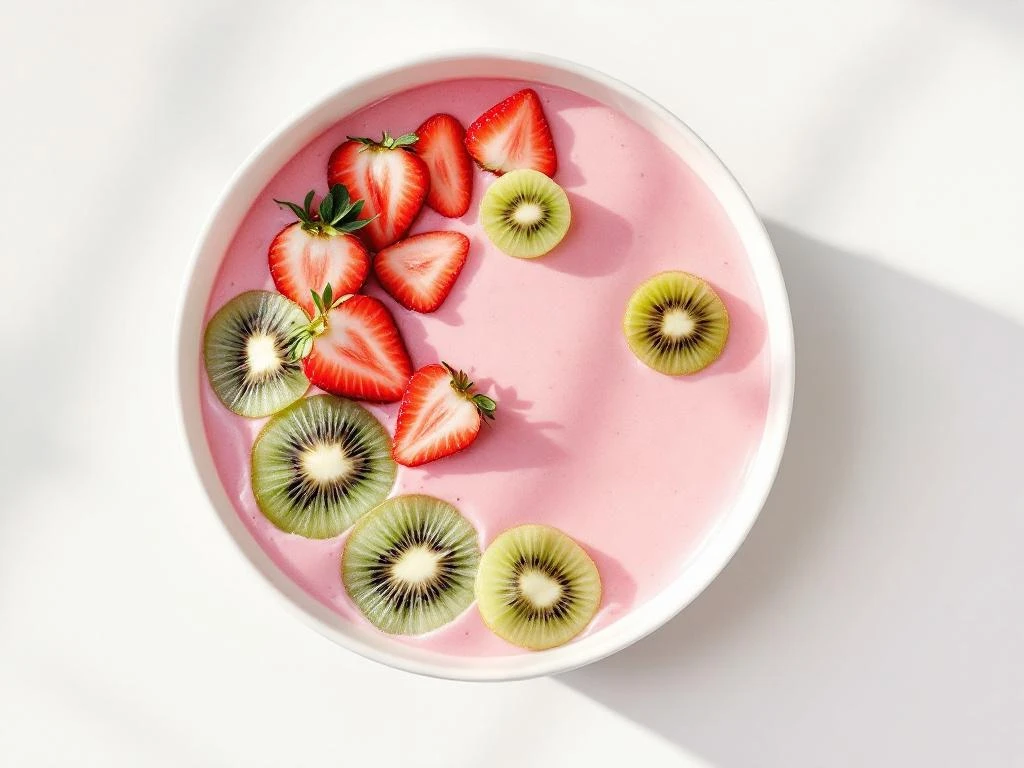
Waking up with digestive discomfort makes breakfast a challenge when you have IBS. A strawberry kiwi smoothie bowl gives you a gut-friendly breakfast that’s gentle on your system whilst delivering satisfying nutrition. This low FODMAP smoothie bowl combines vibrant flavours with ingredients that support digestive health.
This recipe works for beginners and takes about 10 minutes to prepare. You’ll need a blender, measuring tools, fresh strawberries and kiwi, a liquid base like lactose-free milk or almond milk, and your choice of FODMAP-friendly toppings. The result is a thick, creamy breakfast that keeps you full without triggering symptoms.
Why smoothie bowls work for sensitive stomachs
Blending fruit breaks down fibre into smaller particles that your digestive system handles more easily. When you eat whole fruit, your gut works harder to process the intact cell walls and fibre structures. A smoothie bowl does some of this work for you, making nutrients more accessible whilst reducing the digestive load.
Strawberries and kiwi are excellent low FODMAP choices when you stick to proper portions. Strawberries contain about 140g per safe serving, whilst kiwi offers roughly two medium fruits. Both provide vitamin C, antioxidants and natural sweetness without the high FODMAP sugars found in apples, mangoes or watermelon. The blending process also helps distribute any potential irritants more evenly throughout the mixture.
This IBS friendly smoothie delivers nutrient density that supports your health goals. The combination of fruit, liquid base and optional protein powder creates a balanced meal with carbohydrates, vitamins and staying power. Unlike juice, which strips away fibre, a smoothie bowl recipe retains the whole fruit whilst making it gentler on your system. You’ll feel satisfied for hours without the blood sugar spike that comes from refined breakfast options.
Gather your low FODMAP smoothie bowl ingredients
Start with your fruit base. Measure 140g of fresh or frozen strawberries (about 7 medium strawberries) and 2 medium kiwis. Frozen fruit creates a thicker consistency, but fresh works perfectly if you add ice cubes. Staying within these portions keeps your strawberry kiwi bowl recipe firmly in low FODMAP territory.
Choose your liquid base carefully. Pour 120ml of lactose-free milk for a creamy result, or use the same amount of almond milk for a lighter option. Coconut milk from a carton (not canned) also works well. Avoid regular dairy milk, oat milk or soy milk made from whole soybeans, as these contain FODMAPs that might trigger symptoms.
Consider these optional add-ins for extra nutrition:
- 1 tablespoon of chia seeds for omega-3 fatty acids and thickness
- 1 scoop of low FODMAP protein powder (check labels for inulin or chicory root)
- Half a frozen banana (firm, unripe bananas are lower FODMAP)
- 1 tablespoon of maple syrup if you prefer sweeter flavours
For toppings, gather FODMAP-friendly options like unsweetened coconut flakes, a small handful of pumpkin seeds (pepitas), a few walnut halves, additional sliced strawberries or kiwi, and gluten free granola made without honey or dried fruit. Keep nuts to about 10-12 pieces and seeds to 1 tablespoon to maintain safe portions.
Blend your strawberry kiwi smoothie base
Wash your strawberries thoroughly and remove the green tops. Peel your kiwis using a small knife or vegetable peeler, then cut them into quarters. If you’re using frozen fruit, you can skip the ice cubes. Fresh fruit needs 4-6 ice cubes to achieve the proper thick consistency that makes this a bowl rather than a drinkable smoothie.
Add ingredients to your blender in this order for the best results. Pour your liquid base in the bottom, which helps the blender blades move freely. Add your chia seeds or protein powder next if you’re using them. Place the kiwi pieces and strawberries on top, followed by ice cubes if needed. This layering prevents the blades from getting stuck on frozen chunks.
Blend on high speed for 30-45 seconds. Stop and check the consistency. Your digestive-friendly smoothie should be thick enough that a spoon stands upright in it. The texture should resemble soft-serve ice cream rather than a liquid you could drink through a straw. If it’s too thin, add 2-3 more ice cubes and blend again. If it’s too thick or chunky, add 1-2 tablespoons more liquid and pulse briefly.
Troubleshooting common texture issues helps you get it right. A watery result usually means too much liquid or not enough frozen ingredients. Add more frozen fruit or ice to thicken it up. Chunky bits that won’t blend indicate your blender needs more liquid to process everything smoothly. Scrape down the sides with a spatula and add liquid gradually until everything combines into a creamy mixture.
Customize toppings for texture and nutrition
Pour your thick smoothie base into a bowl, using a spatula to get every bit from the blender. The surface should be smooth and level, creating a canvas for your toppings. Work quickly if you’ve used frozen fruit, as the mixture will start to soften at room temperature.
Arrange fresh fruit slices first for visual appeal. Slice half a strawberry and one kiwi into thin rounds. Place them in rows, circles or scattered patterns across the surface. The contrast between pink strawberries and green kiwi makes your gut-friendly breakfast look as good as it tastes.
Add crunch with seeds and nuts in safe portions. Sprinkle 1 tablespoon of pumpkin seeds across one section. Place 8-10 walnut pieces or a small handful of coconut flakes in another area. This creates texture variety that makes each spoonful interesting. Remember that whilst these ingredients are low FODMAP in small amounts, portions matter for symptom management.
Consider these creative low FODMAP breakfast additions:
- A drizzle of peanut butter (2 tablespoons maximum)
- Unsweetened shredded coconut for tropical flavour
- A few dark chocolate chips (check for milk ingredients)
- Fresh blueberries (20 berries or about 40g)
- A sprinkle of cinnamon for warmth without FODMAPs
Balance flavours by combining sweet and neutral elements. If your smoothie base is very sweet from ripe fruit, add unsweetened coconut or plain seeds. If it’s quite tart from the kiwi, a small drizzle of maple syrup or a few chocolate chips provides contrast. The goal is a gluten free smoothie bowl that satisfies your taste preferences whilst keeping your digestive system comfortable.
Eat your strawberry kiwi smoothie bowl immediately for the best texture and temperature. The thick consistency softens as it sits, though it remains delicious for 15-20 minutes. This makes a perfect breakfast when you need something quick, nourishing and gentle on your gut. The combination of blended fruit, protein-rich add-ins and crunchy toppings keeps you satisfied until lunch without the digestive distress that other breakfast options might cause.
Strawberry kiwi smoothie bowl
Cooking time: 10 minutes | Portions: 1 serving
Base ingredients:
- 140g fresh or frozen strawberries (about 7 medium)
- 2 medium kiwis, peeled and quartered
- 120ml lactose-free milk or almond milk
- 4-6 ice cubes (if using fresh fruit)
- 1 tablespoon chia seeds (optional)
- 1 scoop low FODMAP protein powder (optional)
Topping suggestions:
- Sliced strawberries and kiwi
- 1 tablespoon pumpkin seeds
- 8-10 walnut pieces
- Unsweetened coconut flakes
- Low FODMAP granola
Steps:
- Wash and prepare fruit by removing strawberry tops and peeling kiwis
- Add liquid base to blender, followed by optional add-ins, fruit and ice
- Blend on high for 30-45 seconds until thick and creamy
- Check consistency and adjust with more ice or liquid as needed
- Pour into a bowl and smooth the surface
- Arrange fresh fruit slices on top
- Add seeds, nuts and other toppings in safe portions
- Serve immediately and enjoy
This recipe is for informational purposes only and is not medical or dietary advice. Please consult a healthcare professional before making any changes to your diet.