
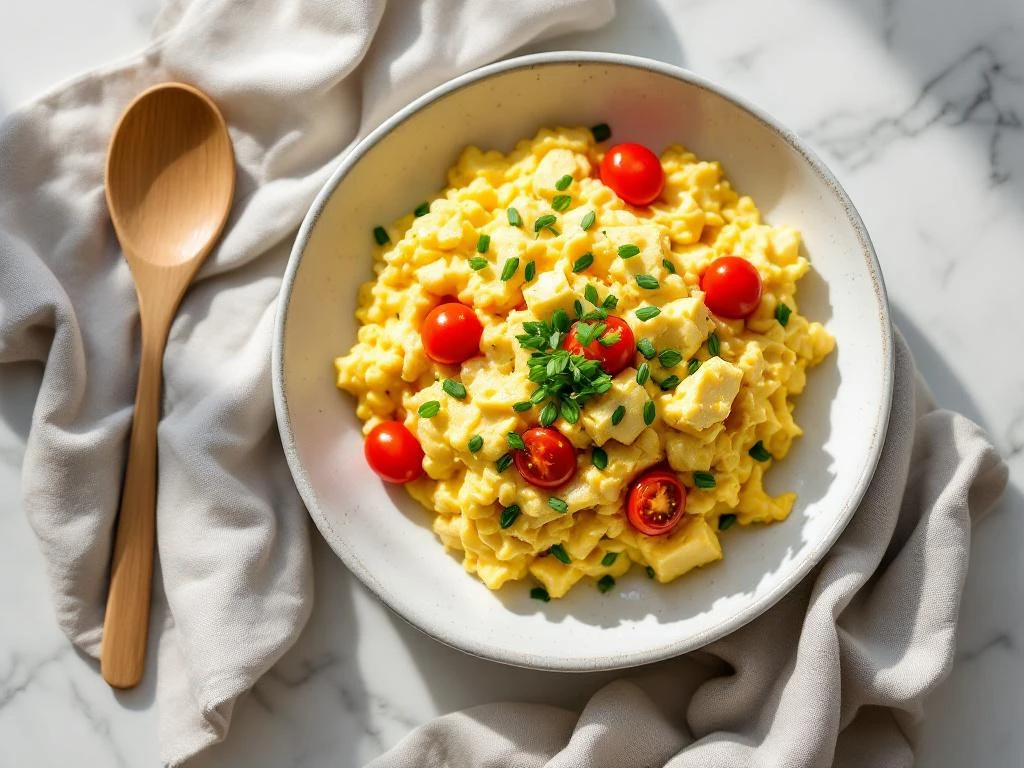
Starting your day with a scrambled tofu breakfast bowl gives you a high protein breakfast bowl that’s gentle on your digestive system. This IBS friendly breakfast combines the versatility of tofu with low FODMAP vegetables and seasonings to create a satisfying meal that won’t trigger symptoms. Whether you’re following a strict low FODMAP diet or simply looking for a dairy free scrambled tofu option, this recipe delivers both nutrition and flavour. You’ll need about 25 minutes from start to finish, and the skills required are beginner friendly. Grab a non-stick pan, a spatula, and your ingredients, and you’ll have a delicious vegan low FODMAP breakfast ready to enjoy.
Why scrambled tofu makes the perfect low FODMAP breakfast
Tofu offers an excellent protein source for those managing IBS symptoms. A single serving provides around 10 grams of protein without the lactose found in dairy or the potential triggers some people experience with eggs. The firm texture holds up well during cooking, and the neutral flavour absorbs whatever seasonings you add.
For digestive health, tofu brings several advantages. It’s naturally low in FODMAPs when you stick to firm or extra-firm varieties. The protein content keeps you satisfied throughout the morning without weighing down your stomach. Unlike some breakfast options that can trigger bloating or discomfort, this scrambled tofu breakfast bowl stays gentle on sensitive digestive systems.
Compared to traditional egg-based breakfasts, scrambled tofu works particularly well for people who’ve identified eggs as a trigger food. The texture mimics scrambled eggs when prepared correctly, and the addition of turmeric gives it that familiar golden colour. You get similar satisfaction without the potential for digestive upset that eggs sometimes cause in IBS sufferers.
Gather your ingredients and kitchen tools
For your scrambled tofu recipe, you’ll need these low FODMAP ingredients:
- 400g firm or extra-firm tofu (drained weight)
- 1 tablespoon garlic-infused olive oil (the oil is low FODMAP, whole garlic is not)
- 1/4 teaspoon ground turmeric
- 1 tablespoon nutritional yeast
- 1/4 teaspoon black pepper
- 1/4 teaspoon salt
- 50g baby spinach
- 1 medium courgette (about 100g, diced)
- 2 tablespoons chopped fresh chives
- Optional: 100g cooked quinoa or rice as a base
The kitchen equipment you’ll need includes a non-stick frying pan (medium size works well), a spatula for stirring, a mixing bowl, clean tea towels or paper towels for pressing the tofu, and something heavy like a cast iron pan or a few tins to weight down the tofu whilst pressing.
Check your tofu package to confirm it’s firm or extra-firm. Silken tofu won’t work for this scrambled tofu breakfast bowl because it contains too much moisture and won’t hold its shape during cooking.
Low FODMAP ingredient notes
Stick to the portion sizes listed. Whilst tofu is low FODMAP, eating excessive amounts in one sitting might cause issues. The same applies to courgette, which becomes high FODMAP in servings larger than 65g. Baby spinach is safe in this quantity, but regular spinach has different FODMAP levels, so use baby spinach specifically.
Prepare and season your tofu for scrambling
Remove the tofu from its package and drain the liquid. Place the block on a plate lined with a clean tea towel or several layers of paper towels. Cover the top with another towel, then place something heavy on top. A cast iron pan works perfectly, or stack a few tins of food. Let it sit for 15 minutes.
This pressing step removes excess moisture that would otherwise make your scramble watery. You’ll notice liquid soaking into the towels. The tofu should feel firmer and drier when you’re done pressing it.
Break the pressed tofu into a mixing bowl using your hands. Crumble it into pieces roughly the size of scrambled eggs. Some larger chunks are fine, but aim for mostly small, bite-sized pieces. Add the turmeric, nutritional yeast, black pepper, and salt to the bowl. Mix everything together with a spoon until the tofu turns golden yellow from the turmeric.
The nutritional yeast adds a savoury, slightly cheesy flavour that makes the tofu taste more like eggs. Don’t skip this ingredient if you want that authentic scrambled egg experience. The turmeric provides colour more than flavour, so a little goes a long way.
Cook the scrambled tofu to perfection
Heat your non-stick pan over medium heat. Add the garlic-infused olive oil and let it warm for about 30 seconds. The pan should feel hot when you hold your hand a few inches above it, but not smoking.
Add your diced courgette to the hot oil. Cook for 3 minutes, stirring occasionally, until the pieces start to soften and develop a few golden spots. The courgette should still have some texture, not turn mushy.
Add the seasoned tofu crumbles to the pan. Stir everything together and spread it out in an even layer. Let it cook undisturbed for 2 minutes. This allows the bottom to develop a slight golden crust. Stir again, then let it cook for another 2 minutes. Repeat this process one more time.
The total cooking time for the tofu should be about 6 to 8 minutes. You want some pieces to turn golden and slightly crispy whilst others stay softer. This texture variation makes the dish more interesting to eat.
Add the baby spinach during the last minute of cooking. It wilts quickly, so just stir it in and let the heat from the pan soften the leaves. The spinach should turn bright green and reduce in volume.
Common mistakes to avoid
Don’t cook the tofu on high heat. It will dry out and turn rubbery instead of staying tender. Medium heat gives you the right balance of golden colour and soft texture. If your tofu seems dry or crumbly, you’ve either pressed it too long or cooked it at too high a temperature. Add a splash more oil next time.
Mushy tofu usually means you skipped the pressing step or didn’t press long enough. That excess water releases during cooking and creates a watery, unappetising texture. Take the full 15 minutes to press properly.
Assemble your breakfast bowl with low FODMAP toppings
Start with your base if you’re using one. Cooked quinoa or rice adds substance and makes the meal more filling. Place about 100g in the bottom of your bowl. If you’re keeping it lighter, skip the grain base and go straight to the tofu.
Spoon the hot scrambled tofu and courgette mixture on top of your base (or directly into the bowl). Spread it out evenly so each bite includes vegetables and tofu together.
Sprinkle the chopped fresh chives over everything. They add a mild onion flavour that’s safe for low FODMAP eating. Spring onion greens (just the green parts, not the white) work as an alternative if you don’t have chives.
For additional toppings that keep this bowl IBS friendly, consider adding a handful of rocket leaves for peppery flavour, a tablespoon of pumpkin seeds for crunch, or a small sliced tomato for freshness. All of these stay within low FODMAP guidelines in reasonable portions.
Season with extra black pepper or a pinch of smoked paprika if you like a bit more flavour. A squeeze of lemon juice brightens everything up and adds a fresh note that complements the tofu nicely.
Store and reheat your tofu breakfast bowl
This tofu breakfast bowl works brilliantly for meal prep. Cook a larger batch and store portions in airtight containers in your fridge. The scrambled tofu keeps well for up to 4 days when refrigerated properly.
Let the cooked tofu cool to room temperature before storing. Hot food creates condensation in containers, which adds unwanted moisture. Divide the scramble into individual portions so you can grab one serving at a time.
Store any grain base separately from the scrambled tofu if possible. This prevents the grains from absorbing too much moisture and becoming soggy. Keep chopped fresh herbs separate too, adding them just before eating to maintain their bright flavour.
To reheat, microwave a portion for 60 to 90 seconds, stirring halfway through. The tofu should be hot throughout but not dried out. If it seems a bit dry after reheating, add a tiny drizzle of olive oil and stir it in.
You can also reheat the scramble in a pan over medium-low heat. This method takes a few minutes longer but helps maintain the texture better than microwaving. Add a splash of water or oil to the pan to prevent sticking.
Don’t freeze this scrambled tofu breakfast bowl. The texture changes significantly after freezing and thawing, becoming watery and unpleasant. Stick to refrigeration for best results.
Making this scrambled tofu breakfast bowl part of your weekly routine gives you a reliable, gut-friendly option that tastes good and keeps you satisfied. The combination of protein from the tofu, fibre from the vegetables, and healthy fats from the oil creates a balanced meal that supports your digestive health whilst fitting perfectly into a low FODMAP diet. Once you’ve mastered the basic technique, experiment with different low FODMAP vegetables and seasonings to keep your breakfasts interesting throughout the week.
Scrambled tofu breakfast bowl
Cooking Time: 25 minutes | Portions: 2 servings
- Press 400g firm tofu for 15 minutes to remove excess moisture
- Crumble the pressed tofu and mix with 1/4 tsp turmeric, 1 tbsp nutritional yeast, salt, and pepper
- Heat 1 tbsp garlic-infused olive oil in a non-stick pan over medium heat
- Cook 100g diced courgette for 3 minutes until softened
- Add seasoned tofu crumbles and cook for 6 to 8 minutes, stirring every 2 minutes
- Stir in 50g baby spinach during the last minute of cooking
- Serve over optional quinoa or rice base (100g per serving)
- Top with fresh chopped chives and additional seasonings as desired
- Store leftovers in airtight containers for up to 4 days
- Reheat in microwave for 60 to 90 seconds or in a pan with a splash of oil
This recipe is for informational purposes only and is not medical or dietary advice. Please consult a healthcare professional before making any changes to your diet.