
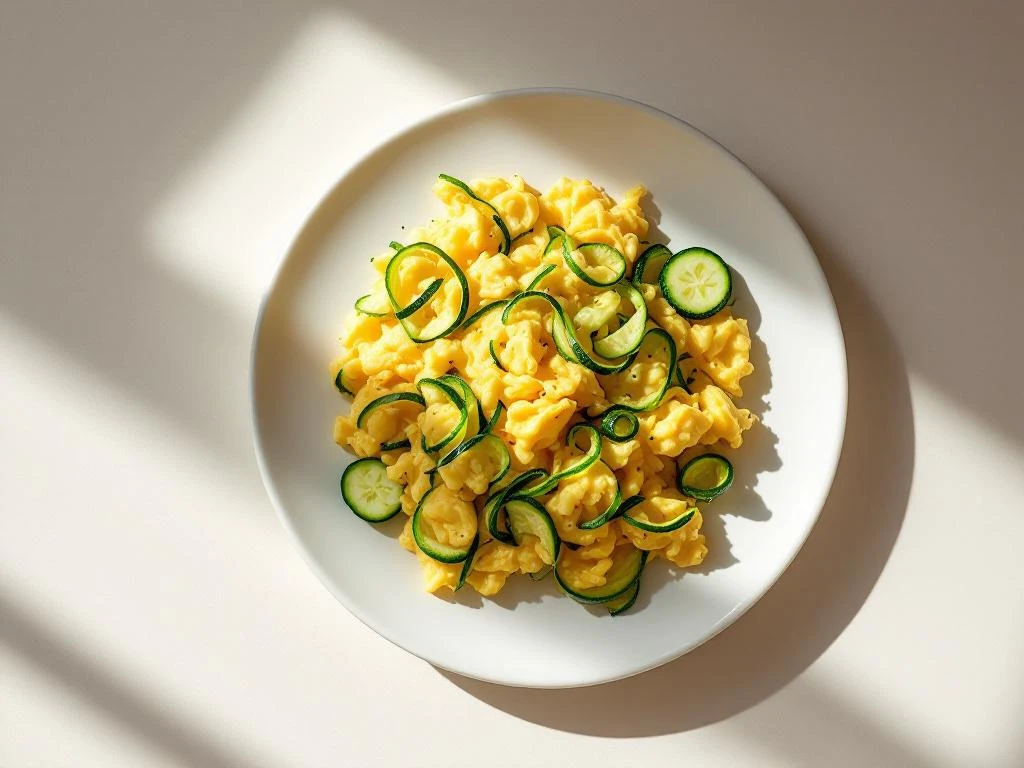
Making a satisfying breakfast that’s gentle on your digestive system doesn’t have to be complicated. This scrambled eggs with zucchini recipe takes about 15 minutes and works perfectly for anyone following a low FODMAP diet. You’ll need basic kitchen tools you probably already have and just a few simple ingredients. The result is a FODMAP friendly breakfast that’s filling, nutritious, and easy on your gut.
This guide is suitable for beginners with basic cooking skills. You’ll learn how to prepare zucchini to avoid watery eggs, cook scrambled eggs to a creamy texture, and customise this dish to keep your breakfasts interesting. By the end, you’ll have a reliable IBS friendly breakfast recipe you can make any day of the week.
Why scrambled eggs with zucchini work for IBS
Eggs are naturally low FODMAP and provide high-quality protein that’s easy to digest. They contain no carbohydrates that might trigger IBS symptoms, making them an excellent foundation for a gentle breakfast. Zucchini is also low FODMAP in standard serving sizes (up to 65g per meal) and adds fibre, vitamins, and moisture without causing digestive distress.
This combination supports gut health because both ingredients are naturally gluten free and can be prepared without high FODMAP additions like onion or garlic. The protein in eggs helps you feel satisfied longer, whilst zucchini provides nutrients like vitamin C and potassium without overloading your system with fermentable carbohydrates. For people managing IBS symptoms, this low FODMAP egg dish offers nutrition and variety without the worry.
The gentle cooking method preserves the digestibility of both ingredients. Scrambled eggs cooked properly remain soft and easy to break down, whilst lightly cooked zucchini maintains its mild flavour and tender texture. This makes the entire dish easier for sensitive digestive systems to process compared to heavier breakfast options.
Gather your ingredients and tools
For this easy scrambled eggs recipe, you’ll need the following ingredients for two servings:
- 4 large eggs
- 1 small zucchini (approximately 130g total, using 65g per person)
- 1 tablespoon of olive oil or lactose-free butter
- Salt to taste
- Black pepper to taste
- Optional: fresh chives or parsley (FODMAP safe herbs)
When selecting zucchini, look for firm specimens with smooth, unblemished skin. Smaller zucchini tend to have fewer seeds and less water content, which helps prevent soggy scrambled eggs. Avoid any that feel soft or have wrinkled skin.
You’ll need these basic kitchen tools:
- A non-stick frying pan or skillet
- A silicone spatula or wooden spoon
- A sharp knife
- A cutting board
- A bowl for whisking eggs
- A fork or small whisk
For seasonings, stick to simple options like salt and pepper. Avoid garlic powder and onion powder, as these are high FODMAP. Fresh herbs like chives, parsley, or basil are safe choices that add flavour without triggering symptoms.
Prepare the zucchini properly
Wash the zucchini thoroughly under cold running water. Pat it dry with a clean tea towel. This removes any dirt and ensures you’re starting with clean produce.
Trim off both ends of the zucchini. Cut it in half lengthways, then slice each half into half-moon shapes about 3-4mm thick. Alternatively, you can dice it into small cubes roughly 1cm in size. The key is keeping the pieces relatively uniform so they cook evenly.
Here’s the important step for preventing watery eggs: place the cut zucchini in a clean tea towel or on paper towels. Sprinkle lightly with salt and let it sit for 5 minutes. The salt draws out excess moisture. After 5 minutes, pat the zucchini pieces dry. This step makes a significant difference in the final texture of your scrambled eggs.
If you’re short on time, you can skip the salting step, but you’ll need to cook the zucchini a bit longer to evaporate the moisture before adding the eggs. This takes an extra 2-3 minutes in the pan.
Cook perfect scrambled eggs with zucchini
Heat your non-stick pan over medium heat. Add the olive oil or lactose-free butter and let it warm for about 30 seconds. You’ll know it’s ready when the oil moves easily across the pan or the butter has melted and stopped foaming.
Add the prepared zucchini to the pan. Cook for 3-4 minutes, stirring occasionally, until the pieces are tender and lightly golden at the edges. They should still hold their shape but feel soft when you press them with your spatula. This is your visual cue that the zucchini is ready.
Whilst the zucchini cooks, crack the eggs into your bowl. Add a pinch of salt and pepper. Whisk them with a fork until the yolks and whites are fully combined and you see a uniform yellow colour. Don’t overdo it, just 20-30 seconds of whisking is enough.
Pour the whisked eggs over the cooked zucchini in the pan. Reduce the heat to medium-low. Let the eggs sit undisturbed for about 20 seconds until you see the edges beginning to set. This creates a foundation for creamy scrambled eggs.
Using your spatula, gently push the eggs from the edge towards the centre, tilting the pan so the uncooked egg flows to the empty spaces. Continue this motion, working slowly around the pan. The entire process takes about 2-3 minutes. The eggs are done when they’re mostly set but still look slightly wet. They’ll continue cooking from residual heat after you remove them from the stove.
Remove the pan from heat immediately when the eggs reach this point. Scrambled eggs go from perfect to rubbery very quickly, so timing matters here. Serve straight away whilst they’re still soft and creamy.
What can go wrong and how to fix it
Watery eggs are the most common problem with this zucchini breakfast recipe. This happens when the zucchini releases too much moisture. The solution is proper preparation: salt the zucchini pieces before cooking and pat them thoroughly dry. If you’ve already added the eggs and notice excess liquid, increase the heat slightly and cook a bit longer whilst stirring to evaporate the extra moisture.
Rubbery, overcooked eggs result from too much heat or cooking too long. If your eggs turn out tough, reduce your heat next time and remove the pan from the stove when the eggs still look slightly underdone. They’ll finish cooking off the heat. There’s no way to fix overcooked eggs once they’re rubbery, but you can prevent it by watching carefully during the last minute of cooking.
Uneven cooking, where some parts are runny and others are overdone, usually means your heat is too high or you’re not stirring enough. Use medium-low heat and keep the eggs moving gently but consistently. If your pan has hot spots, rotate it occasionally on the burner.
Bland flavour is easy to fix. Season the eggs before cooking, not after. Add more salt than you think you need because eggs absorb quite a bit. Fresh herbs added at the end brighten the whole dish. A squeeze of lemon juice (low FODMAP in small amounts) can also lift the flavours without adding FODMAPs.
Customise your scrambled eggs with zucchini
This healthy scrambled eggs base adapts well to different additions. Try these low FODMAP variations:
Herb options: Fresh chives, parsley, basil, or oregano all work beautifully. Add them right at the end of cooking so they stay bright and fresh. Use about 1-2 tablespoons of chopped herbs per serving.
Cheese additions: Lactose-free cheddar, Swiss cheese, or feta (in small amounts) are suitable options. Add grated cheese when the eggs are almost done so it melts into them. Use about 30g per serving to keep it low FODMAP.
Protein additions: Cooked bacon, smoked salmon, or leftover chicken can make this dish more substantial. Add pre-cooked proteins when you add the eggs so everything heats through together. This turns your breakfast into a more filling gluten free scrambled eggs meal.
Serving suggestions: Serve alongside gluten-free toast with a scrape of butter, or wrap in a corn tortilla for a breakfast burrito. A side of baby spinach dressed with olive oil and lemon makes this a complete meal. You can also serve over cooked quinoa for extra staying power.
Make it dinner: This low FODMAP scrambled eggs recipe works perfectly for a quick evening meal. Double the portion size and serve with roasted potatoes and a simple salad. Add cherry tomatoes (up to 75g per serving) for extra colour and flavour.
The basic technique stays the same regardless of additions. Just remember to keep any extra ingredients within low FODMAP serving sizes and add them at the appropriate stage of cooking.
You now have a reliable recipe that fits your dietary needs without sacrificing taste or satisfaction. This zucchini egg recipe proves that eating for digestive health can still be enjoyable and varied. Make it once, and it’ll likely become part of your regular breakfast rotation.
Scrambled eggs with zucchini
Cooking time: 15 minutes | Portions: 2
- Wash and slice 1 small zucchini (130g total) into thin half-moons or small cubes
- Salt the zucchini pieces lightly and let sit for 5 minutes, then pat dry
- Heat 1 tablespoon olive oil or lactose-free butter in a non-stick pan over medium heat
- Cook zucchini for 3-4 minutes until tender and lightly golden
- Whisk 4 eggs with salt and pepper in a bowl
- Pour eggs over cooked zucchini and reduce heat to medium-low
- Let eggs sit for 20 seconds, then gently push from edges to centre
- Continue stirring gently for 2-3 minutes until eggs are mostly set but still slightly wet
- Remove from heat immediately and serve whilst creamy
- Optional: top with fresh herbs, lactose-free cheese, or serve with gluten-free toast
This recipe is for informational purposes only and is not medical or dietary advice. Please consult a healthcare professional before making any changes to your diet.