
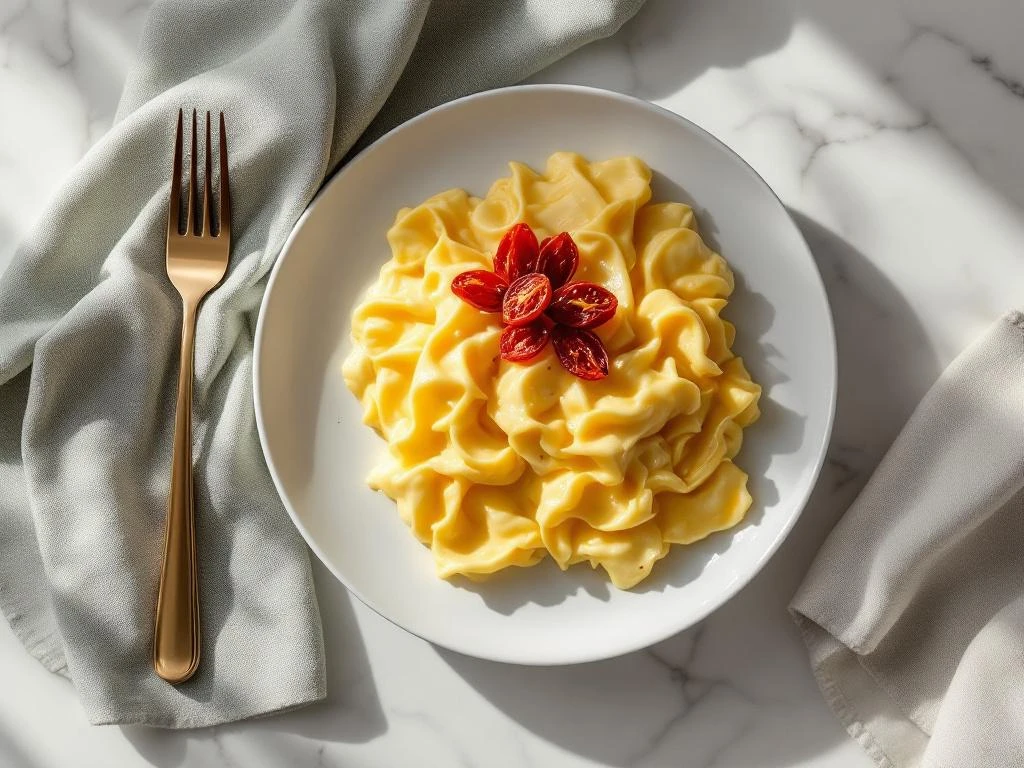
Starting your day with scrambled eggs with sun-dried tomatoes gives you a protein-rich breakfast that’s completely IBS-friendly. This quick breakfast recipe combines creamy eggs with the intense, sweet flavour of sun-dried tomatoes, all whilst staying within low FODMAP guidelines. You’ll need about 10 minutes from start to finish, making it perfect for busy mornings when you want something satisfying without triggering digestive symptoms.
This guide is suitable for beginners. You’ll need basic kitchen skills like cracking eggs and using a hob. The techniques here will help you avoid common mistakes that make scrambled eggs rubbery or watery.
Why scrambled eggs with sun-dried tomatoes work for IBS
Eggs are naturally low FODMAP and provide high-quality protein that keeps you full without causing digestive distress. They contain essential amino acids, B vitamins, and minerals that support overall health whilst being gentle on sensitive stomachs.
Sun-dried tomatoes add concentrated flavour and nutrition to this FODMAP friendly breakfast. When prepared without garlic or onion, they remain safe for IBS sufferers. They’re rich in lycopene, vitamin C, and antioxidants. The key is choosing plain sun-dried tomatoes packed in oil or dried versions you rehydrate yourself.
This combination delivers satisfying taste and texture without common IBS triggers. The protein from eggs slows digestion in a good way, helping you feel satisfied longer. The sun-dried tomatoes provide that umami depth many people miss when avoiding garlic and onion. Together, they create a gluten free scrambled eggs dish that doesn’t compromise on flavour.
Gather your ingredients and kitchen tools
For this low FODMAP scrambled eggs recipe, you’ll need these ingredients:
- 3 large eggs per serving
- 30g sun-dried tomatoes (oil-packed or dried)
- 1 tablespoon butter or garlic-infused oil (the oil is low FODMAP as FODMAPs don’t transfer to oil)
- Salt and pepper to taste
- Optional: 1 tablespoon lactose-free milk or cream for extra creaminess
Check your sun-dried tomato jar carefully. Many commercial versions contain garlic or onion. Look for plain varieties packed only in oil, or buy dried tomatoes and rehydrate them yourself.
You’ll need this kitchen equipment:
- Non-stick frying pan (20-25cm diameter works well)
- Whisk or fork for beating eggs
- Silicone or wooden spatula for stirring
- Small bowl for whisking eggs
- Chopping board and sharp knife
- Kitchen paper for draining tomatoes
Having everything ready before you start makes the cooking process smooth. This sun-dried tomato eggs recipe comes together quickly once you begin.
Prepare sun-dried tomatoes for scrambling
If using oil-packed sun-dried tomatoes, remove them from the jar and place them on kitchen paper. Pat them gently to remove excess oil. Too much oil can make your scrambled eggs greasy and may cause them to cook unevenly.
Chop the tomatoes into small pieces, roughly 5mm in size. Smaller pieces distribute better throughout the eggs and prevent large chunks that might burn. If your tomatoes are very tough, chop them even finer.
For dried sun-dried tomatoes, place them in a small bowl and cover with boiling water. Let them sit for 10 minutes until softened. Drain thoroughly and squeeze out excess water. Pat dry with kitchen paper, then chop as above.
Check your prepared tomatoes don’t smell of garlic or onion. Even a small amount of contamination can trigger IBS symptoms. When in doubt, choose a different batch or brand.
Master the perfect scrambled egg technique
Crack your eggs into a bowl and add a pinch of salt. Whisk thoroughly with a fork or whisk until the yolks and whites are completely combined. You should see no streaks of clear egg white. If using lactose-free milk, add it now and whisk again.
Place your non-stick pan over medium-low heat. This is crucial for how to make scrambled eggs properly. High heat creates rubbery, overcooked eggs. Wait about 1 minute for the pan to warm gently.
Add your butter or garlic-infused oil to the pan. Let it melt and coat the bottom, but don’t let it brown. Pour in your whisked eggs immediately.
Wait 20 seconds without stirring. This lets a thin layer set on the bottom. Then, using your spatula, gently push the eggs from the edge towards the centre. Tilt the pan so uncooked egg flows to the empty spaces.
Continue this pushing motion every 20-30 seconds. The eggs will form soft curds. When the eggs are about 70% cooked (still quite wet and glossy), add your chopped sun-dried tomatoes. Fold them in gently.
Remove the pan from heat when the eggs still look slightly undercooked. They’ll continue cooking from residual heat. This technique gives you creamy, soft scrambled eggs rather than dry, rubbery ones. The whole cooking process takes 3-4 minutes.
Season with black pepper and additional salt if needed. Serve immediately whilst still creamy.
Customise your scrambled eggs with FODMAP-safe additions
Fresh herbs add brightness without FODMAPs. Chop 1 tablespoon of chives or basil and sprinkle over your finished eggs. Both herbs are low FODMAP and complement the sun-dried tomatoes beautifully.
Lactose-free cheese works well if you want extra richness. Add 30g of grated lactose-free cheddar or parmesan in the final 30 seconds of cooking. This amount stays within safe FODMAP limits.
Baby spinach adds nutrients and colour. Stir in a handful (about 30g) when you add the tomatoes. The residual heat will wilt it perfectly. Spinach is low FODMAP in this portion size.
For this easy scrambled eggs variation, try smoked paprika. A quarter teaspoon adds smokiness that pairs well with sun-dried tomatoes. Paprika is low FODMAP and adds no digestive triggers.
Keep additions moderate. Each ingredient has FODMAP thresholds, and combining too many can push you over safe limits even if each individual item is compliant.
Troubleshoot common scrambled egg mistakes
Rubbery texture means you cooked the eggs too long or at too high heat. The proteins tighten and squeeze out moisture when overcooked. Next time, use lower heat and remove the pan earlier. You can’t rescue overcooked eggs, but you can chop them and use them in a wrap with other ingredients to mask the texture.
Watery eggs happen when you don’t whisk thoroughly or add too much liquid. Make sure no streaks of egg white remain before cooking. If you added lactose-free milk, reduce it to half a tablespoon next time. Watery eggs can be saved by returning them to low heat and cooking gently until excess liquid evaporates.
Burnt sun-dried tomatoes occur when you add them too early or use too high heat. Add them only in the final minute of cooking. If some pieces burn, remove them before serving as burnt bits taste bitter.
Uneven cooking results from not stirring enough or using a pan that’s too large. Use the right sized pan for your egg quantity. Three eggs need about a 20cm pan. Stir regularly but gently to create even curds.
If your eggs stick to the pan, it’s either not non-stick or you didn’t use enough fat. Always use butter or oil, and check your non-stick coating isn’t damaged. A well-seasoned pan prevents sticking better than a worn one.
This quick breakfast recipe becomes easier each time you make it. The technique stays the same whether you’re cooking for one or scaling up for several people.
You’ve now learnt how to create this IBS friendly breakfast that delivers both nutrition and satisfaction. The combination of protein-rich eggs and flavourful sun-dried tomatoes proves that low FODMAP eating doesn’t mean boring food. These techniques work for any scrambled egg variation, so you can adapt them to other FODMAP-safe ingredients you enjoy.
Start with this basic recipe and experiment with the customisation options once you’re comfortable with the method. The key is always gentle heat and knowing when to stop cooking. Your digestive system will thank you for choosing ingredients that taste great without causing problems.
Scrambled eggs with sun-dried tomatoes
Cooking time: 10 minutes | Portions: 1 serving
- 3 large eggs
- 30g plain sun-dried tomatoes (no garlic or onion), chopped small
- 1 tablespoon butter or garlic-infused oil
- Salt and pepper to taste
- Optional: 1 tablespoon lactose-free milk
- Prepare sun-dried tomatoes by draining and patting dry, then chop into 5mm pieces
- Whisk eggs thoroughly in a bowl with salt until no streaks remain
- Heat non-stick pan over medium-low heat for 1 minute
- Add butter or oil, let it melt and coat the pan
- Pour in eggs and wait 20 seconds before stirring
- Gently push eggs from edges to centre every 20-30 seconds
- When eggs are 70% cooked, fold in chopped sun-dried tomatoes
- Remove from heat whilst still slightly wet and glossy
- Season with pepper and serve immediately
This recipe is for informational purposes only and is not medical or dietary advice. Please consult a healthcare professional before making any changes to your diet.