
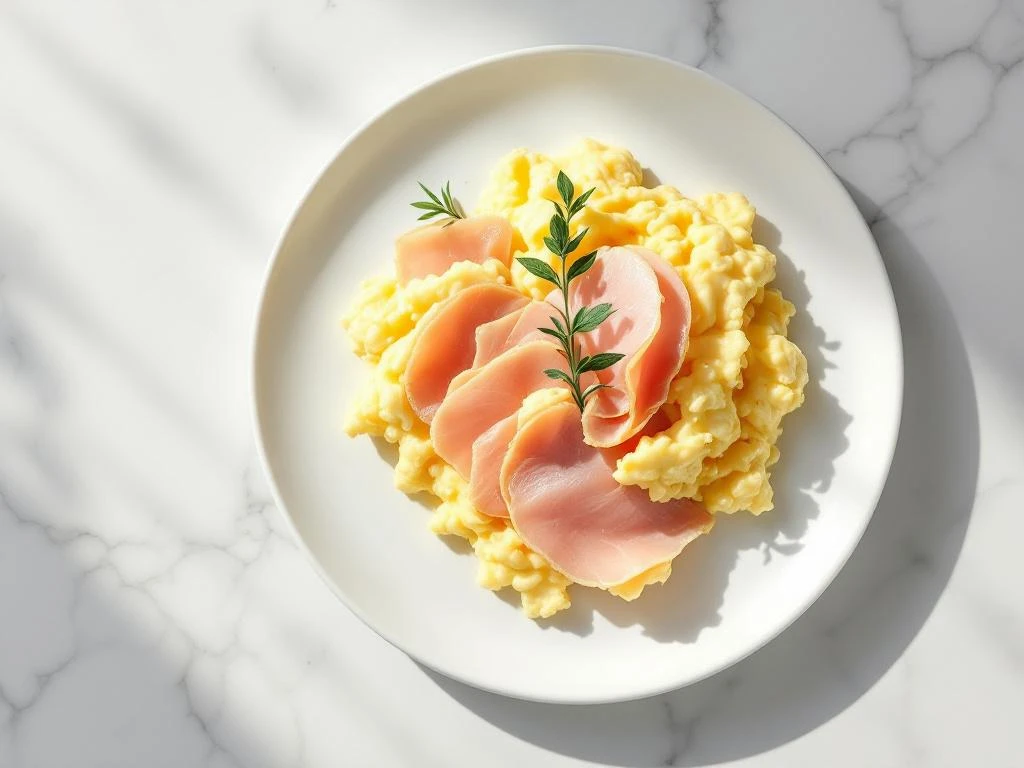
Managing IBS means finding breakfasts that taste good and settle well. Scrambled eggs with smoked turkey delivers both. This quick low FODMAP breakfast provides protein without triggering digestive symptoms, making it perfect for busy mornings when you need reliable fuel.
This recipe takes about 10 minutes from start to finish. You’ll need basic kitchen skills like cracking eggs and using a stovetop. The technique is simple enough for beginners but produces restaurant-quality results.
You’ll need fresh eggs, low FODMAP-safe smoked turkey, a non-stick pan, and butter or suitable oil. Optional additions include fresh herbs and seasoning. Everything is readily available at most supermarkets.
By the end, you’ll know how to make creamy, perfectly cooked scrambled eggs every time. You’ll also understand which ingredients work for IBS-friendly breakfasts and how to customise this dish to your preferences.
Why scrambled eggs with smoked turkey work for IBS
Eggs are naturally low FODMAP and gentle on sensitive digestive systems. They contain high-quality protein that keeps you satisfied without causing bloating or discomfort. The simple composition of eggs makes them easy to digest, which matters when managing IBS symptoms.
Smoked turkey adds flavour and extra protein without introducing problematic FODMAPs. Choose plain smoked turkey without added onion or garlic seasoning. Check ingredient labels to ensure no high FODMAP additives are hiding in the mix.
This combination creates an IBS friendly breakfast that supports stable energy levels throughout the morning. The protein content helps prevent blood sugar crashes that can worsen digestive symptoms. Both ingredients are gluten free scrambled eggs naturally, making this suitable for multiple dietary needs.
The nutritional value extends beyond protein. Eggs provide essential vitamins and minerals including B12, selenium, and choline. Smoked turkey contributes iron and zinc. Together, they form a complete breakfast that nourishes without irritating your gut.
What you need for perfect scrambled eggs
Start with fresh eggs at room temperature. You’ll need 2-3 eggs per person. Cold eggs don’t scramble as smoothly, so take them out of the fridge 15 minutes before cooking.
Select plain smoked turkey without seasoning blends. About 50-75g per serving works well. Dice it into small pieces so it distributes evenly throughout the eggs.
Essential ingredients:
- Fresh eggs (2-3 per person)
- Plain smoked turkey (50-75g per serving)
- Butter or lactose-free alternative (1 tablespoon)
- Salt and black pepper to taste
- Fresh chives or parsley (optional)
Kitchen equipment needed:
- Non-stick frying pan (medium size)
- Mixing bowl
- Whisk or fork
- Silicone spatula
- Sharp knife and cutting board
For dairy-free preferences, use olive oil or a plant-based butter alternative instead of regular butter. Coconut oil works but adds a slight coconut flavour. Garlic-infused oil is low FODMAP safe and adds extra taste without the FODMAP content of actual garlic.
Portion sizes matter for low FODMAP compliance. Stick to 2-3 eggs per serving. While eggs themselves are low FODMAP, eating excessive amounts of any food can trigger symptoms in some people.
Prepare your ingredients and workspace
Remove your eggs from the refrigerator and let them sit on the counter. Room temperature eggs blend better and cook more evenly. This small step makes a noticeable difference in texture.
Dice the smoked turkey into small, bite-sized pieces. Aim for roughly 1cm cubes. Smaller pieces distribute better throughout the scrambled eggs and ensure every forkful has flavour. Set the diced turkey aside in a small bowl.
Crack your eggs into a mixing bowl. Check each egg as you crack it to catch any shell fragments. Add a pinch of salt and a few grinds of black pepper. Whisk thoroughly until the yolks and whites combine completely. You should see no streaks of clear egg white remaining.
Set up your cooking area before you start heating the pan. Place your spatula, diced turkey, and butter within easy reach. Low FODMAP scrambled eggs cook quickly, so having everything ready prevents scrambling to find tools mid-cooking.
Choose a non-stick pan that’s large enough to spread the eggs in a thin layer. A pan that’s too small creates thick, unevenly cooked eggs. Medium heat works best for this easy scrambled eggs recipe.
Cook scrambled eggs with smoked turkey step-by-step
Place your non-stick pan over medium heat. Add the butter and let it melt completely. Tilt the pan to coat the entire surface. The butter should foam slightly but not brown. If it starts turning golden, your heat is too high.
Pour the whisked eggs into the pan. Let them sit undisturbed for about 20 seconds. You’ll see the edges start to set. This brief waiting period is crucial for achieving creamy texture rather than rubbery eggs.
Use your silicone spatula to gently push the eggs from the edges toward the centre. Tilt the pan so uncooked egg flows to the empty spaces. Work slowly and deliberately. Rushing this step creates small, dry curds instead of soft, creamy folds.
When the eggs are about halfway cooked (still quite wet but starting to form curds), add the diced smoked turkey. Fold it in gently with your spatula. The turkey will warm through as the eggs finish cooking.
Visual cues for perfect doneness: The eggs should look slightly glossy and still a bit wet when you remove them from heat. They’ll continue cooking from residual heat for another 30 seconds. Remove the pan from the burner when the eggs are 80% done.
The entire cooking process takes 3-4 minutes. Watch the texture carefully during the final minute. Scrambled eggs go from perfect to overcooked very quickly. Better to err on the side of slightly undercooked than push them too far.
Give the eggs one final gentle fold with your spatula. The residual heat will finish the cooking process. You want soft, creamy curds that hold together but remain moist. This is what separates good scrambled eggs from great ones.
Avoid common scrambled egg mistakes
Overcooked eggs turn rubbery and dry. This happens when you leave them on heat too long or use temperature that’s too high. Pull the pan off the burner when eggs still look slightly wet. They’ll reach perfect consistency as they rest on the plate.
Watery scrambled eggs result from insufficient whisking or adding liquid. Don’t add milk or cream to this recipe. Eggs contain enough moisture on their own. Whisk thoroughly before cooking to prevent watery pools forming around your finished eggs.
Uneven cooking comes from inconsistent heat or stirring too much. Keep your burner at steady medium heat. Stir gently and infrequently. Constant stirring creates small, broken curds instead of the soft, pillowy texture you want.
Burnt turkey happens when you add it too early or use heat that’s too high. Add the smoked turkey halfway through cooking, not at the beginning. The turkey just needs to warm through, not cook. It’s already fully cooked when you buy it.
If your eggs stick to the pan, you didn’t use enough butter or your pan isn’t truly non-stick. A proper non-stick surface is essential for this quick low FODMAP breakfast. Replace pans when the coating shows wear.
Temperature control causes most scrambled egg problems. Medium heat works for nearly everyone. If your stovetop runs hot, use medium-low instead. The eggs should cook gently, not rapidly. Patience produces better results than speed.
Serve and customize your low FODMAP breakfast
Plate your scrambled eggs immediately while they’re still hot. The creamy texture is best enjoyed fresh. Garnish with chopped fresh chives or parsley if desired. Both herbs are low FODMAP safe and add colour.
Serve alongside low FODMAP toast made from suitable gluten-free bread. Sourdough spelt bread (in controlled portions) also works for some people. Check your personal tolerance levels and stick to recommended serving sizes.
Low FODMAP accompaniments that work well:
- Cherry tomatoes (5 tomatoes maximum per serving)
- Baby spinach leaves (wilted or fresh)
- Sliced cucumber
- Gluten-free toast with lactose-free butter
- Fresh herbs like basil or coriander
For meal prep, cook the eggs fresh each morning rather than making them ahead. Scrambled eggs don’t reheat well and lose their creamy texture. However, you can pre-dice the smoked turkey and store it in the fridge for up to three days.
Try variations by swapping smoked turkey for other low FODMAP proteins. Cooked bacon (check for additives), plain ham, or smoked salmon all work. Keep portions moderate and always verify ingredient labels for hidden FODMAPs.
Season creatively while staying low FODMAP safe. Add a pinch of paprika for colour and mild spice. Fresh cracked black pepper adds bite. Dried herbs like oregano or thyme bring Mediterranean flavour. Avoid garlic powder and onion powder completely.
Store any leftover smoked turkey properly in an airtight container. It keeps for 3-4 days in the refrigerator. Pre-portioning your turkey makes weekday breakfasts even faster. You’ll have this smoked turkey breakfast ready in under 10 minutes.
This low FODMAP turkey eggs recipe adapts easily to different preferences. Make it dairy-free, adjust the protein amount, or change up the herbs. The basic technique stays the same regardless of small modifications. Master this method and you’ll have a reliable breakfast option that never triggers symptoms.
We’ve built our recipe collection around practical dishes like this one. Simple ingredients, clear instructions, and results that work for sensitive digestive systems. That’s what matters when you’re managing IBS while still wanting to enjoy your food.
Scrambled eggs with smoked turkey
Cooking time: 10 minutes | Portions: 1 serving
Ingredients:
- 2-3 fresh eggs (room temperature)
- 50-75g plain smoked turkey (diced)
- 1 tablespoon butter or lactose-free alternative
- Salt and black pepper to taste
- Fresh herbs (optional)
Method:
- Remove eggs from fridge 15 minutes before cooking
- Dice smoked turkey into 1cm pieces
- Whisk eggs thoroughly with salt and pepper until no streaks remain
- Melt butter in non-stick pan over medium heat
- Pour eggs into pan and let sit for 20 seconds
- Gently push eggs from edges to centre, tilting pan to spread uncooked egg
- Add diced turkey when eggs are halfway cooked
- Remove from heat when eggs are 80% done (still slightly wet)
- Let rest 30 seconds, then serve immediately
This recipe is for informational purposes only and is not medical or dietary advice. Please consult a healthcare professional before making any changes to your diet.
Related Articles
- Scrambled Eggs with Sun-Dried Tomato Pesto
- Is bacon ok on FODMAP?
- Gluten-Free Banana Coconut Bread
- Raspberry Chia Breakfast Bowl
- Coconut Yogurt Granola Parfait