
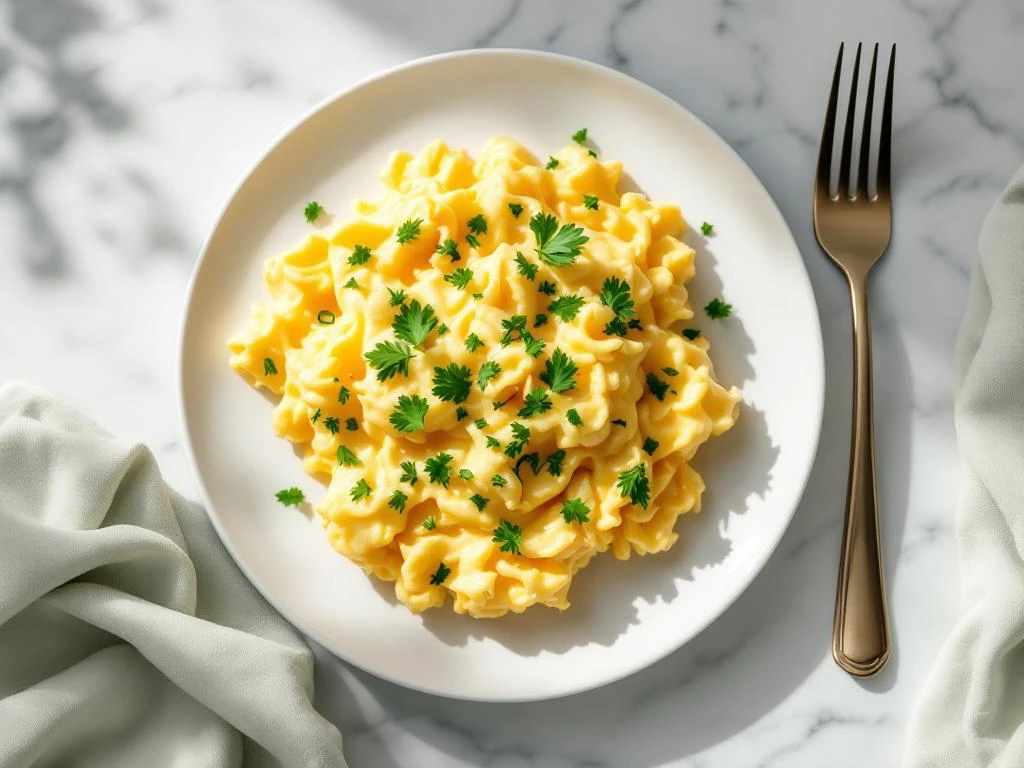
Learning to make perfect scrambled eggs with fresh herbs is simpler than you might think. This recipe transforms a basic breakfast into something special while remaining completely low FODMAP friendly. You’ll need about 10 minutes from start to finish, making it ideal for busy mornings when you want something nourishing that won’t upset your digestive system.
This guide suits complete beginners. You don’t need any special cooking skills, just a willingness to follow a few simple steps. The ingredients are straightforward and the herbs we’ll use are all safe for those managing IBS or following a low FODMAP diet.
You’ll need fresh eggs, low FODMAP herbs like chives or parsley, butter or a lactose-free alternative, and basic kitchen tools. The result is fluffy, creamy scrambled eggs that taste restaurant-quality without any of the digestive triggers that often come with rich breakfast dishes.
Why fresh herbs elevate scrambled eggs
Fresh herbs add brightness and depth to scrambled eggs without any risk to your digestive system. When you’re following a low FODMAP diet, finding ways to add flavour can feel challenging. Many common seasonings contain garlic or onion, but fresh herbs like chives, parsley, and basil are completely safe choices that bring colour and taste to your plate.
Scrambled eggs themselves are an excellent breakfast option for anyone with IBS or food sensitivities. Eggs are naturally low FODMAP, high in protein, and gentle on the digestive system. They provide sustained energy without the bloating or discomfort that carbohydrate-heavy breakfasts can trigger.
The herbs you choose do more than just look pretty. Chives offer a mild onion-like flavour without the FODMAPs found in actual onions. Parsley adds a fresh, slightly peppery note. Basil brings a sweet, aromatic quality that pairs beautifully with the richness of eggs. Each herb also contains vitamins and antioxidants, turning your simple breakfast into a nutritious start to your day.
Using fresh rather than dried herbs makes a noticeable difference. Fresh herbs have a brighter, more vibrant flavour that doesn’t get lost in the creamy texture of the eggs. They also add visual appeal, making your breakfast look as good as it tastes.
Gather your ingredients and tools
Before you start cooking, get everything ready. This makes the process smooth and prevents you from scrambling (no pun intended) while your eggs are on the heat.
Ingredients you’ll need:
- 3 large fresh eggs
- 1 tablespoon of butter or lactose-free butter alternative
- 2 tablespoons of fresh herbs (choose from chives, parsley, or basil, or use a combination)
- Pinch of salt
- Optional: a splash of lactose-free milk for extra creaminess
Essential tools:
- Non-stick frying pan or skillet
- Whisk or fork for beating eggs
- Silicone or wooden spatula
- Small mixing bowl
- Chopping board and knife for herbs
When selecting herbs, look for bright green leaves without any yellowing or wilting. Rinse them under cold water and pat dry with a paper towel. For chives, snip them into small pieces using kitchen scissors. For parsley or basil, remove the leaves from the stems and chop them finely. Smaller pieces distribute better throughout the eggs.
Store any leftover herbs by wrapping them in a damp paper towel and placing them in a sealed container in the fridge. They’ll stay fresh for several days this way. You can also freeze chopped herbs in ice cube trays with a bit of water or oil for longer storage.
Prepare and whisk the eggs properly
Crack your eggs into the mixing bowl. Tap each egg firmly on a flat surface rather than the edge of the bowl. This prevents shell fragments from falling into your eggs. If a piece of shell does get in, use half of the eggshell to scoop it out.
Add a small pinch of salt to the eggs now. Some cooks wait until after cooking, but adding salt before whisking helps break down the egg proteins slightly, resulting in a more tender texture. If you’re using lactose-free milk, add about a tablespoon now as well.
Whisk the eggs thoroughly until the yolks and whites are completely combined. You want to see no streaks of white or yellow. The mixture should look uniform and slightly frothy. This takes about 30 seconds of vigorous whisking. The more air you incorporate, the fluffier your scrambled eggs will be.
Add most of your chopped herbs to the egg mixture, but save a small amount for garnishing at the end. Stir them in gently with your whisk or a fork. The herbs should be evenly distributed throughout the mixture.
Your egg mixture should look pale yellow with flecks of green herbs throughout. The consistency should be liquid but slightly thickened from the whisking. If it looks watery or separated, whisk it again briefly before cooking.
Cook scrambled eggs to creamy perfection
Place your non-stick pan on the stove over medium-low heat. This is the most important part of making perfect scrambled eggs. Low and slow is the secret to creamy texture. High heat makes eggs rubbery and dry.
Add your butter to the pan and let it melt completely. Tilt the pan to coat the bottom evenly. The butter should foam slightly but not brown. If it starts to brown, your heat is too high. Lower it and wait a moment before adding the eggs.
Pour the egg mixture into the pan. Let it sit undisturbed for about 20 seconds. You’ll see the edges just starting to set. Now, using your spatula, gently push the eggs from the edge toward the centre. Tilt the pan so the uncooked egg flows to the empty space.
Continue this process, pushing and tilting, every 20 to 30 seconds. You’re creating soft curds rather than stirring constantly. The eggs should look creamy and slightly wet, not dry or broken into tiny pieces. This gentle method takes about 3 to 4 minutes total.
When the eggs are mostly set but still look slightly glossy and wet, remove the pan from the heat. This is crucial. The eggs will continue cooking from the residual heat of the pan. If you wait until they look completely done, they’ll be overcooked by the time you plate them.
Give them one final gentle fold with your spatula. The eggs should be soft, creamy, and formed into large, fluffy curds. Plate them immediately and sprinkle with the reserved fresh herbs for garnish.
Troubleshoot common scrambled egg mistakes
Rubbery eggs are the most common problem. This happens when the heat is too high or you’ve cooked them too long. The fix is simple: use lower heat and remove the pan earlier than you think you should. The eggs keep cooking after you take them off the heat.
If your eggs turn out watery, you might have added too much milk or not cooked them long enough. For low FODMAP scrambled eggs, you can skip the milk entirely. The eggs will still be creamy from the butter and gentle cooking method. If you do use lactose-free milk, stick to just a tablespoon for three eggs.
Overcooked texture with dry, crumbly eggs means you either used too high heat or left them on the stove too long. There’s no way to fix already overcooked eggs, but you’ll know for next time. Remove them from heat when they still look a bit underdone.
Herbs burning or turning brown happens when they’re added too early or the heat is too high. Mix most herbs into the raw egg mixture, and they’ll stay bright green. Only add herbs directly to the hot pan if you’re using them as a final garnish after removing from heat.
Uneven cooking with some parts dry and others runny means you’re not moving the eggs enough. Use your spatula to gently push the cooked portions toward the centre more frequently. The key is gentle but regular movement, not constant stirring.
If your eggs stick to the pan despite using a non-stick surface, you might not have used enough butter, or your pan might need replacing. Even non-stick pans wear out over time. Make sure the butter coats the entire bottom of the pan before adding the eggs.
By following these steps, you’ll consistently make fluffy scrambled eggs with fresh herbs that are both delicious and gentle on your digestive system. The low FODMAP herbs add flavour without any triggers, making this a safe and satisfying breakfast option. Once you’ve mastered this basic technique, you can experiment with different herb combinations to keep your breakfasts interesting. We encourage you to explore more low FODMAP recipes on our site to expand your meal options while managing your dietary needs.
Scrambled eggs with fresh herbs
Cooking time: 10 minutes | Portions: 1 serving
Ingredients:
- 3 large fresh eggs
- 1 tablespoon butter or lactose-free alternative
- 2 tablespoons fresh low FODMAP herbs (chives, parsley, or basil)
- Pinch of salt
- Optional: 1 tablespoon lactose-free milk
Steps:
- Crack eggs into a bowl and add salt
- Whisk thoroughly until uniform and slightly frothy
- Stir in most of the chopped herbs, reserving some for garnish
- Melt butter in a non-stick pan over medium-low heat
- Pour in egg mixture and let sit for 20 seconds
- Gently push eggs from edges to centre, tilting pan to let uncooked egg flow
- Continue for 3 to 4 minutes until eggs are mostly set but still glossy
- Remove from heat while still slightly wet
- Plate immediately and garnish with reserved herbs
This recipe is for informational purposes only and is not medical or dietary advice. Please consult a healthcare professional before making any changes to your diet.