
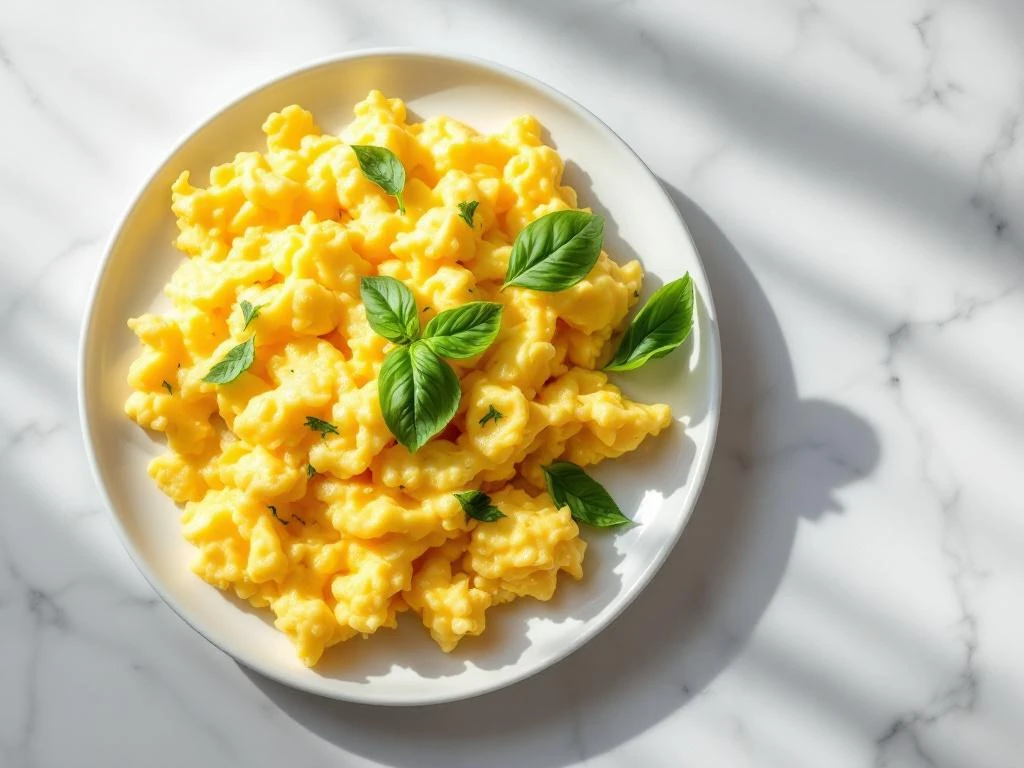
Learning to make scrambled eggs with fresh basil transforms a simple breakfast into something special. This beginner-friendly recipe takes about 10 minutes and requires no advanced cooking skills. You’ll need fresh eggs, basil leaves, butter or a lactose-free alternative, and basic kitchen tools. The herb adds aromatic flavour whilst remaining completely low FODMAP compliant, making it perfect for those managing IBS symptoms. By the end, you’ll know how to create soft, creamy scrambled eggs that taste restaurant-quality.
Why fresh basil elevates simple scrambled eggs
Fresh basil brings a sweet, slightly peppery flavour that complements eggs beautifully. Unlike onion or garlic, which can trigger digestive discomfort, basil remains gentle on sensitive stomachs whilst adding genuine aromatic depth. The herb contains natural oils that release during cooking, creating a fragrant breakfast without any high FODMAP ingredients.
Basil also offers nutritional benefits beyond flavour. It contains antioxidants and has traditionally been used to support digestive health. For those following a low FODMAP diet, finding herbs that add variety without causing symptoms makes meal planning easier. Fresh basil transforms basic scrambled eggs into a flavourful, gut-friendly meal that feels special enough for weekend brunch.
The bright green leaves add visual appeal to your plate. When you’re managing food sensitivities, meals can sometimes feel limited. Adding fresh herbs like basil proves that IBS friendly scrambled eggs can be just as delicious and satisfying as any traditional breakfast.
Gather your ingredients and tools
Start by collecting everything you need before you begin cooking. This makes the process smoother and helps prevent overcooking whilst you search for missing items.
Low FODMAP ingredients
- 3 large eggs (fresh eggs work best for scrambling)
- Small handful of fresh basil leaves (about 8-10 leaves)
- 1 tablespoon butter or lactose-free alternative (such as lactose-free butter or suitable plant-based spread)
- Pinch of salt
- Pinch of black pepper
Essential kitchen tools
- Non-stick pan (medium-sized works well)
- Whisk or fork (for beating eggs)
- Spatula (silicone or wooden to protect your pan)
- Small bowl (for whisking eggs)
- Chopping board and knife (for basil)
When selecting fresh basil, look for bright green leaves without brown spots or wilting. The leaves should smell fragrant when you gently rub them. If you have lactose intolerance, check that your butter alternative is certified lactose-free rather than just dairy-free, as some products still contain traces that might cause symptoms.
Prepare the eggs and basil properly
Crack the eggs into your small bowl. Whisk them thoroughly until the yolks and whites combine completely. You should see no streaks of clear egg white remaining. This takes about 30 seconds of vigorous whisking. The mixture should look uniformly yellow and slightly frothy on top.
Rinse your basil leaves under cold water to remove any dirt. Pat them dry with a clean tea towel or kitchen paper. Stack the leaves on top of each other, then roll them tightly like a small cigar. Slice across the roll to create thin ribbons. This technique, called chiffonade, distributes the basil evenly throughout your scrambled eggs.
Add most of the chopped basil to your whisked eggs, keeping a small pinch aside for garnish. Give everything a quick stir to distribute the herbs. The basil will darken slightly during cooking, so don’t worry if the raw leaves look very bright green.
Success check: Your egg mixture should be smooth, well-combined, and flecked with thin green ribbons of basil throughout.
Cook scrambled eggs to creamy perfection
Place your non-stick pan over medium-low heat. Add the butter and let it melt completely, tilting the pan so it coats the bottom evenly. The butter should foam gently but not brown. If it starts turning golden, your heat is too high.
Pour your egg mixture into the pan. Wait about 20 seconds without touching it. You’ll see the edges start to set slightly. Now use your spatula to gently push the eggs from the edge towards the centre, tilting the pan so uncooked egg flows into the empty spaces.
Continue this gentle pushing motion every 20-30 seconds. The key to creamy scrambled eggs is patience and low heat. Remove the pan from heat when the eggs still look slightly wet and glossy. They’ll continue cooking from residual heat, and this prevents them from becoming dry and rubbery.
The entire cooking process takes about 3-4 minutes. If your eggs are cooking faster, reduce the heat. Slow cooking creates soft, creamy curds that make restaurant-quality basil scrambled eggs recipe results.
Warning: Don’t walk away during cooking. Scrambled eggs need constant attention for the best texture.
Timing the basil addition
Since you mixed most of the basil into the raw eggs, it cooks throughout the process and releases maximum flavour. The small pinch you reserved can be sprinkled on top just before serving. This gives you both cooked basil flavour throughout and fresh basil aroma on top.
Customise your scrambled eggs with variations
This basic recipe for how to make scrambled eggs with fresh herbs adapts easily to your preferences. Try adding a tablespoon of lactose-free cream cheese in the last 30 seconds of cooking for extra richness. The cheese melts into the eggs, creating an even creamier texture.
Low FODMAP serving suggestions
- Serve on gluten free scrambled eggs toast (made from certified gluten-free bread)
- Pair with grilled tomatoes (cherry tomatoes work well)
- Add a side of baby spinach leaves
- Top with a small amount of feta cheese (check portion sizes for FODMAP compliance)
- Accompany with crispy bacon (check ingredients for added garlic or onion)
Herb variations for easy scrambled eggs
Whilst basil is wonderful, you can substitute or combine it with other low FODMAP herbs. Fresh chives add a mild onion-like flavour without the FODMAPs. Parsley brings freshness and colour. Dill creates a completely different flavour profile that works surprisingly well with eggs.
For larger portions, simply multiply the ingredients. Three eggs typically serves one hungry person or two as part of a larger breakfast spread. Six eggs in a larger pan serves a family breakfast, though you’ll need to extend cooking time slightly.
Make-ahead tips
Scrambled eggs taste best fresh, but you can prep the ingredients the night before. Whisk your eggs and chop your basil, storing them separately in the fridge. In the morning, combine them and cook as directed. This saves precious time during busy weekday mornings whilst still delivering fresh scrambled eggs with herbs.
These low FODMAP scrambled eggs work perfectly for meal prep too. Cook a larger batch and store portions in airtight containers for up to two days. Reheat gently in the microwave, adding a small splash of lactose-free milk to restore moisture.
You’ve now mastered a simple technique that elevates basic eggs into something special. The combination of proper whisking, gentle heat, and fresh basil creates an IBS friendly scrambled eggs breakfast that proves restricted diets don’t mean restricted flavour. This recipe works as a quick weekday breakfast or a leisurely weekend brunch. The skills you’ve learned apply to countless egg dishes, so experiment with different herb combinations and serving styles.
We encourage you to make this recipe your own. Try different herbs, adjust the cooking time to your texture preference, and pair it with your favourite low FODMAP breakfast items. Each time you make it, you’ll become more confident with the technique.
Scrambled eggs with fresh basil
Cooking time: 10 minutes | Portions: 1 serving
- Whisk 3 eggs until completely combined with no streaks
- Wash and chiffonade 8-10 fresh basil leaves into thin ribbons
- Mix most of the basil into whisked eggs, reserving a pinch for garnish
- Melt 1 tablespoon butter or lactose-free alternative in non-stick pan over medium-low heat
- Pour egg mixture into pan and wait 20 seconds
- Gently push eggs from edge to centre every 20-30 seconds for 3-4 minutes
- Remove from heat when eggs look slightly wet and glossy
- Garnish with reserved fresh basil and serve immediately
- Season with salt and pepper to taste
This recipe is for informational purposes only and is not medical or dietary advice. Please consult a healthcare professional before making any changes to your diet.