
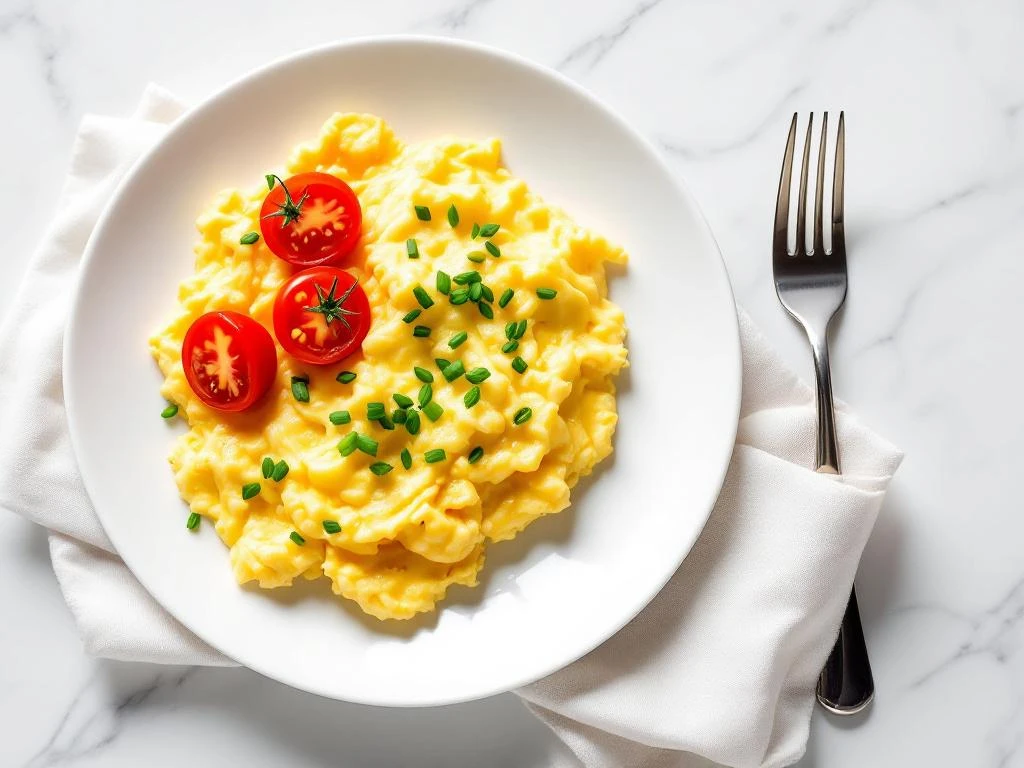
Managing IBS doesn’t mean sacrificing a satisfying breakfast. This easy scrambled eggs recipe with chives and tomatoes delivers protein, flavour and gut-friendly ingredients in under 10 minutes. You’ll learn the exact technique for fluffy, creamy eggs while keeping portions within low FODMAP limits. Whether you’re new to the diet or looking for quick breakfast ideas, this recipe works for beginners and takes minimal kitchen equipment. By the end, you’ll have a reliable breakfast that supports digestive health without compromising on taste.
Why scrambled eggs with chives and tomatoes work for IBS
Eggs form the foundation of this IBS friendly scrambled eggs recipe because they’re naturally low FODMAP and rich in easily digestible protein. Unlike many breakfast options that trigger symptoms, eggs provide essential nutrients without the gut irritants found in wheat, dairy or high FODMAP vegetables.
Chives add flavour without the FODMAP load that onions and garlic bring. The green tops contain minimal fructans, making them safe for the low FODMAP diet when used in typical serving sizes. Fresh chives deliver a mild, pleasant taste that enhances your scrambled eggs with fresh herbs without causing digestive distress.
Tomatoes remain low FODMAP in controlled portions (around 75g or half a medium tomato per serving). They contribute vitamins, antioxidants and a slight acidity that balances the richness of eggs. This combination creates a digestive friendly breakfast that supports gut health whilst delivering approximately 15g of protein per serving.
The simple preparation method avoids heavy creams, processed ingredients or trigger foods. Using butter or a suitable oil keeps the recipe gluten free scrambled eggs compliant, whilst the quick cooking time preserves nutrients and maintains gentle digestion.
Gather your ingredients and kitchen tools
Preparing low FODMAP scrambled eggs requires minimal ingredients and basic kitchen equipment. Having everything ready before you start cooking ensures smooth preparation and perfect results.
Essential ingredients
- 3 large eggs (per serving)
- 1 tablespoon fresh chives, finely chopped
- Half a medium tomato, diced (approximately 75g to maintain low FODMAP compliance)
- 1 tablespoon butter or garlic-free oil
- Pinch of salt
- Freshly ground black pepper to taste
Required kitchen tools
- Non-stick frying pan (20-24cm diameter)
- Whisk or fork for beating eggs
- Silicone or wooden spatula
- Small cutting board
- Sharp knife for chopping
- Small bowl for whisking eggs
Stick to the portion sizes listed to keep this easy scrambled eggs recipe within low FODMAP guidelines. One serving uses three eggs, which provides adequate protein for breakfast whilst allowing room for other low FODMAP foods throughout your meal.
Prepare the chives and tomatoes
Proper preparation of your vegetables ensures even cooking and maintains the low FODMAP integrity of your breakfast. Take a few minutes to prep everything before you start cooking the eggs.
Rinse the fresh chives under cold water and pat them dry with a clean tea towel. Place them on your cutting board and use a sharp knife to chop them finely, creating pieces roughly 2-3mm in length. Fine chopping distributes the chive flavour throughout your scrambled eggs with chives without creating large, stringy pieces.
Select a ripe but firm tomato. Wash it thoroughly and cut it in half. Measure out approximately 75g (half a medium tomato) to stay within low FODMAP serving sizes. Remove the core and dice the tomato into small cubes, about 5mm on each side. Smaller pieces integrate better into the eggs and release less moisture during cooking.
Place your chopped chives and diced tomatoes in separate small bowls or on your cutting board. Having them ready means you can add them at precisely the right moment without interrupting your cooking flow. If your tomato releases excess juice whilst sitting, drain it slightly before adding to the pan.
Cook perfectly fluffy scrambled eggs
The technique you use determines whether your scrambled eggs turn out creamy and tender or rubbery and dry. This method creates restaurant-quality results at home.
Crack three eggs into a small bowl. Use a whisk or fork to beat them thoroughly for about 30 seconds until the yolks and whites combine completely. You should see no streaks of clear egg white. Beating incorporates air, which helps create fluffy scrambled eggs.
Place your non-stick pan over medium-low heat. Add the butter and let it melt slowly, swirling to coat the bottom of the pan. The butter should foam gently but not brown. If it starts turning golden, your heat is too high. Lower the temperature and wait 30 seconds before proceeding.
Pour the beaten eggs into the pan. Wait 10 seconds without touching them, allowing the bottom to just begin setting. Using your spatula, gently push the eggs from the edge toward the centre, tilting the pan so uncooked egg flows to the empty spaces. Continue this gentle pushing motion every 10-15 seconds.
Watch for the texture to change. The eggs should form soft curds whilst still looking slightly wet and glossy. This takes roughly 2-3 minutes over medium-low heat. Remove the pan from heat when the eggs still look slightly undercooked. They’ll continue cooking from residual heat, reaching perfect doneness as you add the vegetables.
Add chives and tomatoes at the right moment
Timing matters when incorporating vegetables into scrambled eggs with tomatoes. Add them too early and they’ll make the eggs watery. Add them too late and they won’t warm through properly.
Once you’ve removed the pan from heat and your eggs are still slightly glossy, immediately sprinkle the chopped chives over the surface. Use your spatula to fold them in gently with two or three broad strokes. The residual heat will soften the chives slightly whilst preserving their fresh flavour and bright colour.
Add the diced tomatoes next, distributing them evenly across the eggs. Fold them in with the same gentle motion, turning the eggs over themselves rather than stirring vigorously. Aggressive stirring breaks down the curds you’ve carefully created and can make the texture mushy.
The tomatoes will warm through from the heat of the eggs without releasing excessive moisture. If you added them earlier during cooking, their liquid would make the eggs runny and prevent proper curd formation. This timing preserves both texture and the distinct flavour of each ingredient in your low FODMAP breakfast.
Season with salt and pepper, folding once more to distribute. Serve immediately whilst the eggs remain creamy and the vegetables stay distinct.
Troubleshoot common scrambled egg mistakes
Even experienced cooks encounter problems with scrambled eggs. Understanding what went wrong helps you adjust technique for perfect results every time.
Rubbery or dry eggs
This happens when eggs cook too long or at too high a temperature. The proteins tighten excessively, squeezing out moisture and creating a tough texture. Always use medium-low heat and remove the pan whilst eggs still look slightly wet. They finish cooking off the heat, staying tender and creamy.
Watery scrambled eggs
Excess liquid usually comes from vegetables added too early or eggs removed from heat too soon. Make sure your tomatoes are well-drained before adding them. If you prefer softer eggs, that’s fine, but add vegetables only after removing from heat to avoid extra moisture mixing with uncooked egg.
Uneven cooking with some parts overdone
Your heat is likely too high or you’re not moving the eggs enough. Lower the temperature and use consistent, gentle pushing motions every 10-15 seconds. This redistributes the uncooked egg and prevents hot spots from overcooking portions whilst others remain raw.
Burnt butter flavour
Butter burns quickly at high temperatures, creating a bitter taste. Always melt butter over medium-low heat and add eggs as soon as it foams but before it browns. If you struggle with this, switch to a neutral oil with a higher smoke point, or use half butter and half oil.
Vegetables release too much moisture
Tomatoes contain significant water content. Dice them into small pieces and let any excess juice drain before adding to eggs. Only add vegetables after removing the pan from direct heat. The gentle residual warmth heats them without drawing out moisture that would make your eggs soggy.
Practice improves your feel for the right temperature and timing. Each attempt teaches you how your particular hob and pan behave, helping you create perfect scrambled eggs with chives consistently.
Scrambled eggs with chives and tomatoes
Cooking time: 8 minutes | Portions: 1 serving
- Beat 3 large eggs thoroughly in a bowl until no white streaks remain
- Chop 1 tablespoon fresh chives finely
- Dice half a medium tomato (75g) into 5mm cubes
- Melt 1 tablespoon butter in a non-stick pan over medium-low heat
- Pour eggs into pan when butter foams gently
- Wait 10 seconds, then push eggs from edges to centre every 10-15 seconds
- Cook for 2-3 minutes until eggs form soft curds but remain slightly glossy
- Remove from heat whilst still slightly undercooked
- Fold in chopped chives with gentle strokes
- Add diced tomatoes and fold gently to distribute
- Season with salt and pepper
- Serve immediately
This recipe is for informational purposes only and is not medical or dietary advice. Please consult a healthcare professional before making any changes to your diet.