
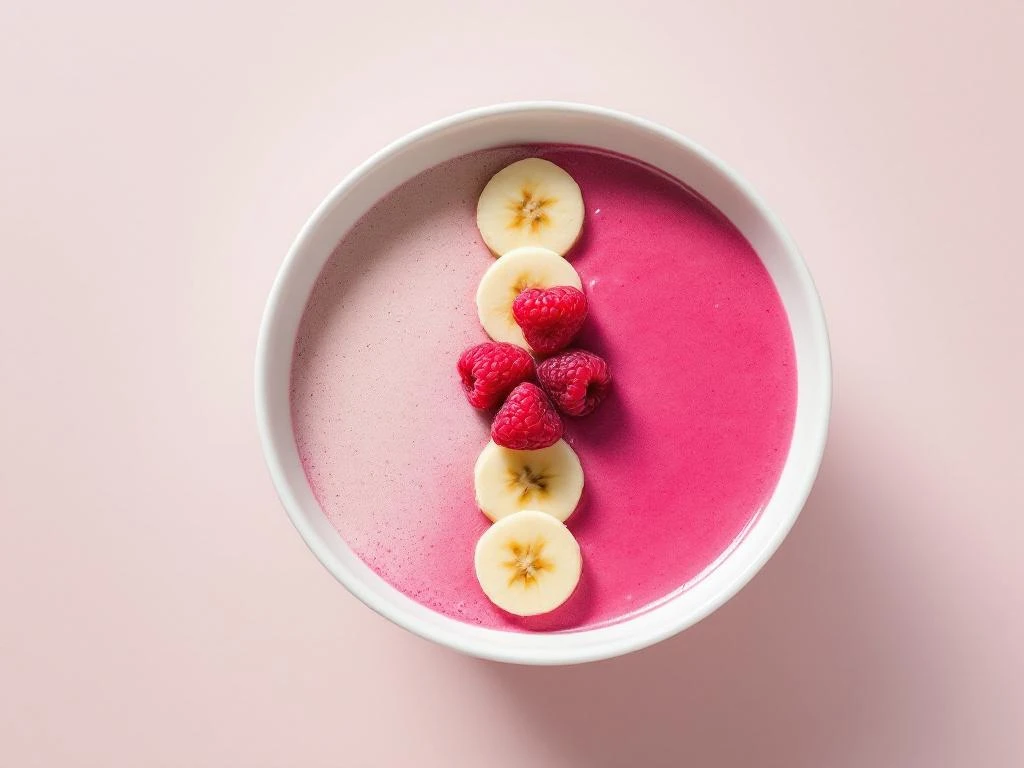
Making a healthy breakfast that won’t upset your stomach can feel like a challenge when you’re managing IBS. This raspberry banana smoothie bowl offers a delicious solution that’s both gut-friendly and satisfying. You’ll create a thick, spoonable base topped with carefully chosen ingredients that follow low FODMAP guidelines.
This guide is perfect for beginners with no special cooking skills required. You’ll need about 10 minutes to prepare everything and another 5 minutes to blend and assemble your bowl. The recipe uses simple, accessible ingredients and basic kitchen equipment you probably already own.
By the end, you’ll have a vibrant, nutritious breakfast that supports your digestive health without sacrificing flavour or satisfaction. You’ll also learn which toppings work best for IBS and how to adjust the recipe for your specific needs.
Why raspberry banana smoothie bowls work for IBS
Raspberries and bananas form an ideal combination for those following a low FODMAP diet. Firm, unripe bananas contain resistant starch that feeds beneficial gut bacteria without triggering symptoms. A medium unripe banana stays within safe FODMAP limits, making it perfect for this IBS-friendly smoothie bowl.
Raspberries bring natural sweetness and fibre while remaining low FODMAP in controlled portions. A serving of 60 grams (about 10-12 raspberries) provides antioxidants and vitamins without causing digestive distress. These berries contain less fructose than many other fruits, which helps explain why they’re gentler on sensitive stomachs.
The smoothie bowl format offers specific advantages for digestive health. Unlike drinkable smoothies that you might consume too quickly, a thick bowl encourages slower eating. This gives your digestive system time to process the food properly. The spoonable texture also allows you to add crunchy toppings that require chewing, which further aids digestion by stimulating saliva production and enzyme release.
This breakfast provides sustained energy without the blood sugar spikes that can worsen IBS symptoms. The natural sugars from fruit combine with healthy fats and optional protein to create a balanced meal. Many people with IBS find that starting their day with a gentle, nutritious breakfast like this sets a positive tone for their entire digestive day.
Gather your low FODMAP ingredients and tools
You’ll need these carefully portioned ingredients to create your gut-friendly breakfast. Each measurement follows Monash University low FODMAP guidelines to keep your symptoms at bay.
Base ingredients:
- 1 medium firm banana (not fully ripe, with some green on the peel)
- 60 grams fresh or frozen raspberries (about 10-12 berries)
- 125 ml lactose-free milk or almond milk (check for added FODMAPs)
- 1 tablespoon lactose-free yoghurt or coconut yoghurt (optional for creaminess)
- 2-3 ice cubes if using fresh fruit
Safe topping options (choose 2-3):
- 1 tablespoon pumpkin seeds
- 10 walnut halves (about 30 grams)
- 1 tablespoon shredded coconut
- 5-6 fresh blueberries
- 1 teaspoon chia seeds
- Small handful of gluten-free granola (check ingredients)
Your kitchen equipment needs are minimal. A high-powered blender works best for achieving that thick, ice cream-like consistency. Standard blenders can work too, but you might need to stop and scrape down the sides more often. You’ll also need measuring cups and spoons for accurate portions (this matters more with a low FODMAP diet than regular cooking), a sturdy serving bowl, and a spatula for scraping every bit of goodness from your blender.
Keep your ingredients cold for the best texture. Frozen raspberries actually work better than fresh ones because they create a thicker consistency. If your banana is too ripe, peel it and freeze it the night before. This prevents FODMAP levels from increasing while giving you perfect smoothie bowl texture.
Blend your perfect raspberry banana base
Start by breaking your banana into chunks. This helps your blender process everything more smoothly. Add the banana pieces to your blender first, as they’ll help push the other ingredients down toward the blades.
Pour in your raspberries next, followed by the lactose-free milk. The liquid amount is crucial here. Too much milk creates a drinkable smoothie instead of a thick bowl. Start with just 125 ml, and you can always add a splash more if needed. Less is more when you’re aiming for that spoonable texture.
Add your ice cubes if using fresh fruit. Frozen fruit needs less or no ice. If you’re including yoghurt for extra creaminess, add it now. This step is optional but creates a smoother, more luxurious texture that many people prefer.
Blend on high speed, but use short pulses rather than continuous blending. Stop every 10-15 seconds to check the consistency. You want a mixture thick enough that a spoon stands up in it. This usually takes 30-60 seconds total blending time. Your mixture should look like soft-serve ice cream rather than a pourable liquid.
If your smoothie is too thick to blend properly, add milk one tablespoon at a time. If it’s too thin, add a few more frozen raspberries or another ice cube and blend again. The goal is a texture that requires a spoon to eat, not a straw to drink.
Success check: When you lift your spatula from the mixture, it should slowly fall off rather than drip quickly. The surface should hold soft peaks when you scoop it into your bowl.
Choose gut-friendly toppings and garnishes
Toppings transform your smoothie bowl from simple to satisfying, but portion control matters when you’re managing IBS. Each topping carries its own FODMAP limits that you need to respect.
Seeds offer the safest option for generous sprinkling. Pumpkin seeds and chia seeds are low FODMAP in reasonable amounts and add valuable nutrients. They provide healthy fats that help you feel full longer. The crunch also creates important textural contrast against the smooth base.
Nuts require more careful measuring. Walnuts stay low FODMAP at 10 halves (roughly 30 grams). Almonds work too, but limit yourself to 10 nuts. Pecans are another good choice at 10 halves. Don’t mix multiple types of nuts in one bowl, as FODMAPs can add up quickly across different foods.
Fresh fruit toppings should be minimal since your base already contains fruit. Five to six blueberries add colour without pushing you over FODMAP limits. A few extra raspberries work if you stayed conservative with the base amount. Sliced strawberries are safe at 2-3 medium berries. Kiwi fruit offers a tangy option at one small kiwi, sliced.
Coconut products generally work well for IBS. Shredded coconut adds tropical flavour and healthy fats. Coconut chips provide extra crunch. Both are low FODMAP in tablespoon amounts.
If you want sweetness, a small drizzle of maple syrup stays within safe limits at one tablespoon. Honey should be avoided as it’s high FODMAP. Dark chocolate shavings (at least 70% cocoa) work in small amounts, about 5 chips or 30 grams.
Arrange your toppings in sections rather than scattering them randomly. This creates an appealing visual presentation and helps you see exactly what you’re eating. It also makes the bowl feel more substantial and special.
Customise your bowl for dietary needs
This raspberry banana smoothie bowl adapts easily to additional dietary requirements beyond low FODMAP. The base recipe is already gluten-free and can be made completely vegan with simple swaps.
For a fully plant-based version, use almond milk or coconut milk instead of lactose-free dairy milk. Replace any yoghurt with coconut yoghurt. Check that your toppings don’t include honey, and choose maple syrup instead. All other ingredients in the basic recipe are naturally vegan.
Protein additions help make this bowl more filling for those with higher energy needs. A scoop of low FODMAP protein powder blends well into the base. Look for powders made from rice protein or pea protein isolate, as whey concentrate can cause issues even when labelled lactose-free. Add the powder with your liquid ingredients before blending.
If you’re in the elimination phase of the FODMAP diet, stick strictly to the measured portions listed earlier. During reintroduction, you might test slightly larger fruit portions or different types of nuts. Keep a food diary to track which variations work for your body.
Meal prep works well with this recipe if you prepare components separately. Pre-portion your banana chunks and raspberries into freezer bags. Each morning, dump one bag into your blender with fresh milk. Don’t pre-blend the entire smoothie, as it separates and loses texture when stored.
The blended base keeps in the fridge for about 4 hours if needed, though texture suffers slightly. Give it a quick stir before eating. Never store it longer than this, as the fruit oxidises and beneficial nutrients degrade.
For travel or busy mornings, prepare a smoothie bowl jar. Layer your toppings in the bottom of a sealed container, add a frozen smoothie base on top, and let it thaw during your commute. Mix everything together when you’re ready to eat. This works best for trips under 2 hours.
Temperature preferences vary among people with IBS. Some find very cold foods uncomfortable first thing in the morning. If that’s you, let your frozen ingredients sit at room temperature for 5 minutes before blending, or use slightly less ice. The bowl should be cold but not icy.
This healthy smoothie bowl recipe gives you a reliable breakfast option that supports your digestive health while delivering genuine nutrition and satisfaction. You’ve learned which ingredients stay within safe FODMAP limits, how to achieve the perfect thick texture, and which toppings enhance both nutrition and enjoyment. The customisation options mean you’ll never get bored with this gut-friendly breakfast.
Start with the basic recipe until you’re confident with the technique and your body’s response. Then experiment with different topping combinations to find your favourites. Keep portion sizes accurate, especially during the elimination phase, and you’ll have a breakfast that truly works for your needs.
Raspberry banana smoothie bowl
Preparation time: 10 minutes | Servings: 1 bowl
Ingredients:
- 1 medium firm banana (slightly green)
- 60g raspberries (fresh or frozen)
- 125ml lactose-free milk or almond milk
- 1 tbsp lactose-free yoghurt (optional)
- 2-3 ice cubes (if using fresh fruit)
Toppings (choose 2-3):
- 1 tbsp pumpkin seeds
- 10 walnut halves
- 1 tbsp shredded coconut
- 5-6 blueberries
- 1 tsp chia seeds
Instructions:
- Break banana into chunks and add to blender
- Add raspberries, milk, optional yoghurt, and ice
- Blend in short pulses until thick and spoonable (30-60 seconds)
- Check consistency (should hold soft peaks)
- Pour into bowl using spatula to scrape all mixture
- Arrange chosen toppings in sections on top
- Serve immediately for best texture
This recipe is for informational purposes only and is not medical or dietary advice. Please consult a healthcare professional before making any changes to your diet.