
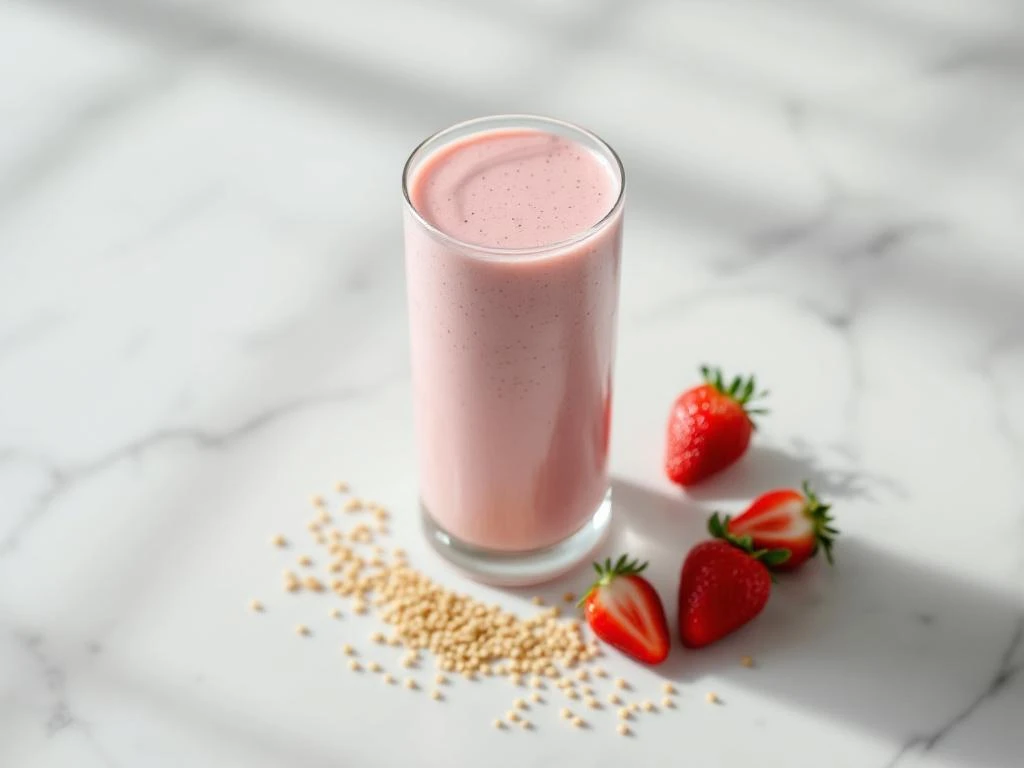
Making a healthy low FODMAP smoothie doesn’t have to be complicated or bland. This quinoa strawberry smoothie combines the natural sweetness of strawberries with the protein-packed benefits of cooked quinoa, creating a satisfying breakfast or snack that’s gentle on your digestive system. The recipe works well for beginners and takes about 20 minutes from start to finish, including quinoa cooking time.
You’ll need a blender, measuring cups, a small saucepan, and a few simple ingredients. The result is a creamy, FODMAP friendly breakfast that provides sustained energy without triggering IBS symptoms. This healthy low FODMAP smoothie offers a practical way to add variety to your morning routine while staying within dietary guidelines.
Why quinoa works perfectly in smoothies
Quinoa brings remarkable nutritional value to your smoothie without causing digestive distress. This gluten free grain provides complete protein with all nine essential amino acids, making it an excellent choice for a quinoa breakfast smoothie that keeps you satisfied until lunch. A quarter cup of cooked quinoa adds approximately 6 grams of protein to your drink.
The texture contribution from cooked quinoa transforms a thin smoothie into a creamy, substantial meal replacement. When properly cooked and cooled, quinoa blends smoothly and creates a thick consistency similar to what you’d get from banana, but without the FODMAP concerns. The mild, slightly nutty flavour complements strawberries beautifully without overpowering the fruit.
For those following the low FODMAP diet, quinoa stands out as an ideal ingredient. It contains no FODMAPs when consumed in appropriate portions (up to one cup cooked per serving). Unlike oats or wheat-based additions, quinoa won’t trigger bloating, gas, or other IBS symptoms. This makes your quinoa strawberry smoothie a reliable option during both the elimination and maintenance phases of the diet.
The grain also provides important minerals including iron, magnesium, and zinc. These nutrients support energy production and immune function, benefits that matter when you’re managing digestive sensitivities. Quinoa’s fibre content aids healthy digestion without irritating sensitive intestines, offering gentle support for gut health.
Gather your ingredients and tools
Start with these FODMAP-safe ingredients for one large serving. You’ll need a quarter cup of uncooked white or red quinoa (which yields about three-quarters cup cooked). Fresh or frozen strawberries work equally well, measure out one cup. Choose lactose-free milk, almond milk (check the label for added FODMAPs), or rice milk as your liquid base, you’ll need one cup.
For added nutrition and flavour, gather one tablespoon of maple syrup or a low FODMAP sweetener if desired. Include half a cup of ice cubes if using fresh strawberries, or skip the ice with frozen berries. A tablespoon of chia seeds or a scoop of low FODMAP protein powder can boost the nutritional profile further.
Your kitchen tools should include a high-speed blender (immersion blenders work but produce a less smooth result), a small saucepan with lid for cooking quinoa, measuring cups and spoons, and a fine-mesh strainer for rinsing the quinoa. A storage container helps if you’re meal prepping quinoa in advance.
Suitable substitutions maintain FODMAP compliance while accommodating preferences. Swap strawberries for blueberries, raspberries, or a combination of low FODMAP berries. Replace maple syrup with glucose syrup or a small amount of stevia. If you can’t tolerate any dairy alternatives, use plain water with a tablespoon of coconut cream for richness (stick to two tablespoons maximum to stay low FODMAP).
Portion sizes matter for maintaining FODMAP safety. Keep strawberries to one cup (about 10 medium berries) per serving. Limit chia seeds to one tablespoon, as larger amounts can become high FODMAP. When using protein powder, verify it contains no inulin, chicory root, or high FODMAP sweeteners like honey or agave.
Ingredient checklist
- Quarter cup uncooked quinoa
- One cup strawberries (fresh or frozen)
- One cup lactose-free or suitable plant milk
- One tablespoon maple syrup (optional)
- Half cup ice cubes (if using fresh fruit)
- One tablespoon chia seeds (optional)
Prepare and blend your quinoa strawberry smoothie
Rinse your quinoa thoroughly under cold running water in a fine-mesh strainer for about 30 seconds. This removes the natural coating called saponin, which can taste bitter and may irritate sensitive stomachs. The water should run clear when rinsing is complete.
Combine the rinsed quinoa with half a cup of water in your small saucepan. Bring to a boil over medium-high heat, then reduce to low, cover, and simmer for 12 to 15 minutes. The quinoa is ready when all water is absorbed and the grains look translucent with a visible white ring around each seed. Remove from heat and let it sit covered for 5 minutes.
Fluff the quinoa with a fork and spread it on a plate to cool quickly. This step is important because hot quinoa will create a warm, unpleasant smoothie and may affect the texture. Room temperature works fine, but refrigerating for 10 minutes speeds up the process. You can cook quinoa the night before and store it covered in the fridge.
Add ingredients to your blender in this order for best results. Pour in your liquid base (lactose-free milk or alternative), add the cooled quinoa, then strawberries, ice (if using), and any optional ingredients like chia seeds or sweetener. This layering prevents the quinoa from sticking to the blender blades and ensures smooth blending.
Blend on high speed for 45 to 60 seconds. The mixture should look completely smooth with no visible quinoa grains. Stop and scrape down the sides if needed, then blend for another 15 seconds. The finished strawberry smoothie should be thick enough to coat the back of a spoon but still pourable.
Check the consistency. If your quinoa smoothie recipe turned out too thick, add liquid two tablespoons at a time and pulse briefly. If it’s too thin, add a few more ice cubes or a tablespoon more cooked quinoa and blend again. The texture should be creamy and substantial, similar to a milkshake.
Timing guidance
Total preparation takes approximately 20 minutes. Quinoa cooking requires 15 minutes (12 to 15 minutes simmering plus 5 minutes resting). Cooling takes 5 to 10 minutes depending on your method. Actual blending takes under 2 minutes. Plan ahead by cooking quinoa in batches, it keeps refrigerated for up to 5 days.
Customize your smoothie for taste and nutrition
Adjust sweetness to your preference while maintaining FODMAP compliance. Maple syrup works well at one to two tablespoons per serving. Glucose syrup offers pure sweetness without FODMAPs. A few drops of liquid stevia provide sweetness without calories. Avoid honey, agave, or dates as these contain high FODMAP sugars that can trigger symptoms.
Boost protein content with low FODMAP options. Add a scoop of rice protein powder, pea protein isolate (check for added ingredients), or hemp protein. A tablespoon of peanut butter (limit to two tablespoons) increases both protein and healthy fats. Lactose-free Greek yogurt (quarter cup) adds creaminess and protein but check your individual tolerance.
Incorporate healthy fats for better satiety and nutrient absorption. One tablespoon of chia seeds provides omega-3 fatty acids and creates a thicker texture. A tablespoon of almond butter works if you tolerate nuts. Add half a small avocado for ultra-creamy texture (this remains low FODMAP at this portion). A teaspoon of coconut oil blends invisibly while adding medium-chain triglycerides.
Modify thickness based on your preference. For a thinner, more drinkable IBS friendly smoothie, increase the liquid base by quarter to half cup. Create a thicker, spoonable smoothie bowl by reducing liquid and adding more frozen strawberries or ice. Frozen banana (one-third of a firm banana) thickens well while staying within FODMAP limits.
Try these flavour variations while keeping your strawberry quinoa drink FODMAP safe. Add a quarter teaspoon of vanilla extract for warmth. Include half a teaspoon of fresh ginger for a spicy kick (ginger aids digestion too). Mix in a tablespoon of cocoa powder for a chocolate strawberry version. Substitute half the strawberries with blueberries for a mixed berry profile.
Maintain FODMAP compliance when personalizing by checking portion sizes carefully. Many low FODMAP foods become high FODMAP in larger amounts. Stick to tested serving sizes for fruits, nuts, and seeds. Read all product labels for hidden FODMAPs like inulin, chicory root, or high FODMAP sweeteners. When trying new additions, test them individually to identify any personal triggers.
Quick customisation options
- Extra protein: Add one scoop low FODMAP protein powder
- Creamier texture: Include quarter cup lactose-free yogurt
- More filling: Increase quinoa to one-third cup uncooked
- Sweeter taste: Use two tablespoons maple syrup
- Chocolate version: Mix in one tablespoon cocoa powder
- Tropical twist: Replace half the milk with coconut cream (two tablespoons maximum)
This low FODMAP smoothie recipe provides a practical solution for anyone managing IBS or digestive sensitivities. The combination of protein-rich quinoa and vitamin-rich strawberries creates a nutritionally complete meal that supports your health without compromising your comfort. You now have a reliable gluten free smoothie option that fits seamlessly into your FODMAP friendly breakfast rotation.
The versatility of this recipe means you won’t get bored. Change up the berries, adjust the thickness, or add different protein sources to keep things interesting. Meal prep by cooking quinoa in advance, then blend a fresh smoothie in under 5 minutes on busy mornings. This approach saves time while ensuring you start your day with proper nutrition.
Experiment with the customisation options to find your perfect version. Some people prefer a sweeter profile, others enjoy the natural fruit flavour with minimal added sweetness. The beauty of making your own healthy low FODMAP smoothie lies in complete control over ingredients and portions. You can trust what goes into your body and avoid the hidden FODMAPs often lurking in commercial smoothies.
Keep this recipe in your regular rotation for reliable digestive comfort. The consistent success of this quinoa strawberry smoothie makes it a dependable choice when you need something quick, nutritious, and safe for your sensitive system.
Quinoa and strawberry smoothie
Cooking Time: 20 minutes | Portions: 1 large serving
- Rinse quarter cup quinoa thoroughly under cold water
- Cook quinoa in half cup water for 12 to 15 minutes until tender
- Let cooked quinoa cool to room temperature (about 10 minutes)
- Add one cup lactose-free milk to blender
- Add cooled quinoa, one cup strawberries, and half cup ice
- Include optional tablespoon maple syrup or chia seeds
- Blend on high for 45 to 60 seconds until completely smooth
- Adjust consistency with more liquid or ice as needed
- Pour into glass and enjoy immediately
This recipe is for informational purposes only and is not medical or dietary advice. Please consult a healthcare professional before making any changes to your diet.