
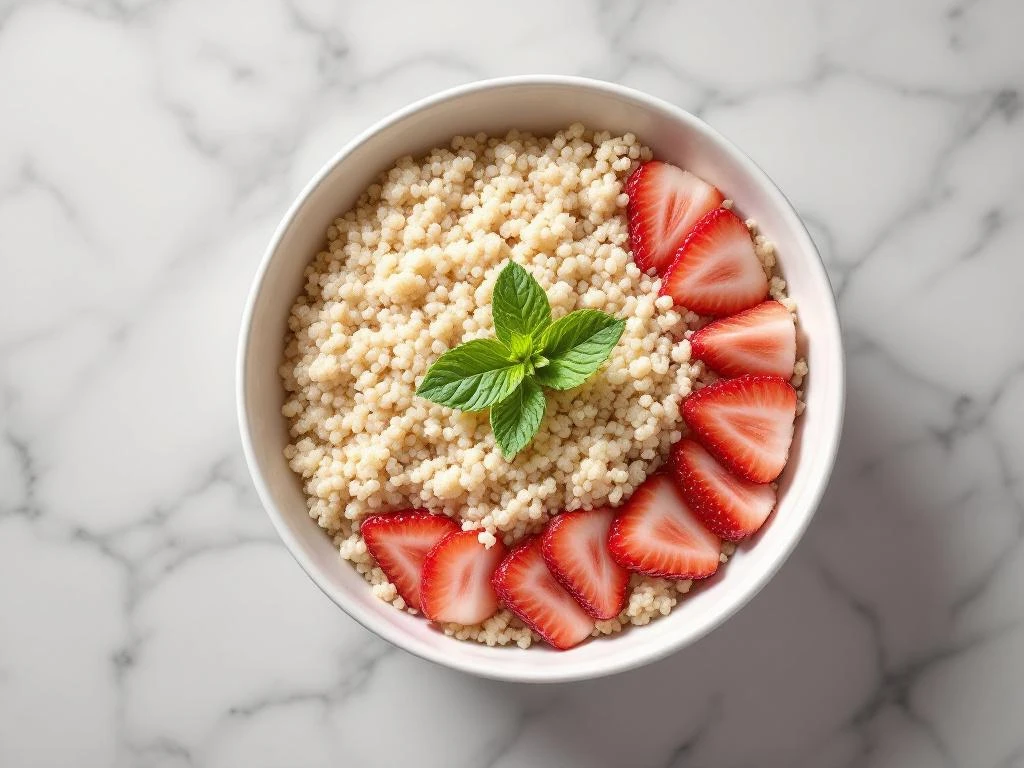
Starting your morning with a quinoa breakfast bowl topped with fresh strawberries gives you sustained energy without triggering IBS symptoms. This easy quinoa bowl combines protein-rich quinoa with antioxidant-packed strawberries for a satisfying, FODMAP friendly breakfast that takes just 20 minutes to prepare. Whether you’re new to the low FODMAP diet or looking for fresh breakfast ideas, this strawberry quinoa bowl offers the perfect balance of nutrition and flavour.
This guide is suitable for beginners with basic cooking skills. You’ll need about 20 minutes of active cooking time, plus 15 minutes if your quinoa needs to cool. The recipe makes one generous serving, though you can easily double or triple the ingredients for meal prep throughout the week.
Why quinoa and strawberry make the perfect breakfast
Quinoa stands out as a complete protein source, containing all nine essential amino acids your body needs. This makes it particularly valuable for a healthy breakfast bowl that keeps you satisfied until lunch. Unlike many grains, quinoa is naturally gluten free and low FODMAP in servings up to 155g cooked, making it an excellent choice for those managing IBS symptoms.
Strawberries bring natural sweetness and antioxidants to your bowl without causing digestive distress. They’re low FODMAP in servings up to 10 medium berries (140g), providing vitamin C and fibre that supports gut health. The combination delivers steady energy release rather than the blood sugar spike you’d get from refined cereals or pastries.
This pairing provides digestive-friendly nutrients that work particularly well for sensitive stomachs. The soluble fibre in quinoa helps regulate digestion, whilst strawberries add gentle bulk without overwhelming your system. Together, they create an IBS friendly breakfast that doesn’t compromise on taste or satisfaction.
Gather your ingredients and tools
For one serving of this quinoa and strawberry recipe, you’ll need 65g uncooked quinoa (which yields about 155g cooked). Choose white, red, or tricolour quinoa based on your preference. White quinoa has the mildest flavour and fluffiest texture, whilst red quinoa offers a slightly nuttier taste.
Add 8 to 10 medium fresh strawberries (approximately 140g), hulled and sliced. Select ripe but firm berries for the best flavour. You’ll also need 125ml lactose-free milk or a suitable alternative such as almond milk (limit to 60ml) or rice milk. For additional richness, consider 2 tablespoons of lactose-free yoghurt.
Optional toppings include 1 tablespoon of chopped walnuts or pecans, 1 teaspoon of chia seeds, and a drizzle of pure maple syrup. Keep portion sizes within these limits to maintain FODMAP compliance.
Kitchen tools required are straightforward. You’ll need a medium saucepan with a lid, a fine-mesh strainer for rinsing, measuring cups and spoons, and a serving bowl. A fork works perfectly for fluffing the cooked quinoa.
Cook quinoa to fluffy perfection
Place your uncooked quinoa in a fine-mesh strainer and rinse thoroughly under cold running water for 30 to 45 seconds. This crucial step removes the bitter-tasting saponins that naturally coat quinoa seeds. You’ll notice the water becomes slightly soapy at the start, then runs clear when the quinoa is properly rinsed.
Transfer the rinsed quinoa to your saucepan and add 130ml of cold water. This 1:2 ratio of quinoa to water produces perfectly fluffy results. Bring the mixture to a boil over medium-high heat without covering the pan. Once boiling, reduce the heat to low and cover with a tight-fitting lid.
Simmer for exactly 15 minutes without lifting the lid. Resist the temptation to check on it, as releasing steam affects the cooking process. After 15 minutes, remove the pan from heat and let it stand, still covered, for 5 minutes. This resting period allows the quinoa to absorb any remaining moisture.
Remove the lid and fluff the quinoa gently with a fork, separating the grains. Properly cooked quinoa appears translucent with a visible white ring around each grain. The texture should be tender but slightly chewy, never mushy or crunchy.
For meal prep efficiency, cook a larger batch and store cooled quinoa in an airtight container in the fridge for up to 5 days. Reheat portions in the microwave with a splash of water, or enjoy cold in your breakfast bowl.
Assemble your breakfast bowl
Spoon your cooked quinoa into a serving bowl whilst it’s still warm. The warmth helps other ingredients release their flavours and creates a more comforting texture. Spread the quinoa evenly across the bottom, creating a stable base for your toppings.
Arrange your sliced strawberries over the quinoa in an appealing pattern. You can place them in a circular design or scatter them naturally across the surface. If you prefer softer strawberries with more released juice, let them sit at room temperature for 10 minutes before adding them, or gently mash a few slices with a fork.
Pour your chosen lactose-free milk around the edges of the bowl, allowing it to seep into the quinoa slightly. Use 125ml for a porridge-like consistency, or reduce to 80ml if you prefer a drier texture. The milk should pool gently at the bottom without drowning the quinoa.
Add any optional toppings at this stage, distributing them evenly for balanced flavour in every spoonful. If using lactose-free yoghurt, dollop it on top rather than stirring it through. This creates appealing visual contrast and allows you to control the creaminess as you eat.
Remember that your complete bowl should stay within low FODMAP serving sizes. The 155g cooked quinoa, 140g strawberries, and 125ml lactose-free milk all fall within safe limits when combined in one meal.
Customize with low FODMAP toppings
Nuts add satisfying crunch and healthy fats to your quinoa breakfast recipe. Stick to 10 walnut halves, 10 pecan halves, or 20 macadamia nuts per serving. These portions provide omega-3 fatty acids and protein whilst remaining low FODMAP. Chop them roughly for better distribution throughout your bowl.
Seeds offer another texture dimension without FODMAP concerns. Sprinkle up to 2 tablespoons of pumpkin seeds, 1 tablespoon of chia seeds, or 1 tablespoon of sunflower seeds over your bowl. Chia seeds absorb liquid and create a pleasant gel-like texture, whilst pumpkin seeds stay crunchy.
Natural sweeteners enhance the strawberry flavour without adding FODMAPs. Pure maple syrup works beautifully in 1 to 2 tablespoon portions. Alternatively, try a small drizzle of rice malt syrup for a milder sweetness. Avoid honey and agave nectar, as these contain high FODMAP sugars.
Warm spices bring depth without digestive upset. Ground cinnamon is particularly lovely with strawberries, adding warmth and natural sweetness perception. A pinch of ground ginger or cardamom creates interesting flavour variations. Start with 1/4 teaspoon and adjust to taste.
Additional fruit options within safe serving sizes include 20 blueberries, 1/2 medium banana, or 2 tablespoons of passionfruit pulp. These complement strawberries whilst maintaining FODMAP compliance. Mix different fruits throughout the week to prevent breakfast boredom.
Texture contrasts make each bite more interesting. Combine creamy elements like lactose-free yoghurt with crunchy nuts, soft strawberries with chewy quinoa, and smooth milk with textured seeds. This variety keeps your gluten free breakfast engaging meal after meal.
What are common mistakes to avoid?
Overcooking quinoa creates an unpleasant mushy texture that ruins your bowl. If you notice your quinoa becoming waterlogged or sticky, you’ve either used too much water or cooked it too long. Stick to the 1:2 quinoa-to-water ratio and set a timer for exactly 15 minutes of simmering time.
Using regular dairy milk or certain plant-based alternatives can trigger symptoms. Regular cow’s milk contains lactose, a high FODMAP sugar. Soy milk made from whole soybeans (not soy protein) is also problematic in larger serves. Choose lactose-free dairy milk, rice milk, or small portions of almond milk (maximum 60ml) to stay safe.
Exceeding safe strawberry serving sizes happens easily when you’re not measuring. Ten medium strawberries might seem conservative, but this limit prevents fructose overload. Weigh your strawberries initially to learn what 140g looks like, then you can estimate more accurately in future.
Skipping the quinoa rinsing step leaves bitter saponins on the seeds. Even pre-rinsed quinoa benefits from a quick rinse under running water. This 30-second task dramatically improves the final flavour, making your bowl more enjoyable.
Cross-contamination with high FODMAP ingredients often occurs in shared kitchens. If you’ve used your wooden spoon to stir onion-laden dishes, those FODMAPs can transfer to your quinoa. Keep separate utensils for low FODMAP cooking, or wash shared tools thoroughly with hot soapy water before use.
Adding too many toppings at once might push your total FODMAP load too high. Even though individual ingredients are safe in measured portions, combining multiple items can create cumulative effects. Start with one or two toppings and notice how your body responds before adding more variety.
Storing cooked quinoa incorrectly leads to food safety issues and texture problems. Always cool quinoa completely before refrigerating, and store it in an airtight container. Quinoa left at room temperature for more than 2 hours can develop harmful bacteria.
This low FODMAP breakfast bowl offers a practical way to start your day with energy and confidence. The simple preparation process becomes even quicker once you’ve made it a few times, and batch cooking quinoa on Sunday sets you up for effortless weekday breakfasts. You’ll find this strawberry quinoa bowl particularly valuable during the elimination phase of the low FODMAP diet, when safe breakfast options feel limited. The recipe adapts easily to your preferences whilst maintaining digestive comfort, proving that managing IBS doesn’t mean sacrificing flavour or satisfaction.
Quinoa and strawberry breakfast bowl
Cooking Time: 20 minutes | Portions: 1 serving
- 65g uncooked quinoa (white, red, or tricolour)
- 130ml cold water for cooking
- 8 to 10 medium strawberries (140g), hulled and sliced
- 125ml lactose-free milk or safe alternative
- Optional: 2 tablespoons lactose-free yoghurt
- Optional: 1 tablespoon chopped walnuts or pecans
- Optional: 1 teaspoon chia seeds
- Optional: 1 tablespoon pure maple syrup
- Optional: 1/4 teaspoon ground cinnamon
Method:
- Rinse quinoa thoroughly in a fine-mesh strainer under cold water for 30 to 45 seconds
- Combine rinsed quinoa and 130ml cold water in a medium saucepan
- Bring to a boil over medium-high heat, then reduce to low and cover
- Simmer covered for 15 minutes without lifting the lid
- Remove from heat and let stand covered for 5 minutes
- Fluff quinoa with a fork and transfer to a serving bowl
- Top with sliced strawberries arranged over the quinoa
- Pour lactose-free milk around the edges of the bowl
- Add optional toppings such as nuts, seeds, yoghurt, maple syrup, or cinnamon
- Serve immediately whilst quinoa is warm
This recipe is for informational purposes only and is not medical or dietary advice. Please consult a healthcare professional before making any changes to your diet.