
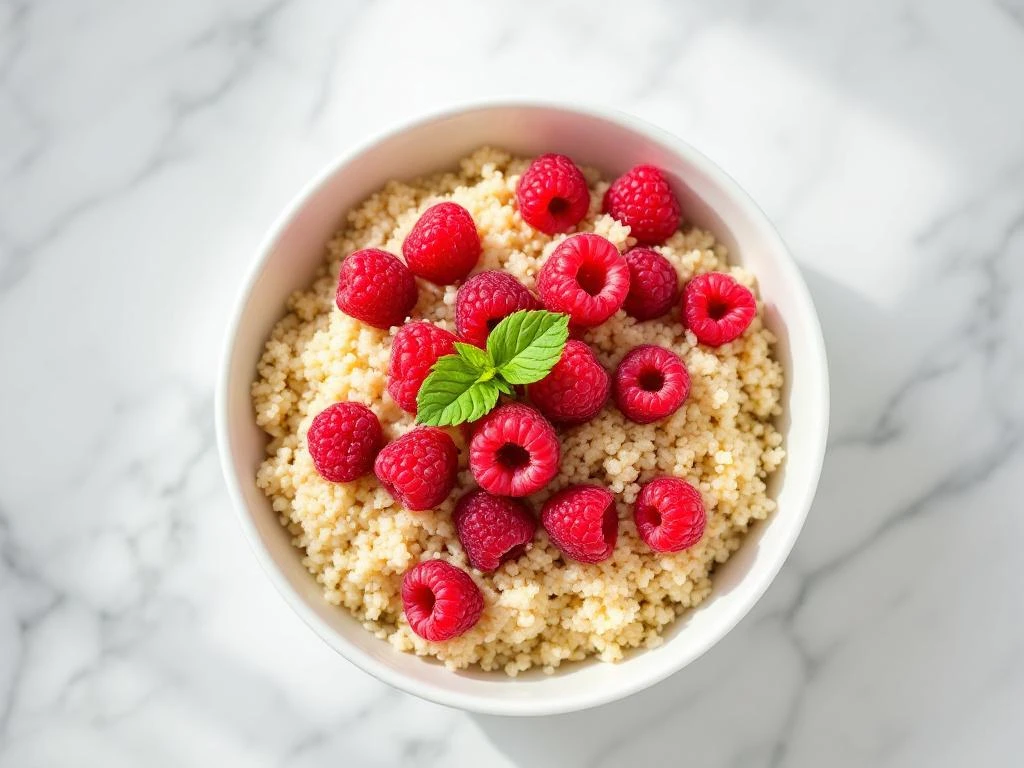
Starting your morning with a quinoa breakfast bowl topped with fresh raspberries gives you steady energy without triggering IBS symptoms. This recipe combines protein-rich quinoa with low FODMAP-friendly toppings to create a satisfying meal that’s gentle on sensitive digestive systems. You’ll learn how to cook quinoa perfectly, assemble a balanced breakfast bowl, and prep components ahead for busy weekday mornings.
This guide suits beginners who’ve never cooked quinoa before. You’ll need about 25 minutes for cooking and assembly, plus optional time for meal prep. The recipe follows strict low FODMAP guidelines, making it safe for the elimination phase of the diet.
You’ll need basic kitchen equipment including a saucepan, measuring cups, a fine-mesh strainer, and serving bowls. The ingredients are simple and available at most supermarkets. By the end, you’ll have a reliable breakfast option that tastes good and supports your digestive health goals.
Why quinoa makes the perfect low FODMAP breakfast base
Quinoa stands out as an excellent breakfast grain for people managing IBS because it’s naturally low FODMAP in controlled portions. Unlike wheat-based cereals or oats (which can trigger symptoms in some people), quinoa provides complete protein with all nine essential amino acids. This protein content helps keep you full throughout the morning without the blood sugar spikes that come from refined breakfast carbohydrates.
The fiber in quinoa differs from high FODMAP grains. It contains mostly insoluble fiber, which moves through your digestive system without fermenting excessively. Monash University has tested quinoa and certified it as low FODMAP up to 155g of cooked quinoa per serving. This generous portion size means you can enjoy a proper breakfast bowl without worrying about symptom triggers.
Quinoa also brings practical advantages to your morning routine. It cooks faster than many whole grains, taking just 15 minutes on the stovetop. The mild, slightly nutty flavour pairs well with both sweet and savoury toppings, giving you variety throughout the week. When you’re following a restricted diet, this versatility matters for long-term adherence.
Gather your ingredients and tools
For the quinoa base, you’ll need 85g of uncooked white or golden quinoa (this yields about 155g cooked, which is one low FODMAP serving). White quinoa has the mildest flavour and fluffiest texture for breakfast bowls. You’ll also need 250ml of water or lactose-free milk for cooking, plus a pinch of salt.
The raspberry topping requires 65g of fresh raspberries per serving. Raspberries are low FODMAP up to this amount and add natural sweetness without needing much additional sweetener. Keep your optional toppings low FODMAP by choosing from this list:
- 2 tablespoons of lactose-free yogurt (plain or vanilla)
- 1 tablespoon of maple syrup or 1 teaspoon of brown sugar
- 10 walnut halves or 2 tablespoons of pumpkin seeds
- 1 tablespoon of shredded coconut
- A sprinkle of cinnamon or vanilla extract
Your kitchen tools should include a medium saucepan with a lid, a fine-mesh strainer for rinsing quinoa, measuring cups and spoons, a fork for fluffing, and your serving bowl. Having everything ready before you start cooking makes the process smooth and stress-free.
Cook quinoa to fluffy perfection
Rinse your quinoa thoroughly under cold running water for 30 seconds. This step removes the natural coating called saponin, which can taste bitter if left on the grains. Place your fine-mesh strainer under the tap and swirl the quinoa around whilst the water runs through it. You’ll notice the water becomes less cloudy as you rinse.
Pour the rinsed quinoa into your saucepan and add 250ml of water or lactose-free milk. The liquid-to-quinoa ratio of roughly 3:1 produces tender grains that aren’t mushy. Add a pinch of salt, then bring the mixture to a boil over medium-high heat. This takes about 3 minutes.
Once boiling, reduce the heat to low and cover the saucepan with a tight-fitting lid. Set a timer for 15 minutes and resist the urge to lift the lid. The quinoa cooks by absorbing the liquid through steady, gentle heat. Lifting the lid releases steam and disrupts this process.
After 15 minutes, turn off the heat but leave the lid on for 5 more minutes. This resting period allows any remaining moisture to absorb fully. Remove the lid and check that the quinoa looks fluffy with visible spiral-shaped germs separating from each grain. If you see standing water, put the lid back on for another 2 minutes. Fluff the quinoa gently with a fork before assembling your bowl.
Success check: Properly cooked quinoa should be tender but still have a slight bite. Each grain should be separate rather than clumped together. If your quinoa turns out mushy, you’ve used too much liquid. If it’s crunchy, it needs more cooking time.
Assemble and customize your breakfast bowl
Spoon your cooked quinoa into a serving bowl whilst it’s still warm. The warmth helps other ingredients blend nicely and creates a comforting breakfast texture. For a sweeter breakfast bowl, drizzle 1 tablespoon of maple syrup over the warm quinoa and stir it through. This sweetens the entire base rather than just the top.
Arrange your 65g of fresh raspberries on top of the quinoa. You can scatter them across the surface or cluster them on one side for a prettier presentation. The raspberries will soften slightly from the warmth of the quinoa, releasing some of their juices to create a naturally sweet sauce.
Add your chosen toppings in layers for the best texture contrast. Dollop lactose-free yogurt on one side, then sprinkle nuts or seeds over another section. This layering approach means each spoonful captures different flavour and texture combinations. If you’re using cinnamon, dust it over the entire bowl at the end.
Portion sizes matter for maintaining low FODMAP compliance. Stick to the tested amounts: one serving of cooked quinoa (155g), one serving of raspberries (65g), and appropriate portions of any additional toppings. Going over these amounts might trigger symptoms, especially if you’re in the elimination phase.
Pro tip: Try different flavour combinations throughout the week. Monday might be raspberries with walnuts and cinnamon. Wednesday could be raspberries with coconut and a drizzle of maple syrup. This variety prevents breakfast boredom whilst staying within safe FODMAP limits.
Store and meal prep for busy mornings
Batch-cooking quinoa saves significant time during hectic mornings. Cook 3 to 4 servings at once using the same method but scaling up your water and quinoa proportionally. Let the cooked quinoa cool completely before storing, which takes about 30 minutes spread out on a plate or baking sheet. Hot quinoa creates condensation in storage containers, leading to soggy grains.
Store cooled quinoa in an airtight container in the refrigerator for up to 5 days. Glass containers work well because they don’t absorb odours. Divide the quinoa into individual portions (155g each) so you can grab exactly one low FODMAP serving each morning. This pre-portioning prevents accidentally eating too much when you’re rushed.
Reheat refrigerated quinoa by adding 1 tablespoon of water or lactose-free milk to the portion, then microwaving for 60 to 90 seconds. The added liquid prevents the quinoa from drying out during reheating. Stir halfway through to ensure even heating. You can also reheat it in a small saucepan over low heat, stirring occasionally.
Keep your raspberries separate until you’re ready to eat. Wash them the night before and store them in the refrigerator in a container lined with paper towel. The paper towel absorbs excess moisture that would otherwise make the berries mushy. Don’t wash raspberries more than a day ahead, as they deteriorate quickly once wet.
Prepare your toppings in advance by portioning nuts or seeds into small containers or bags. Measure out 10 walnut halves or 2 tablespoons of pumpkin seeds per serving. Having these pre-measured portions ready means you can assemble your breakfast bowl in under 3 minutes on busy mornings. This minimal morning effort makes it easier to stick with FODMAP-friendly breakfast choices even when you’re pressed for time.
Warning: Don’t freeze cooked quinoa for this recipe. Freezing changes the texture, making it grainy and less pleasant for breakfast bowls. Refrigeration maintains the fluffy texture you want.
You now have a reliable system for enjoying IBS-friendly breakfast bowls throughout your week. The combination of protein-rich quinoa and antioxidant-packed raspberries provides sustained energy without digestive discomfort. Your meal prep routine ensures that following a low FODMAP diet doesn’t require extra morning stress. As you become comfortable with this basic recipe, experiment with other low FODMAP fruits like blueberries or strawberries to keep your breakfast routine interesting. The skills you’ve learned here apply to countless other FODMAP breakfast ideas, giving you confidence to create your own variations.
Quinoa and raspberry breakfast bowl
Cooking time: 25 minutes | Portions: 1 serving
Ingredients:
- 85g uncooked white quinoa
- 250ml water or lactose-free milk
- Pinch of salt
- 65g fresh raspberries
- 1 tablespoon maple syrup (optional)
- 2 tablespoons lactose-free yogurt (optional)
- 10 walnut halves or 2 tablespoons pumpkin seeds (optional)
- Cinnamon to taste (optional)
Instructions:
- Rinse quinoa thoroughly under cold water for 30 seconds using a fine-mesh strainer
- Combine rinsed quinoa, liquid, and salt in a saucepan
- Bring to a boil over medium-high heat (about 3 minutes)
- Reduce heat to low, cover, and simmer for 15 minutes without lifting the lid
- Turn off heat and let rest covered for 5 minutes
- Fluff quinoa with a fork and transfer to serving bowl
- Top with fresh raspberries and your choice of optional toppings
- Serve warm and enjoy immediately
This recipe is for informational purposes only and is not medical or dietary advice. Please consult a healthcare professional before making any changes to your diet.
Related Articles
- Rice Porridge with Maple Syrup
- Blueberry Almond Overnight Oats
- Orange Ginger Overnight Oats
- Scrambled Eggs with Sun-Dried Tomato Pesto
- How Long Until Low FODMAP Works?