
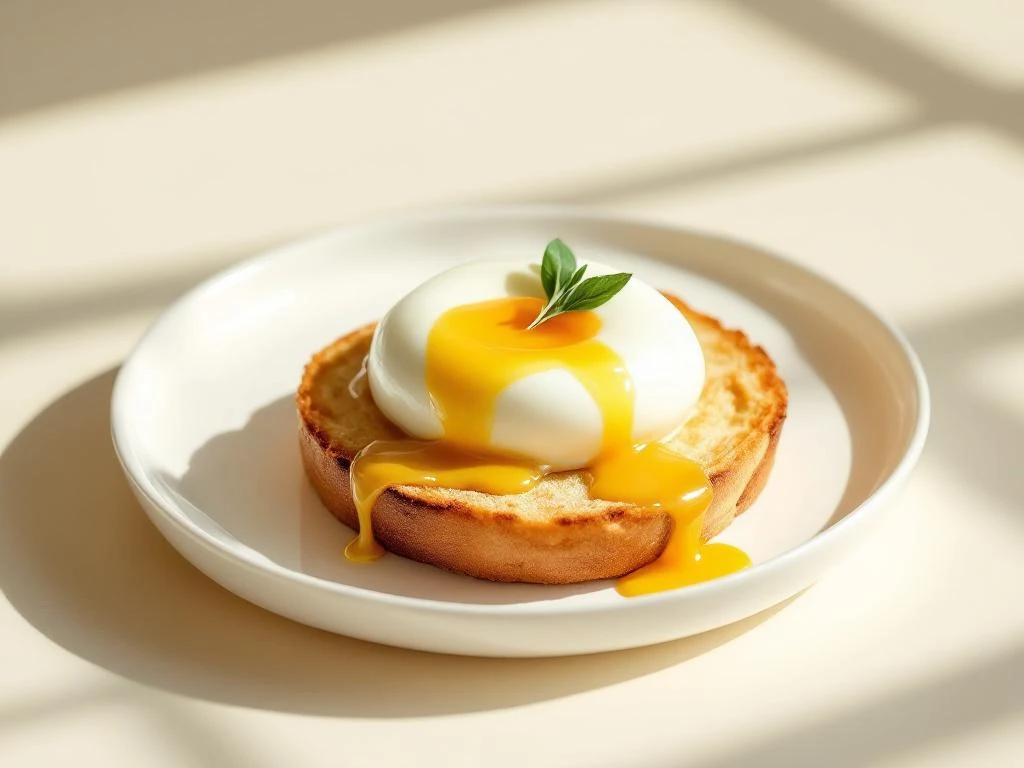
Eggs benedict is a brunch classic that many people with IBS avoid due to the rich hollandaise sauce, wheat-based English muffins, and heavy dairy content. This modified low FODMAP eggs benedict recipe lets you enjoy all the elegance and flavour of the original without triggering digestive symptoms. You’ll learn how to poach eggs perfectly, create a gentle hollandaise sauce using lactose-free butter, and assemble everything on gluten-free bread for an IBS friendly eggs benedict that looks restaurant-quality.
This recipe is suitable for intermediate cooks who are comfortable with basic cooking techniques. You’ll need about 30 minutes total, including preparation and cooking time. The trickiest part is timing everything so the components stay warm, but we’ll walk you through strategies to make this manageable.
You’ll need fresh eggs, lactose-free butter, gluten-free bread, white vinegar, lemon juice, and basic kitchen tools including a medium saucepan, slotted spoon, small pot for hollandaise, and a whisk. Everything should be available at most supermarkets.
Why this low FODMAP eggs benedict works
Traditional eggs benedict can trigger IBS symptoms through several ingredients. The classic hollandaise sauce contains large amounts of butter, which has lactose that many people struggle to digest. English muffins are made with wheat and often contain high FODMAP ingredients like honey or onion powder. Some recipes add garlic or shallots to the hollandaise, both of which are high in FODMAPs.
This modified version addresses each problem systematically. We use lactose-free butter in the hollandaise, which gives you the same rich, creamy texture without the digestive distress. The butter is clarified during preparation, which further reduces any remaining lactose traces. For the base, gluten-free bread replaces traditional English muffins, giving you a sturdy foundation that toasts beautifully and holds up under the poached egg and sauce.
The hollandaise itself is simplified to focus on core flavours. Lemon juice provides the necessary acidity without adding FODMAPs, and a pinch of salt enhances everything without complications. You get the same silky, buttery sauce that makes eggs benedict special, just without the ingredients that cause problems. The presentation remains elegant, and most people won’t notice this is a modified version unless you tell them.
Gather your ingredients and tools
For this low FODMAP brunch recipe, you’ll need specific ingredients that work within dietary restrictions whilst maintaining authentic flavour.
Ingredients needed:
- 4 very fresh eggs (for poaching)
- 3 egg yolks (for hollandaise)
- 125g lactose-free butter
- 2 slices of gluten-free bread (choose a sturdy variety that toasts well)
- 1 tablespoon white vinegar (for poaching water)
- 1 tablespoon fresh lemon juice
- Salt to taste
- Optional: fresh chives or parsley for garnish (check FODMAP portions)
The bread choice matters more than you might think. Look for gluten-free sourdough or a firm white bread that won’t fall apart when topped with the egg and sauce. Avoid breads with added honey or inulin, as these can contain FODMAPs.
Essential kitchen tools:
- Medium saucepan (for poaching eggs)
- Small saucepan or double boiler (for hollandaise)
- Slotted spoon
- Whisk
- Small bowl for cracking eggs
- Timer
- Kitchen thermometer (helpful but not essential)
Before you start cooking, set everything within reach. Crack your poaching eggs into individual small bowls or ramekins. Separate the egg yolks for hollandaise and have your butter measured out. Toast your bread just before you’re ready to assemble so it stays warm and crisp. This preparation makes the actual cooking process much smoother, especially when you’re managing multiple components.
Master the perfect poached egg technique
Poaching eggs intimidates many home cooks, but the technique becomes reliable once you understand the key principles. The goal is a tender white that’s fully set with a yolk that’s still runny inside.
Fill your medium saucepan with water about 8cm deep. Add one tablespoon of white vinegar. The vinegar helps the egg whites coagulate faster, keeping them from spreading too much in the water. Bring the water to a gentle simmer, where you see small bubbles rising but not a rolling boil. The temperature should be around 80-85°C if you’re using a thermometer.
Crack one egg into a small bowl. This lets you check for any shell fragments and makes the next step easier. Using a spoon, create a gentle whirlpool in the water by stirring in one direction. This vortex helps wrap the egg white around the yolk as it cooks. Slide the egg from the bowl into the centre of the whirlpool, keeping the bowl close to the water surface.
Let the egg cook undisturbed for exactly 3 minutes for a medium egg, or 3.5 minutes for a large egg. You’ll see the white turn opaque whilst the yolk remains soft. Use your slotted spoon to gently lift the egg and check that the white is completely set. If you touch it lightly, it should feel firm but the yolk should still jiggle.
Remove the egg with your slotted spoon and let excess water drain off. You can rest the spoon on a clean tea towel for a moment to absorb water. If you’re cooking multiple eggs, keep finished ones in a bowl of warm (not hot) water whilst you poach the rest. They’ll stay at the right temperature for about 10 minutes.
Prepare the low FODMAP hollandaise sauce
Hollandaise has a reputation for being difficult, but this simplified version is quite forgiving. The key is gentle heat and patience.
Melt your lactose-free butter in a small saucepan over low heat. Let it bubble gently for a minute or two. You’ll notice milk solids settling at the bottom. This is clarifying the butter, which creates a smoother sauce and removes the last traces of lactose. Pour the clear golden butter into a jug, leaving the white solids behind.
In a heatproof bowl (or the top of a double boiler), whisk together three egg yolks and one tablespoon of lemon juice. Add a pinch of salt. Place the bowl over a saucepan of barely simmering water, making sure the bottom of the bowl doesn’t touch the water. The steam provides gentle, even heat.
Whisk constantly whilst the mixture warms. After about 2 minutes, it will start to thicken slightly and look pale. This is when you begin adding the butter. Pour it in a very thin, steady stream whilst whisking continuously. The sauce will begin to emulsify and thicken as the butter incorporates. This takes about 3-4 minutes of steady whisking.
If the sauce seems too thick, whisk in a teaspoon of warm water. If it’s too thin, keep whisking over the heat for another minute. The finished hollandaise should coat the back of a spoon and slowly drip off. Remove from heat immediately when it reaches this consistency. If you see any signs of the eggs scrambling (small lumps forming), remove from heat straight away and whisk in a splash of cold water.
Keep the hollandaise warm by leaving it over the warm water bath with the heat turned off. Don’t let it get too hot or it will split. You can hold it this way for about 15 minutes whilst you finish the other components.
Assemble and serve your eggs benedict
Timing is everything when assembling eggs benedict. You want every component warm when it reaches the plate.
Toast your gluten-free bread slices until they’re golden and crisp. The texture should be firm enough to support the weight of the egg and sauce without getting soggy. Place each slice on a warm plate. If your plates are cold, warm them briefly in a low oven or under hot water (then dry them).
Lift each poached egg from the warm water with your slotted spoon. Let excess water drain, then place one egg on each piece of toast. The egg should sit securely without sliding off. If you’re serving two per person, arrange them side by side on a larger piece of toast or use two separate slices.
Spoon the hollandaise generously over each egg, letting it cascade down the sides. You want enough sauce to coat the egg and pool slightly around the base. The visual appeal comes from this glossy, golden sauce contrasting with the white egg and toasted bread.
If you’re using garnishes, add a small sprinkle of chopped fresh chives or parsley now. Keep portions small, as some herbs can become high FODMAP in larger amounts. A light crack of black pepper adds visual interest and a bit of warmth to the flavour.
Serve immediately whilst everything is still warm. The ideal bite includes crispy toast, creamy hollandaise, tender egg white, and that perfect runny yolk that breaks and mingles with the sauce. This is why eggs benedict remains such a beloved brunch dish, even in its modified low FODMAP version.
Troubleshoot common poaching problems
Even experienced cooks occasionally have poaching challenges. Here’s how to fix the most common issues with this easy poached eggs recipe.
Eggs spreading too much in the water: This usually means your eggs aren’t fresh enough or the water is too turbulent. Very fresh eggs have thicker whites that hold together better. If your eggs are a few days old, strain them through a fine sieve before poaching to remove the watery part of the white. Make sure your water is at a gentle simmer, not a rolling boil. The vinegar also helps, so don’t skip it.
Overcooked or undercooked results: Water temperature makes the biggest difference. Too hot and the outside cooks before the inside, leaving you with rubbery whites and raw yolks. Too cool and the egg spreads before it sets. Aim for that 80-85°C range where you see steady small bubbles. Use a timer rather than guessing. If you consistently get overcooked eggs, reduce your time by 30 seconds.
Hollandaise too thick or too thin: Thick hollandaise needs more liquid. Whisk in warm water one teaspoon at a time until it reaches the right consistency. Thin hollandaise needs more heat and whisking. Put it back over the warm water and whisk steadily for another minute. If it splits (looks curdled or separated), start with a fresh egg yolk in a clean bowl, then slowly whisk the split sauce into the new yolk. This usually brings it back together.
Timing issues with multiple eggs: Poach eggs in batches if you’re serving more than two people. Keep finished eggs in a bowl of warm water as mentioned earlier. You can even poach eggs up to an hour ahead, keep them in cold water in the fridge, then reheat them by dipping in simmering water for 30 seconds just before serving. This takes the pressure off timing everything perfectly.
Make-ahead and storage tips: The hollandaise doesn’t store well and is best made fresh. However, you can clarify your butter ahead of time and keep it in the fridge. Gently rewarm it before making the sauce. Poached eggs can be prepared a day ahead using the cold water storage method described above. The gluten-free toast should be made just before serving, as it doesn’t reheat well without losing its crispness.
If you need to hold assembled eggs benedict for a few minutes, tent them loosely with foil. Don’t cover tightly or condensation will make everything soggy. The dish really is best served immediately, so coordinate your timing so everything finishes within a few minutes of each other.
This modified eggs benedict recipe proves that following a low FODMAP diet doesn’t mean giving up special occasion meals. You’ve learned techniques that work for any poached egg dish, not just benedict. The hollandaise method applies to other sauces as well. These skills will serve you well for many IBS friendly breakfasts and brunches to come.
The beauty of this recipe is that it looks and tastes like the traditional version. Your guests won’t feel like they’re eating “diet food,” and you won’t feel restricted. That’s what good low FODMAP cooking should accomplish: full flavour and satisfaction without the digestive consequences.
Poached eggs benedict (modified)
Cooking time: 30 minutes | Portions: 2 servings
Ingredients:
- 4 very fresh eggs
- 3 egg yolks
- 125g lactose-free butter
- 2 slices gluten-free bread
- 1 tablespoon white vinegar
- 1 tablespoon lemon juice
- Salt to taste
Method:
- Fill a medium saucepan with 8cm water, add vinegar, bring to gentle simmer (80-85°C)
- Melt lactose-free butter over low heat, clarify by letting milk solids settle, pour clear butter into jug
- Whisk 3 egg yolks with lemon juice and salt in heatproof bowl over simmering water for 2 minutes until pale
- Slowly pour clarified butter into yolks whilst whisking constantly until thick and creamy (3-4 minutes)
- Crack each poaching egg into small bowl, create whirlpool in simmering water, slide egg into centre
- Poach for 3 minutes (medium eggs) or 3.5 minutes (large eggs) until whites are set but yolks remain runny
- Remove eggs with slotted spoon, drain excess water
- Toast gluten-free bread until golden and crisp
- Place one poached egg on each toast slice, spoon hollandaise generously over top
- Serve immediately whilst warm
This recipe is for informational purposes only and is not medical or dietary advice. Please consult a healthcare professional before making any changes to your diet.