
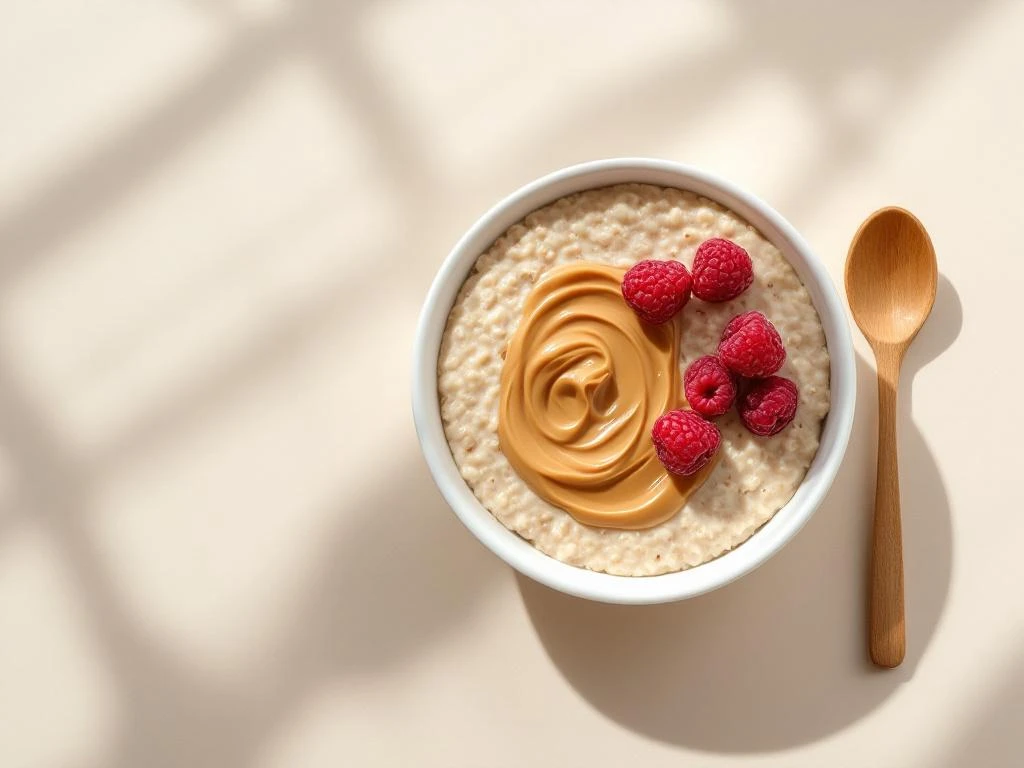
Managing IBS symptoms while enjoying a satisfying breakfast can feel challenging. This peanut butter raspberry oatmeal combines gut-friendly ingredients that taste delicious and keep you full until lunch. The recipe takes about 10 minutes to prepare and works for beginners with basic cooking skills.
You’ll need a saucepan or microwave-safe bowl, measuring cups, a stirring spoon, and simple low FODMAP ingredients. This healthy breakfast bowl provides fibre from oats, protein from peanut butter, and antioxidants from raspberries without triggering digestive discomfort.
Why peanut butter raspberry oatmeal works for IBS
This recipe combines three low FODMAP ingredients that work together to create a satisfying, gut-friendly breakfast. Oats provide soluble fibre that helps regulate digestion without overwhelming your system. Peanut butter adds protein and healthy fats that keep you satisfied for hours. Raspberries bring natural sweetness and antioxidants in a portion size that remains safe for sensitive stomachs.
The key to making this IBS friendly breakfast work lies in portion control and ingredient selection. Oats are low FODMAP up to 52 grams per serving. Peanut butter stays safe at 2 tablespoons when you choose varieties without high FODMAP additives like honey or inulin. Raspberries remain low FODMAP at 30 grams, which gives you about 10 berries to enjoy.
This combination offers genuine nutritional benefits for digestive health. The soluble fibre in oats feeds beneficial gut bacteria and helps maintain regular bowel movements. Peanut butter provides protein that stabilises blood sugar and prevents the energy crashes that can worsen IBS symptoms. Raspberries contain polyphenols that support gut health while adding flavour without excess sugar.
The texture and temperature of warm oatmeal also make it easier to digest compared to cold breakfast options. Your digestive system processes warm foods more efficiently, which matters when you’re managing IBS symptoms. This easy oatmeal recipe creates a comforting meal that won’t leave you feeling bloated or uncomfortable.
Gather your low FODMAP ingredients
Start with 52 grams of rolled oats or quick oats. Both types work well for this gluten free oatmeal recipe. Check the label to ensure your oats are certified gluten free if you have coeliac disease alongside IBS. Avoid instant oatmeal packets that often contain high FODMAP sweeteners or flavourings.
You’ll need 2 tablespoons of natural peanut butter. Choose varieties with only peanuts and salt in the ingredients list. Many commercial peanut butter brands add honey, agave, or chicory root, which contain high FODMAP ingredients. Smooth or crunchy both work based on your texture preference.
Measure out 30 grams of fresh or frozen raspberries. This equals roughly 10 berries. Fresh raspberries work beautifully, but frozen ones are equally nutritious and often more affordable. Don’t thaw frozen berries before adding them to your oatmeal.
Add 240 ml of lactose-free milk or water for cooking. Lactose-free milk adds creaminess and extra protein. Water works perfectly if you prefer a lighter option or avoid dairy completely. Some people use almond milk, which is low FODMAP at 250 ml per serving.
Optional toppings that stay within FODMAP limits include a small handful of pumpkin seeds (pepitas), a drizzle of maple syrup (up to 1 tablespoon), or a pinch of cinnamon. These additions let you customise flavour without triggering symptoms.
Prepare your peanut butter raspberry oatmeal
Combine your oats and liquid in a small saucepan. Place it over medium heat and bring the mixture to a gentle simmer. Stir occasionally to prevent sticking. The oats will start absorbing liquid within 2 minutes.
Cook for 5 to 7 minutes until the oats reach your preferred consistency. Stir every minute or so. The mixture will thicken as it cooks. Add more liquid if you prefer creamier oatmeal. Remove the pan from heat when the texture looks right.
Stir in your peanut butter immediately while the oatmeal is hot. The heat will soften the peanut butter and help it blend smoothly throughout the oats. Mix thoroughly until no streaks remain. This creates that rich, nutty flavour throughout every bite.
Add your raspberries now. Gently fold them into the oatmeal. Fresh berries will soften slightly from the heat. Frozen berries will cool your oatmeal a bit, which some people prefer. Don’t overmix or the berries will break apart completely.
For the microwave method, combine oats and liquid in a large microwave-safe bowl. Use a bigger bowl than you think you need because oatmeal bubbles up while cooking. Microwave on high for 90 seconds, then stir. Continue cooking in 30-second intervals, stirring between each, until the oats are tender. This usually takes 2.5 to 3 minutes total. Stir in peanut butter and add raspberries the same way as the stovetop method.
Success check: Your oatmeal should be creamy but not watery, with the peanut butter evenly distributed and raspberries still mostly intact. The consistency should coat your spoon without running off immediately.
Customize your oatmeal for variety
Switch your nut butter to create different flavours while staying low FODMAP. Almond butter works at 1 tablespoon per serving. Macadamia nut butter is low FODMAP at 2 tablespoons. These alternatives provide the same protein and healthy fats with a different taste profile.
Try different berries within FODMAP limits to prevent breakfast boredom. Blueberries work at 28 grams (about 20 berries). Strawberries are safe at 65 grams, which gives you roughly 5 medium berries. Mixing berries creates visual appeal and varied nutrition.
Adjust the texture based on your preferences and digestive needs. Add more liquid for a thinner consistency that’s easier to eat quickly. Cook longer for thicker oatmeal that feels more substantial. Some people with IBS find that slightly thinner oatmeal digests more comfortably.
Sweeten naturally with low FODMAP options. Maple syrup stays safe at 1 tablespoon. Brown sugar works at 1 tablespoon. A small drizzle of rice malt syrup provides sweetness without FODMAPs. Avoid honey, agave, and artificial sweeteners containing sorbitol or mannitol.
Add texture with safe toppings. Pumpkin seeds provide crunch and extra protein. Shredded coconut (dried, not fresh) adds tropical flavour at 2 tablespoons. A small amount of dark chocolate chips (check for low FODMAP certification) creates a treat-like breakfast.
Adapt seasonally by adjusting spices and temperature. Add cinnamon and nutmeg during autumn. Try vanilla extract year-round for extra flavour. In summer, prepare the oatmeal and refrigerate it overnight for a cold breakfast option that still provides all the same benefits.
This raspberry oatmeal recipe adapts easily to meal prep. Make a larger batch and portion it into containers. Reheat individual servings with a splash of extra liquid. Store the peanut butter and fresh raspberries separately, adding them after reheating for the best texture and flavour.
Peanut butter raspberry oatmeal
Cooking Time: 10 minutes | Portions: 1 serving
- 52 grams rolled oats or quick oats
- 240 ml lactose-free milk or water
- 2 tablespoons natural peanut butter (only peanuts and salt)
- 30 grams fresh or frozen raspberries (about 10 berries)
- Optional: maple syrup, cinnamon, pumpkin seeds
- Combine oats and liquid in a saucepan over medium heat
- Simmer for 5 to 7 minutes, stirring occasionally
- Remove from heat and stir in peanut butter until smooth
- Gently fold in raspberries
- Add optional toppings and serve immediately
This recipe is for informational purposes only and is not medical or dietary advice. Please consult a healthcare professional before making any changes to your diet.