
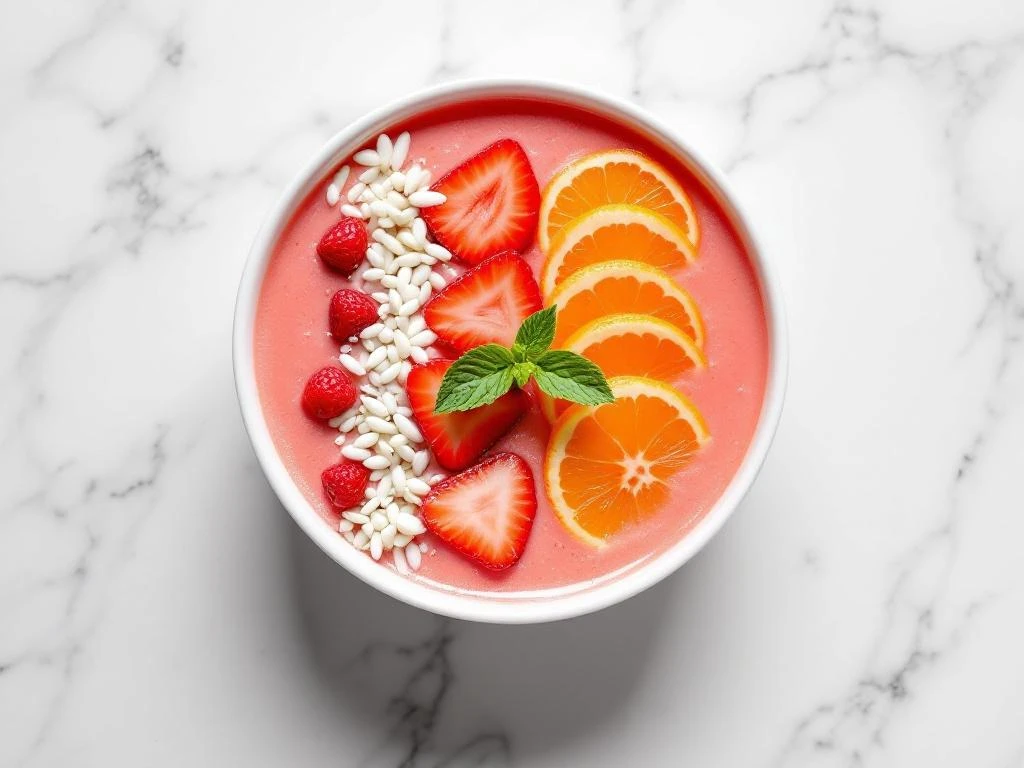
Starting your day with an orange strawberry smoothie bowl gives you a vibrant, nourishing breakfast that supports digestive comfort. This low FODMAP smoothie bowl recipe combines safe portions of fruit with creamy texture, creating an IBS friendly breakfast that doesn’t trigger symptoms. You’ll need about 10 minutes to prepare this gluten free smoothie bowl, plus a few basic kitchen tools. The recipe serves one person and requires a high-speed blender, measuring cups, and your choice of FODMAP friendly toppings. This healthy smoothie bowl works for anyone managing food sensitivities or simply looking for a refreshing morning meal.
Why this orange strawberry smoothie bowl works for IBS
This strawberry smoothie bowl recipe follows strict low FODMAP guidelines by using controlled portions of fruit that stay within safe limits. Strawberries are low FODMAP at 65g per serving, and oranges remain safe at one medium fruit. Both fruits contain natural enzymes that support gentle digestion without overwhelming your system.
The combination of orange and strawberry provides vitamin C and antioxidants that help reduce inflammation in your digestive tract. Smoothie bowls make ideal breakfast options because their thick consistency slows down how quickly you consume them, giving your body time to process the nutrients gradually. This prevents the sudden influx of sugars that can trigger IBS symptoms.
The recipe avoids high FODMAP ingredients like honey, apple juice, or mango that commonly appear in regular smoothie bowls. Instead, you’ll achieve natural sweetness from ripe fruit and creaminess from lactose free alternatives. This approach supports symptom management while delivering the energy you need to start your day.
Gather your low FODMAP ingredients and tools
You’ll need these FODMAP-friendly ingredients for your orange strawberry smoothie bowl base. Measure carefully to stay within safe portions.
- 65g fresh or frozen strawberries (about 5 medium berries)
- 1 medium orange, peeled and segmented
- 125ml lactose free yoghurt or coconut yoghurt
- 60ml lactose free milk or almond milk
- 1 teaspoon maple syrup (optional, for extra sweetness)
- 3-4 ice cubes if using fresh fruit
For toppings, keep these options ready. You’ll add them after blending.
- 10g pumpkin seeds or sunflower seeds
- 1 tablespoon gluten free oats
- 5 blueberries (low FODMAP at this portion)
- 1 teaspoon shredded coconut
- Small handful of low FODMAP granola
Essential kitchen equipment includes a high-speed blender, measuring cups and spoons, a serving bowl, and a sharp knife for fruit prep. Choose ripe but firm strawberries for the best flavour without excess liquid. Your orange should feel heavy for its size, indicating juiciness. If using frozen strawberries, skip the ice cubes as they’ll provide enough chill.
Substitution options work well for dietary variations. Replace coconut yoghurt with lactose free Greek yoghurt for extra protein. Swap almond milk for rice milk if you avoid nuts. The recipe adapts easily while maintaining its FODMAP friendly status.
Selecting the right fruit
Look for strawberries with bright red colour and fresh green tops. Avoid berries with soft spots or mould. Frozen strawberries work perfectly and often cost less than fresh options. For oranges, navel or Valencia varieties blend smoothly and taste sweet. Avoid blood oranges if you prefer milder flavour.
Blend your orange strawberry smoothie base
Start by preparing your fruit properly. Wash fresh strawberries and remove the green tops. Cut them in half to help your blender process them easily. Peel your orange completely, removing as much white pith as possible since it adds bitterness. Separate the orange into segments and check for seeds.
Add ingredients to your blender in this order for the best results. Pour in the lactose free milk first, then add the yoghurt. This liquid base helps the blender blades move freely. Next, add the orange segments, followed by the strawberries. Place ice cubes on top if you’re using them.
Blend on high speed for 30 to 45 seconds. Stop and check the consistency. Your smoothie bowl should be thick enough to hold toppings without them sinking immediately. The texture should resemble soft serve ice cream rather than a drinkable smoothie. If it’s too thin, add a few more ice cubes or frozen strawberries and blend again for 15 seconds.
If your smoothie is too thick and the blender struggles, add milk one tablespoon at a time. Blend briefly between additions until you reach the right consistency. The mixture should pour slowly when you tilt the blender jug.
Adjusting sweetness naturally
Taste your smoothie base before adding maple syrup. Ripe fruit often provides enough sweetness on its own. If you need more sweetness, add maple syrup in small amounts. Start with half a teaspoon, blend briefly, and taste again. This prevents over-sweetening while keeping the recipe low FODMAP.
Troubleshooting texture issues
Getting a grainy texture? Your blender might not be powerful enough to break down frozen fruit completely. Let frozen strawberries thaw for 5 minutes before blending. Blend for an extra 15 seconds on the highest setting to achieve smoothness.
If your smoothie separates or looks watery, you’ve added too much liquid. Fix this by blending in a tablespoon of lactose free yoghurt or a few more strawberries. The extra fruit and yoghurt will thicken the base and bring it back together.
Choose FODMAP-friendly toppings and garnishes
Pour your thick smoothie base into a wide, shallow bowl. This shape gives you plenty of surface area for arranging toppings. Now comes the creative part where you add texture, crunch, and extra nutrition.
Start with seeds as your protein-rich base topping. Sprinkle 10g of pumpkin seeds or sunflower seeds across one section of your bowl. These provide healthy fats and stay within safe FODMAP limits at this portion. Add a tablespoon of gluten free oats for fibre and a satisfying chew.
Place your fruit toppings strategically. Arrange 5 blueberries in a small cluster. Slice any leftover strawberry pieces thinly and fan them out on another section. This visual arrangement makes your easy smoothie bowl recipe look appealing and helps you eat mindfully.
Add a teaspoon of shredded coconut for tropical flavour. If you’re using low FODMAP granola, measure out a small handful (about 20g) and sprinkle it over the top. Many shop-bought granolas contain high FODMAP ingredients like honey or dried fruit, so check labels carefully or make your own with gluten free oats, maple syrup, and seeds.
Portion control for nuts and seeds
Stick to the recommended 10g serving of seeds. This equals roughly one tablespoon. Going over this amount can push you into high FODMAP territory and trigger symptoms. Measure your portions until you can estimate accurately by sight.
Creative presentation ideas
Arrange toppings in rows or sections rather than scattering them randomly. Create a pattern with alternating colours for visual appeal. Place larger items like strawberry slices around the edge and smaller items like seeds in the centre. Take a photo if you like, then mix everything together as you eat for varied flavour in each spoonful.
This lactose free smoothie bowl stays fresh for about 30 minutes before the base starts to melt. Eat it straightaway for the best texture and temperature contrast between cold smoothie and crunchy toppings.
You’ve created a nutritious, digestive-friendly breakfast that proves eating with IBS doesn’t mean sacrificing flavour or satisfaction. This orange smoothie bowl provides lasting energy without the bloating or discomfort that often follows typical breakfast options. The recipe works year-round with frozen fruit, making it a reliable choice for your morning routine.
Experiment with different approved toppings each time you make this healthy smoothie bowl. Try different seed varieties, swap blueberries for raspberries (60g safe portion), or add a small amount of dark chocolate chips for a treat. Each variation keeps breakfast interesting while supporting your digestive health.
Orange strawberry smoothie bowl
Cooking Time: 10 minutes | Portions: 1 serving
- Wash and prepare 65g strawberries and 1 medium orange
- Add 125ml lactose free yoghurt and 60ml lactose free milk to blender
- Add prepared fruit and 3-4 ice cubes
- Blend on high speed for 30-45 seconds until thick and creamy
- Pour into a wide, shallow bowl
- Top with 10g seeds, 1 tablespoon gluten free oats, 5 blueberries
- Add 1 teaspoon shredded coconut and low FODMAP granola
- Serve immediately for best texture
This recipe is for informational purposes only and is not medical or dietary advice. Please consult a healthcare professional before making any changes to your diet.