
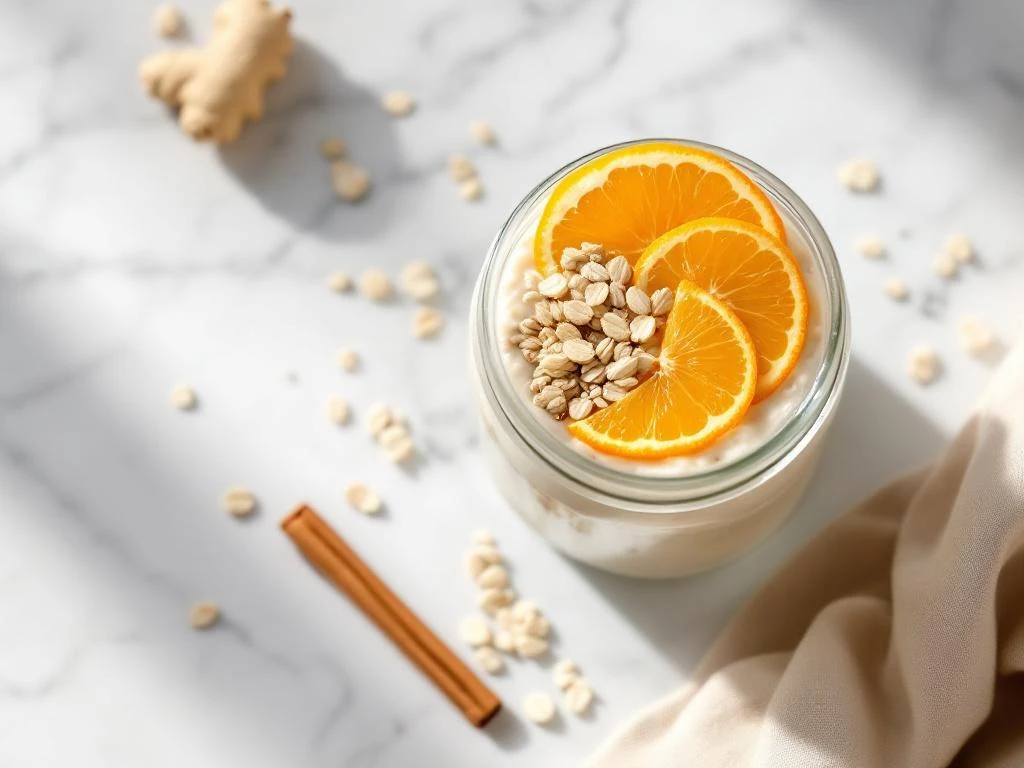
If you have IBS and struggle with rushed mornings, this orange ginger overnight oats recipe solves both problems at once. You’ll create a healthy breakfast recipe that’s gentle on your digestive system whilst saving precious time before work or school. This easy overnight oats recipe combines the bright flavour of orange with warming ginger, both low FODMAP ingredients that won’t trigger symptoms.
This guide suits beginners with no cooking experience needed. You’ll spend about 10 minutes preparing the oats, then let your fridge do the rest of the work overnight. The only tools required are a jar or container, a grater, measuring cups, and a knife. By morning, you’ll have a ready-to-eat meal prep breakfast waiting for you.
Why orange ginger overnight oats work for IBS
Overnight oats support digestive health because the soaking process breaks down some of the starches in the oats. This makes them easier to digest compared to cooked porridge, especially when your gut is sensitive. The cold preparation method also preserves nutrients that might otherwise be lost through heating.
Orange and ginger both fit perfectly into a low FODMAP overnight oats plan. Fresh ginger contains natural compounds that can help calm digestive discomfort, whilst orange provides vitamin C and adds natural sweetness without high FODMAP fruits like apples or pears. Both ingredients have been used traditionally to support gut comfort.
The convenience factor makes this gluten free overnight oats recipe ideal for busy mornings. When you’re managing IBS symptoms, stress and rushing can make things worse. Having breakfast ready to grab means one less decision and one less source of morning pressure. You can also prepare multiple portions at once, giving you a meal prep breakfast solution for the entire week.
Gather your ingredients and tools
For the base of your orange ginger overnight oats, you’ll need gluten free rolled oats (40-50g per serving), lactose-free milk or a low FODMAP alternative like almond milk (120-150ml per serving), one fresh orange, and fresh ginger root (about a 2cm piece per serving). Optional toppings include a drizzle of maple syrup, a sprinkle of cinnamon, or a small handful of low FODMAP seeds like pumpkin or sunflower.
Check that your oats are certified gluten free if you have coeliac disease or gluten sensitivity. Regular oats can be contaminated with wheat during processing. For the milk, stick to lactose-free dairy or plant-based options that are low FODMAP in the portions you’re using. Coconut milk from a carton works well, but avoid large amounts of cashew or soy milk as these can be high FODMAP in bigger servings.
The tools you need are simple. Grab a mason jar or any container with a lid (250-300ml capacity per serving), a fine grater or microplane for the ginger and orange zest, measuring cups or a kitchen scale, a sharp knife for segmenting the orange, and a spoon for mixing. That’s everything required to make this healthy breakfast recipe.
Prepare your orange ginger overnight oats
Add your measured oats to your jar or container. Pour in the lactose-free milk until the oats are covered with about 1cm of liquid above them. The ratio should be roughly 1 part oats to 2.5 parts liquid, but you can adjust this based on whether you prefer thicker or thinner overnight oats.
Wash your ginger root thoroughly. Use your grater to finely grate about half a teaspoon of fresh ginger directly into the oat mixture. Fresh ginger has a strong flavour, so start with less if you’re unsure. You can always add more next time. Grate the zest from about a quarter of your orange into the jar as well, being careful to only remove the coloured part of the peel and not the bitter white pith underneath.
Peel your orange and separate it into segments. Remove any seeds and cut the segments into smaller pieces if they’re large. Add these orange pieces to your jar. The fruit will release some juice overnight, adding natural sweetness and moisture to your overnight oats recipe.
Stir everything together thoroughly. Make sure the oats are fully submerged in the liquid and the ginger and orange are distributed evenly. If the mixture looks too dry, add a splash more milk. If it seems too wet, add a few more oats. Seal the container with its lid.
Refrigerate and serve your overnight oats
Place your sealed container in the fridge for at least 6 hours, though overnight (8-12 hours) gives the best texture. The oats need this time to absorb the liquid and soften. If you prepare them before bed, they’ll be perfect by breakfast time.
Check your oats in the morning by giving the jar a gentle shake or stir. The mixture should be thick and creamy, with no dry oats visible at the bottom. The oats should be soft when you bite into them, not crunchy. If they still seem too firm or dry, add a small splash of milk and let them sit for another 15-30 minutes.
You can eat your orange ginger overnight oats straight from the fridge. Many people prefer the cold, refreshing texture, especially in warmer weather. If you’d rather have warm oats, transfer them to a microwave-safe bowl and heat for 30-60 seconds, stirring halfway through. Add a splash of milk if they’ve thickened too much during heating.
Add any final toppings just before eating. A small drizzle of maple syrup adds sweetness, whilst a pinch of cinnamon complements the ginger beautifully. A few seeds add crunch and healthy fats that help you feel satisfied until lunch.
Customise your overnight oats for variety
Switch up the citrus by using mandarin segments instead of orange, or try a small amount of lemon zest for a sharper flavour. Both options remain low FODMAP in appropriate portions. Lime zest paired with ginger creates a more tropical taste that works particularly well in summer.
Adjust the spice level by adding a pinch of ground ginger alongside the fresh version for extra warmth, or include a tiny amount of ground turmeric for an anti-inflammatory boost. Cinnamon, nutmeg, and cardamom all pair well with this easy overnight oats base whilst staying FODMAP friendly.
Boost the protein content by stirring in a tablespoon of low FODMAP protein powder, a spoonful of peanut butter (check it’s just peanuts and salt), or a dollop of lactose-free Greek yoghurt. These additions help keep you fuller for longer without adding high FODMAP ingredients.
Modify the texture by using quick oats for a smoother consistency or steel-cut oats for more chewiness (though steel-cut oats may need longer soaking time). You can also blend half the mixture before refrigerating for a creamier base whilst keeping some whole oats for texture contrast.
Create seasonal variations by adding a tablespoon of pumpkin puree and pumpkin pie spice in autumn, or fresh strawberries (up to 5 medium berries) with vanilla extract in spring. Always check FODMAP serving sizes when adding new ingredients to maintain the gut-friendly benefits of this meal prep breakfast.
Store and meal prep overnight oats safely
Store your prepared overnight oats in the fridge for up to 5 days in a sealed container. Glass jars or plastic containers with tight-fitting lids work best to prevent the oats from absorbing other fridge odours. Label each container with the date you prepared it so you know when to use it by.
Prepare multiple servings at once by making 3-5 jars on Sunday evening. This gives you a healthy breakfast recipe ready each morning without any effort. Keep the fresh orange segments and any wet toppings separate until the night before you plan to eat each serving, as they can make the oats watery if added too far in advance.
Choose containers that hold 250-300ml for individual portions. Wide-mouth jars make it easier to eat directly from the container and to mix in any additional toppings. If you’re taking your overnight oats to work, make sure your container seals properly to prevent leaks in your bag.
Watch for signs that your oats have gone off. Discard them if you notice any sour smell, visible mould, or if the mixture has separated with clear liquid on top. If the oats taste fermented or fizzy, throw them away. Properly stored overnight oats should smell fresh and slightly sweet from the orange.
Keep the texture fresh by storing any crunchy toppings like seeds separately in a small container or bag. Add these just before eating so they don’t become soggy. If your oats thicken too much during storage, stir in a tablespoon of milk to loosen them back to your preferred consistency.
This orange ginger overnight oats recipe gives you a simple solution for managing IBS whilst enjoying flavourful, satisfying breakfasts. The combination of convenience and gut-friendly ingredients makes it easier to stick to your low FODMAP plan even on the busiest mornings. With proper storage and a bit of weekend preparation, you’ll have a week’s worth of healthy breakfast sorted.
Orange ginger overnight oats
Prep time: 10 minutes | Chill time: 6-12 hours | Portions: 1 serving (easily multiplied)
Ingredients:
- 40-50g gluten free rolled oats
- 120-150ml lactose-free milk or low FODMAP plant milk
- 1 fresh orange (zest and segments)
- 2cm piece fresh ginger root (grated)
- Optional: maple syrup, cinnamon, low FODMAP seeds
Steps:
- Add oats to a jar or container
- Pour in milk to cover oats by 1cm
- Grate fresh ginger and orange zest into the jar
- Add orange segments cut into small pieces
- Stir thoroughly and seal container
- Refrigerate for 6-12 hours
- Check consistency and add milk if needed
- Serve cold or warmed with optional toppings
- Store in fridge for up to 5 days
This recipe is for informational purposes only and is not medical or dietary advice. Please consult a healthcare professional before making any changes to your diet.
Related Articles
- Strawberry Almond Smoothie
- Ham and Cheese Egg Bake
- Gluten-Free Banana Walnut Bread
- Where is IBS pain usually felt?
- Gluten-Free Pumpkin Chocolate Chip Muffins