
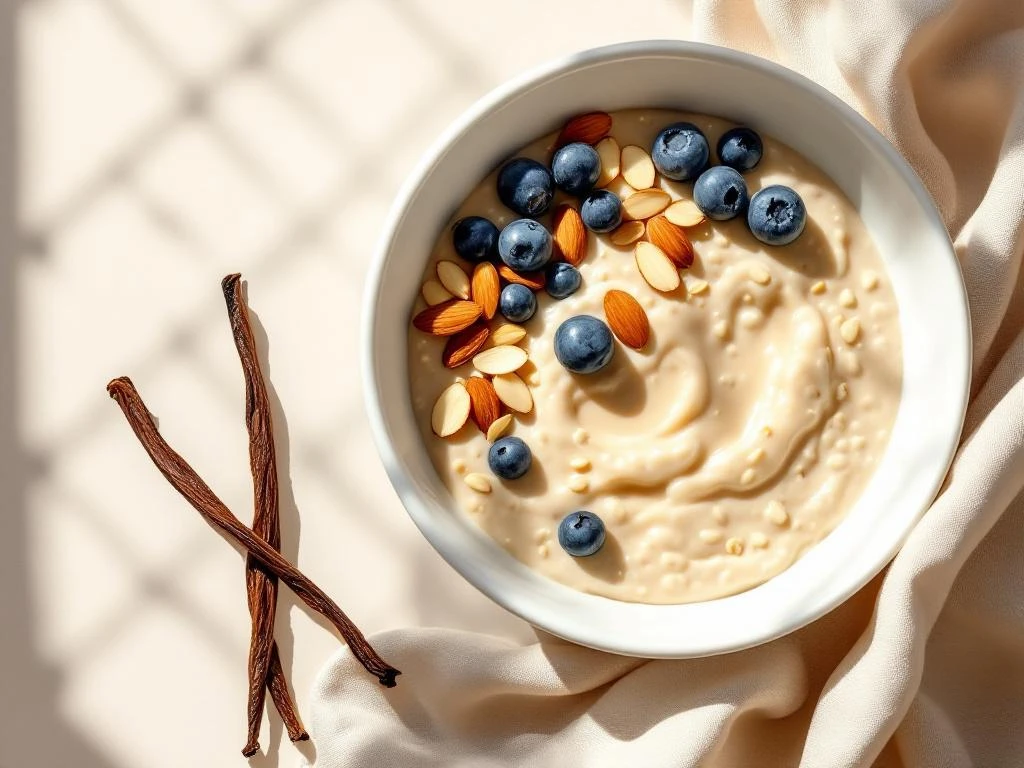
Managing digestive sensitivities doesn’t mean sacrificing a satisfying breakfast. This lactose-free protein oats recipe combines the comfort of warm oatmeal with protein-enriched nutrition that supports your morning without triggering IBS symptoms. You’ll create a creamy, vanilla-flavoured bowl that keeps you full and energised.
This recipe suits beginners and takes about 10 minutes from start to finish. You’ll need basic kitchen equipment (a saucepan, measuring cups, and a whisk), lactose-free protein powder, certified gluten-free oats, and your choice of low FODMAP toppings. The result is a high protein oatmeal that tastes indulgent whilst remaining gentle on sensitive stomachs.
Why protein oats work for sensitive stomachs
Protein-enriched oats provide sustained energy without the blood sugar spikes that can worsen digestive discomfort. When you add lactose-free protein powder to your morning oats, you’re creating a balanced meal that supports muscle maintenance and keeps hunger at bay for hours.
Traditional high-protein breakfasts often rely on dairy products that trigger symptoms in people with IBS. Lactose-free protein oats solve this problem by delivering 20-25 grams of protein per serving without the lactose that causes bloating and discomfort. The protein also slows digestion in a beneficial way, helping you feel satisfied longer.
Oats themselves are naturally soothing for sensitive digestive systems. They contain soluble fibre that supports regular bowel movements without irritation. When prepared with the right liquid-to-oat ratio and combined with lactose-free protein, you get an IBS-friendly breakfast that doesn’t compromise on nutrition or taste.
The vanilla flavour adds natural sweetness without high FODMAP ingredients. This matters because many flavoured protein powders contain artificial sweeteners or sugar alcohols that trigger digestive symptoms. A simple vanilla protein oats recipe lets you control every ingredient.
Gather your lactose-free ingredients
Start with certified gluten-free rolled oats (40-50 grams per serving). Rolled oats work better than instant varieties because they maintain texture when you add protein powder. Steel-cut oats take too long and don’t absorb the protein mixture as smoothly.
Choose a lactose-free protein powder (25-30 grams per serving). Look for options made from rice protein, pea protein, or lactose-free whey isolate. Vanilla-flavoured works best, but unflavoured allows more flexibility with toppings. Check the FODMAP content, some protein powders contain inulin or chicory root that can trigger symptoms.
You’ll need 200-250ml of liquid. Lactose-free milk, almond milk (small portions), or water all work well. Lactose-free milk adds creaminess and extra protein. Almond milk provides subtle flavour but stick to 60ml or less to stay within low FODMAP limits.
Add pure vanilla extract (half a teaspoon). Real vanilla extract contains no FODMAPs and enhances the overall flavour profile. Avoid vanilla essence, which often contains artificial ingredients.
Optional additions that stay within FODMAP limits include a pinch of salt (enhances sweetness), cinnamon (quarter teaspoon), and maple syrup (one tablespoon maximum). Keep these ready before you start cooking.
Substitution options
If you can’t find lactose-free protein powder, use regular whey protein isolate. The isolation process removes most lactose. Rice protein works for complete dairy avoidance. Pea protein provides good texture but has a stronger taste that vanilla helps mask.
Quick oats can replace rolled oats in a pinch. Reduce cooking time by 2-3 minutes and watch carefully to prevent mushiness. Steel-cut oats require pre-cooking before adding protein powder.
Prepare your vanilla protein oats step-by-step
Pour your chosen liquid into a small saucepan over medium heat. Don’t boil it yet. You want it warm but not bubbling when you add the oats. This temperature control prevents the protein from clumping later.
Add the oats to the warming liquid. Stir once to combine, then let them cook for 4-5 minutes. Stir occasionally to prevent sticking. The oats should absorb most of the liquid and look creamy but still slightly wet.
Remove the saucepan from heat. This step is crucial. Never add protein powder whilst the oats are still on the stove. High heat denatures the protein and creates lumps that won’t smooth out.
Wait 30 seconds for the temperature to drop slightly. The oats should still be hot but not actively steaming. This temperature preserves the protein quality whilst allowing it to blend smoothly.
Sprinkle the protein powder over the oats. Don’t dump it all in one spot. Distribute it evenly across the surface. Add your vanilla extract at this point.
Whisk vigorously for 20-30 seconds. Use a fork or small whisk to break up any clumps immediately. The mixture will thicken as you stir. If it becomes too thick, add a splash of warm liquid (one tablespoon at a time) until you reach your preferred consistency.
Achieving perfect consistency
The ideal texture looks thick enough to slowly fall from a spoon but not stiff. If your protein oats are too runny, let them sit for one minute. The oats continue absorbing liquid as they cool slightly.
Too thick? Add warm lactose-free milk one tablespoon at a time. Cold liquid will cool your oats too much and create an unpleasant temperature contrast. Keep a small amount of warm liquid ready for adjustments.
Some protein powders thicken more than others. Rice and pea proteins absorb more liquid than whey isolate. Adjust your initial liquid amount based on your protein type. Start with 250ml for plant-based proteins and 200ml for whey isolate.
Customise with low FODMAP toppings
Fresh blueberries (40 grams) add natural sweetness and antioxidants without exceeding FODMAP limits. Strawberries work too (five medium berries maximum). Avoid dried fruits, which concentrate fructose and trigger symptoms.
Chopped walnuts (10-15 grams) provide healthy fats and satisfying crunch. Pecans and macadamias also stay within safe portions. Skip cashews and pistachios, which contain higher FODMAP levels even in small amounts.
Pumpkin seeds (one tablespoon) offer mineral content and textural variety. Sunflower seeds work similarly. Both remain low FODMAP at these portions and complement the vanilla flavour.
A drizzle of maple syrup (one tablespoon maximum) adds sweetness if needed. Pure maple syrup contains no FODMAPs at this portion. Honey exceeds FODMAP limits, so avoid it even in small amounts.
Cinnamon (quarter teaspoon) enhances the vanilla notes and adds warmth. Cocoa powder (one tablespoon) creates a chocolate variation. Both spices are FODMAP-free and boost flavour without adding sugars.
Creative flavour combinations
Try blueberries with walnuts and a cinnamon sprinkle for an antioxidant-rich bowl. The combination provides varied textures and balanced sweetness.
Strawberries with pumpkin seeds and a maple drizzle creates a satisfying sweet-savoury contrast. The seeds add protein whilst the fruit provides freshness.
For chocolate lovers, mix cocoa powder into the oats during cooking, then top with sliced banana (half a small banana stays within limits) and a few dark chocolate chips (check for low FODMAP certification).
Store and meal prep for busy mornings
Prepare a large batch on Sunday for the week ahead. Cook 4-5 servings of oats without protein powder. Let the base cool completely before storing.
Divide the plain oat base into individual glass containers with tight-fitting lids. Glass works better than plastic because it reheats evenly and doesn’t absorb odours. Store in the refrigerator for up to five days.
Keep your protein powder separate until serving time. Add it fresh each morning to preserve quality and prevent texture changes. Pre-portioned protein powder in small containers or bags saves morning time.
Reheating for best results
Transfer one portion of oat base to a bowl. Add 2-3 tablespoons of lactose-free milk to restore moisture lost during storage. Microwave for 60-90 seconds, stirring halfway through.
Remove from the microwave when hot but not boiling. Let it cool for 30 seconds, then add your protein powder. Stir thoroughly to prevent clumps. The slightly cooler temperature after storage means you need less cooling time than with fresh oats.
Stovetop reheating works too. Place the oat base in a small saucepan with added liquid. Warm over low heat whilst stirring constantly. Remove from heat and add protein powder as with fresh preparation.
Batch preparation strategies
Cook a double or triple batch of the oat base. Portion it immediately whilst still warm for easier handling. Label containers with preparation dates to track freshness.
Prep topping containers alongside your oat base. Small jars with berries, nuts, and seeds stay fresh for 3-4 days. Keep wet toppings (maple syrup) separate until serving.
Freeze individual portions for longer storage. The oat base freezes well for up to one month. Thaw overnight in the refrigerator, then reheat as normal. Protein powder should still be added fresh after reheating.
This meal prep approach transforms your mornings. You’ll have a nutritious, IBS-friendly breakfast ready in under three minutes. The consistency remains creamy, and the protein quality stays intact when you follow these storage methods.
Creating lactose-free protein oats becomes second nature after a few attempts. You’ve learned how protein supports digestive health without triggering symptoms, mastered the technique for preventing clumps, and discovered topping combinations that stay within FODMAP limits. This easy protein oatmeal recipe adapts to your schedule through smart meal prep strategies.
The beauty of this healthy breakfast for IBS lies in its flexibility. Adjust liquid ratios for your preferred thickness, experiment with low FODMAP toppings, and prepare batches that match your weekly routine. Each bowl delivers sustained energy without the digestive discomfort that often follows traditional high-protein breakfasts.
Start with the basic recipe, then customise based on what works for your body. Track which protein powders blend smoothest and which toppings you enjoy most. This gluten-free protein oats recipe becomes a reliable foundation for symptom-free mornings.
Lactose-free vanilla protein oats
Cooking time: 10 minutes | Portions: 1 serving
Ingredients
- 40-50g certified gluten-free rolled oats
- 200-250ml lactose-free milk (or almond milk, water)
- 25-30g lactose-free vanilla protein powder
- ½ teaspoon pure vanilla extract
- Pinch of salt
- Optional: ¼ teaspoon cinnamon, 1 tablespoon maple syrup
Low FODMAP topping options
- 40g fresh blueberries or 5 medium strawberries
- 10-15g walnuts or pecans
- 1 tablespoon pumpkin or sunflower seeds
- 1 tablespoon maple syrup
- ¼ teaspoon cinnamon or 1 tablespoon cocoa powder
Instructions
- Heat your chosen liquid in a small saucepan over medium heat until warm but not boiling
- Add oats and stir once, then cook for 4-5 minutes, stirring occasionally
- Remove from heat and wait 30 seconds for temperature to drop slightly
- Sprinkle protein powder evenly over the surface and add vanilla extract
- Whisk vigorously for 20-30 seconds until smooth and creamy
- Adjust consistency with warm liquid if needed (add one tablespoon at a time)
- Transfer to a bowl and add your choice of low FODMAP toppings
- Serve immediately whilst warm
Storage instructions
- Prepare oat base without protein powder for meal prep
- Store in glass containers in refrigerator for up to 5 days
- Freeze portions for up to 1 month
- Reheat with 2-3 tablespoons added liquid
- Add protein powder fresh after reheating
This recipe is for informational purposes only and is not medical or dietary advice. Please consult a healthcare professional before making any changes to your diet.