
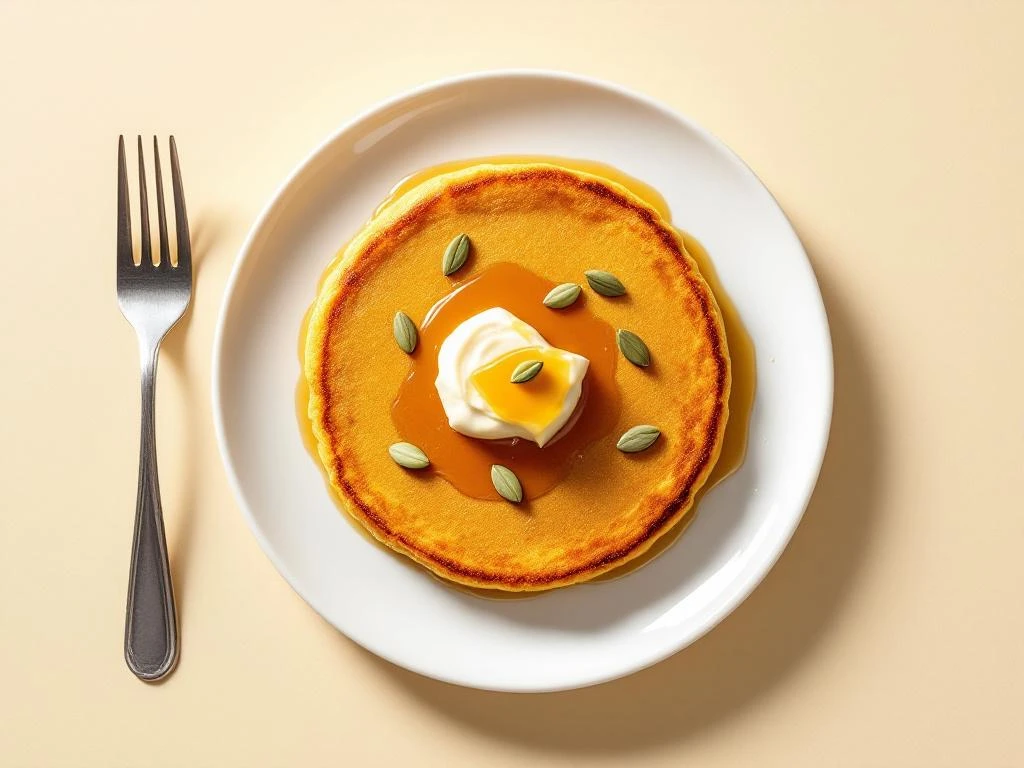
Gluten-free pumpkin pancakes offer a delicious solution for anyone following a low FODMAP diet while managing IBS symptoms. These pancakes combine the natural sweetness and moisture of pumpkin with safe, gluten-free ingredients to create a breakfast that won’t trigger digestive discomfort. You’ll need about 25 minutes to prepare and cook a batch that serves four people.
This recipe works for beginners with basic cooking skills. You’ll need mixing bowls, a whisk, measuring cups, and a griddle or non-stick pan. All ingredients are commonly available at most supermarkets, and the pumpkin puree provides natural binding without eggs if needed.
By following these steps, you’ll create fluffy, FODMAP-friendly pancakes that satisfy your morning cravings without compromising your digestive health. The techniques you’ll learn also apply to other gluten-free pancake recipes.
Why gluten-free pumpkin pancakes work for IBS
Pumpkin fits perfectly into the low FODMAP diet when used in appropriate portions. A serving of 75 grams of pumpkin puree remains within safe FODMAP limits, making it an excellent choice for people with IBS. The natural sweetness means you need less added sugar, which can also trigger symptoms in some people.
These pancakes use gluten-free flour blends instead of wheat flour, eliminating a common IBS trigger. Gluten can cause inflammation and discomfort in sensitive digestive systems, even for people without celiac disease. The pumpkin adds moisture and natural fiber that supports healthy digestion without overwhelming your system.
The nutritional benefits extend beyond FODMAP compliance. Pumpkin provides beta-carotene, vitamin A, and potassium. These nutrients support overall health while being gentle on your digestive tract. The combination of gluten-free flour and pumpkin creates a satisfying breakfast that keeps you full without the bloating or cramping that often follows traditional pancakes.
Gather your ingredients and tools
You’ll need these low FODMAP ingredients for approximately eight pancakes:
- 150 grams gluten-free flour blend (check it contains no chickpea or bean flours)
- 75 grams pure pumpkin puree (not pumpkin pie filling)
- 240 ml lactose-free milk or almond milk
- 1 large egg
- 2 tablespoons maple syrup
- 2 teaspoons baking powder
- 1 teaspoon vanilla extract
- ½ teaspoon cinnamon
- Pinch of salt
- 2 tablespoons melted coconut oil or butter (plus extra for cooking)
When selecting pumpkin puree, read labels carefully. Pure pumpkin contains only pumpkin, while pie filling includes added sugars and spices that may not be FODMAP friendly. Check your gluten-free flour blend ingredients too. Many contain chickpea or bean flours that are high FODMAP. Look for blends based on rice flour, potato starch, or tapioca starch.
Essential tools include two mixing bowls (one large, one medium), a whisk, measuring cups and spoons, a ladle or large spoon for portioning batter, and a non-stick griddle or frying pan. A spatula helps with flipping. Having these items ready before you start makes the process much smoother.
Verifying FODMAP-friendly ingredients
Read every label when buying packaged ingredients. Some gluten-free flour blends contain high FODMAP ingredients like inulin, chicory root, or apple fiber. Your lactose-free milk should list lactase enzyme or state “lactose-free” clearly. Regular milk contains lactose, which triggers IBS symptoms in many people.
Stick with pure maple syrup rather than pancake syrup, which often contains high fructose corn syrup. Pure vanilla extract is safe, but imitation vanilla may contain additives that cause problems. When in doubt, simpler ingredient lists are safer for sensitive digestive systems.
Mix the pumpkin pancake batter properly
Start by whisking together your dry ingredients in the large bowl. Combine the gluten-free flour, baking powder, cinnamon, and salt. Whisk thoroughly to distribute the baking powder evenly. This prevents pockets of baking powder that create an unpleasant taste.
In your medium bowl, whisk the egg until the yolk and white are fully combined. Add the pumpkin puree and whisk until smooth. Pour in the lactose-free milk, maple syrup, vanilla extract, and melted coconut oil. Whisk everything together until you have a uniform orange mixture with no streaks of egg.
Pour the wet ingredients into the dry ingredients. Use gentle folding motions with your whisk rather than vigorous stirring. Stop mixing as soon as you no longer see dry flour. Small lumps are fine and will disappear during cooking. Overmixing gluten-free batter creates dense, gummy pancakes because it breaks down the starches in the flour.
Adjusting batter consistency
Your batter should pour slowly from a spoon, similar to thick double cream. If it’s too thick and barely moves, add lactose-free milk one tablespoon at a time. If it’s too thin and runs like water, add gluten-free flour one tablespoon at a time. Pumpkin puree varies in moisture content between brands, so adjustments are normal.
Let the batter rest for five minutes after mixing. This allows the flour to hydrate fully and the baking powder to start working. The batter will thicken slightly during this rest period.
Cook pancakes to golden perfection
Heat your griddle or pan over medium heat. This typically means setting your hob to 5 or 6 out of 10. The surface is ready when a drop of water sizzles and evaporates within two seconds. Too hot and your pancakes burn before cooking through. Too cool and they turn pale and dense.
Melt a small amount of coconut oil or butter on the cooking surface. Use about half a teaspoon per pancake. Pour roughly 60 ml of batter (about a quarter cup) onto the griddle for each pancake. Don’t spread the batter. Let it settle into its own round shape.
Watch for bubbles to form across the entire surface of each pancake. This takes about 2 to 3 minutes. The edges should look set and slightly dry. When bubbles pop and leave small holes that don’t fill back in, slide your spatula under the pancake and flip it in one smooth motion.
Achieving even browning
The second side cooks faster than the first, usually 1 to 2 minutes. The pancake should feel springy when you press it gently with your spatula. If your finger leaves an indent that doesn’t bounce back, give it another 30 seconds.
Look for golden brown colour on both sides. Pumpkin pancakes naturally have an orange tint, so they won’t look as golden as plain pancakes. The brown spots should be evenly distributed, not dark in some areas and pale in others.
Keep finished pancakes warm by placing them on a plate in a 90°C oven. Don’t stack them directly on top of each other or they’ll steam and become soggy. Place a piece of baking paper between layers if you need to stack them.
Fix common pumpkin pancake problems
Dense, heavy pancakes usually mean you overmixed the batter or your baking powder is old. Check the expiration date on your baking powder. To test if it’s still active, add half a teaspoon to hot water. It should fizz immediately. If your current batch is already mixed, you can’t fix overmixing, but remember to mix gently next time.
Pancakes sticking to the pan indicate insufficient oil or a pan that’s not truly non-stick. Add more coconut oil between batches. If you’re using a regular pan, you might need to use more fat than with a quality non-stick surface. Letting pancakes cook fully before flipping also helps. Trying to flip too early tears them.
Troubleshooting texture issues
If your pancakes are burning on the outside but raw inside, your heat is too high. Lower the temperature and cook more slowly. Gluten-free pancakes need gentler heat than wheat-based ones because the starches behave differently.
Pancakes spreading too thin and turning out like crepes mean your batter is too runny. Stir in more gluten-free flour, one tablespoon at a time, until the batter thickens. Batter that won’t spread at all and stays in a thick blob needs more liquid. Add lactose-free milk gradually.
Pale pancakes that never brown properly are cooking at too low a temperature. Increase your heat slightly. The Maillard reaction that creates browning needs adequate heat to occur.
Serve and store your pancakes
Top your gluten-free pumpkin pancakes with low FODMAP options like pure maple syrup, a small handful of blueberries (28 grams maximum), or a tablespoon of smooth peanut butter. Lactose-free yogurt adds protein and creaminess. Avoid honey in large amounts, as it becomes high FODMAP above one tablespoon.
A sprinkle of cinnamon or a few chopped pecans (10 nuts maximum) adds flavour without triggering symptoms. Sliced banana works if you stick to one small unripe banana. Ripe bananas contain more FODMAPs than firm, slightly green ones.
Storage and reheating methods
Store leftover pancakes in an airtight container in the refrigerator for up to three days. Place baking paper between layers to prevent sticking. They’ll stay softer if you let them cool completely before storing them.
For longer storage, freeze pancakes for up to two months. Wrap individual pancakes in cling film, then place them in a freezer bag. This lets you remove just what you need. Frozen pancakes thaw quickly at room temperature in about 15 minutes.
Reheat refrigerated pancakes in a toaster on a low setting, in a microwave for 20 to 30 seconds, or in a pan over low heat for one minute per side. Frozen pancakes can go straight into the toaster or microwave. Add 10 to 15 seconds of microwave time for frozen pancakes.
Make-ahead strategies
Prepare the dry ingredients the night before and store them in a covered bowl. Mix the wet ingredients in the morning when you’re ready to cook. This cuts your morning prep time in half.
You can also make a full batch on the weekend and freeze portions for quick weekday breakfasts. This approach works well for busy mornings when you need a fast, IBS-friendly meal. Just grab a pancake from the freezer and reheat it while you make coffee.
The batter itself doesn’t store well because the baking powder loses effectiveness once mixed with liquid. Always mix batter fresh for the best texture and rise.
These healthy pumpkin pancakes prove that following a low FODMAP diet doesn’t mean sacrificing flavour or satisfaction. The combination of pumpkin’s natural sweetness with the fluffy texture of properly made gluten-free pancakes creates a breakfast worth repeating. You now have the skills to make FODMAP-friendly pancakes whenever you want a comforting morning meal that won’t upset your digestive system.
Gluten-free pumpkin pancakes
Cooking Time: 25 minutes | Portions: 4 servings (8 pancakes)
Ingredients:
- 150g gluten-free flour blend (rice or potato-based)
- 75g pure pumpkin puree
- 240ml lactose-free milk
- 1 large egg
- 2 tablespoons maple syrup
- 2 teaspoons baking powder
- 1 teaspoon vanilla extract
- ½ teaspoon cinnamon
- Pinch of salt
- 2 tablespoons melted coconut oil (plus extra for cooking)
Instructions:
- Whisk dry ingredients (flour, baking powder, cinnamon, salt) in a large bowl
- Beat egg in medium bowl, add pumpkin puree, milk, maple syrup, vanilla, and melted oil
- Pour wet ingredients into dry ingredients and fold gently until just combined
- Let batter rest for 5 minutes
- Heat griddle to medium, add small amount of oil
- Pour 60ml batter per pancake onto griddle
- Cook 2 to 3 minutes until bubbles form and edges set
- Flip and cook 1 to 2 minutes until golden and springy
- Serve immediately or store for later use
Low FODMAP serving suggestions: Pure maple syrup, small portion of blueberries (28g), lactose-free yogurt, or smooth peanut butter (1 tablespoon)
Storage: Refrigerate up to 3 days or freeze up to 2 months with baking paper between layers
This recipe is for informational purposes only and is not medical or dietary advice. Please consult a healthcare professional before making any changes to your diet.