
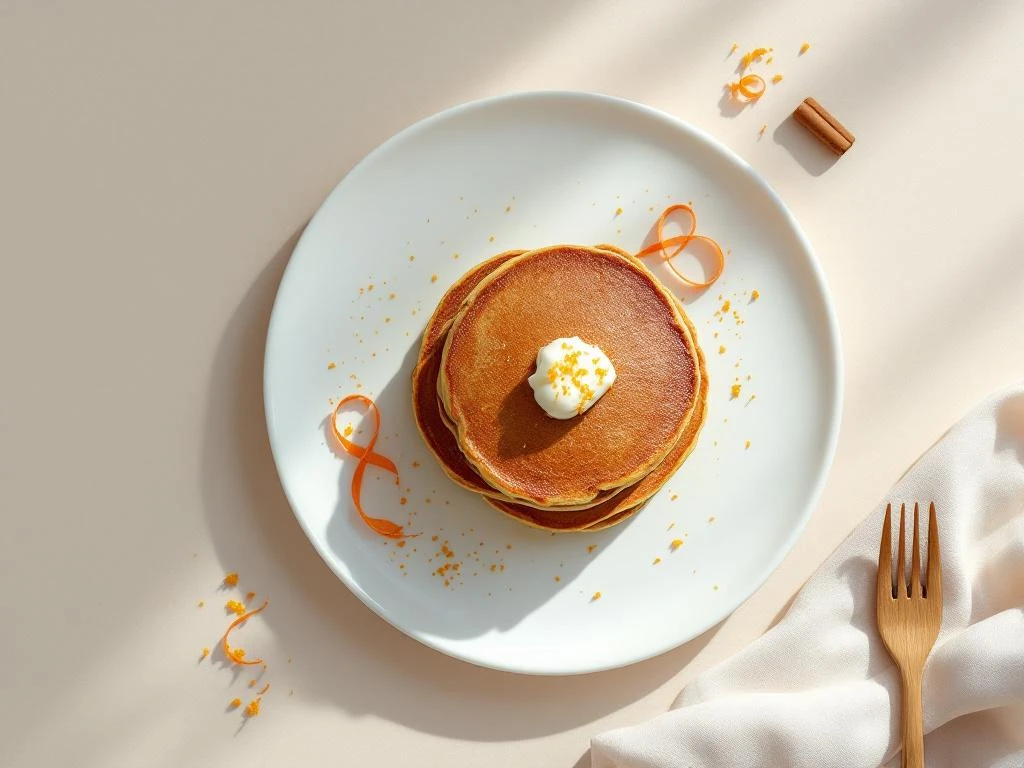
If you miss the warm spices and sweet comfort of carrot cake but need to keep your breakfast IBS-friendly, these gluten-free carrot cake pancakes bring all the flavour without the digestive distress. They’re fluffy, satisfying, and designed to fit into your low FODMAP lifestyle without compromise. This recipe takes about 25 minutes from start to finish and requires basic cooking skills. You’ll need a mixing bowl, grater, non-stick pan, and simple ingredients you can find at most supermarkets. By the end, you’ll have a delicious breakfast that proves eating for gut health doesn’t mean giving up the foods you love.
Why carrot cake pancakes work for low FODMAP diets
Carrots are naturally low in FODMAPs, making them an excellent base for IBS-friendly breakfast recipes. Unlike many fruits and vegetables that trigger symptoms, carrots provide sweetness and moisture without the fructans or polyols that cause bloating and discomfort. A standard serving of grated carrot stays well within safe FODMAP limits, so you can enjoy the flavour without worry.
Traditional carrot cake gets its appeal from warming spices like cinnamon and nutmeg, which are also low FODMAP. When you translate these flavours into pancake format, you create a breakfast that feels indulgent but supports your digestive health. The natural sweetness of carrots means you need less added sugar, and their fibre content helps keep you satisfied through the morning.
These gluten-free carrot cake pancakes offer nutritional benefits beyond being gut-friendly. Carrots provide beta-carotene, which your body converts to vitamin A for immune function and eye health. The combination of protein from eggs and complex carbohydrates from gluten-free flour creates balanced energy that won’t spike your blood sugar. This makes them suitable for anyone managing IBS alongside other health considerations.
Gather your gluten-free pancake ingredients
For the pancakes themselves, you’ll need 150g gluten-free plain flour (look for blends containing rice flour and tapioca starch), 2 teaspoons baking powder, 1 teaspoon ground cinnamon, ¼ teaspoon ground nutmeg, a pinch of salt, 2 large eggs, 180ml lactose-free milk, 2 tablespoons maple syrup, and 100g finely grated carrot. Choose a gluten-free flour blend that’s specifically labelled as suitable for baking, as these contain xanthan gum or another binder to help hold the pancakes together.
When selecting lactose-free milk, any variety works well. Almond milk, rice milk, or lactose-free dairy milk all fit within low FODMAP guidelines in the amounts used here. Avoid coconut milk in large quantities, as it can be high in polyols. For the maple syrup, pure maple syrup is naturally low FODMAP, but check labels to ensure no high-fructose corn syrup has been added.
The equipment needed is straightforward. You’ll need a box grater or food processor for the carrots, two mixing bowls (one for dry ingredients and one for wet), a whisk or fork, a non-stick frying pan or griddle, a spatula, and measuring cups and spoons. Having everything ready before you start makes the process much smoother.
Ingredient substitutions
If you can’t find a pre-mixed gluten-free flour blend, combine 100g rice flour with 50g tapioca starch and add ½ teaspoon xanthan gum. For egg-free versions, try 2 tablespoons ground flaxseed mixed with 6 tablespoons water, though the texture will be slightly denser. You can replace maple syrup with a low FODMAP amount of golden syrup or leave it out entirely if you prefer less sweetness.
Prepare the carrot cake pancake batter
Start by grating your carrots finely using the smallest holes on your box grater. Fine grating distributes the carrot throughout the batter more evenly and prevents large chunks that might make flipping difficult. Squeeze the grated carrot gently with your hands or in a clean tea towel to remove excess moisture. This step prevents watery batter and helps your pancakes cook properly.
In your first mixing bowl, whisk together the gluten-free flour, baking powder, cinnamon, nutmeg, and salt. Make sure these dry ingredients are well combined, as gluten-free flours sometimes clump. In your second bowl, beat the eggs lightly, then add the lactose-free milk and maple syrup. Whisk until everything is smooth and well blended.
Pour the wet ingredients into the dry ingredients and stir gently with a wooden spoon or spatula. Mix until just combined, with no large pockets of dry flour visible. The batter will be slightly lumpy, which is normal for gluten-free pancakes. Avoid overmixing, as this can make the pancakes tough and dense. Fold in the grated carrot until evenly distributed throughout the batter.
Let the batter rest for 5 minutes before cooking. This resting period allows the gluten-free flour to absorb the liquid fully and helps the baking powder activate. The batter should be thick but pourable, similar to regular pancake batter. If it seems too thick, add a tablespoon of lactose-free milk at a time until you reach the right consistency.
Cook perfect gluten-free pancakes every time
Heat your non-stick pan over medium heat. This temperature is important because gluten-free pancakes burn more easily than wheat-based ones. Test if the pan is ready by flicking a drop of water onto the surface. It should sizzle gently but not evaporate instantly. Add a small knob of butter or a teaspoon of neutral oil like sunflower oil to coat the pan lightly.
Pour about 60ml of batter (roughly ¼ cup) into the pan for each pancake. Don’t spread the batter, just let it settle naturally into a round shape. Cook for 2 to 3 minutes on the first side. You’ll know it’s time to flip when small bubbles form on the surface and the edges look set and slightly dry. The bubbles won’t pop as dramatically as with wheat pancakes, so watch the edges carefully.
Flip the pancake gently using a wide spatula. Gluten-free pancakes are more delicate than regular ones, so slide the spatula fully underneath before lifting. Cook for another 2 minutes on the second side until golden brown. The pancake should feel firm when you press it lightly with the spatula. If it feels mushy or wet, give it another 30 seconds.
Troubleshooting common issues
If your pancakes stick to the pan, the heat might be too high or you need more oil. Lower the temperature slightly and add a bit more fat before the next pancake. If they’re breaking when you flip them, wait a bit longer before flipping. The first side needs to be fully set to provide structure. Dark spots or burning means your heat is too high, so reduce it and let the pan cool for a minute before continuing.
Customise with low FODMAP toppings and variations
Pure maple syrup is the simplest low FODMAP topping and complements the carrot cake flavours beautifully. For something richer, make a quick cream cheese frosting using 100g lactose-free cream cheese, 2 tablespoons icing sugar, and a splash of lactose-free milk. Beat until smooth and drizzle over warm pancakes. This stays within low FODMAP limits when divided among 4 servings.
Suitable nuts include walnuts or pecans in small amounts (about 10 walnut halves or 10 pecan halves per serving). These add crunch and healthy fats whilst staying FODMAP-friendly. For fruit options, try a small handful of blueberries or sliced strawberries. A medium banana (firm, not overripe) is also acceptable in low FODMAP portions.
To adjust the spice profile, add ¼ teaspoon ground ginger for extra warmth, or increase the cinnamon to 1½ teaspoons if you love that flavour. Some people enjoy a tiny pinch of ground cloves, though this is quite strong. You can also fold in 2 tablespoons of shredded coconut (the dried, unsweetened kind) for texture, staying within FODMAP limits.
Storage and reheating
Store leftover pancakes in an airtight container in the fridge for up to 3 days. Stack them with small pieces of baking paper between each pancake to prevent sticking. Reheat in a toaster, toaster oven, or microwave for 30 seconds. For longer storage, freeze the pancakes for up to 2 months. Defrost in the fridge overnight or reheat from frozen in the toaster on a low setting.
These gluten-free carrot cake pancakes prove that following a low FODMAP diet doesn’t mean missing out on comforting breakfast favourites. With the right ingredients and techniques, you can enjoy pancakes that are both delicious and gentle on your digestive system. The warm spices and natural sweetness make them feel special enough for weekend mornings, whilst the simple preparation means you can easily make them on busy weekdays too.
Gluten-free carrot cake pancakes
Cooking Time: 25 minutes | Portions: 4 servings (8 pancakes)
Ingredients:
- 150g gluten-free plain flour
- 2 teaspoons baking powder
- 1 teaspoon ground cinnamon
- ¼ teaspoon ground nutmeg
- Pinch of salt
- 2 large eggs
- 180ml lactose-free milk
- 2 tablespoons maple syrup
- 100g finely grated carrot (excess moisture squeezed out)
- Butter or oil for cooking
Method:
- Grate carrots finely and squeeze out excess moisture
- Whisk dry ingredients (flour, baking powder, spices, salt) in one bowl
- Beat eggs, milk, and maple syrup in another bowl
- Pour wet ingredients into dry and mix until just combined
- Fold in grated carrot and let batter rest 5 minutes
- Heat non-stick pan over medium heat with butter or oil
- Pour 60ml batter per pancake and cook 2-3 minutes until bubbles form
- Flip carefully and cook 2 minutes more until golden
- Serve warm with maple syrup, lactose-free cream cheese frosting, or low FODMAP toppings
This recipe is for informational purposes only and is not medical or dietary advice. Please consult a healthcare professional before making any changes to your diet.