
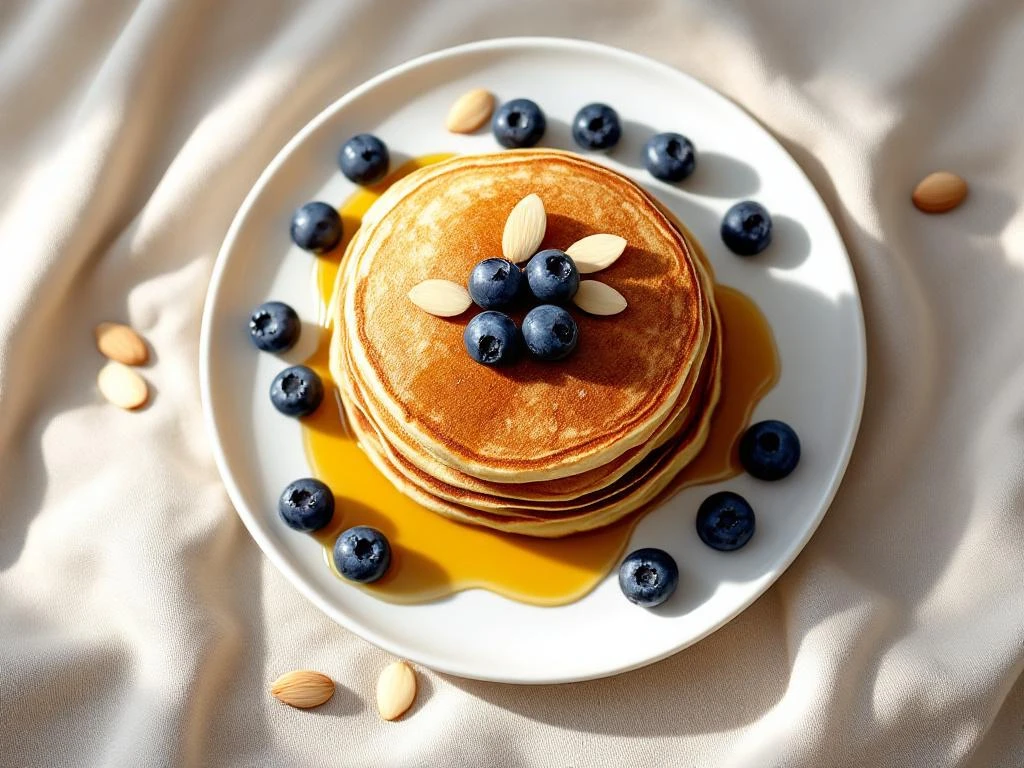
These gluten-free blueberry almond pancakes bring together fluffy texture and gentle digestion in one satisfying breakfast. If you’re managing IBS or following a low FODMAP diet, you don’t have to sacrifice delicious pancakes. This recipe uses carefully selected ingredients that are kind to sensitive digestive systems while delivering the golden, fluffy pancakes you crave. You’ll need about 30 minutes from start to finish, including prep and cooking time. This is a beginner-friendly recipe that requires basic kitchen skills like mixing and pan-frying. Have your ingredients measured and your griddle ready before you start.
Why these gluten-free pancakes work for IBS
This recipe focuses on low FODMAP ingredients that reduce digestive triggers. The combination of gluten-free flour and almond flour creates structure without wheat, which many people with IBS need to avoid. Fresh blueberries add natural sweetness and antioxidants without high FODMAP fruits like apples or pears.
Almond flour brings moisture and a subtle nutty flavour while keeping the recipe IBS-friendly. Small amounts of almond flour typically fall within low FODMAP serving sizes. The gluten-free flour blend provides the binding power that regular flour would, giving you pancakes that hold together and cook evenly.
Lactose-free milk replaces regular dairy, removing a common IBS trigger. Eggs provide protein and help bind the ingredients without adding FODMAPs. These healthy pancakes prove that an IBS-friendly pancake recipe doesn’t mean compromising on taste or texture.
Gather your ingredients and tools
Having everything ready before you start makes the cooking process smooth and stress-free. Measure your ingredients first so you can focus on technique once you begin mixing.
Ingredients you’ll need:
- 150g gluten-free flour blend (look for one with xanthan gum already added)
- 50g almond flour
- 2 teaspoons baking powder
- 1/4 teaspoon salt
- 2 large eggs
- 240ml lactose-free milk
- 2 tablespoons vegetable oil (plus extra for cooking)
- 100g fresh blueberries
- 1 tablespoon maple syrup (optional, for batter)
Essential kitchen tools:
- Two medium mixing bowls
- Whisk or fork
- Large non-stick griddle or frying pan
- Spatula
- Measuring cups and spoons
If you need to substitute ingredients, use another neutral oil like sunflower instead of vegetable oil. You can swap lactose-free milk for almond milk or another low FODMAP milk alternative. Make sure your gluten-free flour contains xanthan gum or add 1/2 teaspoon separately to help bind the batter.
Mix the batter for fluffy pancakes
Proper mixing technique makes the difference between dense, flat pancakes and light, fluffy ones. The key is keeping wet and dry ingredients separate until the last moment.
Combine your gluten-free flour, almond flour, baking powder, and salt in one bowl. Whisk these dry ingredients together for about 30 seconds to distribute the baking powder evenly. This step ensures your pancakes rise uniformly.
In your second bowl, whisk the eggs until slightly frothy. Add the lactose-free milk, oil, and maple syrup if using. Mix until everything blends together smoothly.
Pour the wet ingredients into the dry ingredients. Stir gently with your whisk, making about 10-15 slow circular motions. The batter should look slightly lumpy. Stop mixing when you no longer see dry flour. Overmixing makes gluten-free pancakes gummy and dense.
Let the batter rest for 5 minutes. This allows the gluten-free flour to absorb the liquid properly. After resting, gently fold in the blueberries using a spatula. Distribute them throughout the batter without crushing them.
Cook perfect golden pancakes
Temperature control is crucial for easy gluten-free pancakes that cook evenly without burning. Heat your griddle or pan over medium heat for 2-3 minutes before adding any batter.
Test if your pan is ready by flicking a few drops of water onto the surface. They should sizzle and evaporate within 2 seconds. Add a small amount of oil and spread it with a paper towel to create a thin, even coating.
Pour about 60ml (1/4 cup) of batter per pancake onto the griddle. Don’t spread the batter, let it settle into its own round shape. Cook for 2-3 minutes on the first side. Watch for small bubbles to form on the surface and the edges to look set. This is your signal to flip.
Use your spatula to flip the pancake in one confident motion. Cook the second side for 1-2 minutes until golden brown. The second side always cooks faster than the first.
Keep finished pancakes warm on a plate covered with a clean kitchen towel. Adjust your heat down slightly if pancakes brown too quickly or up if they’re taking longer than 3 minutes per side.
Serve and store your pancakes
These blueberry almond pancakes taste best when served warm. Stack them on plates and add your favourite low FODMAP toppings.
Low FODMAP topping suggestions:
- Pure maple syrup
- Lactose-free butter
- Extra fresh blueberries or strawberries
- A sprinkle of icing sugar
- Lactose-free yoghurt
Store leftover pancakes in an airtight container in the refrigerator for up to 3 days. Layer parchment paper between pancakes to prevent sticking. For longer storage, freeze them for up to 2 months.
Reheat refrigerated pancakes in a toaster or toaster oven for the best texture. They’ll crisp up slightly on the outside while staying soft inside. Microwave reheating works too, use 30-second intervals on medium power. Frozen pancakes can go straight into the toaster from the freezer.
Troubleshoot common pancake problems
Flat or dense pancakes usually mean overmixing or old baking powder. Check your baking powder is fresh by dropping a bit in hot water. It should fizz immediately. Mix your batter less next time, those lumps are actually helpful.
If your batter seems too thick and doesn’t spread at all, add lactose-free milk one tablespoon at a time until it pours slowly from a spoon. Too thin and runny? Add gluten-free flour one tablespoon at a time. The right consistency looks like thick cream.
Pancakes sticking to the pan means you need more oil or your pan isn’t hot enough yet. Add a bit more oil and let it heat properly before pouring the next pancake. A good non-stick pan makes this recipe much easier.
Uneven cooking or burnt spots happen when your heat is too high. Turn it down to medium-low and give your pan a minute to adjust. Different gluten-free flour brands absorb liquid differently. If you switch brands, you might need to adjust the milk amount slightly.
Blueberries sinking to the bottom? Your batter might be too thin. Thicken it slightly with more flour. You can also coat the blueberries in a teaspoon of gluten-free flour before folding them in. This helps them stay suspended in the batter.
At high altitude, reduce your baking powder by 1/4 teaspoon and add an extra tablespoon of liquid. The lower air pressure affects how pancakes rise and cook.
Gluten-free blueberry almond pancakes
Cooking Time: 30 minutes | Portions: 8-10 pancakes
Dry ingredients:
- 150g gluten-free flour blend
- 50g almond flour
- 2 teaspoons baking powder
- 1/4 teaspoon salt
Wet ingredients:
- 2 large eggs
- 240ml lactose-free milk
- 2 tablespoons vegetable oil
- 1 tablespoon maple syrup (optional)
- 100g fresh blueberries
Quick steps:
- Whisk dry ingredients together in one bowl
- Mix wet ingredients in a separate bowl
- Pour wet into dry and stir gently until just combined
- Let batter rest for 5 minutes
- Fold in blueberries
- Heat griddle to medium and oil lightly
- Pour 60ml batter per pancake
- Cook 2-3 minutes until bubbles form, then flip
- Cook second side 1-2 minutes until golden
- Serve warm with low FODMAP toppings
This recipe is for informational purposes only and is not medical or dietary advice. Please consult a healthcare professional before making any changes to your diet.