
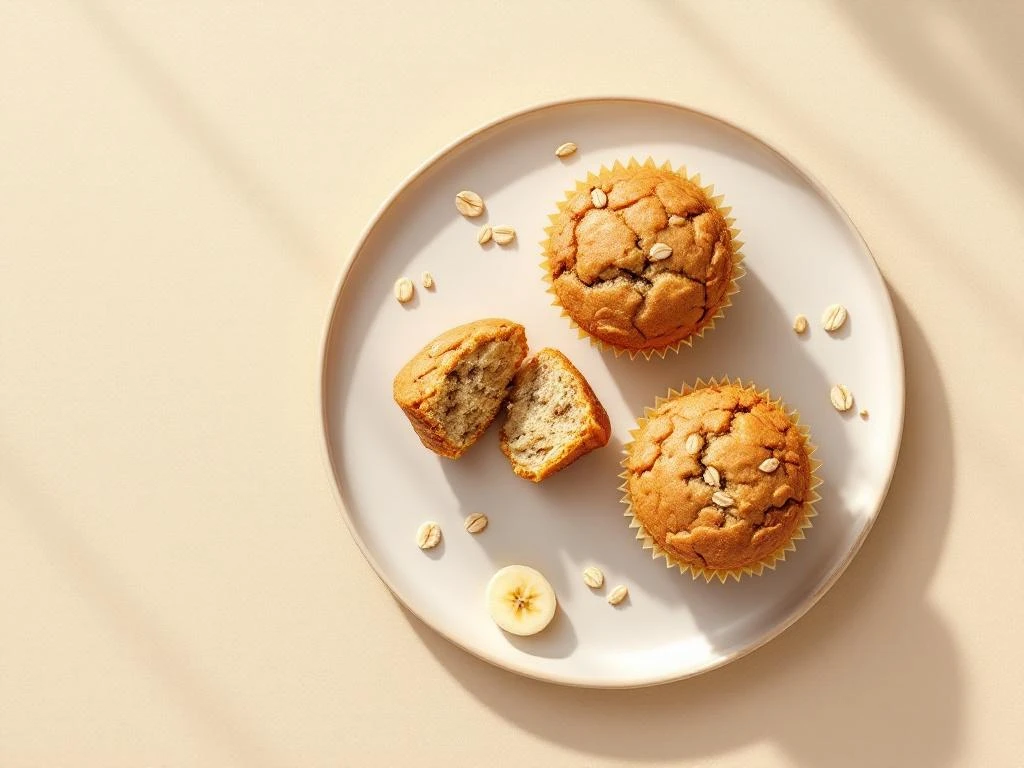
These gluten-free banana oat muffins are perfect for anyone following a low FODMAP diet while managing IBS. They combine naturally sweet bananas with gentle oats to create a moist, satisfying muffin that won’t trigger digestive discomfort. You’ll need basic baking skills and about 40 minutes from start to finish. This recipe uses simple ingredients you likely have at home and requires only standard kitchen tools. The muffins freeze beautifully, making them ideal for meal prep.
This beginner-friendly recipe requires a muffin tin, mixing bowls, and measuring tools. The batter comes together quickly without complicated techniques.
Why gluten-free banana oat muffins work for IBS
These muffins fit naturally into a low FODMAP diet because they use ingredients that are gentle on sensitive digestive systems. Bananas are low FODMAP when firm and slightly underripe, providing natural sweetness without added sugars that might cause issues. Gluten-free oats are well-tolerated by most people with IBS and add beneficial soluble fibre that supports digestive health.
The recipe avoids common IBS triggers like wheat flour, regular milk, and high FODMAP sweeteners. We use lactose-free alternatives and portion-controlled amounts of certified gluten-free oats. Oats contain beta-glucan, a type of fibre that can help regulate digestion without causing bloating or discomfort. The combination creates IBS-friendly muffins that taste indulgent whilst being kind to your gut.
These banana oat muffins are naturally gluten-free when you use certified gluten-free oats. Many people with IBS also react to gluten, so this recipe removes that concern entirely. The lactose-free approach means you can enjoy these muffins without worrying about dairy-related symptoms. Each muffin provides sustained energy without the digestive upset that often comes with traditional baked goods.
Gather ingredients and tools for banana oat muffins
You’ll need these low FODMAP ingredients for 12 muffins:
- 3 firm, slightly spotted bananas (not overripe)
- 2 cups certified gluten-free oats
- 2 large eggs at room temperature
- 60ml maple syrup or low FODMAP sweetener
- 60ml lactose-free milk or almond milk
- 1 teaspoon baking powder
- 1 teaspoon vanilla extract
- ½ teaspoon cinnamon
- Pinch of salt
- 2 tablespoons melted coconut oil or lactose-free butter
Essential baking tools include a 12-cup muffin tin, paper muffin cases, two mixing bowls, measuring cups and spoons, a fork for mashing, and a whisk or wooden spoon. You’ll also need a blender or food processor to turn the oats into flour.
Bring your eggs and milk to room temperature before starting. This helps everything blend smoothly and creates better texture in the final muffins. Check that your oats are certified gluten-free if you have coeliac disease or gluten sensitivity. Regular oats can be cross-contaminated during processing.
Prepare the banana oat muffin batter
Preheat your oven to 180°C (350°F) and line your muffin tin with paper cases. Process the gluten-free oats in a blender until they form a fine flour texture. This takes about 30 seconds on high speed. Pour the oat flour into a large mixing bowl.
Add the baking powder, cinnamon, and salt to the oat flour. Whisk these dry ingredients together thoroughly to distribute the leavening agent evenly. This prevents some muffins from rising more than others.
In your second bowl, mash the bananas with a fork until mostly smooth. A few small lumps are fine and actually add nice texture. Mix in the eggs, maple syrup, lactose-free milk, vanilla extract, and melted coconut oil. Whisk until everything combines into a smooth wet mixture.
Pour the wet ingredients into the dry ingredients. Stir gently with a wooden spoon until just combined. Stop mixing as soon as you no longer see dry flour. Overmixing gluten-free batter creates dense, gummy muffins. The batter should look slightly lumpy and thick enough to hold its shape when scooped.
Bake and test for perfect muffin doneness
Divide the batter evenly among the 12 muffin cases. Fill each about three-quarters full. This allows room for the muffins to rise without overflowing. Use an ice cream scoop or large spoon for consistent portions.
Bake for 22 to 25 minutes on the middle oven rack. The muffins are done when the tops turn golden brown and spring back when lightly pressed. Insert a toothpick into the centre of one muffin. It should come out clean or with just a few moist crumbs attached. Wet batter on the toothpick means they need more time.
Remove the tin from the oven and let the muffins cool in the pan for 5 minutes. This settling time helps them firm up and makes them easier to remove. Transfer the muffins to a wire rack to cool completely. They’ll continue cooking slightly from residual heat, so don’t skip this cooling step.
The muffins should feel light when you pick them up and have a slightly crisp exterior with a tender interior. If they feel heavy or dense, check the troubleshooting section below.
What can go wrong with gluten-free oat muffins?
Dense or gummy texture usually means overmixing or too much liquid. Mix the batter only until the flour disappears. If your bananas were very large or overripe, they added extra moisture. Reduce the milk by 1 tablespoon next time.
Muffins sticking to the pan happens when you skip the paper cases or remove them too early. Always use paper liners with gluten-free baking. Let the muffins cool for at least 5 minutes before removing them from the tin.
Uneven baking with some muffins done before others means uneven batter distribution or hot spots in your oven. Use a scoop to portion the batter evenly. Rotate the muffin tin halfway through baking if your oven heats unevenly.
Dry, crumbly results come from overbaking or not enough moisture. Check your muffins at 22 minutes rather than waiting the full time. Gluten-free baked goods dry out faster than wheat-based ones. Add an extra tablespoon of milk if your batter seems thick.
Flat muffins that don’t rise indicate old baking powder or undermixing. Check the expiry date on your baking powder. Make sure you mixed the wet ingredients thoroughly before combining with the dry ingredients.
Store and customize your banana oat muffins
Store cooled muffins in an airtight container at room temperature for up to 3 days. They stay moist without refrigeration during this time. For longer storage, refrigerate them for up to 1 week in a sealed container. The cold can make them slightly firmer, but they’ll still taste great.
Freeze muffins for up to 3 months by wrapping each one individually in cling film, then placing them all in a freezer bag. This prevents freezer burn and makes it easy to grab single portions. Thaw overnight in the fridge or microwave for 30 seconds from frozen.
Reheat refrigerated or frozen muffins in the microwave for 15 to 20 seconds. This brings back the just-baked softness. You can also warm them in a 160°C oven for 5 minutes if you prefer a slightly crisp exterior.
Customize your healthy muffins with low FODMAP additions. Fold in 80g of fresh blueberries for extra antioxidants. Add 40g of chopped walnuts or pecans for crunch (limit to 10 nuts per serving to stay low FODMAP). Mix in 30g of dark chocolate chips for an indulgent treat. Sprinkle the tops with extra oats before baking for texture.
Try different spice combinations like nutmeg and ginger, or add a tablespoon of cocoa powder to the dry ingredients for chocolate banana oat muffins. Replace half the banana with mashed pumpkin for autumn-inspired lactose-free muffins. Each variation maintains the IBS-friendly properties whilst adding variety to your low FODMAP baking.
These gluten-free banana muffins prove that following a restricted diet doesn’t mean sacrificing flavour or satisfaction. The simple ingredient list and straightforward method make them accessible for any skill level. You now have a reliable recipe for IBS-friendly muffins that work for breakfast, snacks, or packed lunches. The banana oat muffins recipe adapts easily to your preferences whilst staying within low FODMAP guidelines. Keep a batch in your freezer for convenient, gut-friendly options whenever you need them.
Gluten-free banana oat muffins
Cooking Time: 25 minutes | Portions: 12 muffins
- Preheat oven to 180°C (350°F) and line muffin tin with paper cases
- Blend 2 cups gluten-free oats into fine flour
- Mix oat flour with 1 tsp baking powder, ½ tsp cinnamon, and pinch of salt
- Mash 3 firm bananas until mostly smooth
- Add 2 eggs, 60ml maple syrup, 60ml lactose-free milk, 1 tsp vanilla, and 2 tbsp melted coconut oil to bananas
- Combine wet and dry ingredients until just mixed
- Fill muffin cases three-quarters full
- Bake 22 to 25 minutes until golden and toothpick comes out clean
- Cool in pan 5 minutes, then transfer to wire rack
- Store in airtight container up to 3 days or freeze up to 3 months
This recipe is for informational purposes only and is not medical or dietary advice. Please consult a healthcare professional before making any changes to your diet.